
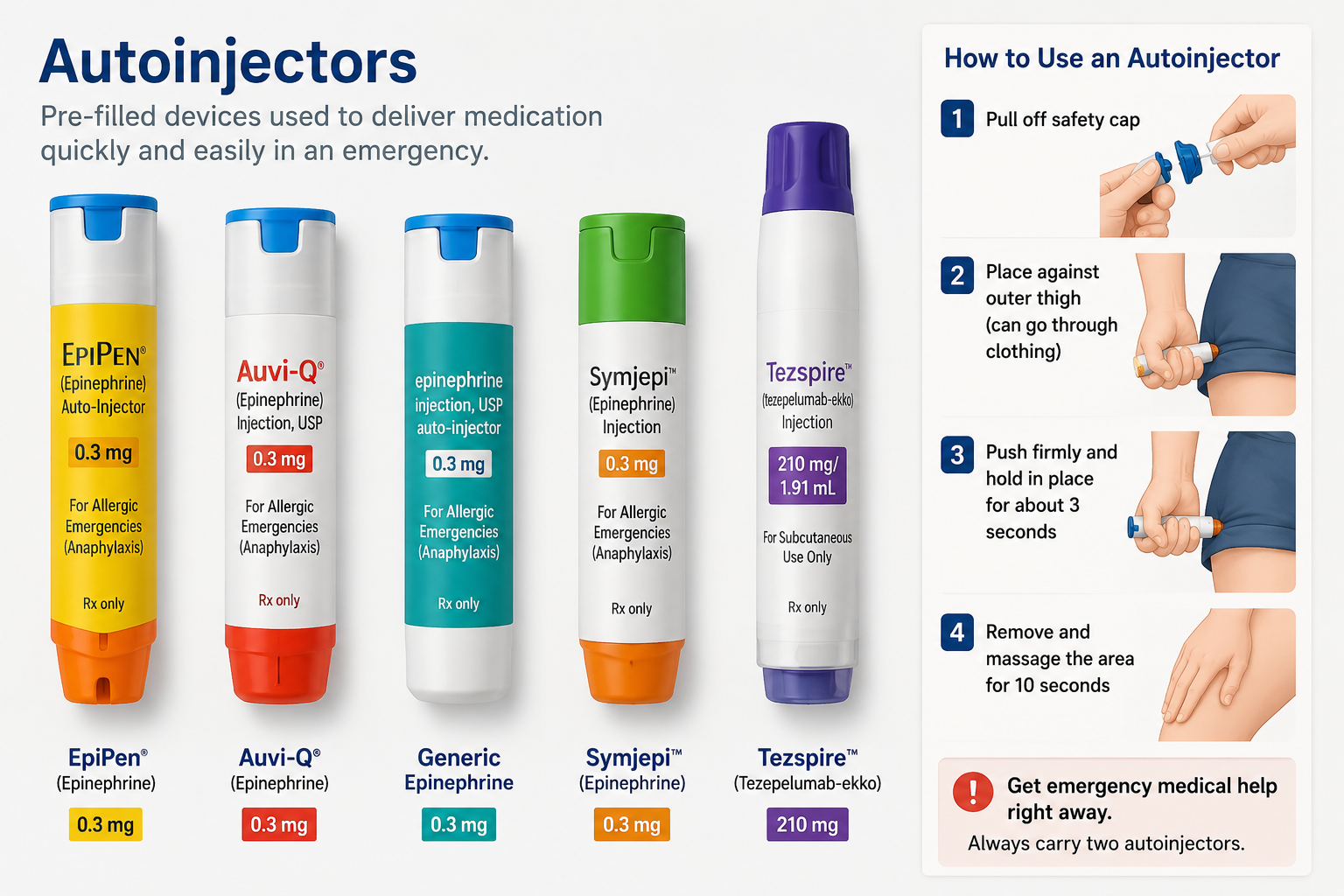
The global healthcare industry is undergoing a major transformation, with patient-centric care and self-administration technologies becoming increasingly important. Among the innovations leading this shift are autoinjectors—advanced drug delivery devices designed to enable patients to administer injectable medications safely, accurately, and conveniently without professional assistance.
The global autoinjectors market was valued at USD 107.60 billion in 2025 and reached USD 127.30 billion in 2026. The market is projected to expand at a remarkable CAGR of 18.7% from 2026 to 2031, ultimately reaching USD 300.46 billion by 2031. Rising incidences of chronic and autoimmune diseases, growing adoption of biologic therapies, increasing patient preference for home-based treatment, and favorable reimbursement policies are among the primary factors driving this exceptional growth.
Understanding the Role of Autoinjectors in Modern Healthcare
Autoinjectors are medical devices designed to deliver a pre-measured dose of medication through a simple, user-friendly injection process. They have become increasingly popular for treating chronic conditions that require frequent or long-term injectable therapies.
By simplifying drug administration, reducing needle anxiety, and improving treatment adherence, autoinjectors are transforming how patients manage diseases outside traditional healthcare settings.
Today, autoinjectors are widely used for therapies involving diabetes, rheumatoid arthritis, multiple sclerosis, anaphylaxis, psoriasis, inflammatory diseases, and obesity management.
Download an Illustrative overview: https://www.marketsandmarkets.com/pdfdownloadNew.asp?id=173991724
Key Factors Driving Market Growth
Rising Prevalence of Chronic and Autoimmune Diseases
One of the strongest drivers of the autoinjectors market is the increasing burden of chronic illnesses and autoimmune disorders worldwide.
Conditions such as diabetes, rheumatoid arthritis, multiple sclerosis, and inflammatory diseases often require regular injectable medications over extended periods. Autoinjectors provide patients with a convenient and reliable method for administering these treatments at home, reducing dependence on healthcare facilities.
Growing Adoption of Self-Administered Therapies
Healthcare systems globally are emphasizing patient empowerment and home-based care models.
Patients increasingly prefer self-administered therapies due to:
- Greater convenience
- Reduced hospital visits
- Improved treatment adherence
- Enhanced quality of life
- Lower healthcare costs
Autoinjectors align perfectly with these preferences, making them an essential component of modern chronic disease management.
Expansion of Biologics and Specialty Pharmaceuticals
The rapid growth of biologic drugs has significantly increased demand for advanced drug delivery devices.
Many biologics require injectable administration and are prescribed for chronic diseases such as autoimmune disorders, oncology indications, and metabolic conditions. Autoinjectors help ensure accurate dosing while making complex therapies easier for patients to manage independently.
Increasing Regulatory Approvals
Regulatory agencies across major healthcare markets are approving a growing number of injectable therapies that incorporate autoinjector delivery systems.
Pharmaceutical manufacturers are increasingly pairing innovative biologic drugs with patient-friendly autoinjector platforms to improve user experience and support treatment compliance.
Favorable Reimbursement Policies and Government Support
Government healthcare initiatives and supportive reimbursement frameworks are encouraging broader adoption of self-injection devices.
In many countries, reimbursement programs are helping reduce out-of-pocket costs for patients, making autoinjector-based therapies more accessible and affordable.
Market Segmentation Insights
By Usage: Disposable Autoinjectors Lead Future Growth
The disposable autoinjectors segment is projected to register the highest CAGR during the forecast period.
Their advantages include:
- Ease of use
- Reduced maintenance requirements
- Improved patient safety
- Lower contamination risks
- Enhanced convenience for home administration
As healthcare providers prioritize patient-friendly solutions, disposable devices are expected to witness strong adoption globally.
By Actuation Mechanism: Mechanical Autoinjectors Dominate
The mechanical (spring-based) autoinjectors segment accounted for the largest market share in 2025.
These devices remain highly popular due to:
- Proven reliability
- Cost-effectiveness
- Simple design
- Consistent drug delivery
- Broad compatibility with various medications
Although electronic and smart autoinjectors are gaining attention, spring-based systems continue to dominate due to their established clinical performance.
By Route of Administration: Subcutaneous Delivery Remains Preferred
The subcutaneous administration segment held an overwhelming 91.3% market share in 2025.
Subcutaneous injections offer several benefits:
- Convenient self-administration
- Reduced pain and discomfort
- Suitable for biologics and chronic therapies
- Faster patient training and adoption
The widespread use of biologics further reinforces the dominance of this administration route.
By Therapy Area: Obesity Emerges as a High-Growth Opportunity
The obesity segment is expected to register the highest CAGR during the forecast period.
The growing global obesity epidemic, combined with the rapid adoption of injectable weight-management therapies, is creating substantial opportunities for autoinjector manufacturers.
Recent advancements in metabolic and obesity medications are accelerating demand for convenient, patient-friendly injection devices that support long-term treatment adherence.
By Drug Type: Biologics Segment Holds the Largest Share
The biologics segment accounted for the largest market share in 2025.
Biologic therapies are increasingly being used to treat:
- Autoimmune diseases
- Inflammatory disorders
- Cancer
- Metabolic conditions
- Rare diseases
As biologics continue to dominate pharmaceutical innovation pipelines, demand for compatible autoinjector systems is expected to grow substantially.
By Volume: Up to 3 mL Segment Leads the Market
The up to 3 mL segment represented the largest share of the market in 2025.
This volume range is particularly suitable for many biologic therapies and chronic disease treatments, balancing effective drug delivery with patient comfort.
By End User: Home Care Settings Drive Future Expansion
The home care settings segment is projected to register the highest CAGR of 19.3% during the forecast period.
Several factors are contributing to this trend:
- Growing preference for home-based healthcare
- Rising healthcare costs
- Increasing telemedicine adoption
- Patient demand for greater treatment flexibility
- Reduced burden on hospitals and clinics
As healthcare systems continue shifting toward decentralized care models, home administration is expected to become a major growth engine for the autoinjectors industry.
Emerging Trends Shaping the Market
Smart and Connected Autoinjectors
Digital healthcare integration is driving the development of connected autoinjector platforms equipped with:
- Dose tracking capabilities
- Mobile app connectivity
- Adherence monitoring
- Treatment reminders
- Data sharing with healthcare providers
These innovations support improved patient outcomes and personalized disease management.
Human-Centered Device Design
Manufacturers are increasingly focusing on ergonomic and user-friendly designs that simplify the injection process.
Features such as hidden needles, one-button activation, audible feedback, and visual indicators help reduce injection anxiety and improve patient confidence.
Sustainability and Environmental Considerations
As disposable device usage grows, manufacturers are exploring sustainable materials and eco-friendly designs to reduce environmental impact while maintaining product safety and effectiveness.
Regional Outlook
North America currently leads the autoinjectors market due to high biologics adoption, advanced healthcare infrastructure, and strong reimbursement support.
Europe continues to experience steady growth driven by increasing prevalence of chronic diseases and expanding home healthcare initiatives.
Meanwhile, the Asia Pacific region is expected to emerge as one of the fastest-growing markets, supported by:
- Expanding healthcare access
- Rising healthcare expenditures
- Growing awareness of self-administration therapies
- Increasing prevalence of chronic diseases
- Large patient populations
Countries such as India, China, Japan, and South Korea are expected to play critical roles in future market expansion.
Competitive Landscape
The autoinjectors market is highly dynamic, with pharmaceutical companies and device manufacturers investing heavily in innovation, patient-centric design, and strategic partnerships.
Key areas of competition include:
- Smart autoinjector technologies
- Connected healthcare solutions
- Enhanced safety mechanisms
- Improved patient usability
- Integration with biologic drug pipelines
- Expansion into emerging markets
Manufacturers that successfully combine advanced drug delivery capabilities with digital health features are likely to gain a competitive advantage in the evolving market landscape.
Conclusion
The global autoinjectors market is entering a period of unprecedented growth, driven by the convergence of chronic disease management, biologic drug expansion, patient preference for self-administration, and healthcare system transformation. With the market expected to reach USD 300.46 billion by 2031, autoinjectors are becoming an indispensable component of modern healthcare delivery.
As innovations in connected devices, biologic therapies, and home-based care continue to accelerate, autoinjectors will play a vital role in improving patient outcomes, enhancing treatment adherence, and shaping the future of personalized healthcare worldwide.
Request Sample Pages: https://www.marketsandmarkets.com/requestsampleNew.asp?id=173991724