

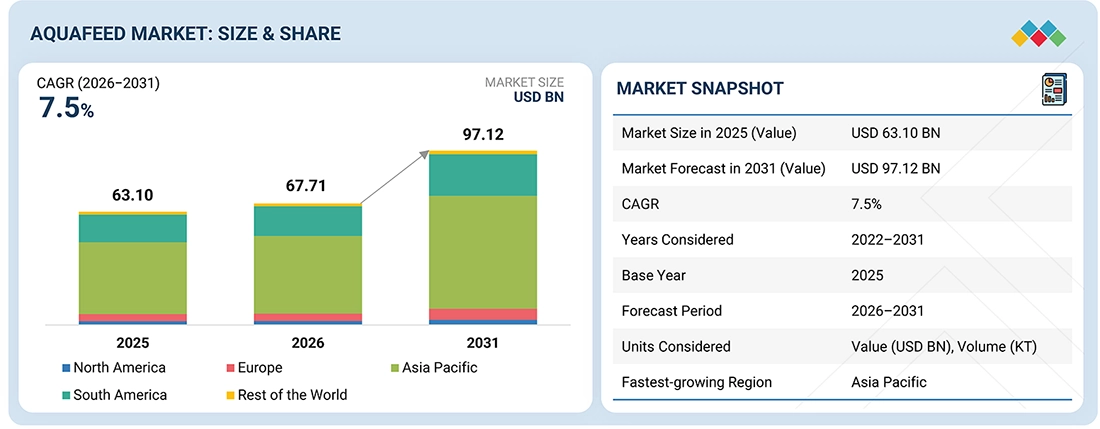
The global aquafeed market is estimated at USD 67.71 billion in 2026 and is projected to reach USD 97.12 billion by 2031, growing at a CAGR of 7.5% during the forecast period. This growth is primarily fueled by increasing seafood consumption, advancements in feed formulations, and the rising focus on sustainable aquaculture practices.
The global aquaculture industry is undergoing a major transformation as seafood consumption continues to rise worldwide. The increasing need for sustainable protein sources, combined with the rapid expansion of commercial fish farming, is significantly boosting demand for advanced aquafeed solutions. As a result, the aquaculture sector is becoming one of the most important pillars of global food security.
Rising Global Population Accelerating Aquafeed Demand
The steadily growing global population, particularly across developing economies, is creating strong demand for protein-rich food products such as seafood. As natural fisheries face mounting pressure from overfishing, climate change, and environmental degradation, aquaculture has emerged as a reliable solution to bridge the global protein gap.
Modern fish farming operations rely heavily on high-quality aquafeed to improve fish health, maximize growth rates, and optimize feed conversion efficiency. This dependency has made aquafeed a critical component of the global seafood supply chain.
Traditionally, aquafeed formulations have depended on fish meal and fish oil derived from wild-caught marine species. However, sustainability concerns are driving the industry toward alternative ingredients such as plant-based proteins, algae-derived nutrients, insect proteins, and microalgae. These innovations are helping reduce pressure on marine ecosystems while supporting long-term aquaculture expansion.
Download PDF Brochure: https://www.marketsandmarkets.com/pdfdownloadNew.asp?id=1151
Sustainability and Precision Nutrition Reshaping the Industry
Sustainability has become a major focus area within the aquafeed industry. Feed manufacturers are investing heavily in research and development to improve nutritional performance while minimizing environmental impact.
Advanced feed technologies now emphasize the following:
- Improved digestibility
- Reduced feed waste
- Better nutrient absorption
- Lower carbon footprint
- Sustainable sourcing of raw materials
Precision nutrition is also gaining traction, enabling feed manufacturers to develop species-specific diets that improve aquatic animal performance and farm productivity.
One notable innovation is the AmiNova feed formulation concept introduced in 2024 by Skretting. The formulation focuses on enhancing feed efficiency while reducing environmental impact. Initially launched for the Chilean salmonid market, the solution is expected to expand into additional species and regions in the coming years. Such developments demonstrate how technological advancements are transforming the future of aquaculture nutrition.
Asia Pacific Dominates the Aquafeed Market
By region, Asia Pacific is projected to remain the dominant aquafeed market throughout the forecast period. The region’s strong position is supported by rapid aquaculture expansion, increasing seafood consumption, and rising investments in sustainable aquaculture infrastructure.
Countries such as China, India, Vietnam, and Indonesia continue to lead global aquaculture production.
According to the USDA’s 2024 China Fishery Products Report, China’s aquaculture industry is rapidly transitioning toward industrialized and intensive farming systems. This transformation is significantly increasing demand for feed ingredients such as soybean meal, which accounts for up to 28% of feed composition for certain aquatic species.
The growing adoption of nutritionally balanced and value-added feeds across the Asia Pacific region is expected to further strengthen aquafeed market growth over the next decade.
Request Sample Pages: https://www.marketsandmarkets.com/requestsampleNew.asp?id=1151
Amino Acids Emerging as a Key Feed Ingredient
Among feed additives, amino acids are expected to hold a significant share of the aquafeed market during the forecast period. Amino acids are essential building blocks of protein and play a vital role in supporting aquatic animal growth, immunity, and metabolism.
The inclusion of essential amino acids in aquafeed formulations helps producers:
- Improve feed conversion ratios
- Enhance fish growth performance
- Reduce nutrient wastage
- Improve product quality
- Address dietary deficiencies
As aquaculture operations become increasingly intensive, producers are focusing on scientifically balanced nutrition programs to maximize productivity and profitability. This trend is expected to accelerate the adoption of amino acid-enriched feed solutions worldwide.
Crustaceans Segment to Witness Fastest Growth
By species, the crustaceans segment is projected to register the highest growth rate during the forecast period. Rising global demand for shrimp and prawns is significantly increasing the need for high-performance aquafeed products.
Modern shrimp farming requires nutritionally optimized feed solutions to ensure healthy growth, disease resistance, and high survival rates. As shrimp farming intensifies to meet growing seafood demand, feed consumption continues to rise substantially.
Aquafeed designed for crustaceans contains carefully balanced nutrients, vitamins, proteins, and minerals that help improve farming efficiency and product quality. The growing popularity of shrimp-based seafood products across global markets is expected to remain a major driver for this segment.
Competitive Landscape of the Aquafeed Industry
The aquafeed market is highly competitive, with major players focusing on product innovation, sustainability initiatives, strategic partnerships, and regional expansion.
Key companies operating in the market include:
- ADM
- Cargill
- dsm-firmenich
- Nutreco
- Alltech
- Ridley Corporation Limited
- Purina Animal Nutrition LLC
- Adisseo
- Aller Aqua Group
- Avanti Feeds Limited
- The Waterbase Limited
- JAPFA Ltd.
- Charoen Pokphand Foods PCL
- BioMar Group
- Norel Animal Nutrition
Future Outlook
The future of the aquafeed industry remains highly promising as global seafood demand continues to rise alongside population growth and changing dietary preferences. Increasing investment in sustainable feed ingredients, precision nutrition technologies, and environmentally responsible aquaculture practices will continue shaping the next phase of industry expansion.
As aquaculture becomes increasingly important for global food security, the aquafeed market is expected to play a central role in supporting efficient, sustainable, and scalable seafood production worldwide.