
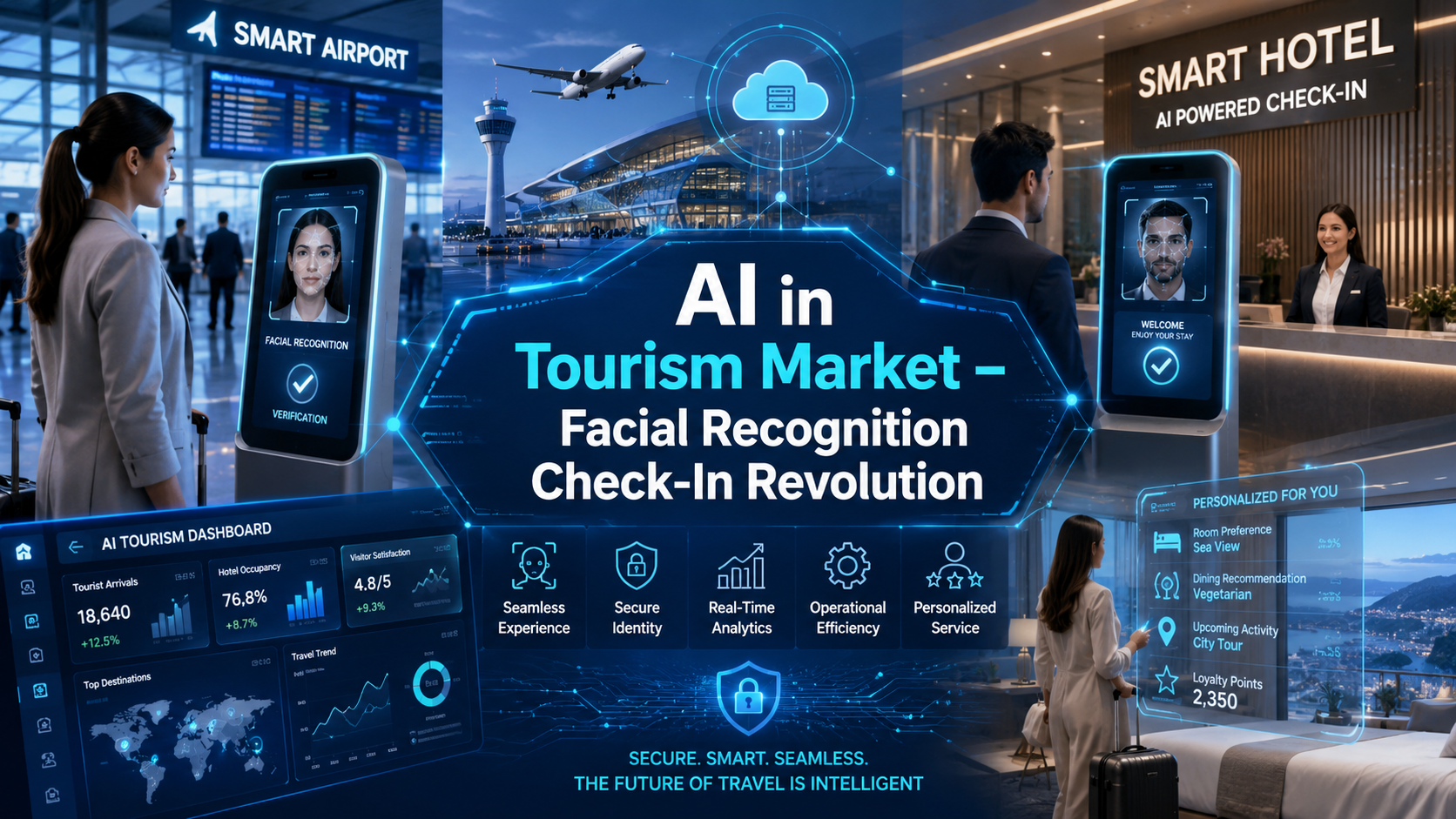
The New Era of Intelligent Tourism Experiences
The global travel and hospitality sector is undergoing a significant digital transformation, with Facial Recognition Check-In emerging as a key innovation redefining customer engagement and operational excellence. As organizations continue to invest in automation, advanced security frameworks, and customer-centric technologies, the AI in Tourism Market is witnessing substantial expansion across airports, hotels, resorts, cruise lines, and other tourism service providers.
Modern travelers increasingly expect seamless, contactless, and personalized experiences throughout their journeys. Traditional check-in processes often result in long wait times, identity verification complexities, and operational bottlenecks that can negatively impact customer satisfaction. Facial Recognition Check-In addresses these challenges by integrating artificial intelligence, biometric authentication, and real-time analytics to streamline traveler journeys while enhancing both security and convenience.
As enterprises pursue scalable digital transformation initiatives, this technology is becoming an essential pillar supporting the continued growth of the AI in Tourism Market.
Why Facial Recognition Check-In is Gaining Global Momentum
Several technology-driven trends are accelerating the adoption of biometric solutions within the tourism industry, including:
- Contactless customer engagement
- AI-powered identity verification
- Smart airport modernization programs
- Connected digital tourism ecosystems
- Personalized travel experiences
- Automated customer service capabilities
- Advanced cybersecurity requirements
- Intelligent traveler analytics
Governments, airlines, hospitality brands, and tourism operators are increasingly deploying facial recognition technologies to enhance operational efficiency, strengthen security measures, and elevate traveler satisfaction.
Market research indicates strong trends Download the PDF to uncover business insights.
Understanding the Role of AI in Tourism Market Transformation
Artificial intelligence is fundamentally transforming how tourism organizations manage customer engagement, operational processes, security frameworks, and strategic decision-making.
According to ongoing AI in Tourism Market analysis, organizations are leveraging AI technologies to:
- Enhance customer engagement and retention
- Automate routine operational processes
- Improve organizational efficiency
- Anticipate traveler preferences and behavior
- Optimize workforce planning and allocation
- Strengthen security and risk management frameworks
- Generate actionable business intelligence
Facial Recognition Check-In represents a practical application of AI that delivers measurable business outcomes while supporting digital transformation across the tourism ecosystem.
Discover what’s fuelling successful companies download the Sample Report for your business growth.
How Facial Recognition Check-In Works
Facial Recognition Check-In integrates multiple advanced technologies to create a seamless identity verification process.
Identity Capture
A traveler’s facial image is securely captured through dedicated cameras, self-service kiosks, or mobile applications.
Biometric Authentication
Artificial intelligence algorithms analyze and compare unique facial characteristics against verified identity records.
Real-Time Verification
The system validates user identities within seconds through secure and encrypted databases.
Automated Access
Following successful authentication, travelers receive immediate access to hotel accommodations, airport security checkpoints, boarding gates, or other tourism facilities.
Continuous Learning and Optimization
Machine learning models continuously improve recognition accuracy by adapting to environmental changes and evolving user characteristics.
This intelligent workflow significantly reduces manual verification requirements while delivering a faster and more efficient customer experience.
Key Business Drivers Behind Rapid Adoption
Several factors continue to drive enterprise adoption of Facial Recognition Check-In technologies.
Growing Demand for Contactless Experiences
Consumers increasingly prefer frictionless, technology-enabled interactions throughout their travel journey.
Rising Operational Costs
Organizations are implementing automation solutions to reduce labor-intensive processes and improve resource utilization.
Enhanced Security Requirements
Tourism operators require more sophisticated identity verification capabilities to mitigate fraud and strengthen security.
Evolving Customer Expectations
Today’s travelers prioritize convenience, speed, and personalized experiences.
Smart Infrastructure Investments
Governments and private organizations worldwide continue to invest in intelligent tourism infrastructure and digital transformation initiatives.
Collectively, these factors are strengthening the long-term AI in Tourism outlook across multiple industry segments.
Enterprise Benefits for Hotels, Airports, and Travel Organizations
Enhanced Customer Experience
Facial Recognition Check-In significantly reduces waiting times while delivering a more convenient and seamless experience.
Accelerated Processing Times
Identity verification can be completed within seconds, dramatically improving operational efficiency compared to traditional methods.
Reduced Operational Expenditure
Automation minimizes dependency on manual processes while increasing workforce productivity.
Strengthened Security
Biometric authentication enhances identity verification accuracy and reduces the risk of unauthorized access or fraudulent activity.
Increased Customer Satisfaction
Personalized, frictionless interactions contribute to stronger brand loyalty and customer retention.
Data-Driven Decision Making
AI-powered analytics provide valuable insights into traveler behavior, preferences, and service optimization opportunities.
Real-World Applications Across the Tourism Ecosystem
Smart Hotels
Hospitality providers utilize facial recognition technology for automated guest check-ins, room access management, payment authentication, and personalized service delivery.
Airports
Airports leverage biometric systems for passenger verification, security screening, immigration processes, and boarding management.
Cruise Operations
Cruise operators employ facial recognition solutions to streamline passenger identification and onboard access control.
Theme Parks and Attractions
Visitors benefit from faster entry procedures and personalized engagement experiences.
Corporate Travel Management
Organizations use AI-powered identity verification systems to improve compliance, security, and travel program efficiency.
These implementations continue to contribute to expanding AI in Tourism share across global markets.
AI-Powered Personalization and Customer Experience
One of the most valuable advantages of AI-enabled tourism platforms is their ability to deliver highly personalized customer experiences.
When integrated with broader AI ecosystems, facial recognition systems can:
- Identify returning guests
- Recognize individual preferences
- Recommend personalized services
- Deliver targeted promotional offers
- Strengthen loyalty program participation
- Improve customer retention rates
This capability enables organizations to transform traditional customer interactions into highly customized digital experiences.
Security, Compliance, and Digital Identity Management
Security remains a strategic priority for tourism enterprises operating in an increasingly digital environment.
Facial Recognition Check-In supports organizational objectives through:
Fraud Prevention
Advanced biometric authentication significantly reduces identity fraud risks.
Regulatory Compliance
Organizations can strengthen Know Your Customer (KYC) procedures and meet evolving identity verification requirements.
Cybersecurity Enhancement
AI-driven monitoring systems help identify suspicious activities and potential threats in real time.
Digital Trust
Transparent and secure identity management practices contribute to stronger customer confidence and trust.
As cyber threats continue to evolve, biometric technologies are becoming increasingly important within enterprise security strategies.
Operational Efficiency and Cost Optimization
AI-powered solutions enable organizations to optimize resources while maintaining exceptional service quality.
Key benefits include:
- Automated check-in and verification processes
- Reduced administrative workloads
- Improved workforce productivity
- Lower operational costs
- Faster service delivery
- Enhanced resource utilization
These efficiencies directly support profitability, scalability, and sustainable business growth.
AI in Tourism Market Analysis: Current Trends and Opportunities
Current AI in Tourism trends highlight strong enterprise investment across several emerging technology categories, including:
- Generative AI-powered travel assistants
- Predictive traveler analytics
- Intelligent booking and reservation systems
- Autonomous customer support solutions
- Smart destination management platforms
- Digital identity verification systems
- Biometric authentication technologies
- AI-driven revenue optimization tools
Organizations that proactively adopt these innovations are likely to achieve significant competitive advantages in the evolving tourism landscape.
Emerging Technologies Shaping the Future of Travel
The future tourism ecosystem will increasingly integrate advanced technologies that enhance operational intelligence and customer engagement.
Digital Twins
Virtual representations of tourism infrastructure enabling real-time monitoring and optimization.
Edge AI
Localized data processing capabilities supporting real-time traveler interactions.
Computer Vision
Advanced recognition technologies that enhance identity verification and behavioral analytics.
IoT Integration
Connected tourism environments delivering intelligent and personalized experiences.
Predictive Analytics
Data-driven insights that enable proactive service delivery based on traveler behavior patterns.
Together, these technologies are expected to accelerate AI in Tourism size expansion worldwide.
Challenges Organizations Must Address
Despite significant opportunities, organizations must proactively address several implementation challenges, including:
- Data privacy and protection concerns
- Biometric data governance requirements
- Regulatory compliance obligations
- Technology integration complexities
- Cybersecurity risks
- Customer acceptance and trust considerations
A well-defined implementation strategy is critical to ensuring successful deployment and long-term value creation.
AI in Tourism Forecast: What Enterprises Should Expect by 2030
The AI in Tourism forecast indicates continued acceleration in enterprise adoption and innovation.
Key developments expected over the coming years include:
- Widespread deployment of biometric travel experiences
- Fully automated hotel check-in processes
- AI-driven smart tourism ecosystems
- Hyper-personalized traveler engagement
- Advanced digital identity management frameworks
- Increased operational automation
- Significant investment in intelligent infrastructure
Organizations that establish robust AI foundations today will be better positioned to capitalize on future growth opportunities.
Strategic Recommendations for Business Leaders
To maximize the value of Facial Recognition Check-In technologies, organizations should consider the following strategic priorities:
- Develop comprehensive AI and digital transformation roadmaps.
- Prioritize cybersecurity, privacy, and regulatory compliance.
- Invest in scalable cloud-native technology architectures.
- Establish responsible and ethical AI governance frameworks.
- Integrate AI solutions seamlessly with existing operational systems.
- Focus on measurable customer experience improvements.
- Strengthen data-driven decision-making capabilities across the organization.
These initiatives can support long-term innovation, resilience, and sustainable competitive advantage.
Facial Recognition Check-In has evolved beyond a convenience-focused technology and is now becoming a strategic enterprise capability within the rapidly expanding AI in Tourism Market. Organizations across hospitality, aviation, transportation, and tourism sectors are leveraging biometric technologies to enhance customer experiences, strengthen security, improve operational efficiency, and unlock new business opportunities.
As AI adoption continues to accelerate, enterprises that embrace intelligent identity verification, automation, and personalized customer engagement strategies will be well-positioned to lead the next generation of digital tourism experiences. The future of travel is becoming increasingly intelligent, connected, secure, and customer-centric, making Facial Recognition Check-In one of the most transformative technologies shaping the industry’s future.