
According to the report published by MarketsandMarkets, “Synthetic Feed Additives Market by Type, Livestock, Form, Function, and Region – Global Forecast to 2030,” the market is projected to grow from USD 33.88 billion in 2025 to USD 44.46 billion by 2030, registering a CAGR of 5.6% during the forecast period. This expansion reflects the rising synthetic feed additives market size supported by long-term structural changes in animal agriculture.
This growth highlights a fundamental shift in livestock production toward performance optimization, cost efficiency, and sustainable protein output.
The global synthetic feed additives market is entering a phase of steady, demand-led expansion as livestock producers increasingly turn to science-backed nutrition solutions to improve productivity, animal health, and operational efficiency.
Scientifically Validated Nutrition Takes Center Stage
A defining trend shaping the industry is the shift toward scientifically validated, precision-based nutrition strategies. Livestock producers are moving away from conventional feed formulations toward targeted additive solutions that deliver measurable performance outcomes.
Synthetic feed additives are increasingly used to improve gut health and nutrient utilization, enhance immunity and stress tolerance, support faster and more consistent growth rates, reduce feed conversion ratios, and minimize reliance on antibiotics. This approach aligns with global efforts to promote responsible animal production while maintaining operational profitability.
Request Custom Data to Address your Specific Business Needs
Swine Segment Set for the Fastest Expansion
Among livestock categories, the swine segment is expected to witness the fastest growth in demand for synthetic feed additives. Swine producers are increasingly focused on gut health management, disease prevention, and feed efficiency, particularly as digestive disorders and infections become more prevalent.
Amino acids, enzymes, and swine-specific functional additives are seeing strong adoption as producers work to optimize growth performance while reducing antibiotic usage. With global pork consumption continuing to rise, science-based feed additive solutions are becoming essential for productivity improvement in swine farming.
United States Emerges as a Key Growth Engine
The United States stands out as a major contributor to the global synthetic feed additives industry, driven by highly industrialized livestock systems and strong adoption of performance-driven nutrition strategies.
US producers are early adopters of advanced feed technologies aimed at improving growth efficiency, enhancing disease resistance, and supporting antibiotic reduction goals. The presence of leading feed manufacturers, global additive suppliers, and strong research infrastructure continues to accelerate innovation and adoption across poultry, swine, cattle, and aquaculture segments, reinforcing overall synthetic feed additives market growth.
Dry Form Additives Gain Strong Industry Acceptance
By form, dry synthetic feed additives are projected to register strong growth during the forecast period. Their adoption is driven by operational advantages such as greater stability, longer shelf life, ease of storage and transportation, and compatibility with large-scale feed manufacturing. These characteristics make dry additives especially attractive to feed mills and integrated livestock operations worldwide.
Competitive Landscape and Industry Leaders
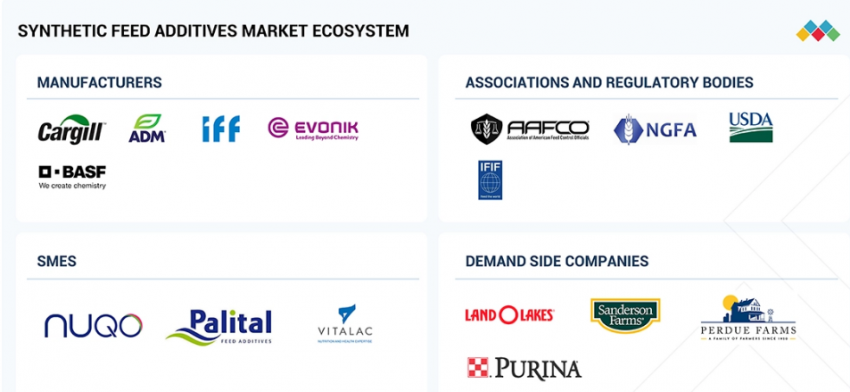
The market features a mix of global agribusiness leaders and specialized feed additive manufacturers investing in product innovation, capacity expansion, and strategic collaborations. Key players include Cargill, ADM, Evonik Industries, BASF SE, dsm-firmenich, Ajinomoto, Novonesis Group, Adisseo, Nutreco, Kemin Industries, Lallemand, Alltech, Bentoli, and Novus International.
These companies are increasingly focusing on high-value functional additives, precision nutrition solutions, and sustainability-oriented innovations to strengthen their market positions.
Rising Protein Demand Fuels Market Momentum
Global consumption of meat, dairy, poultry, and aquaculture products continues to increase, driven by population growth, urbanization, and changing dietary preferences. This trend places pressure on producers to deliver safe, high-quality, and affordable animal protein at scale.
Synthetic feed additives play a critical role in addressing these challenges. Ingredients such as amino acids, enzymes, vitamins, acidifiers, probiotics, antioxidants, and specialty functional additives help improve feed efficiency, enhance nutrient absorption, strengthen immunity, and support consistent animal growth. As profit margins tighten, these solutions are becoming central to improving synthetic feed additives market share across global livestock value chains.
Outlook to 2030: Efficiency, Innovation, and Sustainability
Looking ahead, the synthetic feed additives market is set to benefit from rising global protein demand, tightening production economics, and increasing regulatory and consumer scrutiny related to animal health and antibiotic use. Producers adopting advanced feed additive solutions will be better positioned to enhance efficiency, improve animal well-being, and meet evolving market expectations.
As livestock systems become more data-driven and performance-oriented, synthetic feed additives will continue to play a central role in modern animal nutrition strategies.
Frequently Asked Questions
- What are synthetic feed additives?
Synthetic feed additives are chemically manufactured ingredients added to animal feed to improve growth performance, feed efficiency, gut health, immunity, and overall livestock productivity. Common examples include amino acids, vitamins, enzymes, minerals, antioxidants, acidifiers, and preservatives.
- What is the current size of the synthetic feed additives market?
The global synthetic feed additives market is estimated at USD 33.88 billion in 2025 and is projected to reach USD 44.46 billion by 2030, growing at a CAGR of 5.6% during the forecast period.
- What factors are driving the growth of the synthetic feed additives market?
Market growth is driven by rising global demand for meat, dairy, poultry, and aquaculture products, increasing focus on feed efficiency and animal health, adoption of scientifically validated nutrition solutions, and efforts to reduce antibiotic usage in livestock production.
- Which types of synthetic feed additives are most widely used?
Widely used synthetic feed additives include amino acids, phosphates, vitamins, enzymes, acidifiers, antioxidants, minerals, mycotoxin detoxifiers, flavors and sweeteners, nonprotein nitrogen, preservatives, and antibiotics.
- Which livestock segment is growing the fastest?
The swine segment is expected to witness the fastest growth due to increasing emphasis on gut health, disease prevention, and performance optimization, along with rising global pork consumption and reduced reliance on antibiotics.