
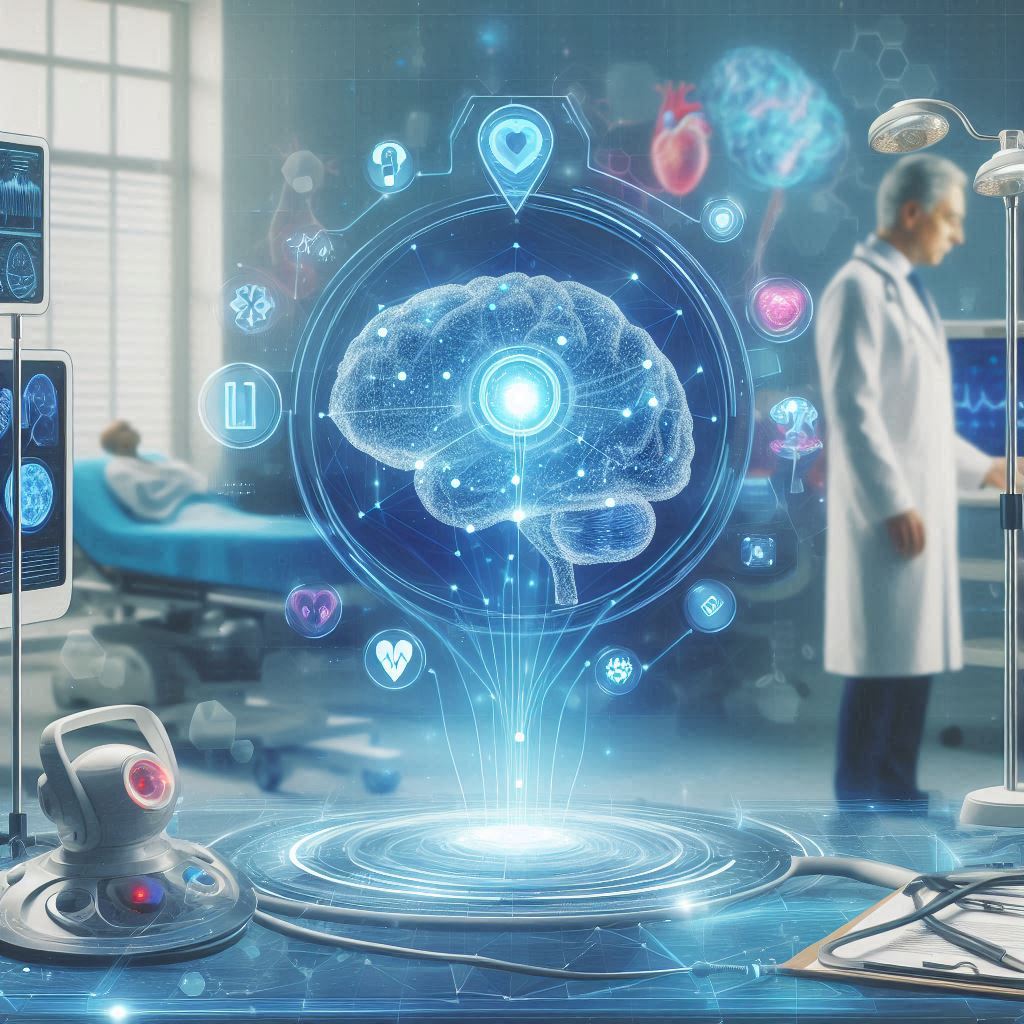
Artificial Intelligence (AI) is revolutionizing the healthcare industry, bringing transformative changes to how care is delivered, diseases are diagnosed, and patient outcomes are managed. As AI technologies continue to advance, their applications in healthcare are expanding rapidly, offering promising solutions to some of the sector’s most pressing challenges.
Enhancing Diagnostics and Early Detection
One of the most significant impacts of AI in healthcare is its ability to enhance diagnostics and early detection. Machine learning algorithms and deep learning models are increasingly used to analyze medical images with remarkable accuracy. AI systems can detect abnormalities in X-rays, MRIs, and CT scans, often identifying issues that might be missed by the human eye. For instance, AI tools are proving invaluable in diagnosing conditions such as cancer, cardiovascular diseases, and neurological disorders at earlier stages, leading to better treatment outcomes and increased survival rates.
Personalizing Treatment Plans
AI is transforming the way treatment plans are personalized for individual patients. By analyzing vast amounts of data from electronic health records (EHRs), genetic information, and clinical studies, AI algorithms can recommend tailored treatment options that are most likely to be effective for each patient. This personalized approach not only enhances the efficacy of treatments but also minimizes adverse effects and improves overall patient satisfaction. AI-driven precision medicine is paving the way for more targeted therapies and individualized care strategies.
Improving Patient Monitoring and Management
Artificial Intelligence in Healthcare Industry technologies are also enhancing patient monitoring and management, particularly for chronic conditions. Wearable devices equipped with AI capabilities can continuously track vital signs, activity levels, and other health metrics. These devices can alert patients and healthcare providers to potential issues in real-time, enabling timely interventions. For example, AI-powered glucose monitors for diabetic patients provide real-time data and predictive insights, helping to manage blood sugar levels more effectively and reduce the risk of complications.
Market Growth of AI in the Healthcare Industry :
The AI in Healthcare industry is projected to grow from USD 20.9 billion in 2024 and is estimated to reach USD 148.4 billion by 2029; it is expected to grow at a Compound Annual Growth Rate (CAGR) of 48.1% from 2024 to 2029.
The integration of Artificial Intelligence (AI) in healthcare is not merely a technological advancement; it is a driving force behind significant market growth. As AI continues to evolve, its applications in healthcare are expanding, offering transformative benefits across diagnostics, treatment, patient management, and administrative processes.
Download PDF Brochure @
https://www.marketsandmarkets.com/pdfdownloadNew.asp?id=54679303
Streamlining Administrative Processes
In addition to clinical applications, AI is streamlining administrative processes within healthcare settings. AI-powered systems are used for automating routine tasks such as appointment scheduling, billing, and patient intake. Natural language processing (NLP) tools can assist in transcribing and organizing clinical notes, reducing the administrative burden on healthcare professionals. By improving efficiency and reducing errors, AI helps healthcare providers focus more on patient care rather than administrative duties.
Enhancing Drug Discovery and Development
The drug discovery and development process is another area where AI is making a significant impact. AI algorithms can analyze complex biological data to identify potential drug candidates and predict their effectiveness. Machine learning models can simulate how different compounds interact with biological targets, accelerating the drug development process and reducing the time and cost associated with bringing new therapies to market. AI’s ability to process large datasets and recognize patterns is driving innovation in pharmaceutical research and development.
Supporting Decision-Making and Predictive Analytics
AI-driven predictive analytics are supporting decision-making in healthcare by providing valuable insights into patient outcomes and treatment efficacy. Predictive models can forecast disease progression, anticipate complications, and suggest preventive measures based on historical data and current health trends. This proactive approach enables healthcare providers to make informed decisions, optimize resource allocation, and improve overall patient care.
Ethical Considerations and Challenges
While AI holds immense promise for transforming healthcare, it also presents ethical considerations and challenges. Issues related to data privacy, algorithmic bias, and the need for transparency in AI decision-making processes must be addressed to ensure equitable and responsible use of technology. It is crucial for healthcare organizations to implement robust policies and practices to mitigate these challenges and build trust in AI-driven solutions.
Enhanced Predictive Analytics
AI’s ability to analyze vast amounts of data enables predictive analytics that supports proactive healthcare decision-making. Predictive models can forecast disease progression, anticipate potential complications, and suggest preventive measures based on historical data and current health trends. This proactive approach allows healthcare providers to implement preventive strategies, optimize resource allocation, and improve patient care by addressing potential issues before they become critical.
Addressing Healthcare Disparities
AI has the potential to address disparities in healthcare access and quality by providing scalable solutions that can reach underserved populations. AI-driven telemedicine platforms, for example, can offer remote consultations and diagnostic services to patients in rural or underserved areas. Additionally, AI can help standardize care by providing evidence-based recommendations, reducing variability in treatment approaches, and ensuring that all patients receive high-quality care.
Artificial Intelligence is ushering in a new era of healthcare, offering innovative solutions to enhance diagnostics, personalize treatments, improve patient monitoring, and streamline administrative processes. As AI technology continues to evolve, its potential to transform the healthcare industry is boundless. Embracing AI-driven advancements can lead to more accurate diagnoses, better treatment outcomes, and a more efficient and patient-centered healthcare system. However, it is essential to address ethical considerations and ensure that AI technologies are implemented thoughtfully and responsibly to maximize their benefits for patients and healthcare providers alike.
The benefits of AI in healthcare are vast and transformative, offering significant advancements in diagnostics, treatment personalization, patient monitoring, and more. As AI technologies continue to evolve, they hold the promise of further enhancing the efficiency, accuracy, and accessibility of medical care. However, it is essential to approach the integration of AI with careful consideration of ethical implications, data privacy, and the need for transparency. Embracing AI’s potential while addressing these challenges will pave the way for a future where healthcare is more precise, personalized, and accessible for everyone.