
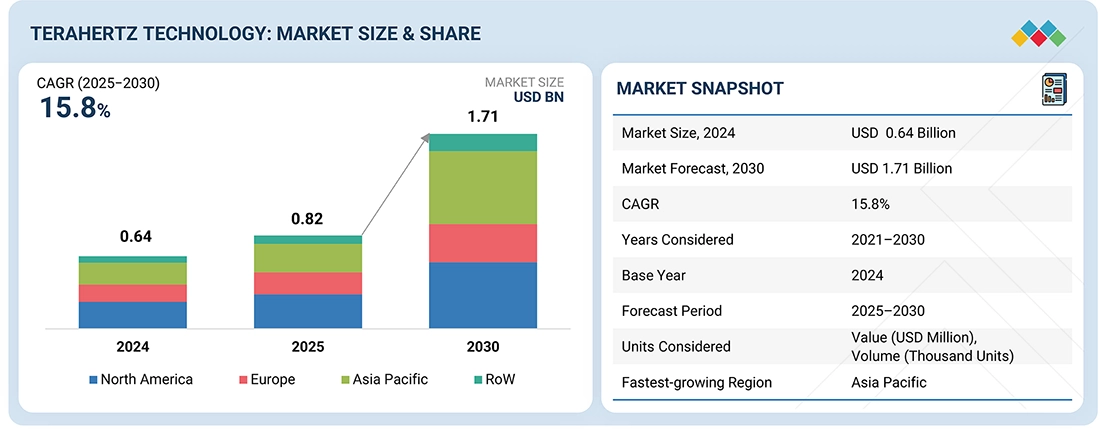
The Terahertz Technology Market is undergoing a period of rapid evolution as advancements in imaging, spectroscopy, and communication unlock new industrial, scientific, and commercial applications. Positioned between microwave and infrared frequencies, terahertz waves offer unique properties such as non-ionizing penetration, material-specific spectral signatures, and ultra-fast data transmission potential. These features make terahertz systems increasingly valuable across sectors including healthcare, semiconductor manufacturing, aerospace, defense, telecommunications, and material science. As technological refinements reduce cost and complexity, the market is moving steadily toward broader adoption and commercial maturity.
Download PDF Brochure @ https://www.marketsandmarkets.com/pdfdownloadNew.asp?id=71182197
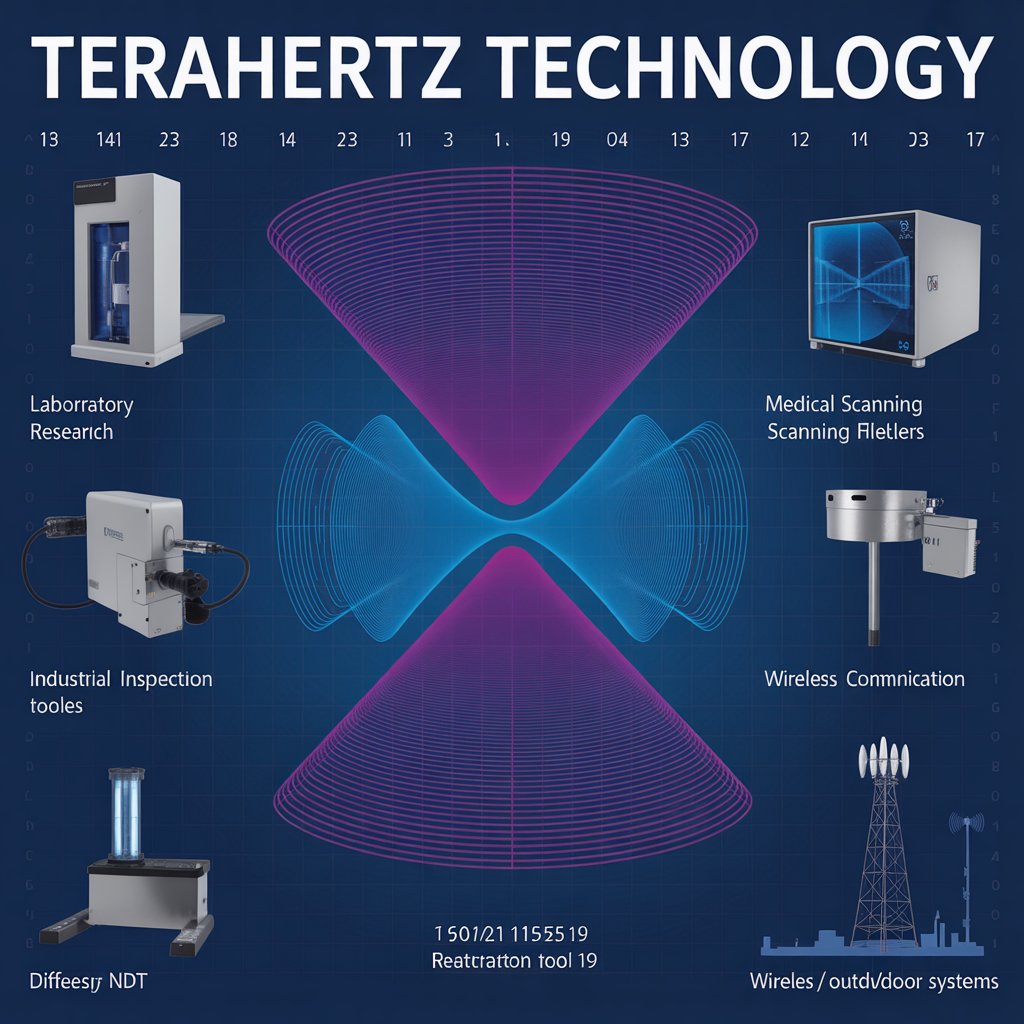
Terahertz imaging is one of the most dynamic segments, driven by its non-invasive and non-destructive capabilities that reveal hidden features without damaging samples. Recent developments focus on enhancing resolution, improving signal-to-noise ratios, and increasing imaging speed to support real-time analysis. Breakthroughs in terahertz camera sensors, time-domain imaging platforms, and compact solid-state THz sources are enabling more precise inspection of semiconductor wafers, detection of defects in composite materials, and security screening in transportation hubs. Industries such as aerospace and automotive are deploying terahertz imaging to evaluate structural integrity, while the medical field is exploring its potential for early disease diagnosis by differentiating tissue types based on THz absorption characteristics. These advancements highlight the growing shift from research-centric use to full-scale industrial integration.
Spectroscopy remains another cornerstone of terahertz innovation, with significant progress in both instrumentation and data analytics. THz spectroscopy is increasingly relied upon to analyze molecular structures, detect impurities, and characterize chemical compositions. Recent developments include high-resolution spectrometers, broadband THz sources, and advanced Fourier-transform algorithms that enhance accuracy and speed. Pharmaceutical companies use terahertz spectroscopy to monitor drug formulations, assess crystallinity, and ensure batch consistency. In materials science, THz spectroscopy provides insights into dielectric properties, carrier mobility, and conductivity of advanced materials such as graphene, silicon carbide, and next-generation semiconductors. The integration of artificial intelligence and machine learning into THz analysis is accelerating interpretation, enabling automated detection of spectral patterns and expanding the technology’s usefulness in large-scale industrial environments.
Communication is emerging as one of the most promising frontiers for terahertz technology, particularly as global demand for high-speed, low-latency data transmission intensifies. Terahertz frequencies offer the potential to support ultra-fast wireless communication systems, achieving data rates far beyond what current 5G networks can deliver. This positions THz waves as a foundational element of future 6G architectures. Key developments include advancements in THz transceivers, beamforming technologies, and metamaterial-based antennas designed to overcome challenges related to attenuation and limited propagation range. Collaboration between telecom operators, semiconductor manufacturers, and research institutions is accelerating the development of THz-enabled communication modules suitable for high-density, short-range networks. These innovations support emerging applications such as holographic communication, autonomous systems coordination, and high-bandwidth data transfer for smart factories.
Inquiry Before Buying @ https://www.marketsandmarkets.com/enquiry_Before_BuyingNew.asp?id=71182197
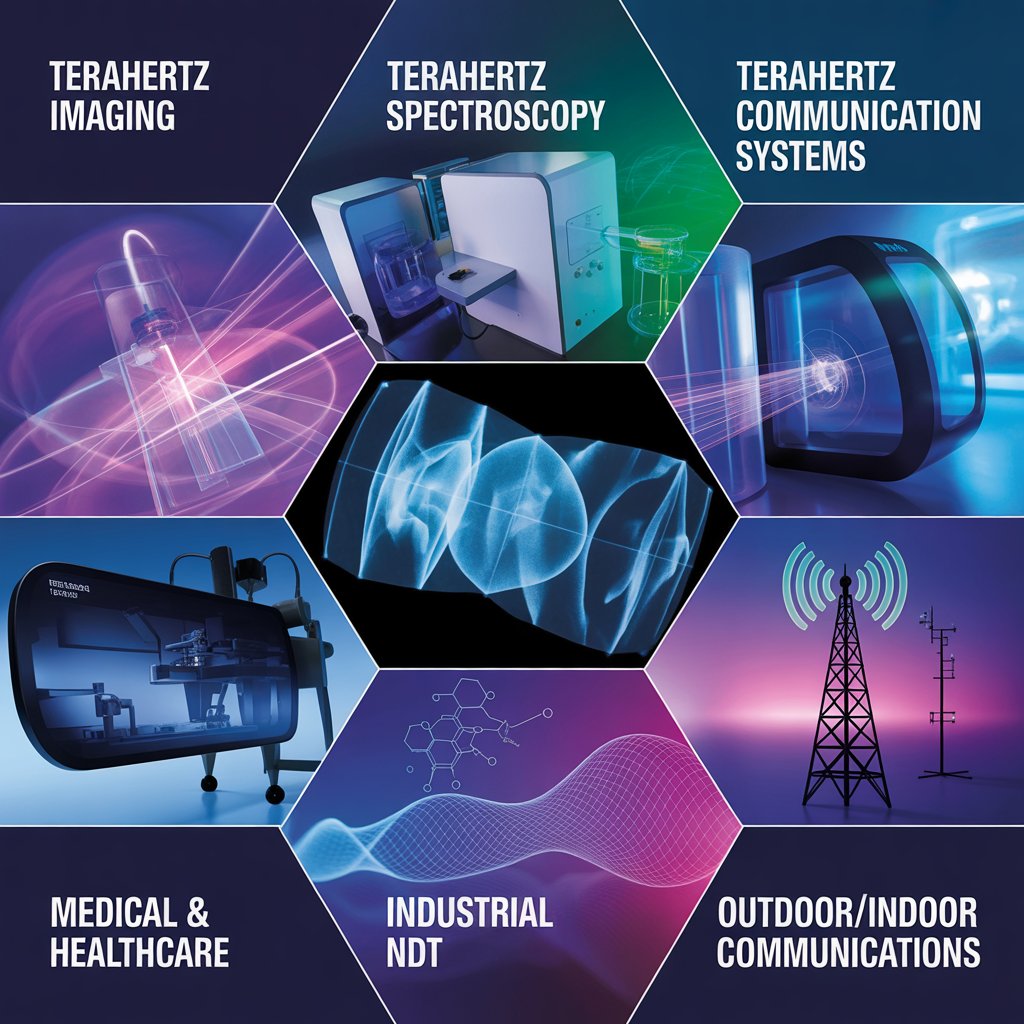
Across all three domains—imaging, spectroscopy, and communication—miniaturization and integration are becoming critical focus areas. Historically, terahertz systems were bulky and expensive, limiting adoption. However, breakthroughs in semiconductor-based THz emitters, photonic-integrated circuits, and CMOS-compatible devices are enabling the production of compact, energy-efficient, and affordable THz solutions. These advancements are driving a transition from laboratory settings to mainstream commercial applications, particularly in sectors requiring precise, real-time monitoring and high-resolution analysis.
Industry players are also investing heavily in software-driven advancements to complement hardware innovation. Real-time image reconstruction algorithms, AI-enhanced signal processing, and cloud-connected analytics platforms are enhancing the performance and usability of THz equipment. This software-centric shift is fostering more intuitive user experiences, enabling automated defect detection, and improving the accuracy of spectroscopic analysis. As industries increasingly adopt automated and intelligent workflows, the integration of terahertz systems into digital ecosystems is becoming a key driver of market growth.
Despite strong momentum, the market still faces several challenges. Signal attenuation in atmospheric environments, limited propagation distance, and the high cost of advanced THz components remain barriers to widespread adoption, particularly in long-range communication applications. However, ongoing research aimed at improving THz amplifiers, developing low-loss materials, and optimizing waveguides is expected to gradually mitigate these limitations. Governments and academic institutions are also playing key roles by funding research programs and establishing standards that support commercialization.
View detailed Table of Content here – https://www.marketsandmarkets.com/Market-Reports/terahertz-technology-market-71182197.html
 The growing convergence of industry demand, technological innovation, and strategic investment underscores a promising future for the terahertz technology market. As imaging systems become more precise, spectroscopic tools more analytical, and communication technologies faster, terahertz solutions will continue to expand their influence across high-tech industries. With continuous improvements in hardware, software, and system integration, the market is set to enter a new phase of accelerated growth, transforming scientific research, manufacturing processes, and next-generation communication networks.