
The security screening market plays a crucial role in ensuring safety across transportation hubs, government facilities, commercial spaces, and critical infrastructure. With rising global security concerns, increasing passenger traffic, and stricter regulatory requirements, the demand for advanced screening technologies continues to grow.
Security screening systems are designed to detect prohibited items, prevent threats, and enhance public safety. These systems are widely deployed in airports, border checkpoints, railway stations, stadiums, and corporate buildings. The market is segmented by system type, each offering unique capabilities and applications to address evolving security challenges.
X-ray Body Scanners
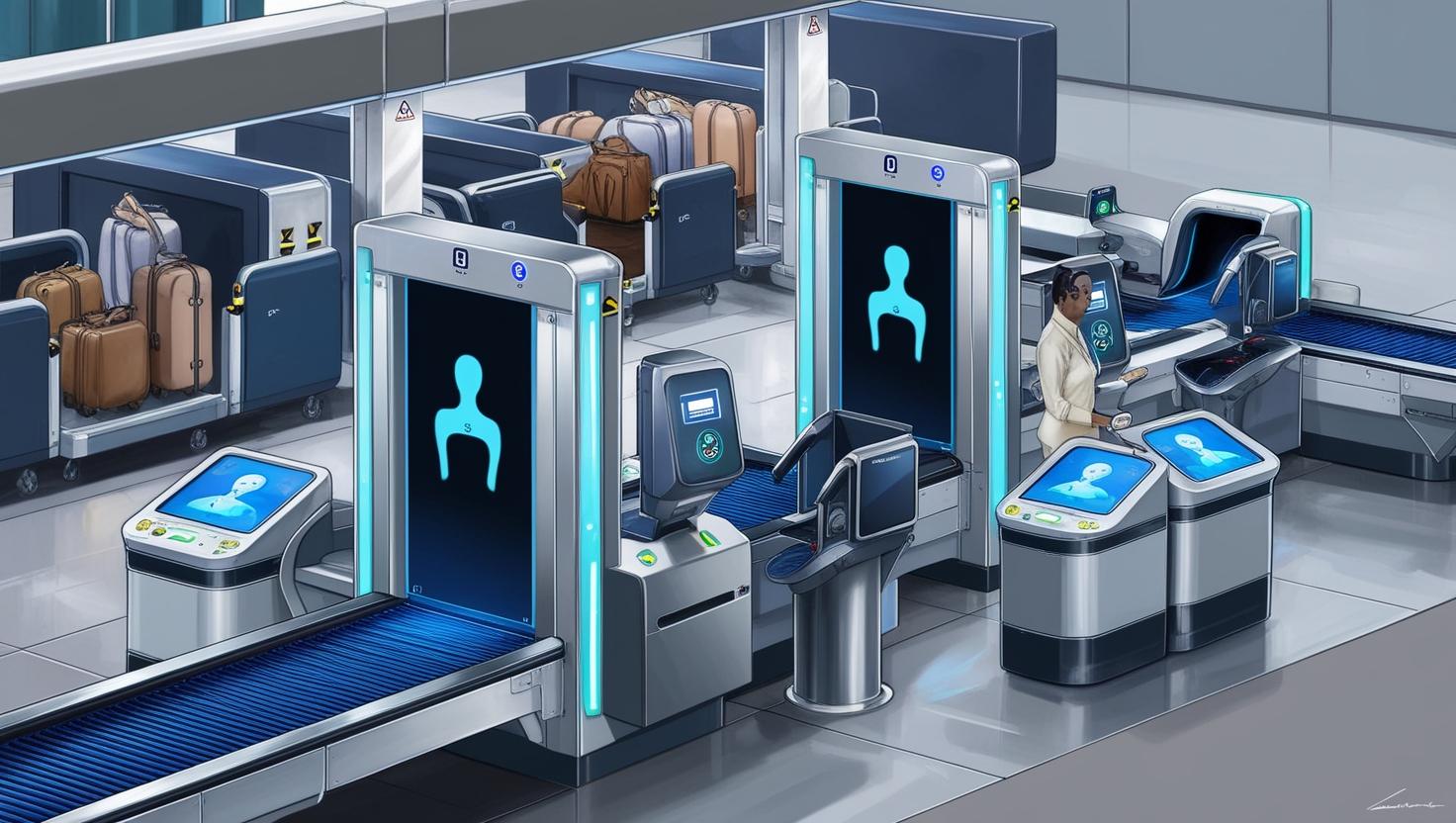
X-ray body scanners are widely used for detecting concealed weapons, explosives, and contraband on individuals. These systems are commonly deployed at airports, government buildings, and high-security facilities.
They use low-dose X-ray technology to create detailed images of a person’s body, allowing security personnel to identify hidden objects without physical contact. Modern scanners incorporate advanced imaging algorithms and AI to improve detection accuracy while ensuring privacy and compliance with regulations.
The growing need for efficient and non-invasive screening methods is driving the adoption of X-ray body scanners globally.
X-ray Baggage Scanners
X-ray baggage scanners are one of the most essential components of security infrastructure, especially in transportation hubs like airports and train stations. These systems are used to inspect luggage, parcels, and cargo for prohibited items.
They operate by passing X-rays through baggage and generating images based on the density of materials inside. Security personnel can quickly identify suspicious objects such as weapons, explosives, or hazardous materials.
With increasing air travel and cargo movement, demand for high-speed and high-resolution baggage scanners is rising. Integration with AI and automated threat detection systems is further enhancing their efficiency.
Download PDF Brochure @ https://www.marketsandmarkets.com/pdfdownloadNew.asp?id=264685413
X-ray Handheld Scanners
X-ray handheld scanners are portable devices used for on-the-spot inspections in security-sensitive environments. They are particularly useful for inspecting vehicles, packages, and confined spaces where larger systems cannot be used.
These devices provide flexibility and mobility, allowing security personnel to conduct rapid checks in dynamic environments such as border security and military operations.
Advancements in battery technology and imaging capabilities have improved the effectiveness of handheld scanners, making them a valuable tool in modern security operations.
Cabinet X-ray Systems
Cabinet X-ray systems are compact, enclosed devices used to inspect small items such as mail, packages, and electronics. These systems are commonly used in government offices, corporate facilities, and research labs.
They provide high-resolution imaging, enabling detailed analysis of internal structures and materials. Cabinet X-ray systems are especially useful for detecting suspicious objects in controlled environments.
Their compact design and ease of use make them ideal for organizations that require consistent and reliable screening of smaller items.
Electromagnetic Metal Detection Systems
Electromagnetic metal detection systems are widely used to detect metallic objects concealed on individuals or within luggage. These systems are commonly deployed at security checkpoints, stadium entrances, and public events.
They operate by generating electromagnetic fields that detect disruptions caused by metallic objects. Metal detectors are highly effective for identifying weapons such as knives and firearms.
These systems are cost-effective, easy to install, and provide real-time alerts, making them a fundamental component of security screening infrastructure.
Biometric Systems
Biometric systems are increasingly being integrated into security screening processes to enhance identity verification and access control. These systems use unique biological characteristics such as fingerprints, facial recognition, iris scans, and voice patterns.
Biometric authentication improves security by ensuring that only authorized individuals gain access to restricted areas. It also reduces the risk of identity fraud and enhances operational efficiency.
With advancements in AI and machine learning, biometric systems are becoming more accurate and reliable, driving their adoption across various sectors.
Spectrometry and Spectroscopy Systems
Spectrometry and spectroscopy systems are advanced technologies used to analyze the composition of substances. These systems are capable of detecting explosives, narcotics, and hazardous chemicals based on their molecular signatures.
They are widely used in airport security, defense applications, and scientific research. These systems provide highly accurate and non-invasive detection capabilities, making them essential for identifying chemical threats.
As security threats become more sophisticated, the demand for advanced detection technologies like spectrometry and spectroscopy is increasing.
Market Drivers
Several factors are driving the growth of the security screening market:
- Rising global security threats such as terrorism and illegal trafficking
- Increasing passenger traffic in airports and transportation hubs
- Stringent government regulations and compliance requirements
- Technological advancements in imaging, AI, and automation
- Growth in infrastructure development and smart city projects
These drivers are encouraging governments and private organizations to invest in advanced screening technologies.
Market Challenges
Despite strong growth prospects, the security screening market faces several challenges:
- High installation and maintenance costs of advanced systems
- Privacy concerns associated with imaging technologies
- False positives and detection errors
- Complex integration with existing systems
- Operational delays in high-traffic environments
- Addressing these challenges is essential for ensuring efficient and effective security screening operations.
Emerging Trends
AI and Machine Learning Integration
Artificial intelligence is transforming security screening by enabling automated threat detection, reducing human error, and improving accuracy. AI-powered systems can analyze images and data in real time to identify potential threats more efficiently.
Contactless and Non-Invasive Screening
There is a growing demand for non-invasive and contactless screening technologies, especially in the post-pandemic world. These systems ensure safety while minimizing physical interaction.
Automation and Smart Security Systems
Automation is enhancing the speed and efficiency of security screening processes. Integrated systems can automatically detect threats and trigger alerts, reducing the need for manual intervention.
Enhanced Data Analytics
Advanced analytics tools are helping security agencies analyze patterns, predict risks, and improve decision-making. This data-driven approach is becoming increasingly important in modern security operations.
Future Outlook
The future of the security screening market looks promising, driven by continuous technological advancements and increasing global security concerns. The adoption of AI, IoT, and advanced imaging technologies will further enhance the capabilities of screening systems.
Governments and private organizations will continue to invest in advanced security infrastructure to ensure safety and compliance. As threats become more complex, the need for intelligent and adaptive screening solutions will continue to grow.
The security screening market by system type is evolving rapidly, with a wide range of technologies addressing diverse security needs. From X-ray scanners and metal detectors to biometric systems and spectrometry solutions, each system plays a critical role in enhancing safety and preventing threats.
As technology continues to advance, security screening systems will become more intelligent, efficient, and integrated. The future of security lies in combining innovation with robust safety measures to create secure environments across the globe.
About MarketsandMarkets™
MarketsandMarkets™ has been recognized as one of America’s Best Management Consulting Firms by Forbes, as per their recent report.
MarketsandMarkets™ is a blue ocean alternative in growth consulting and program management, leveraging a man-machine offering to drive supernormal growth for progressive organizations in the B2B space. With the widest lens on emerging technologies, we are proficient in co-creating supernormal growth for clients across the globe.
Today, 80% of Fortune 2000 companies rely on MarketsandMarkets, and 90 of the top 100 companies in each sector trust us to accelerate their revenue growth. With a global clientele of over 13,000 organizations, we help businesses thrive in a disruptive ecosystem.
The B2B economy is witnessing the emergence of $25 trillion in new revenue streams that are replacing existing ones within this decade. We work with clients on growth programs, helping them monetize this $25 trillion opportunity through our service lines – TAM Expansion, Go-to-Market (GTM) Strategy to Execution, Market Share Gain, Account Enablement, and Thought Leadership Marketing.
Built on the ‘GIVE Growth’ principle, we collaborate with several Forbes Global 2000 B2B companies to keep them future-ready. Our insights and strategies are powered by industry experts, cutting-edge AI, and our Market Intelligence Cloud, KnowledgeStore™, which integrates research and provides ecosystem-wide visibility into revenue shifts.
To find out more, visit www.MarketsandMarkets™.com or follow us on Twitter , LinkedIn and Facebook .
Contact:
Mr. Rohan Salgarkar
MarketsandMarkets™ INC.
630 Dundee Road
Suite 430
Northbrook, IL 60062
USA : 1-888-600-6441