
The North America LiDAR (Light Detection and Ranging) market is experiencing rapid growth as autonomous vehicles, smart mobility solutions, and industrial automation continue to expand across the region. LiDAR technology provides high-resolution 3D mapping and real-time object detection, making it a critical enabler for advanced driver-assistance systems (ADAS), self-driving cars, drones, robotics, and smart city infrastructure. With increasing investments in autonomous transportation and the adoption of next-generation mobility solutions, LiDAR is poised to become a cornerstone technology in North America’s evolving automotive and technology landscape.
The adoption of LiDAR in North America is driven not only by the automotive sector but also by government initiatives supporting smart cities, precision mapping, and UAV operations. Rapid technological advancements, combined with decreasing sensor costs, are making LiDAR systems more accessible for a wide range of applications.
Automotive and Autonomous Vehicle Applications
Autonomous vehicles remain the largest growth driver for the North America LiDAR market. LiDAR sensors provide vehicles with the ability to detect obstacles, pedestrians, and road conditions with precision, even in low-light or adverse weather conditions. As OEMs and technology companies race to bring fully autonomous vehicles to market, demand for compact, high-resolution, and cost-effective LiDAR sensors has intensified.
Advanced Driver Assistance Systems (ADAS) are also fueling LiDAR adoption in North America. Features such as adaptive cruise control, lane-keeping assistance, automatic emergency braking, and parking assistance rely on high-accuracy sensing solutions. As regulatory bodies encourage the deployment of safer vehicles, LiDAR has emerged as a key component ensuring real-time situational awareness.
Download PDF Brochure @ https://www.marketsandmarkets.com/pdfdownloadNew.asp?id=2472587
Industrial and UAV Applications
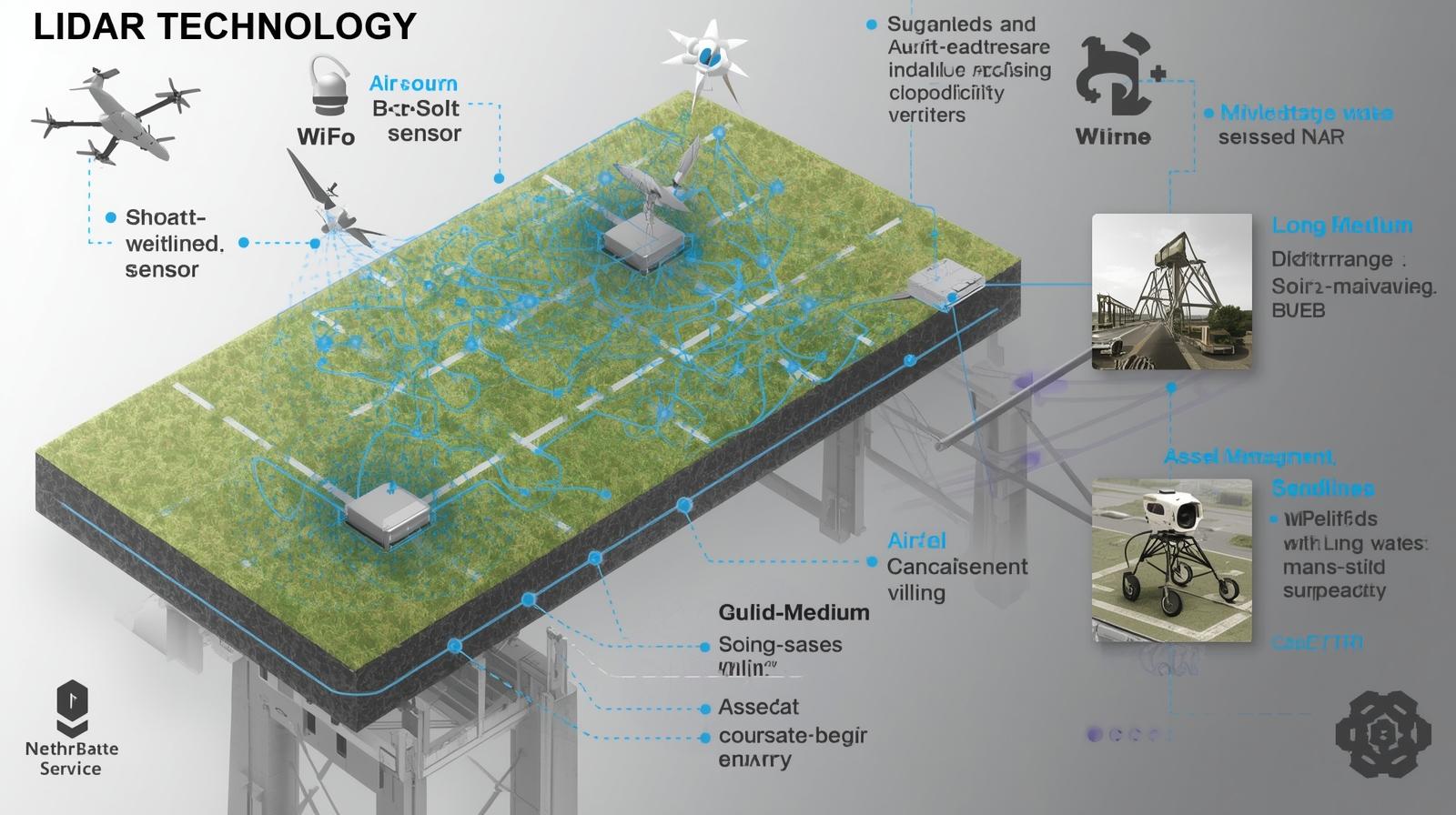
Beyond automotive applications, LiDAR is increasingly used in industrial automation, robotics, and unmanned aerial vehicles (UAVs). In manufacturing and warehouse automation, LiDAR enables precise navigation, obstacle avoidance, and efficient workflow management. For UAVs and drones, LiDAR is essential for topographical mapping, environmental monitoring, and surveying large areas with high accuracy. These applications are particularly relevant in North America, where construction, mining, and agricultural industries are leveraging LiDAR for operational efficiency.
Smart city projects are another significant driver of the market. LiDAR is used for traffic management, urban planning, and infrastructure monitoring, allowing city planners to optimize road networks and monitor environmental changes in real-time. Government investment in digital infrastructure and intelligent transportation systems is expected to further propel LiDAR adoption in urban environments.
Technological Advancements
The North America LiDAR market is being shaped by rapid technological innovation. Traditional mechanical LiDAR sensors, while highly accurate, are bulky and expensive. Solid-state and flash LiDAR technologies are emerging as cost-effective alternatives, offering compact design, higher reliability, and easier integration with automotive and industrial systems. Companies are also focusing on increasing sensor range, resolution, and refresh rate to meet the growing demands of autonomous vehicles and advanced robotics.
Integration of LiDAR with AI and machine learning algorithms is enhancing real-time object recognition, predictive analysis, and path planning capabilities. Wireless and modular LiDAR systems are also gaining traction, providing flexibility in vehicle design and industrial applications.
Regional Market Dynamics
North America, particularly the United States and Canada, dominates the global LiDAR market due to advanced automotive R&D, government support for autonomous mobility, and a strong presence of LiDAR technology manufacturers. Silicon Valley and other tech hubs are fostering innovation, while leading automakers and mobility startups are driving adoption across electric and autonomous vehicle platforms.
Key regulatory support and partnerships between OEMs, LiDAR providers, and tech companies are accelerating market growth. Additionally, regional initiatives focused on smart infrastructure and autonomous transit corridors are opening new avenues for LiDAR deployment beyond automotive applications.
Challenges and Opportunities
Despite its rapid growth, the LiDAR market faces challenges, including high sensor costs, integration complexity, and sensitivity to environmental conditions like rain, fog, and dust. Companies are addressing these issues through R&D investments aimed at developing more affordable, durable, and versatile solutions.
Opportunities for growth lie in expanding applications such as robotics, UAVs, industrial automation, and smart city infrastructure. The shift toward electric and autonomous mobility presents significant potential for LiDAR-enabled vehicles, particularly as cost-effective, solid-state sensors become more widely adopted. Additionally, collaboration between technology companies, automakers, and urban planners can accelerate deployment in smart city initiatives and large-scale mapping projects.
Future Outlook
The North America LiDAR market is expected to witness sustained growth over the next decade. Increasing EV adoption, autonomous vehicle development, smart city initiatives, and industrial automation are creating a diverse and expanding market for LiDAR technologies. Technological advancements in solid-state sensors, AI integration, and high-resolution mapping are likely to make LiDAR systems more affordable and efficient, further driving adoption across sectors.
As North America continues to lead in autonomous mobility and smart infrastructure, LiDAR will remain a key enabling technology, shaping the future of transportation, industrial operations, and urban planning. Its role in enhancing safety, efficiency, and intelligence in mobility and automation positions LiDAR at the forefront of the region’s technological transformation.
Frequently Asked Questions (FAQ): North America LiDAR Market
What is LiDAR and how does it work?
LiDAR (Light Detection and Ranging) is a remote sensing technology that uses laser pulses to measure distances between the sensor and objects. By calculating the time it takes for the light to return, LiDAR generates high-resolution 3D maps and real-time environmental data. This capability is crucial for applications such as autonomous vehicles, UAVs, robotics, and smart city infrastructure.
What are the main applications of LiDAR in North America?
The key applications include autonomous and electric vehicles, Advanced Driver Assistance Systems (ADAS), UAVs and drones, robotics, industrial automation, and smart city projects. In automotive use, LiDAR helps vehicles detect obstacles, pedestrians, and road conditions with high precision. For industrial and UAV applications, it enables mapping, surveying, and navigation in complex environments.
What are the different types of LiDAR technologies?
LiDAR technologies include mechanical LiDAR, solid-state LiDAR, and flash LiDAR. Mechanical LiDAR uses rotating components to scan the environment and offers high accuracy but is bulky and expensive. Solid-state LiDAR has no moving parts, making it compact and more cost-effective. Flash LiDAR captures a wide field of view instantly, suitable for smaller vehicles or drones.