
The Non-Destructive Testing (NDT) Equipment Market trends continues to evolve as industries demand higher precision, safety, and efficiency in inspection and quality assurance processes. By enabling flaw detection, leak identification, and structural assessment without damaging the assets under inspection, NDT technologies are becoming indispensable across sectors such as automotive, aerospace, oil & gas, power generation, and manufacturing.
Key Non-Destructive Testing Equipment Market Trends
1. Ultrasonic Testing (UT)
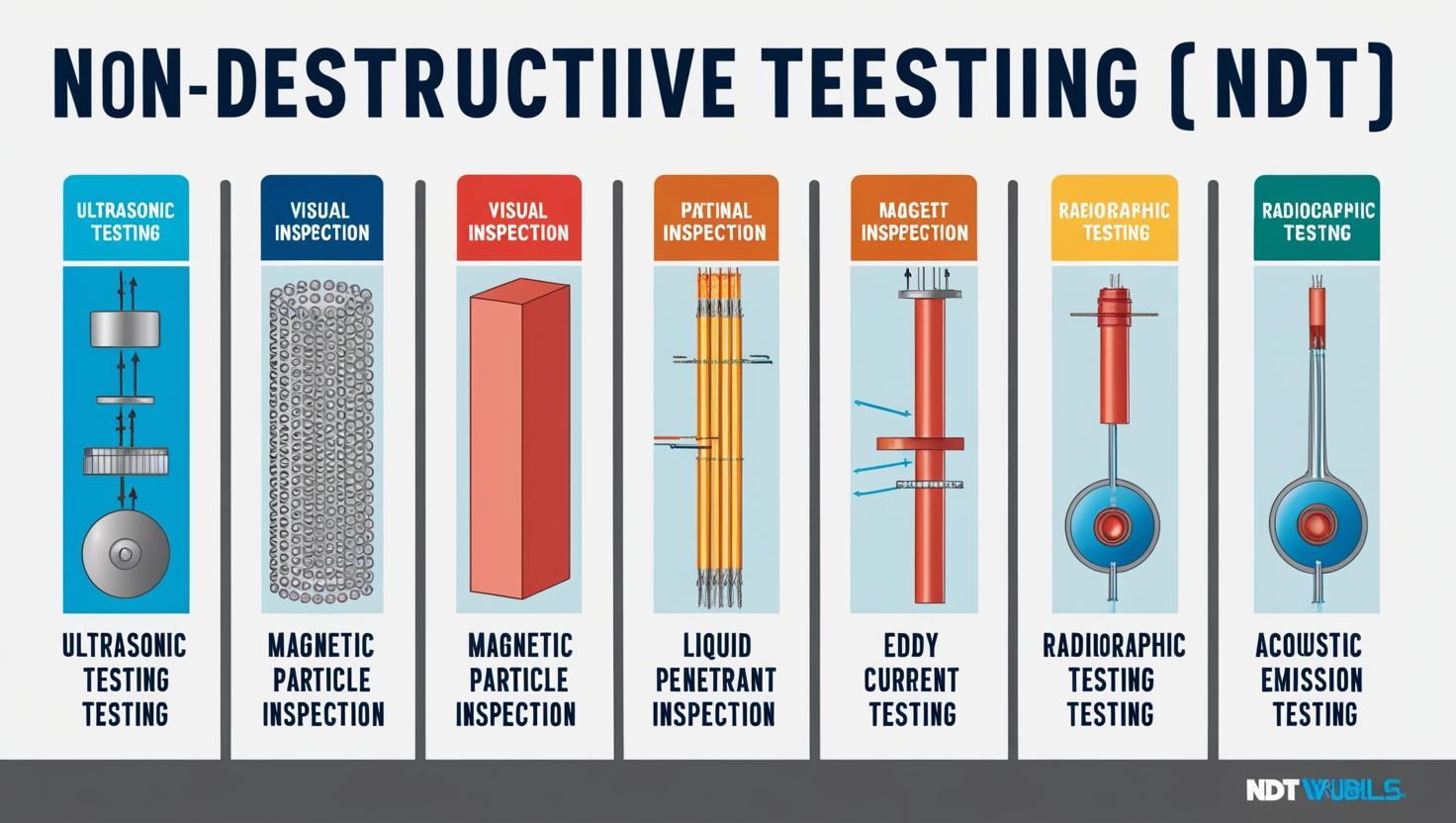
Ultrasonic Testing remains one of the most widely adopted NDT techniques. It uses high-frequency sound waves to detect internal flaws, measure thickness, and assess material properties. Advancements in portable ultrasonic devices and phased array technology are enhancing detection accuracy, making UT a critical driver in the Non-Destructive Testing Equipment Market Trends.
2. Visual Testing (VT)
Visual Testing, the simplest yet most fundamental NDT method, continues to grow with the integration of drones, remote cameras, and augmented reality devices. VT allows rapid inspection of large structures such as pipelines, bridges, and industrial equipment, contributing to operational efficiency and safety compliance.
3. Radiographic Testing (RT)
Radiographic Testing employs X-rays and gamma rays to identify internal defects in materials. Recent innovations in digital radiography and computed radiography have improved image quality, reduced inspection time, and enhanced portability. This technology is a major factor shaping Non-Destructive Testing Equipment Market Trends in sectors like aerospace and power generation.
Download PDF Brochure @ https://www.marketsandmarkets.com/pdfdownloadNew.asp?id=882
4. Acoustic Emission Testing (AET)
Acoustic Emission Testing detects transient elastic waves generated by material deformation or crack propagation. It is increasingly applied in monitoring pressure vessels, pipelines, and critical infrastructure in real time. AET’s non-invasive approach aligns with the rising demand for predictive maintenance, highlighting a key trend in the NDT market.
Industry Applications Driving Market Growth
-
Automotive: NDT ensures component integrity, detects micro-cracks, and improves vehicle safety standards.
-
Oil & Gas: Flaw and leak detection in pipelines, refineries, and storage tanks is critical to prevent environmental hazards.
-
Aerospace: Aircraft maintenance relies heavily on NDT to detect fatigue cracks, corrosion, and structural defects.
-
Power & Energy: From nuclear plants to wind turbines, NDT helps monitor structural health and prevent operational failures.
-
Manufacturing: Continuous quality assurance in production lines ensures defect-free components, reducing rework and operational costs.
These applications underscore the growing significance of Non-Destructive Testing Equipment Market Trends in optimizing safety, reducing downtime, and improving operational efficiency across multiple industries.
Emerging Trends in the NDT Equipment Market
-
Portable and Handheld Devices: Increasing adoption of compact, battery-operated NDT equipment for field inspections.
-
Digitalization and Data Analytics: Integration of AI and machine learning for defect analysis, predictive maintenance, and enhanced decision-making.
-
Automated Inspection Systems: Robotics and drones are revolutionizing inspections in hazardous or hard-to-reach locations.
-
Multi-Method NDT Platforms: Hybrid systems combining UT, RT, VT, and AET enable comprehensive assessments in a single workflow.
-
Sustainability Focus: NDT minimizes material waste and avoids destructive testing, aligning with green manufacturing practices.
The Non-Destructive Testing Equipment Market Trends clearly indicate a shift toward smarter, faster, and more precise inspection technologies. With applications spanning automotive, aerospace, oil & gas, power, and manufacturing, NDT equipment is central to maintaining safety, efficiency, and reliability in industrial operations. As digital tools, AI analytics, and automated inspection platforms continue to evolve, the market is poised for significant growth, driving innovation and operational excellence across global industries.
FAQs:
1. What is the Non-Destructive Testing (NDT) Equipment Market?
The NDT Equipment Market includes technologies and devices that inspect, evaluate, and monitor materials and structures without causing damage. Key methods include Ultrasonic Testing (UT), Visual Testing (VT), Radiographic Testing (RT), and Acoustic Emission Testing (AET). The market spans industries like aerospace, automotive, oil & gas, power, and manufacturing.
2. What are the key drivers for market growth?
-
Rising demand for safety and quality assurance in critical industries.
-
Expansion of industrial automation and predictive maintenance.
-
Growth in sectors such as aerospace, automotive, energy, and manufacturing.
-
Advancements in digital NDT, AI-enabled analytics, and portable equipment.
3. Which NDT methods offer the highest growth potential?
-
Ultrasonic Testing (UT): Strong adoption in manufacturing and aerospace.
-
Radiographic Testing (RT): Growing with digital radiography innovations.
-
Acoustic Emission Testing (AET): Rising in pipeline and pressure vessel monitoring.
-
Visual Testing (VT): Enhanced with drones, AR, and remote inspection technologies.
4. Which industries should investors focus on?
-
Aerospace: High-value components require precise inspections.
-
Oil & Gas: Critical for pipeline integrity, leak detection, and safety compliance.
-
Automotive: Ensures component reliability and safety in vehicles.
-
Power Generation: Monitoring structural health in nuclear, thermal, and renewable energy plants.
-
Manufacturing: Continuous quality control in production lines.
5. What are the emerging trends shaping investment opportunities?
-
Digitalization & AI: Analytics platforms and predictive maintenance solutions.
-
Portable and handheld devices: Enabling field inspections and faster deployments.
-
Automated inspections: Robotics, drones, and hybrid NDT systems for efficiency.
-
Sustainability: Reduced material waste through non-destructive evaluation methods.
6. What are the risks and challenges for investors?
-
High equipment costs: Initial investment for advanced NDT systems can be significant.
-
Regulatory compliance: Standards vary across industries and regions.
-
Technology integration: Interoperability between devices and platforms can be complex.
-
Market fragmentation: Many small players and specialized technologies exist.