
The Microdisplay Market Growth is accelerating rapidly as demand for augmented reality (AR) and virtual reality (VR) technologies continues to rise across consumer, industrial, and defense applications. Microdisplays, known for their compact size and high-resolution output, are becoming essential components in next-generation visual systems, enabling immersive and high-performance display experiences.
The global microdisplay market is expected to grow from USD 1.65 billion in 2025 to USD 5.33 billion by 2030, growing at a CAGR of 26.4%.
The microdisplay market is primarily driven by the increasing adoption of near-to-eye devices in defense and enterprise applications. High-performance microdisplays provide compact, lightweight, and high-resolution visual solutions, enabling enhanced situational awareness, training simulations, and mission-critical operations. These displays are particularly valuable for helmet-mounted systems, heads-up displays (HUDs), and wearable AR devices, where clarity, low latency, and energy efficiency are essential. Unlike conventional displays, microdisplays can deliver immersive visuals in a small form factor, improving user mobility and operational effectiveness. With defense agencies and industrial enterprises worldwide investing in advanced visualization technologies, microdisplays are emerging as a critical enabler for next-generation immersive and interactive systems.
Rising Demand for AR and VR Driving Microdisplay Market Growth
One of the key drivers of Microdisplay Market Growth is the expanding adoption of AR and VR devices. These technologies require ultra-compact, high-resolution displays to deliver realistic and immersive visual experiences.
Applications such as:
- AR smart glasses
- VR headsets
- Mixed reality (MR) devices
are heavily dependent on advanced microdisplay technologies. As industries increasingly integrate AR and VR into training, gaming, healthcare, and retail, Microdisplay Market Growth continues to gain momentum.
Technological Advancements Supporting Market Expansion
Continuous advancements in display technologies are fueling Microdisplay Market Growth. Innovations in OLED, MicroLED, and Liquid Crystal on Silicon (LCoS) are improving brightness, contrast, and energy efficiency.
Key technological benefits include:
- High pixel density for sharper images
- Low power consumption
- Enhanced brightness for outdoor applications
- Improved color accuracy
These improvements make microdisplays highly suitable for AR/VR headsets and other compact display systems, further driving Microdisplay Market Growth.
Download PDF Brochure @ https://www.marketsandmarkets.com/pdfdownloadNew.asp?id=430
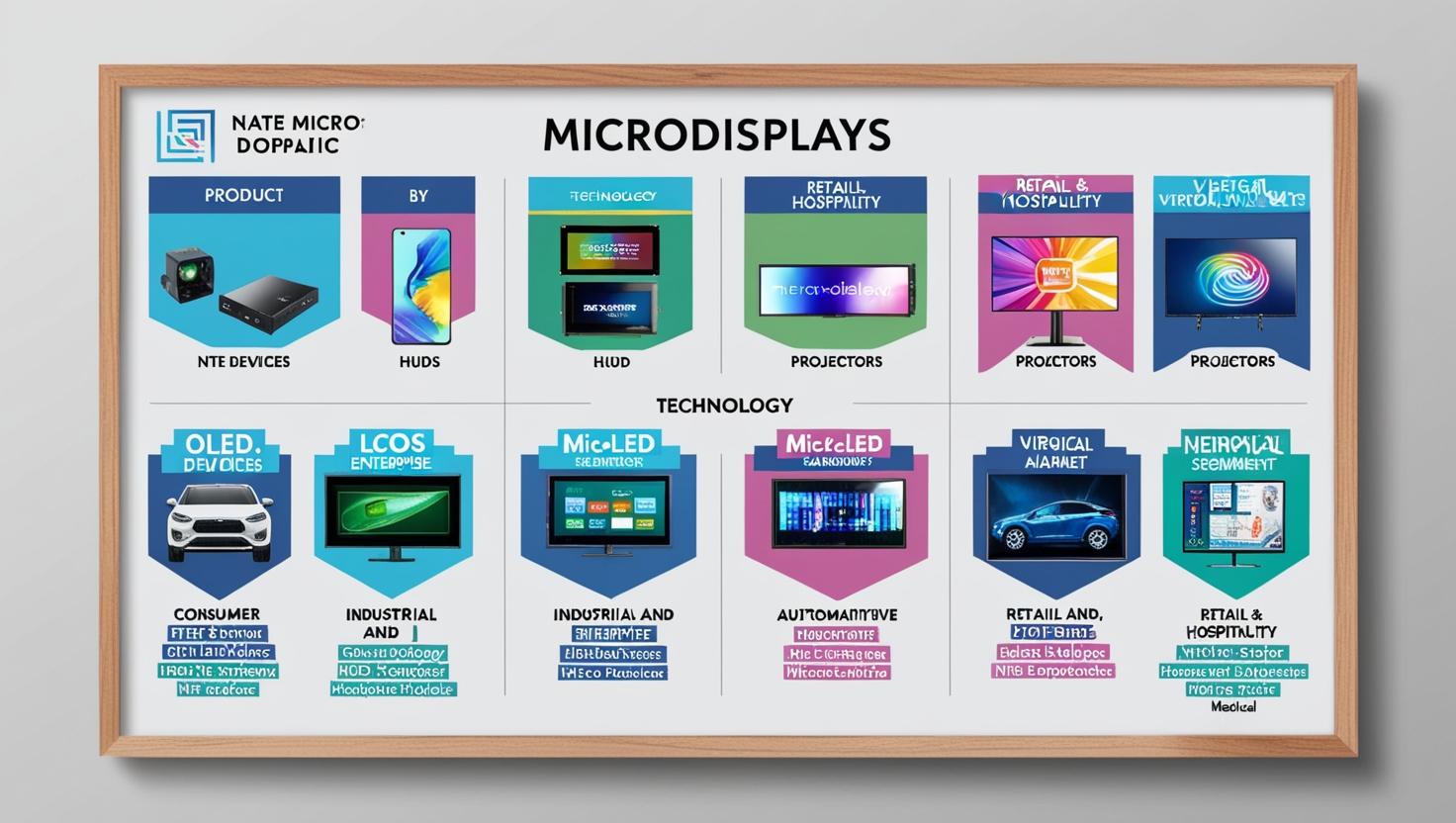
Increasing Adoption in Consumer Electronics
The consumer electronics sector is a major contributor to Microdisplay Market Growth. The rising demand for wearable devices, smart glasses, and portable gaming systems is increasing the need for compact and high-performance displays.
Key factors influencing adoption:
- Growth of immersive gaming and entertainment
- Rising popularity of wearable tech
- Increasing demand for lightweight, portable devices
As consumers seek more interactive and immersive experiences, Microdisplay Market Growth is expected to expand significantly.
Defense and Aerospace Applications Boost Growth
The defense and aerospace sectors are also playing a crucial role in Microdisplay Market Growth. Microdisplays are widely used in:
- Head-up displays (HUDs) in aircraft
- Night vision goggles
- Helmet-mounted displays
These applications require high-resolution, reliable, and durable display systems, making microdisplays a critical technology. The demand for advanced visualization tools in defense systems continues to drive Microdisplay Market Growth globally.
Industrial and Automotive Applications
Beyond consumer and defense sectors, Microdisplay Market Growth is expanding into industrial and automotive applications. In the automotive industry, microdisplays are used in:
- Advanced driver-assistance systems (ADAS)
- Heads-up displays (HUDs)
- Smart dashboards
In industrial settings, they support:
- Remote monitoring systems
- Training simulations
- Visualization tools for complex operations
These diverse applications are contributing to sustained Microdisplay Market Growth across multiple sectors.
Future Outlook of Microdisplay Market Growth
The future of Microdisplay Market Growth looks promising, with strong demand expected to continue through the coming years. Key growth drivers include:
- Expansion of AR/VR ecosystems
- Advancements in MicroLED and OLED technologies
- Increasing adoption in automotive and defense sectors
- Rising investments in immersive display solutions
As industries continue to prioritize compact, high-resolution, and energy-efficient displays, Microdisplay Market Growth is set to experience significant expansion worldwide.
Frequently Asked Questions (FAQ)
1. What is driving Microdisplay Market Growth?
Microdisplay Market Growth is primarily driven by the rising demand for AR and VR technologies, along with advancements in display technologies and increasing adoption in consumer electronics.
2. Why are microdisplays important for AR and VR?
Microdisplays provide high-resolution, compact, and energy-efficient visuals, making them ideal for delivering immersive AR and VR experiences, which directly supports Microdisplay Market Growth.
3. Which technologies are used in microdisplays?
Common technologies include OLED, MicroLED, and LCoS, all of which contribute to improved performance and Microdisplay Market Growth.
4. What industries use microdisplays?
Industries such as consumer electronics, automotive, defense, aerospace, and healthcare are key contributors to Microdisplay Market Growth.
5. What is the future outlook for Microdisplay Market Growth?
The future of Microdisplay Market Growth is strong, driven by increasing adoption of AR/VR devices, technological advancements, and expanding applications across multiple industries.