
The LiDAR Market Opportunities: Unlocking Growth Across Automotive, Smart Cities, and Industrial Applications are expanding at an unprecedented pace as industries adopt precision sensing technologies to enhance automation, safety, and operational efficiency. LiDAR, or Light Detection and Ranging, uses laser pulses to measure distances and generate accurate three-dimensional representations of the environment. This capability makes it indispensable across sectors such as automotive, urban planning, and industrial automation, positioning the LiDAR Market Opportunities at the forefront of technological innovation.
Driving Innovation in Automotive
The automotive sector is a primary growth driver within the LiDAR Market Opportunities With the global push toward autonomous vehicles, Advanced Driver Assistance Systems (ADAS) rely heavily on LiDAR for precise perception and obstacle detection. LiDAR sensors enable vehicles to detect pedestrians, cyclists, road signs, and lane boundaries with high accuracy, enhancing safety and reducing accidents.
Automakers in Europe and North America are aggressively integrating LiDAR into electric vehicles (EVs) and next-generation autonomous systems. Collaborations between sensor manufacturers and automotive companies are accelerating deployment, opening new avenues in the LiDAR Market Opportunities. The sector’s emphasis on enhanced safety, regulatory compliance, and smarter mobility is expected to continue fueling market expansion.
Smart Cities: Enabling Data-Driven Urban Development
Urban planning and smart city initiatives are critical contributors to the LiDAR Market Opportunities. LiDAR provides detailed 3D mapping of urban landscapes, helping city planners optimize traffic flow, monitor environmental conditions, and manage utilities.
From managing congestion to ensuring public safety, LiDAR allows real-time decision-making that improves urban efficiency. European cities, in particular, are adopting LiDAR for digital twin projects, infrastructure monitoring, and energy optimization. The ability to integrate LiDAR with AI and IoT systems further strengthens the LiDAR Market Opportunities, making it a key enabler of smart urban ecosystems.
Download PDF Brochure @ https://www.marketsandmarkets.com/pdfdownloadNew.asp?id=1261
Industrial Automation and Infrastructure Monitoring
Industrial applications represent another significant driver in the LiDAR Market Opportunities. In manufacturing and logistics, LiDAR enables autonomous navigation for robots and automated guided vehicles (AGVs), precision quality control, and real-time monitoring of production lines.
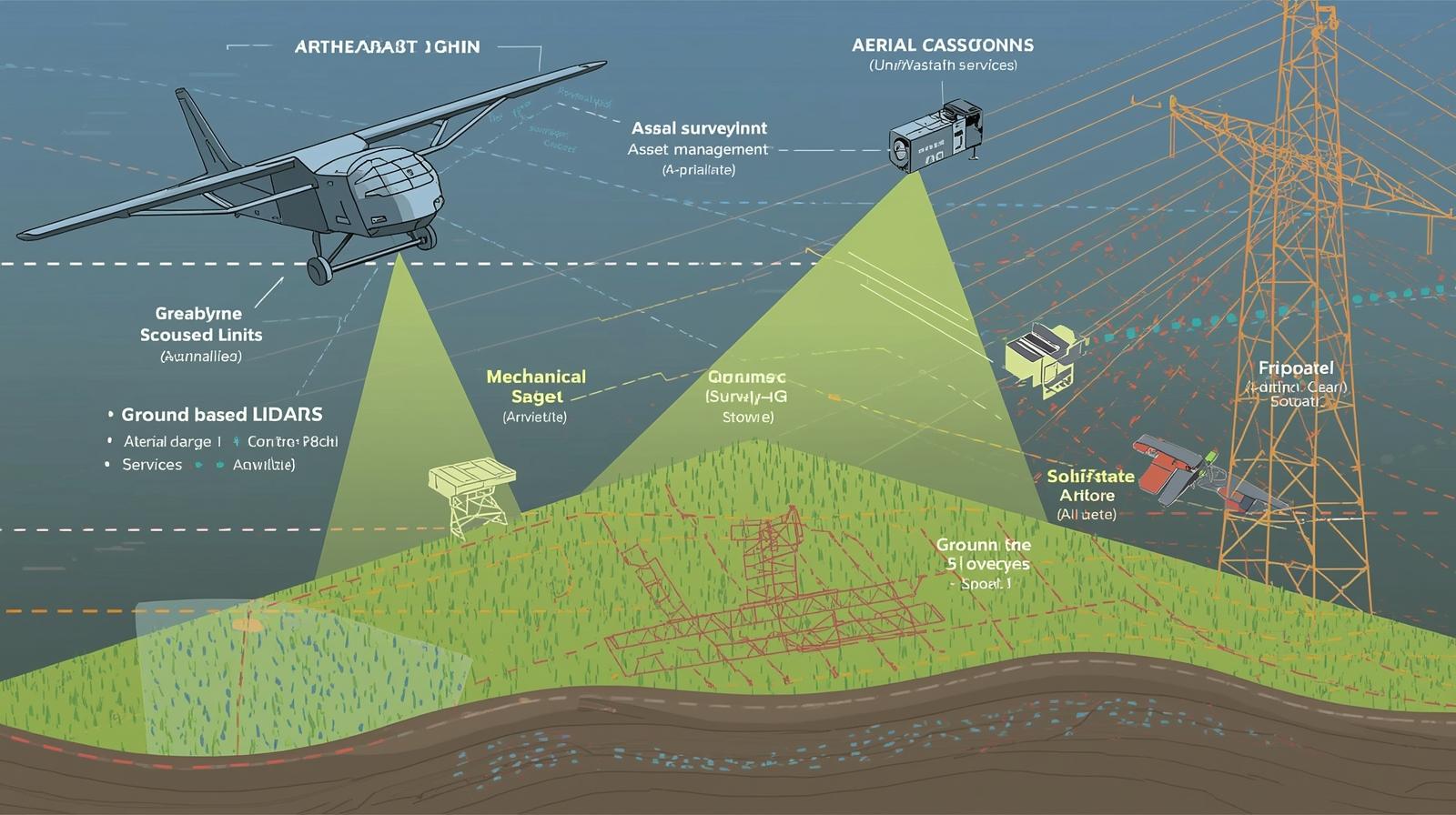
Infrastructure sectors also benefit from LiDAR for monitoring bridges, railways, pipelines, and energy facilities. High-resolution 3D scanning allows early defect detection, predictive maintenance, and reduced downtime, which directly improves safety and efficiency. As industries adopt automation and smart inspection techniques
Technological Advancements Fueling Growth
The LiDAR Market Opportunities are supported by rapid technological innovation. Solid-state LiDAR, MEMS-based systems, and smaller, cost-effective sensors are increasing adoption across industries.
Moreover, integration with artificial intelligence, machine learning, and edge computing is enabling real-time analytics and predictive capabilities. This combination allows LiDAR to not only sense but also intelligently interpret environmental data, expanding its applications beyond traditional mapping and navigation. These innovations continue to enhance the scope and scale of the LiDAR Market Opportunities
The LiDAR Market Opportunities are most prominent in Europe and North America due to strong automotive industries, smart city initiatives, and advanced research capabilities. Meanwhile, Asia-Pacific is emerging as a high-growth region, driven by urbanization, industrial expansion, and government-backed autonomous mobility programs.
Countries such as Germany, France, the UK, and Japan are investing heavily in LiDAR-enabled infrastructure, demonstrating a commitment to safety, efficiency, and technological leadership. This geographic diversity highlights the global potential of the LiDAR Market Opportunities
Future LiDAR Market Outlook
The outlook for the LiDAR Market Opportunities remains highly positive. As autonomous vehicles, smart city projects, and industrial automation continue to expand, LiDAR adoption is expected to grow at a robust pace. Innovations such as AI-powered perception systems, cloud-edge integration, and reduced sensor costs will further accelerate market penetration.
The convergence of technological advancements, regulatory support, and sector-specific demand positions the LiDAR Market Opportunities as a transformative force in the years ahead.
The LiDAR Market Opportunities: Unlocking Growth Across Automotive, Smart Cities, and Industrial Applications highlights the technology’s potential to revolutionize multiple sectors. From enhancing road safety and enabling autonomous driving to supporting smart city planning and industrial automation, LiDAR is a pivotal tool for digital transformation. As industries and governments continue to invest in connected and intelligent systems, these market opportunities are set to expand, shaping the future of mobility, urban development, and industrial innovation.
Frequently Asked Questions (FAQs)
1. What are the LiDAR Market Opportunities: Unlocking Growth Across Automotive, Smart Cities, and Industrial Applications?
The LiDAR Market Opportunities: Unlocking Growth Across Automotive, Smart Cities, and Industrial Applications refer to the expanding potential for LiDAR technology in sectors like autonomous vehicles, urban planning, and industrial automation. The market is driven by precision sensing needs, digital transformation, and automation across industries.
2. How is the automotive sector contributing to LiDAR market growth?
The automotive industry is a major driver of the LiDAR Market Opportunities. LiDAR sensors are used in autonomous vehicles and ADAS systems for object detection, lane monitoring, and collision avoidance, improving road safety and enabling smart mobility.
3. Why are smart cities important in the LiDAR market?
Smart city initiatives significantly impact the LiDAR Market Opportunities. LiDAR enables 3D mapping, traffic management, infrastructure monitoring, and environmental analysis, supporting urban planning and sustainable development.
4. What role does industrial automation play in LiDAR adoption?
Industrial sectors leverage LiDAR for automated guided vehicles (AGVs), robotics navigation, precision quality control, and infrastructure inspection. These applications expand the LiDAR Market Opportunities by enhancing operational efficiency and safety.