
The Automotive Manufacturing Equipment Market is undergoing a significant transformation as manufacturers increasingly adopt advanced technologies to enhance production efficiency, reduce costs, and improve vehicle quality. With the rise of smart factories, automation, and digitalization, the market is poised for sustained growth, driven by innovations across robotics, CNC machinery, additive manufacturing, and industrial IoT.
This article explores the key technologies that are reshaping the Automotive Manufacturing Equipment Market and highlights their impact on the industry.
Robotics: Driving Automation and Precision
Robotics is one of the most influential technologies in the Automotive Manufacturing Equipment Market. Industrial robots are being used extensively in assembly lines, welding, painting, and material handling. These robots increase production speed, maintain consistent quality, and reduce labor costs. As demand for electric vehicles (EVs) and advanced automotive models grows, robotics technology continues to play a pivotal role in reshaping the Automotive Manufacturing Equipment Market.
Download PDF Brochure @ https://www.marketsandmarkets.com/pdfdownloadNew.asp?id=75023639
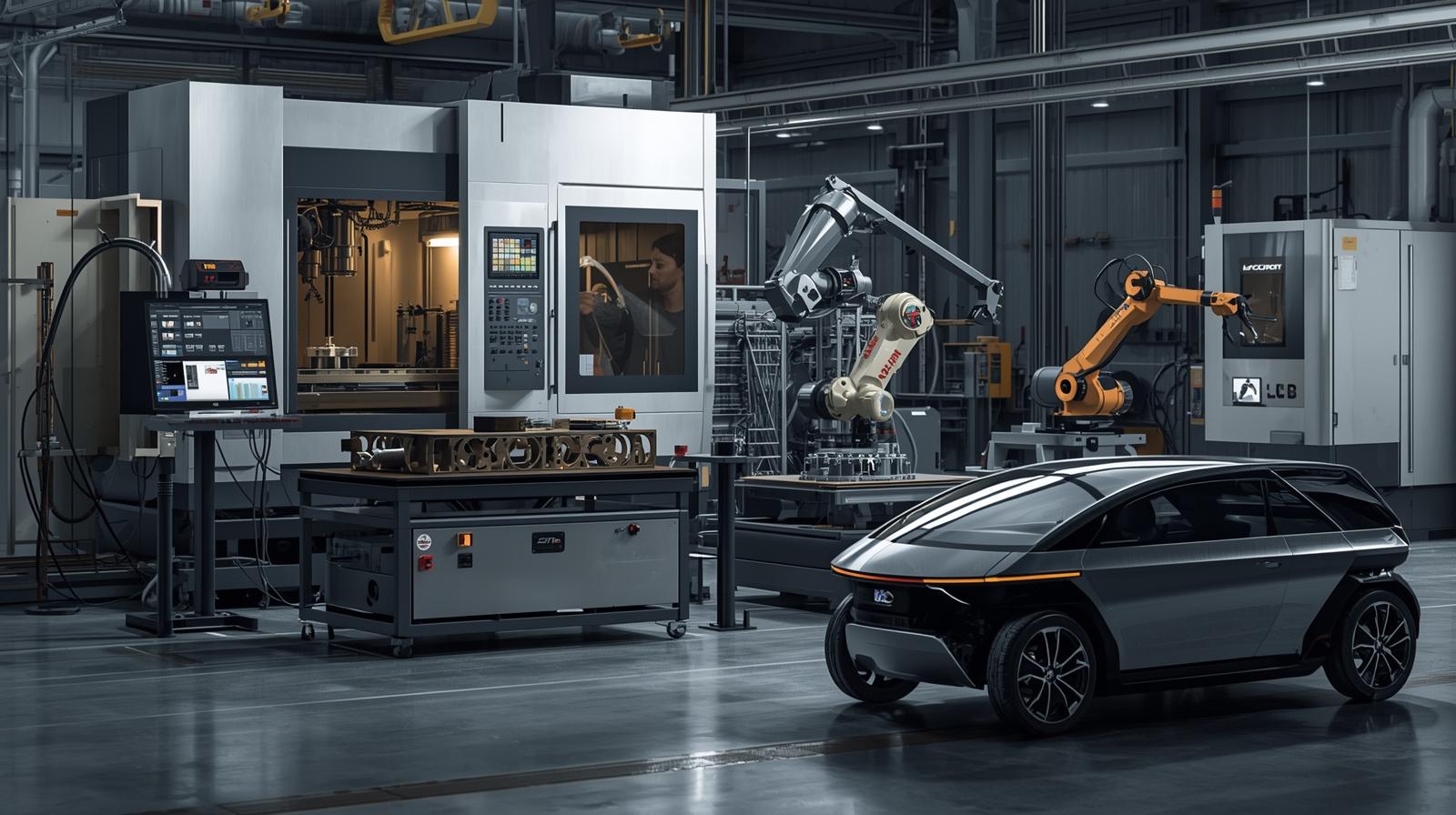
CNC Machines: Enhancing Accuracy and Flexibility
Computer Numerical Control (CNC) machines have revolutionized automotive component manufacturing. They allow precise machining of engine parts, transmission components, and structural elements. The integration of CNC technology ensures high accuracy, repeatability, and flexibility in production processes. According to industry insights, CNC systems are key drivers in the Automotive Manufacturing Equipment Market, enabling manufacturers to meet complex design requirements efficiently.
Additive Manufacturing (3D Printing): Accelerating Innovation
Additive manufacturing, or 3D printing, is creating new opportunities in the Automotive Manufacturing Equipment Market by enabling rapid prototyping and low-volume production of complex parts. Automotive companies leverage 3D printing to design lightweight components, reduce material waste, and shorten product development cycles. This technology enhances innovation while allowing manufacturers to respond quickly to market demands, reinforcing its importance in the Automotive Manufacturing Equipment Market.
Industrial IoT and Smart Manufacturing
The integration of industrial IoT (IIoT) and smart manufacturing systems is reshaping the Automotive Manufacturing Equipment Market by enabling real-time monitoring, predictive maintenance, and data-driven optimization. IoT-enabled sensors and connectivity devices provide actionable insights, reduce downtime, and improve operational efficiency. Smart factories that leverage IIoT are becoming a critical competitive advantage in the Automotive Manufacturing Equipment Market.
Artificial Intelligence and Machine Learning
Artificial intelligence (AI) and machine learning (ML) technologies are transforming production planning, quality inspection, and supply chain management within the Automotive Manufacturing Equipment Market. AI-powered systems can detect defects, optimize production schedules, and predict maintenance needs. The adoption of AI and ML not only improves productivity but also supports sustainability by reducing waste and energy consumption.
Market Outlook and Future Trends
The Automotive Manufacturing Equipment Market is expected to grow steadily as manufacturers continue to invest in advanced technologies. Increasing adoption of EVs, connected vehicles, and autonomous systems is driving demand for highly precise, flexible, and automated equipment. Furthermore, global trends toward smart factories, sustainable manufacturing, and digital twin technologies are expected to further accelerate the growth of the Automotive Manufacturing Equipment Market.
In conclusion, robotics, CNC machines, additive manufacturing, industrial IoT, and AI are key technologies reshaping the Automotive Manufacturing Equipment Market. These innovations are not only increasing efficiency and precision but also enabling automotive manufacturers to stay competitive in a rapidly evolving global market.