
The Security Screening Market is experiencing significant growth due to increasing global security concerns, rising airport and public infrastructure developments, and adoption of advanced screening technologies. With the rise in threats from terrorism, smuggling, and unauthorized access, governments and private organizations are investing heavily in sophisticated security systems to ensure public safety and streamline threat detection.
Market Overview
The Security Screening Market encompasses a wide array of technologies designed to detect weapons, explosives, hazardous materials, and unauthorized access in high-traffic environments such as airports, seaports, rail stations, government buildings, and large public events. The market is driven by technological innovation, regulatory mandates, and increasing awareness of security risks.
Advanced systems now integrate automation, AI, and biometric verification, enabling faster, more accurate screening while reducing human error. By 2030, the Security Screening Market is expected to witness strong growth, particularly in regions investing in smart infrastructure and airport modernization.
Market Segmentation by System Type
The Security Screening Market can be segmented based on the type of system used:
-
X-ray Body Scanner
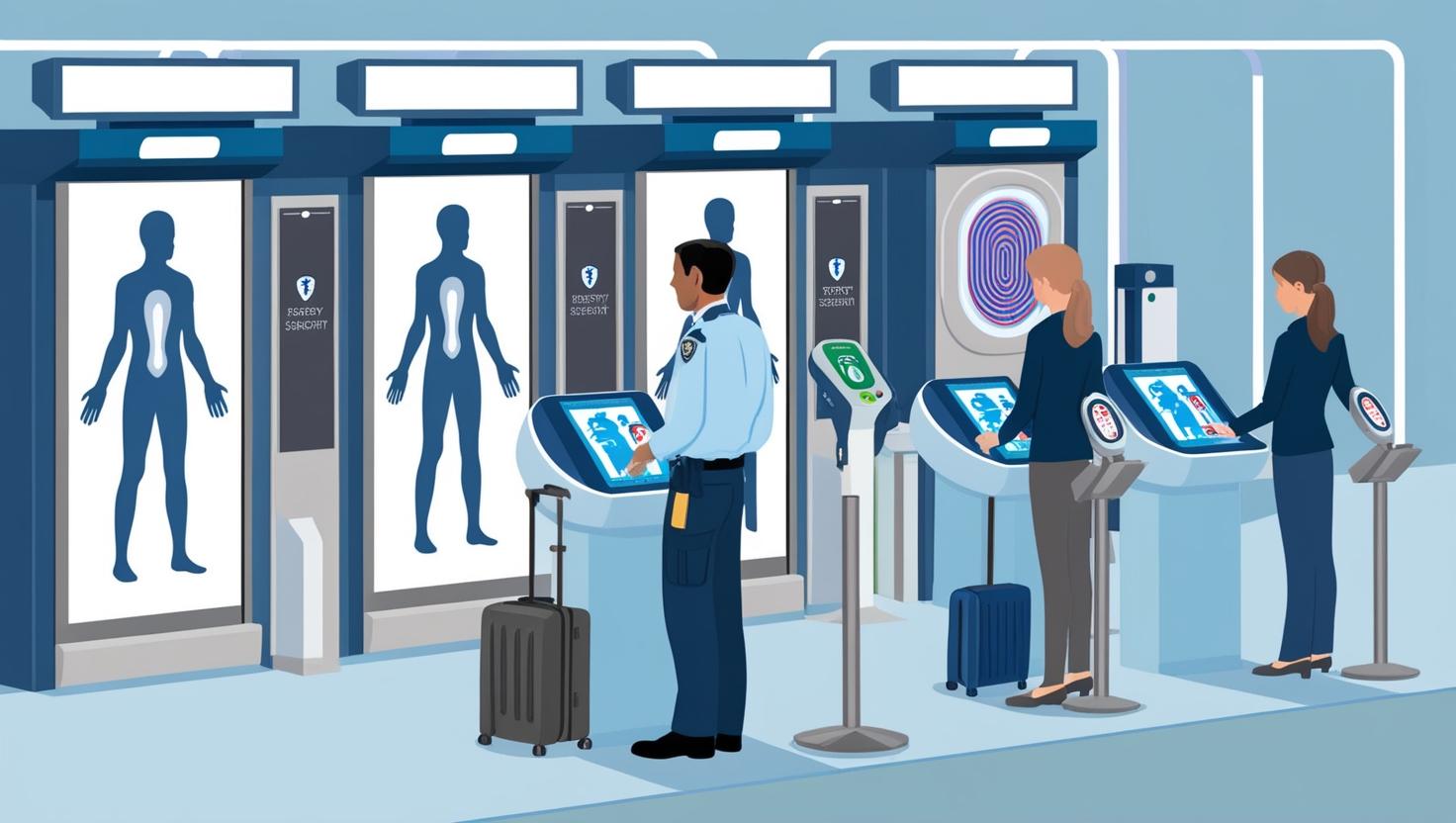
X-ray body scanners are widely used in airports, government facilities, and sensitive industrial areas. They detect concealed weapons, explosives, and contraband on a person’s body without physical contact. With enhanced resolution and AI-assisted threat detection, these scanners are becoming faster and more reliable. -
X-ray Baggage Scanner
X-ray baggage scanners are a cornerstone of airport and transportation security. They allow for automated screening of luggage and parcels, identifying prohibited items such as explosives, firearms, and narcotics. Recent developments include dual-energy scanners and AI-based image analysis for higher accuracy. -
X-ray Handheld Scanner
Handheld X-ray scanners provide portable, flexible screening solutions for security personnel at entrances, checkpoints, and field inspections. These systems are particularly useful in scenarios requiring rapid deployment and mobility.
Download PDF Brochure @ https://www.marketsandmarkets.com/pdfdownloadNew.asp?id=264685413
-
Cabinet X-ray System
Cabinet X-ray systems are designed for screening smaller items such as parcels, electronics, or packages in offices, couriers, and government facilities. Their high-resolution imaging and automated alert features make them essential for controlled access areas. -
Electromagnetic Metal Detection System
Metal detectors are widely used in public venues, airports, and industrial facilities to detect metallic weapons and contraband. Advanced systems now integrate with AI and data analytics for real-time threat monitoring, enhancing overall security efficacy. -
Biometric System
Biometric security systems use fingerprint, facial recognition, iris scans, and voice recognition to control access and enhance identification accuracy. These systems are increasingly integrated with other security screening technologies to create multi-layered protection frameworks. -
Spectrometry & Spectroscopy System
Spectrometry and spectroscopy systems analyze chemical compositions of materials to detect explosives, drugs, and hazardous substances. These technologies are critical for border security, airport cargo screening, and high-risk industrial applications.
Market Drivers
Several factors are propelling the growth of the Security Screening Market:
-
Rising global security concerns due to terrorism, smuggling, and organized crime
-
Expansion of airports, metro stations, and smart city infrastructure
-
Increasing government regulations for public safety
-
Technological advancements such as AI, automation, and integration of multiple security systems
-
Rising demand for portable and flexible security screening solutions
Opportunities
The Security Screening Market offers key opportunities:
-
Integration of AI-based threat detection and predictive analytics
-
Development of compact, portable, and multi-functional security devices
-
Adoption of biometric verification for enhanced identity management
-
Expansion in emerging markets due to infrastructure investments and urbanization
Challenges
Despite growth prospects, the Security Screening Market faces challenges:
-
High initial investment costs for advanced systems
-
Need for skilled personnel to operate sophisticated technologies
-
Privacy concerns and regulatory compliance for biometric and surveillance systems
-
Rapid technology obsolescence requiring frequent upgrades
The Security Screening Market is poised for significant expansion as public safety and security concerns continue to drive investments in advanced screening technologies. From X-ray scanners and metal detectors to biometric and spectroscopy systems, innovations in system type and integration will play a crucial role in enhancing efficiency and accuracy. Companies that focus on AI-driven, multi-functional, and portable solutions are expected to lead the market through 2030, making security screening smarter, faster, and more reliable.