
The Global Non-Destructive Testing (NDT) Equipment Market is experiencing robust growth, fueled by increasing demand from the construction, manufacturing, aerospace, and oil & gas industries. As safety, quality assurance, and regulatory compliance become more critical in industrial operations, companies are increasingly investing in advanced NDT technologies to ensure structural integrity and operational reliability.
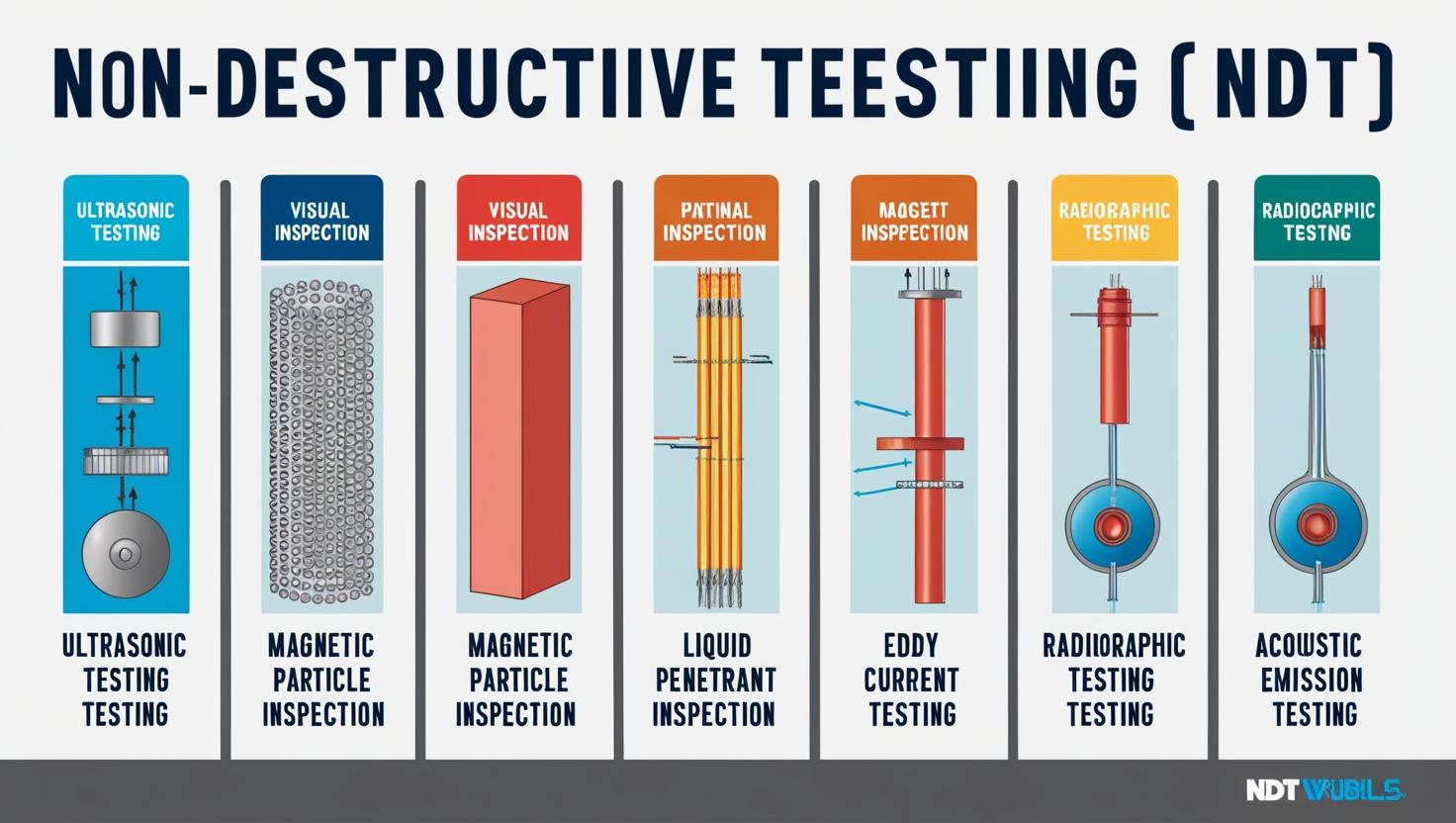
Non-destructive testing refers to a group of inspection techniques used to evaluate the properties of a material, component, or system without causing any damage. Common NDT methods include ultrasonic testing, radiographic testing, magnetic particle testing, eddy current testing, and visual inspection. These techniques are widely applied in industries where failures can result in safety hazards, costly downtime, or regulatory violations.
The NDT and inspection market is expected to reach USD 22.34 billion by 2030 from USD 14.99 billion in 2025 at a CAGR of 8.3.%
Rising Infrastructure Development Drives Market Growth
One of the key drivers of the NDT equipment market is the expansion of global infrastructure projects. Governments and private sectors are investing heavily in bridges, highways, railways, power plants, and commercial buildings. Ensuring the structural safety and longevity of these projects requires reliable inspection methods. NDT equipment allows engineers to detect defects, corrosion, and fatigue in materials without compromising the integrity of the structures.
In regions with rapid urbanization, such as Asia-Pacific and the Middle East, the demand for NDT equipment is particularly high. Countries investing in smart city initiatives and industrial infrastructure projects are increasingly adopting advanced inspection technologies to comply with stringent safety standards and prevent costly failures.
Manufacturing Sector Adoption
The manufacturing industry is another major contributor to the growth of the NDT equipment market. Industries such as automotive, aerospace, electronics, and heavy machinery rely on NDT to maintain high product quality and ensure compliance with industry standards. For example, aerospace manufacturers use ultrasonic and radiographic testing to inspect aircraft components, while the automotive sector applies magnetic particle and eddy current testing for engine parts and welds.
With the rise of Industry 4.0 and smart factories, manufacturers are integrating automated NDT solutions, such as robotic inspection systems and AI-powered defect detection, to improve efficiency, reduce human error, and maintain consistent quality standards. This technological integration is boosting the adoption of modern NDT equipment across industrial sectors.
Download PDF Brochure @ https://www.marketsandmarkets.com/pdfdownloadNew.asp?id=882
Technological Advancements Fuel Market Expansion
Technological innovations are enhancing the capabilities of NDT equipment, making inspections faster, more accurate, and easier to perform. Digital radiography, phased array ultrasonic testing, and advanced eddy current devices enable precise defect detection in complex structures and materials. Moreover, the integration of software analytics and IoT-enabled devices allows real-time monitoring and predictive maintenance, reducing operational risks and downtime.
Portable and handheld NDT devices are also gaining popularity, as they provide flexibility for on-site inspections and remote locations. This trend is particularly significant for industries like oil & gas and energy, where equipment is often located in harsh or inaccessible environments.
Regulatory Compliance and Safety Standards
Strict regulatory requirements are another factor driving the NDT equipment market. Safety regulations and quality standards in sectors such as aerospace, energy, and construction mandate regular inspections to prevent accidents and ensure public safety. Compliance with standards such as ASME, ISO, ASTM, and API requires the use of certified NDT methods, further increasing demand for advanced equipment.
In addition, environmental regulations are pushing companies to adopt NDT techniques to monitor pipelines, storage tanks, and infrastructure for potential leaks or corrosion, minimizing environmental risks and operational liabilities.
Regional Market Insights
The Asia-Pacific region is emerging as a dominant market for NDT equipment due to rapid industrialization, infrastructure development, and increasing safety regulations. North America and Europe also maintain significant market shares, driven by aerospace, automotive, and energy sector requirements. Emerging markets in the Middle East and Africa are witnessing gradual adoption as infrastructure projects and oil & gas activities expand.
Market Outlook
The global NDT equipment market is poised for sustained growth over the coming years. Rising infrastructure investments, increasing manufacturing activities, technological advancements, and stringent regulatory requirements are expected to drive continued demand. Companies are increasingly adopting automated, portable, and AI-enabled NDT solutions to ensure quality, safety, and compliance.
As industries prioritize operational efficiency and risk mitigation, non-destructive testing equipment will remain a vital component of industrial inspection strategies worldwide, ensuring reliability, safety, and cost-effective maintenance of critical assets.
Frequently Asked Questions (FAQs)
1. What is Non-Destructive Testing (NDT)?
Non-Destructive Testing (NDT) is a set of inspection techniques used to evaluate the properties, integrity, or defects of materials, components, or structures without causing damage. Common NDT methods include ultrasonic testing, radiography, magnetic particle testing, and eddy current testing.
2. Why is NDT equipment important for industries?
NDT equipment helps industries ensure safety, quality, and regulatory compliance. By detecting defects, corrosion, or fatigue in materials without damaging them, companies can prevent accidents, reduce downtime, and maintain operational efficiency.
3. Which industries use Non-Destructive Testing the most?
Key industries include:
-
Aerospace – for aircraft components and structural inspections
-
Automotive – for engine parts, welds, and metal components
-
Oil & Gas – for pipelines, storage tanks, and pressure vessels
-
Construction & Infrastructure – for bridges, buildings, and tunnels
-
Energy & Power – for turbines, nuclear plants, and renewable energy equipment
4. What are the major drivers of the NDT equipment market?
Market growth is driven by:
-
Rising infrastructure development globally
-
Increased manufacturing and industrial activities
-
Stricter safety regulations and compliance requirements
-
Adoption of automated, AI-enabled, and portable NDT technologies
5. What are the latest technological trends in NDT equipment?
Recent advancements include:
-
Digital radiography and phased array ultrasonic testing
-
Robotic and automated inspection systems
-
AI-powered defect detection and analytics
-
IoT-enabled devices for real-time monitoring
-
Portable and handheld inspection tools for remote sites