
The global 3D printing market is undergoing a remarkable transformation, fundamentally reshaping how industries approach manufacturing, prototyping, and product development. As we move through 2025 and look toward 2030, the 3D printing market by technology continues to expand at an unprecedented pace, driven by innovations in materials science, software integration, and production capabilities. Industry analysts project that the market, valued at approximately USD 16.16 billion in 2025, will surge to USD 35.79 billion by 2030, reflecting a robust compound annual growth rate of 17.2% during this forecast period.
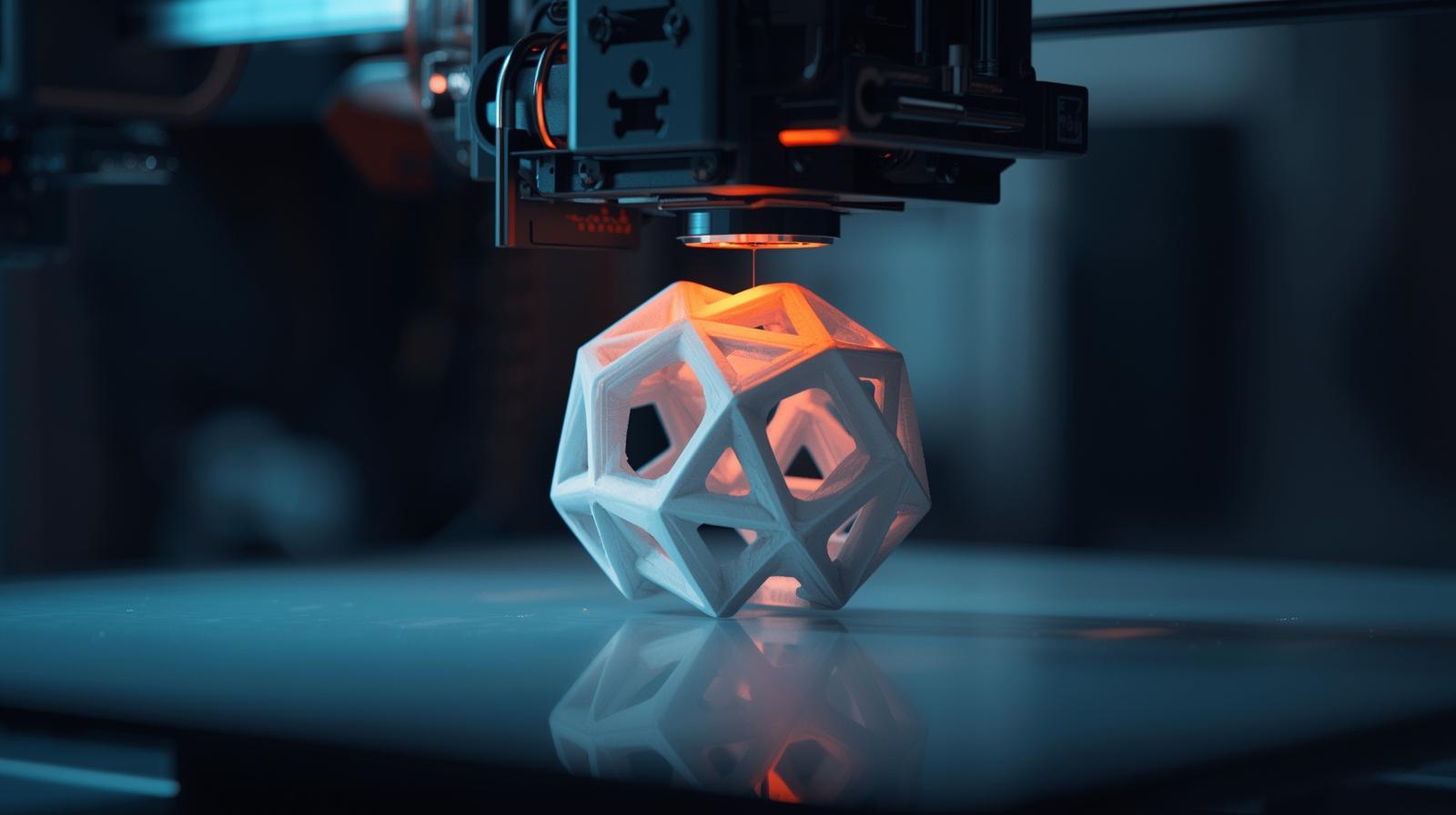
This growth trajectory underscores the increasing reliance on additive manufacturing solutions across aerospace, healthcare, automotive, and consumer goods sectors.
The expansion of the 3D printing market by technology is not merely a story of incremental improvement but rather a fundamental shift in manufacturing paradigms. Traditional subtractive manufacturing methods are increasingly being supplemented or replaced by additive processes that offer unprecedented design freedom, material efficiency, and customization capabilities. As industries embrace Industry 4.0 principles, the integration of artificial intelligence, machine learning, and automated workflows with 3D printing technologies is creating new opportunities for innovation and operational excellence . The convergence of these advanced technologies is enabling manufacturers to achieve levels of precision and complexity that were previously impossible or economically unviable.
Understanding the nuances of the 3D printing market by technology requires a deep dive into the specific processes that dominate the industry, each with unique advantages, material compatibilities, and application domains. From the cost-effective accessibility of Fused Deposition Modeling to the high-precision capabilities of Stereolithography and the industrial-strength production enabled by Powder Bed Fusion technologies, the additive manufacturing ecosystem offers diverse solutions tailored to specific manufacturing challenges. This comprehensive analysis explores these technologies in detail, examining their market positions, growth trajectories, and the factors driving their adoption across various industries.
Market Dynamics Shaping the 3D Printing Industry
The 3D printing market by technology is influenced by a complex interplay of drivers, restraints, opportunities, and challenges that collectively shape its evolution. Understanding these dynamics is essential for stakeholders seeking to navigate this rapidly changing landscape and capitalize on emerging opportunities. The market’s growth is propelled by several key factors that continue to expand the addressable applications for additive manufacturing across industries.
Key market drivers include the ease of manufacturing customized products, which has become increasingly important as consumers and businesses demand personalized solutions tailored to specific requirements . 3D printing enables companies to offer co-design capabilities, allowing customers to participate in the development process and receive products that precisely match their needs. Additionally, the reduction in manufacturing costs and process downtime compared to traditional methods provides compelling economic incentives for adoption. Ongoing technological advancements in existing 3D printing technologies, coupled with reduced printer costs and the expanding availability of diverse materials, have democratized access to additive manufacturing for businesses of all sizes .
Substantial investments from governments and technology giants worldwide are fostering market growth through research funding, infrastructure development, and policy support . The United States Department of Defense has designated additive manufacturing as a critical capability in its budget allocations, while countries like China, India, and South Korea have established national roadmaps and initiatives to promote 3D printing adoption . These strategic investments are accelerating innovation and creating fertile ground for market expansion, particularly in regions aiming to enhance their global manufacturing competitiveness.
However, the 3D printing market by technology also faces significant restraints that must be addressed for sustained growth. The lack of standardized testing methods to verify the mechanical properties of 3D printed materials, combined with high raw material costs, poses challenges for widespread industrial adoption . Materials used in additive manufacturing often require high purity levels, making production expensive, while the absence of uniform standards affects accuracy, reproducibility, and reliability across different platforms and applications. Furthermore, high initial investments encompassing hardware, software, materials, certification, and employee training present barriers to entry for smaller enterprises .
Despite these challenges, the market presents substantial opportunities, particularly in the healthcare sector where demand for medical products and supplies continues to grow in the post-pandemic era . The flexibility of 3D printing enables rapid prototyping, localized manufacturing, and personalized medical solutions that reduce supply chain risks and improve patient outcomes. Rapid advancements in printing technologies and materials, coupled with the development of knowledge and skill progression frameworks, are creating pathways for broader adoption across industries .
Fused Deposition Modeling: The Accessible Workhorse
Fused Deposition Modeling (FDM) represents the most widely adopted technology within the 3D printing market by technology, capturing the largest market share due to its cost-effectiveness, ease of use, and broad material compatibility . This technology operates by extruding thermoplastic filaments through a heated nozzle, depositing material layer by layer to create three-dimensional objects from digital models. The simplicity of the FDM process, combined with the relatively low cost of equipment and materials, has made it the technology of choice for educational institutions, small businesses, and entry-level manufacturing applications . According to research, approximately 71% of businesses utilizing 3D printing employ FDM technology to generate highly durable, precisely tolerant products with complex geometries .
The versatility of FDM technology extends across multiple industries, from automotive and aerospace to consumer goods and healthcare. In the automotive sector, manufacturers leverage FDM for rapid prototyping of parts and components, enabling faster design iterations and reduced time-to-market for new vehicle models . The technology’s ability to produce functional prototypes that closely mimic the properties of end-use parts allows engineers to test form, fit, and function before committing to expensive tooling and production runs. Similarly, aerospace companies utilize FDM for manufacturing aids, jigs, and fixtures that streamline assembly processes and improve production efficiency.
Recent advancements in FDM technology have expanded its capabilities beyond prototyping into end-use part production. The development of high-performance thermoplastics, including carbon fiber-reinforced composites, PEEK, and ULTEM, has enabled the production of parts with mechanical properties suitable for demanding applications . These materials offer enhanced strength, heat resistance, and chemical compatibility, opening new opportunities in industries such as aerospace and medical devices where performance requirements are stringent. Additionally, ongoing research focused on optimizing process parameters, such as layer thickness, extrusion speed, and nozzle temperature, continues to improve the overall quality and dimensional accuracy of FDM-printed parts .
Despite its widespread adoption, FDM technology faces limitations related to surface finish quality and anisotropic mechanical properties resulting from the layer-by-layer construction process. Parts produced via FDM often exhibit visible layer lines and may require post-processing to achieve desired aesthetic or functional characteristics . However, ongoing innovations in material science and process optimization are addressing these limitations, with researchers exploring composite materials and recycled filaments to enhance mechanical properties while promoting sustainability . As the 3D printing market by technology continues to evolve, FDM maintains its position as the accessible entry point for organizations beginning their additive manufacturing journey.
Vat Photopolymerization: Precision and Surface Excellence
Vat photopolymerization technologies, particularly Stereolithography (SLA) and Digital Light Processing (DLP), occupy a critical position in the 3D printing market by technology, distinguished by their exceptional precision, fine detail, and superior surface finish capabilities . These technologies operate by using ultraviolet light to selectively cure liquid photopolymer resin in a vat, solidifying material layer by layer to create highly detailed objects. SLA utilizes a laser to trace each layer’s geometry, while DLP projects an entire layer’s image simultaneously, offering different trade-offs between speed and resolution . The ability to produce parts with intricate geometries and smooth surfaces makes these technologies indispensable for applications where visual quality and dimensional accuracy are paramount.
The healthcare and dental industries represent primary beneficiaries of vat photopolymerization technologies, leveraging their precision for producing customized medical devices, surgical guides, dental models, and prosthetics . In dentistry, SLA and DLP have revolutionized the production of aligners, crowns, and bridges, enabling faster turnaround times and improved patient outcomes through personalized solutions . The ability to create patient-specific anatomical models from medical imaging data allows surgeons to plan complex procedures with greater precision, reducing operating times and improving surgical success rates. As the 3D printing market by technology expands, the healthcare sector’s demand for vat photopolymerization continues to grow at a significant rate.
Jewelry making and consumer goods manufacturing also benefit substantially from the capabilities of vat photopolymerization technologies. The exceptional detail resolution enables the production of intricate patterns for investment casting, allowing jewelers to create complex designs that would be difficult or impossible to achieve through traditional methods . In consumer goods, SLA and DLP are used for creating detailed prototypes, concept models, and end-use parts that require aesthetic appeal and precise dimensional characteristics. The technology’s ability to produce transparent parts with optical clarity further expands its applications in industries requiring see-through components or light-guiding elements.
Advancements in resin formulations continue to expand the application scope for vat photopolymerization within the 3D printing market by technology. Modern photopolymers offer enhanced mechanical properties, including increased strength, flexibility, and temperature resistance, enabling functional applications beyond visual prototypes . Biocompatible resins approved for medical use have opened opportunities in implantable devices and tissue engineering, while castable resins facilitate the jewelry manufacturing workflow. However, the technology’s material selection remains somewhat limited compared to extrusion-based methods, and post-processing steps including cleaning, support removal, and additional curing are often necessary to achieve final part properties . Despite these considerations, the unparalleled precision of vat photopolymerization ensures its continued growth and relevance in the additive manufacturing landscape.
Download PDF Brochure @ https://www.marketsandmarkets.com/pdfdownloadNew.asp?id=1276
Powder Bed Fusion: Industrial Strength Manufacturing
Powder Bed Fusion (PBF) technologies represent the pinnacle of industrial additive manufacturing within the 3D printing market by technology, enabling the production of complex, high-strength, and lightweight parts with exceptional accuracy and durability . This category encompasses several specific processes, including Selective Laser Sintering (SLS) for polymers and Direct Metal Laser Sintering (DMLS) or Selective Laser Melting (SLM) for metals. These technologies utilize a laser or electron beam to selectively fuse powdered material, layer by layer, building solid objects from digital designs. The ability to produce functional end-use parts with mechanical properties comparable to traditionally manufactured components has established PBF as the dominant process for mission-critical applications across aerospace, automotive, and healthcare industries .
Selective Laser Sintering has gained significant traction in the consumer goods and industrial sectors due to its ability to produce durable parts with excellent mechanical properties and intricate geometries without requiring support structures . The technology’s freedom from supports enables greater design flexibility, allowing for internal channels, undercuts, and complex lattice structures that would be impossible to manufacture using conventional methods. SLS parts exhibit isotropic mechanical properties approaching those of injection-molded components, making them suitable for functional prototyping and end-use production in demanding applications . The growing popularity of SLS in the consumer goods sector reflects its ability to deliver production-quality parts with cost-effective economics for medium-volume runs.
Direct Metal Laser Sintering and related metal PBF technologies are experiencing particularly strong growth within the 3D printing market by technology, driven by demand from aerospace, automotive, and medical implant manufacturers . These technologies enable the production of metal components with complex geometries, optimized topologies, and weight-saving internal structures that enhance performance while reducing material consumption. Aerospace companies including Boeing and Airbus have incorporated metal additive manufacturing into their production lines, producing brackets, ducting, and structural components that contribute to aircraft weight reduction and fuel efficiency improvements . In the medical field, DMLS enables the production of patient-specific implants with porous structures that promote osseointegration, improving long-term clinical outcomes.
The powder bed fusion segment’s market dominance is further reinforced by continuous technological advancements that improve speed, efficiency, and material compatibility . Multi-laser systems increase build rates, while improved process monitoring and control enhance part consistency and quality assurance. The development of new metal alloys specifically formulated for additive manufacturing expands application possibilities, with materials including titanium, stainless steel, aluminum, and cobalt-chrome available for various industry requirements . However, the high cost of equipment and metal powders, combined with the need for specialized expertise and post-processing capabilities, limits adoption to organizations with substantial resources and commitment to additive manufacturing .
Emerging Technologies and Future Directions
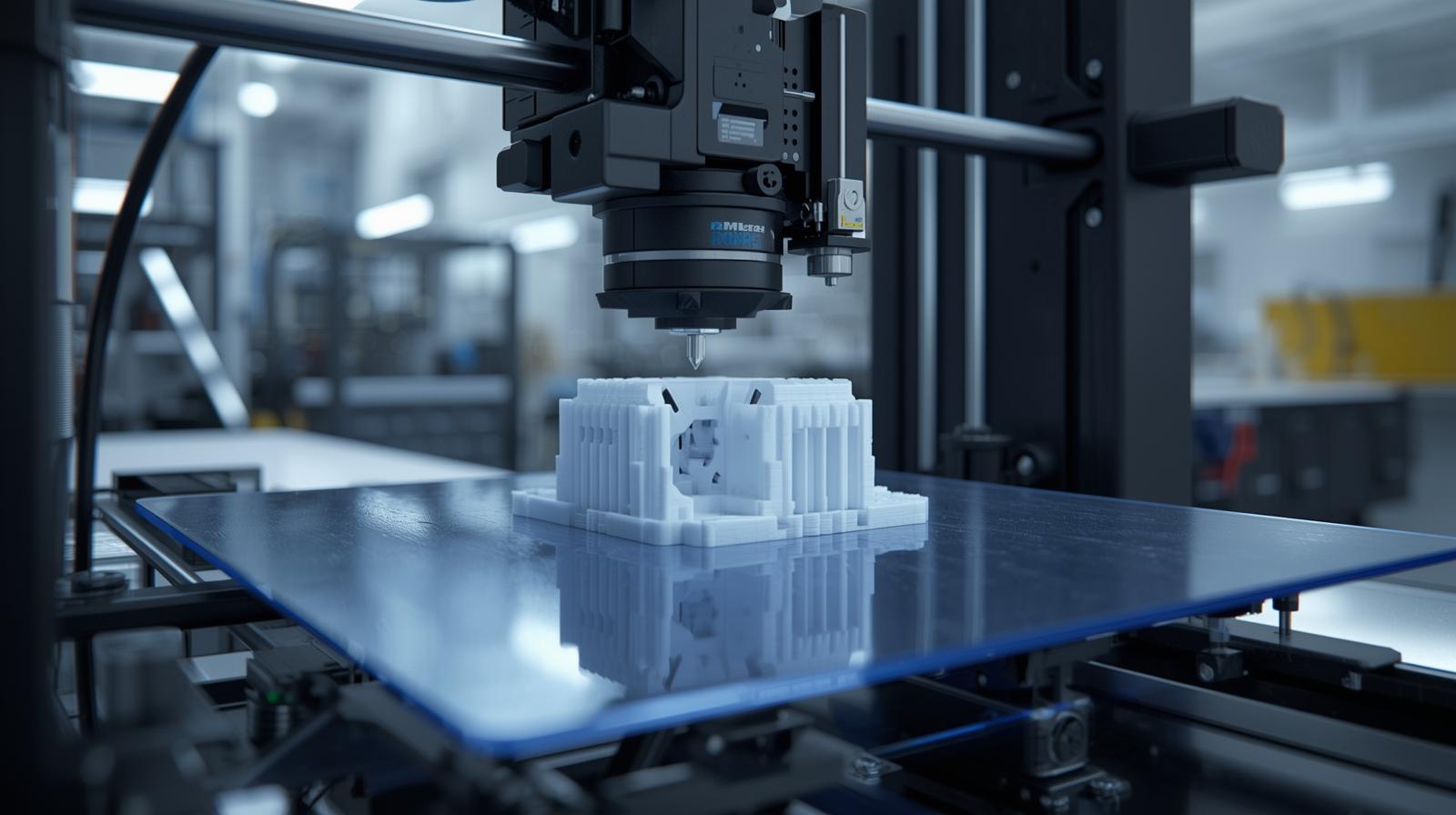
Beyond the established technologies dominating the current 3D printing market by technology, several emerging processes are gaining traction and expanding the boundaries of additive manufacturing. Multi Jet Fusion, developed by HP, combines elements of powder bed fusion and material jetting to achieve high-speed production with consistent quality and scalability for mass customization applications . This technology utilizes an array of inkjet heads to deposit fusing and detailing agents across a powder bed, which is then exposed to infrared energy to create solid parts. The ability to produce functional prototypes and production parts with isotropic mechanical properties and fine feature resolution positions Multi Jet Fusion as a significant contender in the industrial 3D printing landscape.
Binder Jetting represents another technology gaining momentum within the additive manufacturing ecosystem, particularly for large-scale parts and high-volume production applications . This process employs a liquid binding agent to selectively join powder particles, building green parts that subsequently undergo sintering or infiltration to achieve final material properties. Binder Jetting’s advantages include high build speeds, the ability to process a wide range of materials including metals, ceramics, and sands, and cost-effectiveness for producing large components with complex geometries. The technology’s dominance in certain market segments reflects its unique combination of speed, material flexibility, and scalability for industrial applications.
Electron Beam Melting (EBM) offers distinct advantages for metal additive manufacturing, utilizing an electron beam as the energy source to melt metal powder in a vacuum environment . The high energy density and scanning speed of electron beams enable rapid build rates, while the vacuum environment prevents oxidation and enables processing of reactive materials such as titanium alloys. EBM is particularly valued in aerospace and medical implant applications where material properties and purity are critical considerations. The technology’s ability to produce parts with reduced residual stress compared to laser-based methods further enhances its appeal for certain applications.
The integration of artificial intelligence and machine learning with 3D printing technologies represents a transformative trend shaping the future of the 3D printing market by technology . AI-powered software optimizes print parameters, enables real-time quality monitoring, and automates design processes, significantly improving efficiency and consistency across production runs . Generative design algorithms leverage computational power to explore vast design spaces, creating optimized geometries that minimize material usage while maximizing structural performance. As these technologies mature, the convergence of AI and additive manufacturing will drive productivity gains, cost reductions, and operational agility across global production environments.
Regional Analysis and Market Outlook
The geographical distribution of the 3D printing market by technology reveals distinct regional characteristics and growth trajectories that reflect varying levels of technological adoption, industrial infrastructure, and policy support. North America currently holds the largest market share, accounting for approximately 40.8% of the global market in 2025, driven by its strong ecosystem of technology providers, material suppliers, and early adopters across aerospace, automotive, healthcare, and consumer goods industries . The region benefits from significant government and private investments in additive manufacturing research, robust intellectual property frameworks, and the presence of industry leaders including Stratasys, 3D Systems, and General Electric .
Europe represents another mature market for additive manufacturing, with countries including Germany, the United Kingdom, and France leading technological development and industrial adoption . The region’s strong focus on innovation, well-established manufacturing sector, and emphasis on sustainability align favorably with the benefits offered by 3D printing technologies. European Union initiatives promoting digital transformation and carbon emission reduction create conducive conditions for additive manufacturing growth, while the region’s robust aerospace and automotive industries generate substantial demand for advanced manufacturing solutions . The European 3D printing market is expected to reach USD 9.04 billion by 2030, growing at a steady CAGR of 15.5% from 2025 to 2030 .
Asia Pacific is poised to experience the fastest growth in the 3D printing market by technology during the forecast period, driven by rapid industrialization, increasing adoption of advanced manufacturing technologies, and supportive government initiatives . Countries including China, Japan, South Korea, and India are investing heavily in additive manufacturing to enhance their manufacturing capabilities and compete on a global scale. China’s manufacturers view 3D printing as both a risk and opportunity to boost economic competitiveness, leading to substantial research and development investments . India’s Make in India initiative supports market growth through policy encouragement and industry partnerships, exemplified by collaborations such as India Cements partnering with construction 3D printing startup Tvasta to promote sustainability in the construction sector .
The future outlook for the 3D printing market by technology remains exceptionally bright, with projections indicating continued robust growth through 2030 and beyond. As technologies mature and adoption expands across industries, additive manufacturing will increasingly transition from prototyping and niche production to mainstream manufacturing applications. The development of new materials, integration with digital technologies, and advances in automation and AI will further enhance the capabilities and economic viability of 3D printing . Organizations that strategically invest in understanding and implementing appropriate additive manufacturing technologies will position themselves to capture value from this transformative industrial revolution.
Conclusion
The 3D printing market by technology represents a dynamic and rapidly evolving landscape offering diverse solutions tailored to specific manufacturing requirements across industries. From the accessibility and versatility of Fused Deposition Modeling to the precision of Vat Photopolymerization and the industrial strength of Powder Bed Fusion, each technology category contributes unique capabilities that expand the boundaries of what is possible in manufacturing. As the market continues its robust growth trajectory toward USD 35.79 billion by 2030, organizations must carefully evaluate their specific application requirements, material needs, and production volumes to select the most appropriate technologies for their operations .
The convergence of additive manufacturing with artificial intelligence, automation, and advanced materials science promises to accelerate innovation and drive further adoption across sectors including aerospace, healthcare, automotive, and consumer goods . Government investments in research and development, coupled with supportive policy frameworks, are creating fertile ground for market expansion, particularly in rapidly industrializing regions of Asia Pacific . While challenges including standardization, material costs, and quality assurance remain, ongoing research and development efforts continue to address these barriers, paving the way for broader industrial adoption.
For businesses seeking to remain competitive in an increasingly digital and customized manufacturing environment, understanding the nuances of the 3D printing market by technology is no longer optional but essential. The ability to leverage additive manufacturing for rapid prototyping, tooling, and end-use part production offers compelling advantages in time-to-market, design flexibility, and cost efficiency. As the technology continues to evolve and mature, organizations that embrace additive manufacturing strategically will be well-positioned to thrive in the next generation of manufacturing.
Frequently Asked Questions
Q1: What is the current size of the 3D printing market by technology?
The global 3D printing market was estimated at USD 15.39 billion in 2024 and is projected to increase from USD 16.16 billion in 2025 to USD 35.79 billion by 2030, growing at a CAGR of 17.2% during the forecast period . Some research firms project even higher valuations, with estimates reaching USD 136.76 billion by 2034 depending on market definitions and inclusion criteria .
Q2: Which 3D printing technology holds the largest market share?
Fused Deposition Modeling (FDM) currently holds the largest market share within the 3D printing market by technology due to its cost-effectiveness, ease of use, and wide material compatibility . Approximately 71% of businesses using 3D printing employ FDM technology for producing durable and dimensionally stable parts .
Q3: What is the fastest-growing technology in the 3D printing market?
Stereolithography (SLA) is estimated to grow at a high CAGR during the forecast period due to its ability to deliver exceptional precision, fine detail, and smooth surface finishes . Direct Metal Laser Sintering (DMLS/SLM) is also experiencing rapid growth driven by demand for metal components in aerospace, automotive, and medical applications .
Q4: How is artificial intelligence impacting the 3D printing industry?
AI is transforming the 3D printing market by technology through enhanced design processes, optimized production parameters, and real-time quality monitoring . Generative AI algorithms accelerate design iteration, improve prediction accuracy for print outcomes, and enable mass customization of products to fulfill specific customer requirements .
Q5: Which industries are the primary adopters of 3D printing technologies?
Key industries adopting 3D printing include aerospace, automotive, healthcare, and consumer goods . Aerospace companies use additive manufacturing for lightweight components, healthcare applications include customized implants and surgical guides, while automotive manufacturers leverage 3D printing for rapid prototyping and functional part production .