
The global biosensors market is rapidly evolving, fueled by the growing need for real-time, accurate, and cost-effective detection technologies across healthcare, industrial, and environmental sectors. Biosensors—devices that convert biological responses into measurable signals—are at the forefront of innovation, transforming how we monitor health, ensure food safety, and detect environmental hazards.
Expanding Applications Across Sectors
Medical and Healthcare:
In healthcare, biosensors are revolutionizing diagnostics and patient monitoring. From glucose monitoring for diabetes management to rapid detection of infectious diseases, biosensors provide high sensitivity, portability, and real-time data, enabling better decision-making and personalized treatment. Wearable biosensors are gaining prominence, allowing continuous monitoring of vital signs such as heart rate, oxygen saturation, and biomarkers, which supports proactive health management and remote patient care.
Industrial Applications:
Biosensors are also playing a critical role in industrial processes, including food safety, bioprocess monitoring, and environmental testing. Rapid detection of pathogens, toxins, and contaminants ensures product quality and compliance with regulatory standards. In environmental monitoring, biosensors detect pollutants, heavy metals, and hazardous chemicals in water and air, providing real-time data essential for maintaining safety and sustainability.
Technology Trends Driving Growth
The biosensors market is witnessing significant technological advancements:
-
Electrochemical Biosensors: Highly sensitive and widely used in glucose monitoring and medical diagnostics.
-
Optical Biosensors: Enable label-free detection and are increasingly applied in drug discovery and pathogen detection.
-
Thermal and Piezoelectric Biosensors: Applied in industrial and environmental monitoring for precise and rapid measurement.
-
Integration with IoT and AI: Smart biosensors coupled with IoT devices and AI-driven analytics provide real-time monitoring, predictive insights, and seamless data integration across platforms.
Advances in nanotechnology, microfluidics, and lab-on-a-chip systems are further enhancing sensitivity, miniaturization, and cost-effectiveness, broadening biosensor applications in point-of-care testing and field diagnostics.
Download PDF Brochure @ https://www.marketsandmarkets.com/pdfdownloadNew.asp?id=798
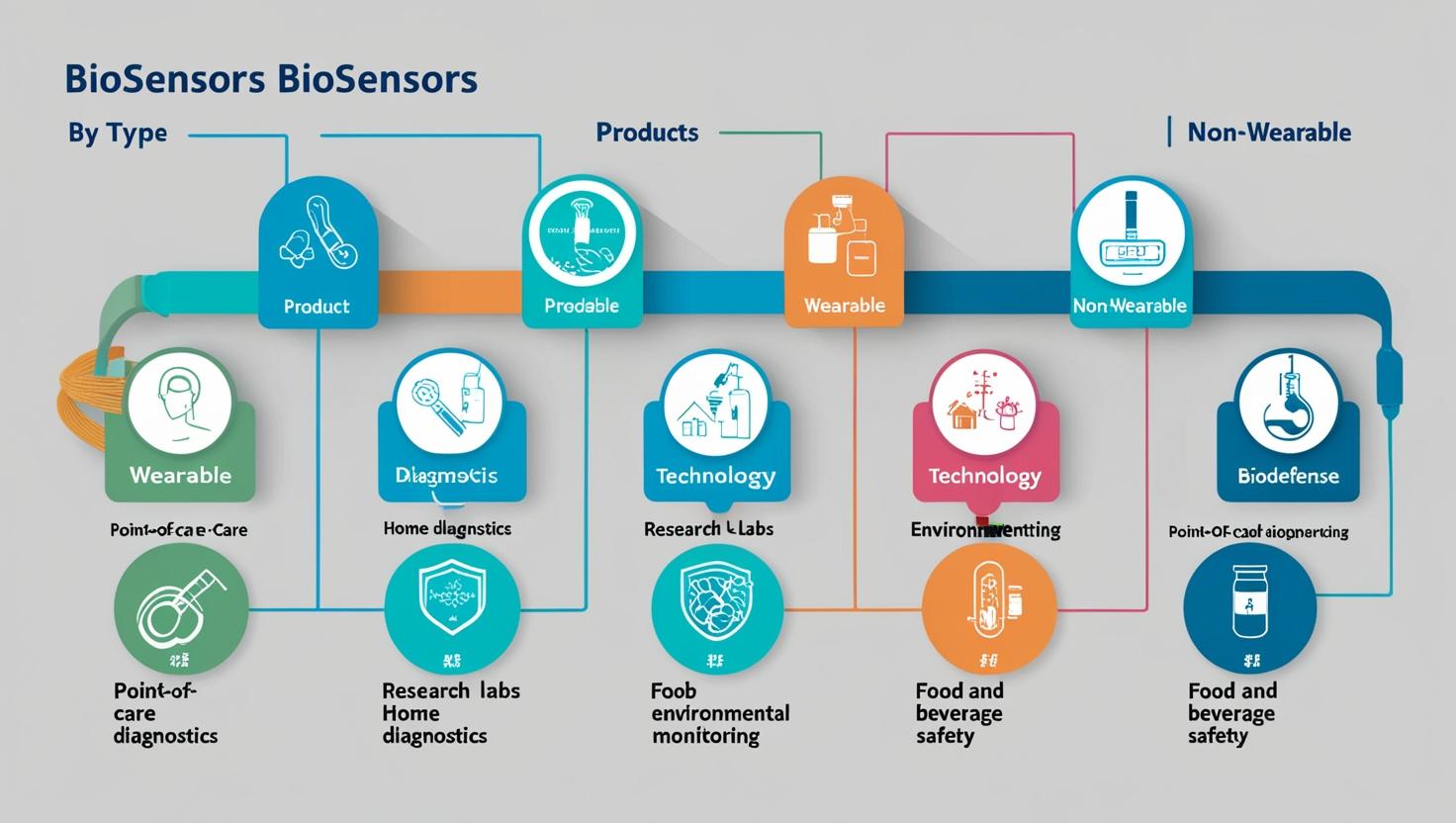
Market Drivers
Several factors are propelling market growth:
-
Rising prevalence of chronic diseases and demand for personalized healthcare solutions
-
Increased focus on rapid, accurate, and non-invasive diagnostic methods
-
Expansion of wearable and connected devices for remote patient monitoring
-
Growing regulatory emphasis on food safety, environmental protection, and industrial quality control
Challenges and Opportunities
While the market is growing, challenges remain, including high development costs, stringent regulatory approvals, and the need for standardization across platforms. However, opportunities lie in emerging markets, innovative device integration, and expanding industrial applications, particularly in food safety and environmental monitoring.
Future Outlook
The biosensors market is poised for sustained growth as technological advancements and multi-sector adoption accelerate. The integration of AI, IoT, and advanced materials will drive next-generation biosensor development, enabling smarter, faster, and more accurate detection solutions.
Biosensors are no longer just laboratory tools—they are essential instruments in healthcare, industry, and environmental monitoring. By providing real-time, actionable insights, they are shaping a safer, healthier, and more connected world.
FAQ
1. What are biosensors?
Biosensors are analytical devices that convert a biological response into a measurable signal. They detect specific biological or chemical substances and are used in healthcare, industrial, and environmental applications.
2. What are the main types of biosensors?
-
Electrochemical Biosensors: Detect changes in electrical properties; widely used in glucose monitoring.
-
Optical Biosensors: Use light-based detection for label-free sensing; applied in pathogen detection and drug discovery.
-
Thermal and Piezoelectric Biosensors: Measure changes in temperature or mechanical stress; often used in industrial monitoring.
-
Wearable Biosensors: Integrate with devices for continuous health monitoring.
3. Which industries are adopting biosensors the most?
-
Healthcare & Medical Diagnostics: Disease detection, glucose monitoring, wearable devices.
-
Food & Beverage Industry: Pathogen and contamination detection.
-
Environmental Monitoring: Detecting pollutants and toxins in water, air, and soil.
-
Industrial Processes: Bioprocess monitoring, quality control, and safety.
4. What are the key drivers of the biosensors market?
-
Growing prevalence of chronic diseases and demand for personalized healthcare
-
Increasing adoption of wearable and connected devices
-
Need for rapid, accurate, and non-invasive diagnostics
-
Regulatory requirements in food safety, environmental monitoring, and industrial quality assurance
5. How is technology shaping the market?
Advances in nanotechnology, microfluidics, lab-on-a-chip systems, IoT, and AI analytics are improving sensitivity, miniaturization, and real-time monitoring capabilities. These innovations enable faster, more accurate detection and integration with digital health platforms.