
The Automotive Manufacturing Equipment Industry is experiencing a transformative phase as manufacturers adopt advanced technologies to improve efficiency, precision, and overall production quality. Equipment such as CNC machines, injection molding machines, industrial robots, metal stamping machines, augmented guided vehicles (AGVs), and DC torque tools are redefining how vehicles are produced. These innovations are enabling faster production cycles and higher accuracy for both passenger and commercial vehicles, solidifying the growth trajectory of the Automotive Manufacturing Equipment Industry.
CNC Machines: Precision and Efficiency
In the Automotive Manufacturing Equipment Industry, CNC machines play a pivotal role by enabling highly precise machining of critical components such as engine parts, chassis, and structural assemblies. These machines provide consistent output, reduce human error, and improve production efficiency. The adoption of CNC technology ensures that manufacturers can meet the growing demand for high-quality passenger and commercial vehicles, reinforcing the strategic importance of the Automotive Manufacturing Equipment Industry in modern automotive production.
Injection Molding Machines: Lightweight and Cost-Effective Components
Injection molding machines are essential in the Automotive Manufacturing Equipment Industry, especially for producing polymer and composite parts used in vehicle interiors, dashboards, and exterior components. Modern injection molding equipment reduces cycle times, improves material utilization, and enhances component precision. The increased use of lightweight materials in both passenger and commercial vehicles makes injection molding an integral part of the Automotive Manufacturing Equipment Industry supply chain.
Download PDF Brochure @ https://www.marketsandmarkets.com/pdfdownloadNew.asp?id=75023639
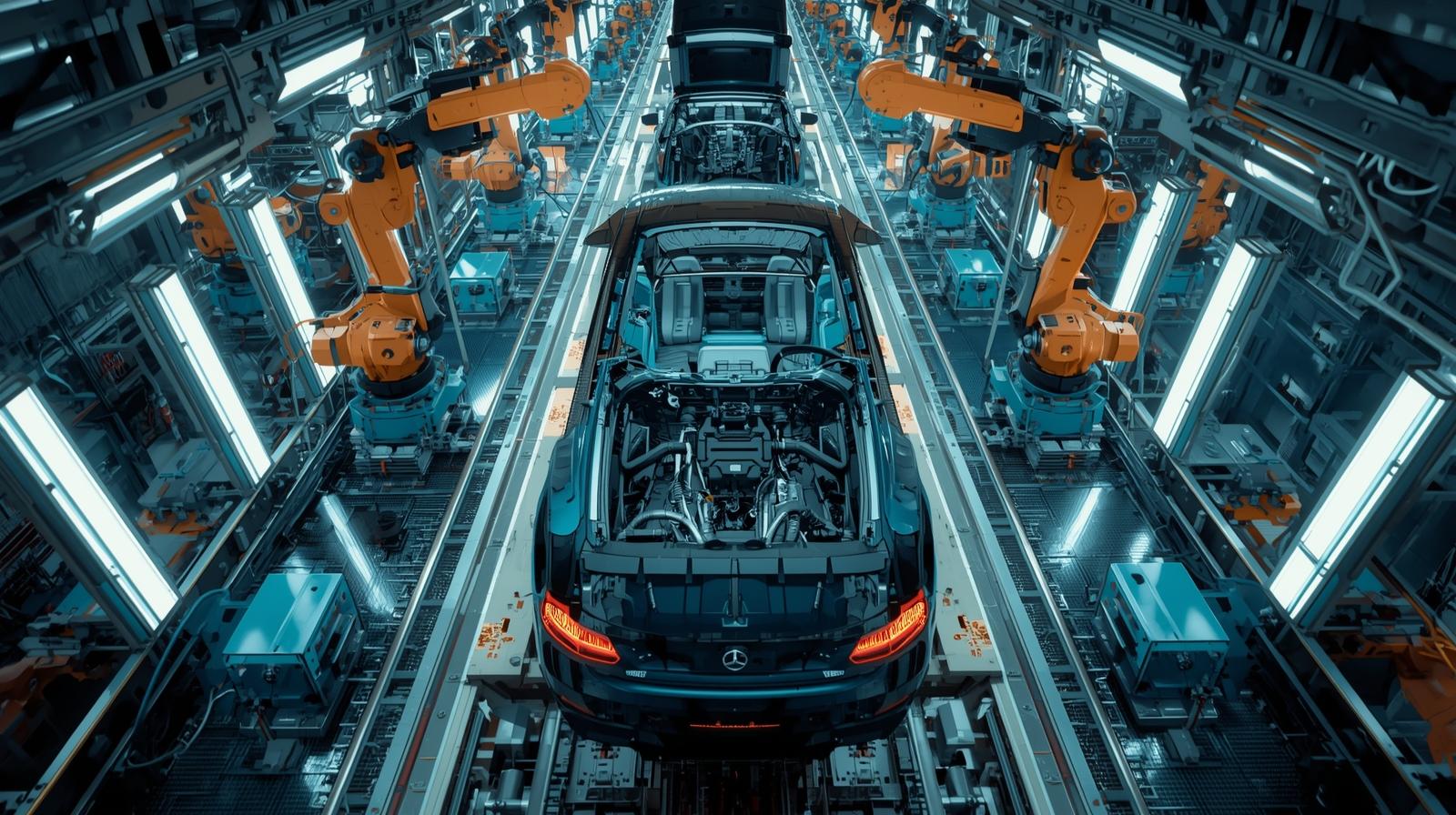
Robots and Automation: Speeding Up Assembly
Industrial robots have revolutionized the Automotive Manufacturing Equipment Industry by automating tasks such as welding, painting, assembly, and material handling. Robotics ensures high precision, improved safety, and faster production throughput. In commercial vehicle manufacturing, where larger parts and assemblies are common, robots are critical for maintaining production efficiency. The integration of robotics continues to drive innovation and competitiveness within the Automotive Manufacturing Equipment Industry.
Metal Stamping Machines: Accuracy at High Volume
Metal stamping machines remain a core component of the Automotive Manufacturing Equipment Industry, producing body panels, chassis components, and structural parts with precision and speed. Advanced stamping machines reduce material waste while supporting the trend toward lighter metals for improved fuel efficiency. By enabling high-volume production without compromising quality, metal stamping machines reinforce the growth and relevance of the Automotive Manufacturing Equipment Industry globally.
AGVs and DC Torque Tools: Streamlining Operations
Augmented Guided Vehicles (AGVs) and DC torque tools are transforming workflows within the Automotive Manufacturing Equipment Industry. AGVs optimize material handling, reduce bottlenecks, and improve assembly line efficiency, while DC torque tools ensure accurate fastening of components. Together, these technologies enhance operational productivity and reduce human error, highlighting the Automotive Manufacturing Equipment Industry’s role in driving faster, more precise vehicle production.
Passenger and Commercial Vehicle Production
The Automotive Manufacturing Equipment Industry supports both passenger and commercial vehicle production. In passenger cars, advanced equipment enables high-volume manufacturing with consistent quality, while in commercial vehicles, it ensures precision and efficiency in handling larger, more complex assemblies. Investment in advanced manufacturing equipment allows automotive manufacturers to respond rapidly to market demand, innovate in design, and maintain competitiveness across both vehicle segments.
Future Outlook for the Automotive Manufacturing Equipment Industry
The future of the Automotive Manufacturing Equipment Industry is closely tied to digitalization, smart factories, and Industry 4.0 technologies. AI-enabled equipment, IoT-integrated machines, and automated workflows are enhancing predictive maintenance, real-time quality control, and production flexibility. By leveraging CNC machines, robots, injection molding systems, metal stamping machines, AGVs, and DC torque tools, the Automotive Manufacturing Equipment Industry is positioned for long-term growth and technological leadership.
The Automotive Manufacturing Equipment Industry is central to the modernization of vehicle production. By integrating advanced manufacturing equipment, the industry is achieving faster production cycles, higher precision, and improved quality for both passenger and commercial vehicles. As global demand for vehicles continues to rise, the Automotive Manufacturing Equipment Industry will remain a strategic driver of efficiency, innovation, and competitiveness in automotive manufacturing.
Investor FAQ: Automotive Manufacturing Equipment Industry
1. What is the Automotive Manufacturing Equipment Industry?
It refers to the sector that produces machinery and equipment used in vehicle manufacturing, including CNC machines, injection molding machines, robots, metal stamping machines, AGVs, and DC torque tools. These tools are essential for producing passenger and commercial vehicles efficiently and with high precision.
2. What is the market size and growth outlook?
The Automotive Manufacturing Equipment Industry is experiencing steady growth, driven by global vehicle demand, automation adoption, and Industry 4.0 initiatives. Analysts project a strong CAGR over the next five to seven years, with significant expansion in both passenger and commercial vehicle production.
3. Which equipment types are most critical?
CNC machines, robots, injection molding machines, metal stamping machines, AGVs, and DC torque tools lead the industry. Each plays a key role: CNC machines ensure precision, robots and AGVs automate production, injection molding machines produce lightweight components, and DC torque tools guarantee accurate assembly.
4. Which vehicle segments drive demand?
Both passenger and commercial vehicles are major consumers. Passenger vehicles require high-volume precision, while commercial vehicles demand equipment that handles larger and more complex assemblies. The industry provides solutions for both efficiently.