
The Asia Pacific Hyperspectral Imaging Systems Market is rapidly evolving, with demand rising from diverse sectors such as agriculture, environmental monitoring, defense surveillance, space programs, and industrial automation. According to a MarketsandMarkets™ forecast, the market is expected to grow from approximately USD 0.23 billion in 2025 to USD 0.48 billion by 2030, registering a CAGR of 16.1% during the forecast period.
This comprehensive industry overview explores market drivers, segmentation by offering and technology, regional dynamics, competitive landscape, and future trends driving hyperspectral imaging adoption across Asia Pacific.
What Are Hyperspectral Imaging Systems?
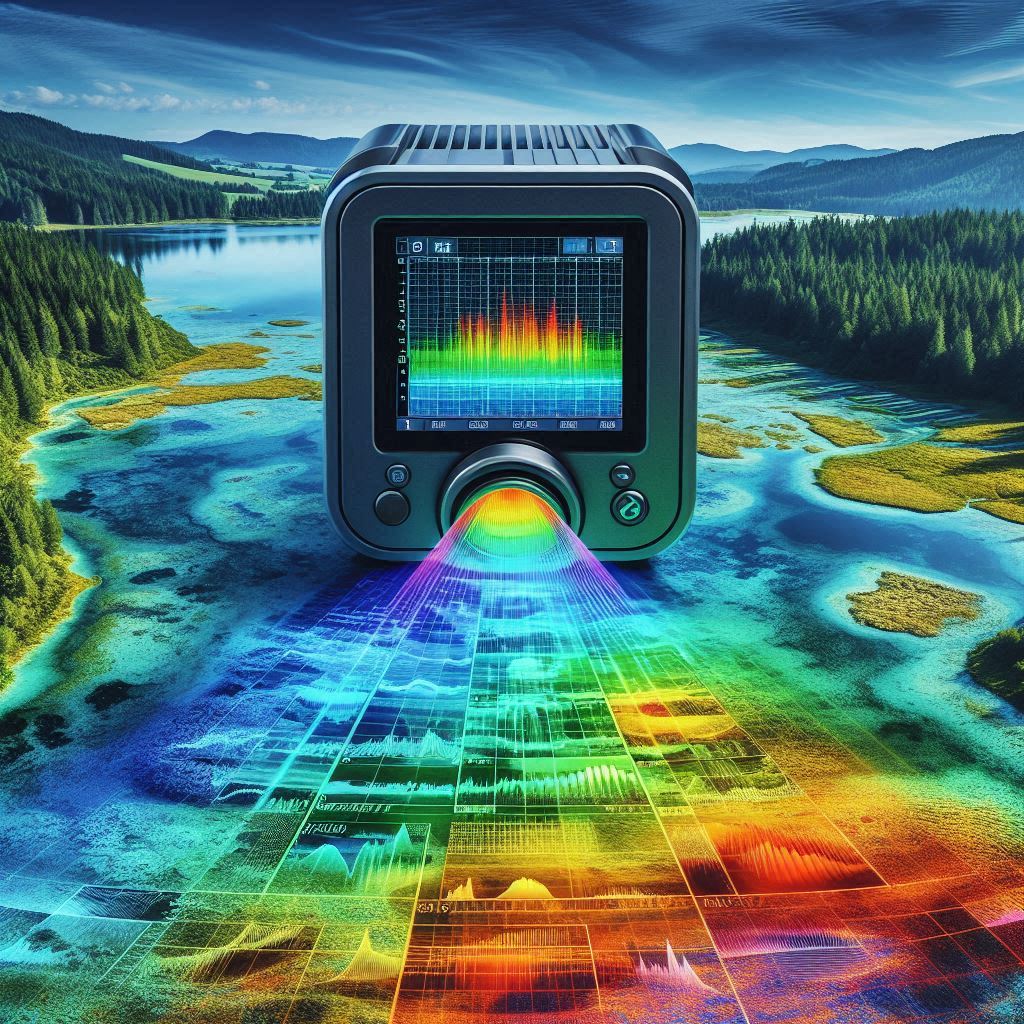
Hyperspectral imaging systems capture and process information across the electromagnetic spectrum, far beyond visible light. Unlike conventional imaging that uses only three wavelengths (RGB), hyperspectral imaging measures hundreds of narrow spectral bands — enabling detailed material identification and analysis. These systems combine imaging and spectroscopy for applications that require high spectral precision and analytical depth.
Market Overview: Growth, Drivers & Forecast
The Asia Pacific Hyperspectral Imaging Systems Market is expanding due to increasing investments from governments and enterprises in advanced imaging technologies. Countries such as China, Japan, South Korea, and India are leading adoption through precision agriculture programs, environmental monitoring initiatives, defense investments, and space applications.
Key Growth Drivers
-
Agriculture modernization & precision farming driving demand for detailed crop analysis.
-
Environmental surveillance & remote sensing to monitor ecosystems, pollution, and natural resources.
-
Defense & security applications for surveillance and threat detection.
-
Space programs & satellite missions pushing the need for high-resolution spectral data.
-
Industrial automation & quality control leveraging hyperspectral analytics.
Market Segmentation
The market is segmented based on offering, technology, wavelength, and country:
1. By Offering
Cameras
Hyperspectral cameras represent the largest market share in the Asia Pacific region, driven by increasing deployment across agriculture, industrial inspection, pharmaceuticals, mining, and healthcare research. These advanced cameras are becoming more affordable and compact, enabling broader adoption.
Services
Support services including integration, analytics, and maintenance are also gaining traction. As companies adopt complex hyperspectral systems, demand for services that ensure effective deployment and optimization is increasing.
2. By Technology
Technologies in hyperspectral imaging include:
Pushbroom / Line-Scan
Pushbroom or line-scan systems dominate the market due to their ability to deliver high spectral resolution and efficient data acquisition across large areas — ideal for environmental and industrial applications.
Snapshot
Snapshot hyperspectral technology can capture an entire spectral cube in a single shot — useful for real-time and dynamic scenarios. While adoption is smaller than pushbroom systems today, advancements and integration with AI are accelerating interest.
Tunable Filter, Imaging FTIR & Whiskbroom
Other technologies such as tunable filters, imaging Fourier Transform Infrared (FTIR), and whiskbroom also serve niche applications — from material analysis to specialized research imaging — contributing to the diversified tech landscape.
3. By Wavelength
Hyperspectral imaging systems operate across different wavelength bands:
Visible & NIR (Near-Infrared)
This segment is expected to grow rapidly, given its widespread use in agriculture, environmental monitoring, and quality inspection.
SWIR (Short-Wave Infrared)
SWIR imaging is crucial for applications like food processing, semiconductor inspection, and material sorting, offering deeper spectral insight beyond visible light.
MWIR (Mid-Wave Infrared) & LWIR (Long-Wave Infrared)
Used in defense, thermal monitoring, and industrial applications, these longer wavelengths help detect heat signatures and perform advanced material discrimination.
Regional Insights: Country Analysis
China
China leads the Asia Pacific hyperspectral imaging market with a significant share of total revenue. Rapid industrial automation, defense modernization, and space program expansions are key growth drivers.
Japan
Japan is expected to grow strongly due to technological advancements and government support for imaging technologies across manufacturing and environmental sectors.
India
India’s hyperspectral market is gaining momentum with initiatives in space programs, agriculture, and research applications. Notably, hyperspectral satellite constellation projects are advancing — reinforcing data accessibility and analytical capabilities.
Rest of Asia Pacific
Countries like South Korea, Australia, and Southeast Asian nations are gradually increasing adoption, driven by industrial automation and remote sensing needs.
Download PDF Brochure @ https://www.marketsandmarkets.com/pdfdownloadNew.asp?id=220275969
Competitive Landscape
The competitive environment in the Asia Pacific hyperspectral imaging market is diverse. Key global and regional players include:
-
Corning Incorporated (US)
-
Specim, Spectral Imaging Ltd. (Finland)
-
HORIBA (Japan)
-
Resonon (US)
-
Bayspec (US)
-
Imec (Belgium)
-
Headwall Photonics (US)
-
Gamaya (Switzerland)
These companies are investing in product innovation, partnerships, and localized sales channels to capture market share. Additionally, startups like Pixxel are emerging as strong contenders, especially with space-based hyperspectral data platforms — signaling growth potential beyond traditional system manufacturing.
Trends & Innovations in the Market
Several trends are shaping the future of hyperspectral imaging in Asia Pacific:
1. AI & Machine Learning Integration
Enhanced analytics powered by AI and machine learning algorithms enable real-time interpretation of hyperspectral data — valuable in agriculture, quality inspection, and environmental monitoring.
2. Sensor Miniaturization
Smaller, lightweight hyperspectral cameras are becoming more accessible, expanding adoption into UAVs, handheld devices, and embedded systems for industrial IoT.
3. Satellite & Space-Based Imaging
Hyperspectral payloads on satellites and CubeSats are increasing frequency and coverage of Earth observation data — boosting applications in resource monitoring, disaster management, and environmental mapping.
4. Government Initiatives & Funding
Governments across Asia Pacific are funding research and pilot programs to embed hyperspectral imaging in national agriculture, sustainability, and defense strategies.
The Asia Pacific hyperspectral imaging systems market is poised for continued growth through 2030, driven by technological innovations, cross-sector adoption, and expanded commercial and government use cases. MarketsandMarkets™ projects sustained interest across agriculture, environmental monitoring, defense, and space sectors with camera offerings and pushbroom technology leading the growth trajectory.