
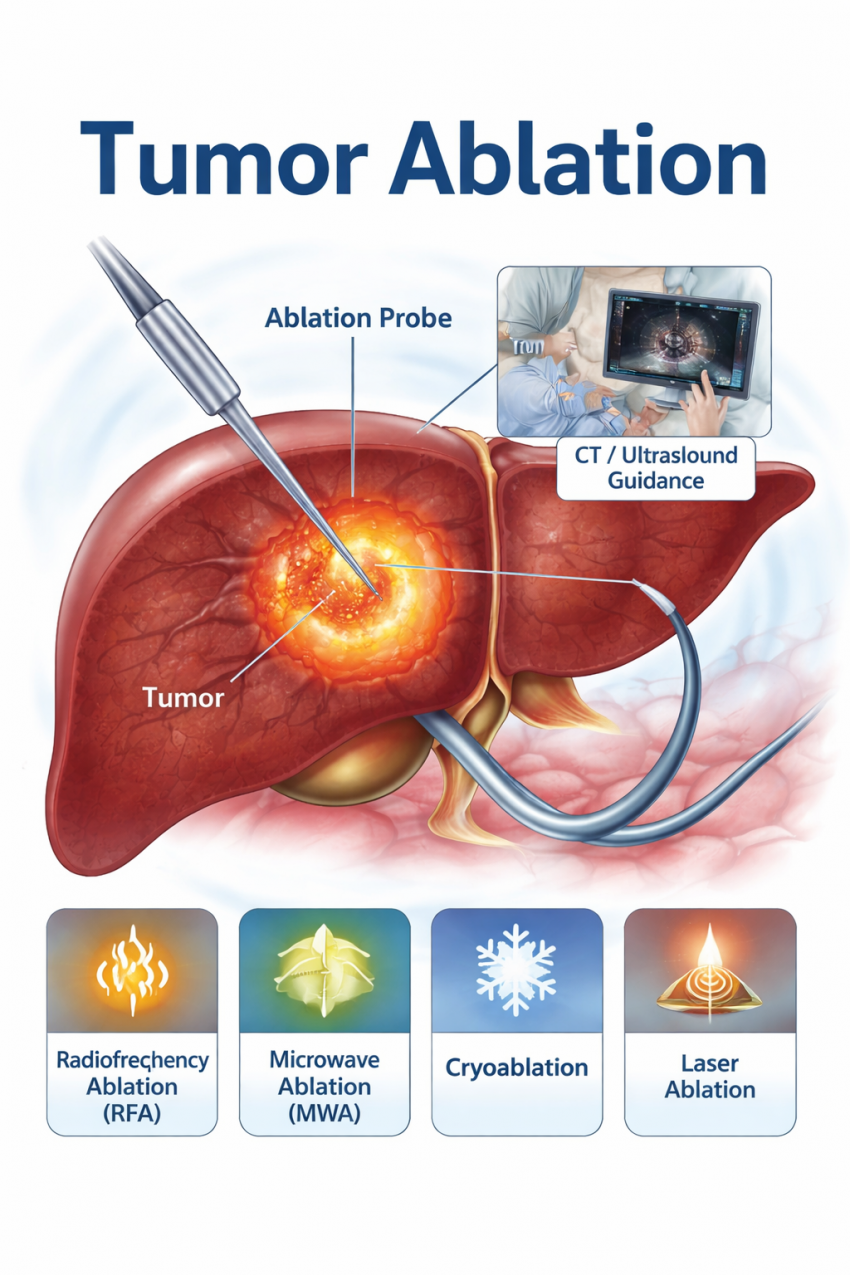
Tumor ablation has emerged as a revolutionary, minimally invasive technique for treating cancer. As healthcare systems shift toward precision medicine and less invasive procedures, tumor ablation is gaining significant traction among oncologists and patients alike. This advanced treatment method offers targeted destruction of cancer cells with minimal damage to surrounding tissues, making it a preferred option for many tumor types.
What is Tumor Ablation?
Tumor ablation is a medical procedure that uses extreme heat, cold, or chemical agents to destroy cancerous tissues without the need for traditional surgery. It is typically performed using imaging guidance such as CT scans, ultrasound, or MRI to ensure precise targeting.
Common Types of Tumor Ablation:
- Radiofrequency Ablation (RFA): Uses high-frequency electrical currents to generate heat
- Microwave Ablation (MWA): Employs electromagnetic waves to destroy tumors
- Cryoablation: Freezes tumor cells using extremely cold temperatures
- Laser Ablation: Uses laser energy to eliminate cancer cells
- Irreversible Electroporation (IRE): Disrupts cell membranes using electrical pulses
Download PDF Brochure: https://www.marketsandmarkets.com/pdfdownloadNew.asp?id=142550258
Key Benefits of Tumor Ablation
Tumor ablation offers several advantages over traditional surgical treatments:
- Minimally invasive with smaller incisions
- Reduced recovery time compared to open surgery
- Lower risk of complications
- Precision targeting of tumors
- Repeatable procedure for recurring tumors
- Suitable for patients unfit for surgery
Applications of Tumor Ablation
Tumor ablation is widely used across multiple cancer types, including:
- Liver cancer (hepatocellular carcinoma and metastases)
- Lung cancer
- Kidney tumors
- Bone metastases
- Prostate cancer
Its versatility makes it a critical tool in interventional oncology.
Tumor Ablation Procedure: Step-by-Step
- Pre-procedure imaging to locate the tumor
- Local or general anesthesia administration
- Insertion of probe/needle into the tumor
- Energy delivery (heat, cold, or electrical pulses)
- Monitoring and completion using imaging
Most procedures are completed within a few hours, with patients often discharged the same day or within 24 hours.
Market Trends and Growth Opportunities
The global tumor ablation market is witnessing rapid growth due to:
- Rising cancer prevalence worldwide
- Increasing demand for minimally invasive procedures
- Technological advancements in image-guided therapies
- Growing adoption in emerging markets
Healthcare providers are increasingly investing in advanced ablation systems to improve patient outcomes and reduce hospital stays.
Challenges in Tumor Ablation
Despite its advantages, tumor ablation faces certain limitations:
- Not suitable for large or complex tumors
- Risk of incomplete tumor destruction
- Requires highly skilled professionals
- Limited accessibility in low-resource settings
Ongoing research and technological innovations aim to address these challenges.
Future Outlook
The future of tumor ablation looks promising with advancements such as:
- AI-integrated imaging systems for enhanced precision
- Development of next-generation ablation devices
- Increased use in combination therapies (with chemotherapy or immunotherapy)
- Expansion into new cancer indications
As technology evolves, tumor ablation is expected to play a pivotal role in personalized cancer care.
Conclusion
Tumor ablation represents a significant advancement in cancer treatment, offering a safer, less invasive alternative to traditional surgery. With its growing adoption, continuous innovation, and expanding applications, it is poised to become a cornerstone in modern oncology.
Request Sample Pages: https://www.marketsandmarkets.com/requestsampleNew.asp?id=142550258
FAQs About Tumor Ablation
- Is tumor ablation safe?
Yes, it is generally safe with fewer complications compared to surgery when performed by experienced professionals. - How long does recovery take?
Most patients recover within a few days to a week. - Can tumor ablation cure cancer?
It can effectively destroy small tumors, especially when detected early. - Is tumor ablation painful?
The procedure is usually performed under anesthesia, minimizing discomfort.