
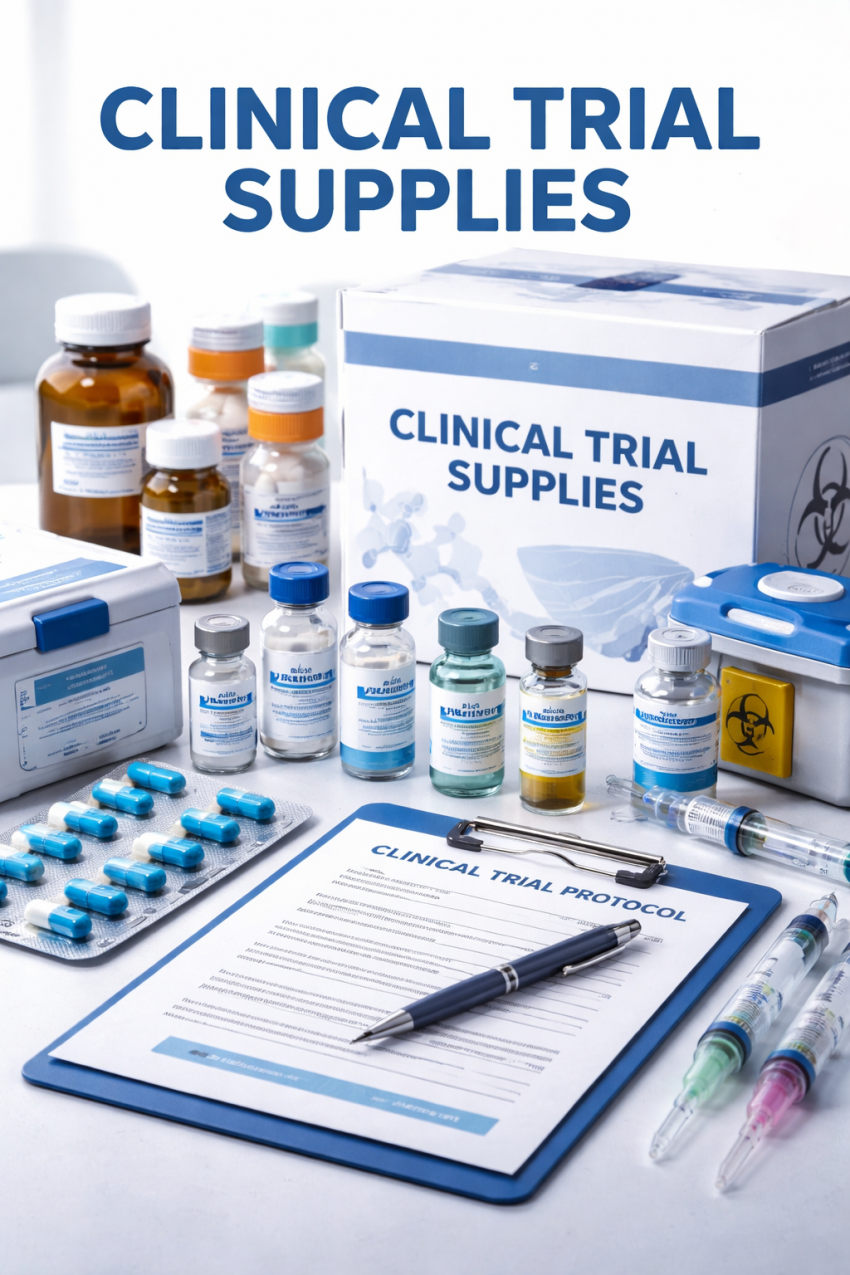
Clinical trial supplies play a critical role in the success of modern drug development. From investigational medicinal products (IMPs) to packaging, labeling, and global distribution, efficient supply chain management ensures trials run smoothly, on time, and within regulatory compliance.
As clinical trials become increasingly global and complex, the demand for advanced clinical trial supply solutions continues to grow rapidly.
What Are Clinical Trial Supplies?
Clinical trial supplies refer to all materials required to conduct a clinical study, including:
- Investigational drugs (IMPs)
- Comparator drugs
- Placebos
- Packaging and labeling materials
- Ancillary supplies (syringes, kits, devices)
- Cold chain logistics solutions
These supplies must be carefully managed to maintain product integrity, patient safety, and regulatory compliance.
Importance of Clinical Trial Supply Management
Effective clinical trial supply management ensures:
1. Timely Trial Execution
Delays in supply delivery can halt trials, leading to increased costs and missed timelines.
2. Regulatory Compliance
Strict adherence to global regulations (FDA, EMA, ICH-GCP) is essential for approval.
3. Product Integrity
Temperature-sensitive biologics require controlled environments throughout the supply chain.
4. Cost Optimization
Efficient forecasting and inventory management reduce waste and overproduction.
Key Components of Clinical Trial Supplies
1. Investigational Medicinal Products (IMPs)
These are the core drugs being tested in clinical trials.
2. Packaging and Labeling
- Blinded packaging to maintain study integrity
- Multi-language labeling for global trials
- Compliance with regional regulations
3. Storage and Distribution
- Cold chain logistics (2–8°C, -20°C, -80°C)
- Real-time temperature monitoring
- Global depot networks
4. Ancillary Supplies
Includes all supporting materials required for trial execution such as diagnostic kits and medical devices.
Clinical Trial Supply Chain Process
The clinical supply chain involves multiple stages:
- Demand forecasting
- Manufacturing and packaging
- Labeling and blinding
- Storage and inventory management
- Distribution to trial sites
- Returns and destruction
Each step must be precisely coordinated to avoid disruptions.
Emerging Trends in Clinical Trial Supplies
1. Decentralized Clinical Trials (DCTs)
With the rise of remote trials, direct-to-patient supply models are gaining popularity.
2. Advanced Cold Chain Technologies
IoT-enabled monitoring ensures real-time tracking of temperature-sensitive drugs.
3. AI and Predictive Analytics
AI improves demand forecasting, reduces waste, and enhances supply chain efficiency.
4. Sustainable Packaging
Eco-friendly materials and reduced waste strategies are becoming industry standards.
Challenges in Clinical Trial Supply Management
Despite advancements, several challenges persist:
- Complex global regulations
- Supply chain disruptions
- Temperature control issues
- Patient recruitment variability
- Inventory mismanagement
Addressing these challenges requires robust planning and digital transformation.
Best Practices for Optimizing Clinical Trial Supplies
To ensure efficient supply management:
- Implement demand forecasting tools
- Use interactive response technology (IRT) systems
- Partner with experienced logistics providers
- Maintain regulatory compliance across regions
- Invest in real-time tracking and monitoring systems
Clinical Trial Supplies Market Outlook (2025–2030)
The global clinical trial supplies market is experiencing strong growth due to:
- Increasing number of clinical trials worldwide
- Rising demand for biologics and personalized medicine
- Growth in outsourcing to CROs and CDMOs
- Expansion of global trial sites
The market is expected to witness significant CAGR growth through 2030, driven by innovation and globalization.
Conclusion
Clinical trial supplies are the backbone of successful clinical research. With increasing complexity in trial designs and global expansion, efficient supply chain management is more important than ever.
Organizations that adopt advanced technologies, optimize logistics, and ensure compliance will gain a competitive edge in the evolving clinical trials landscape.