
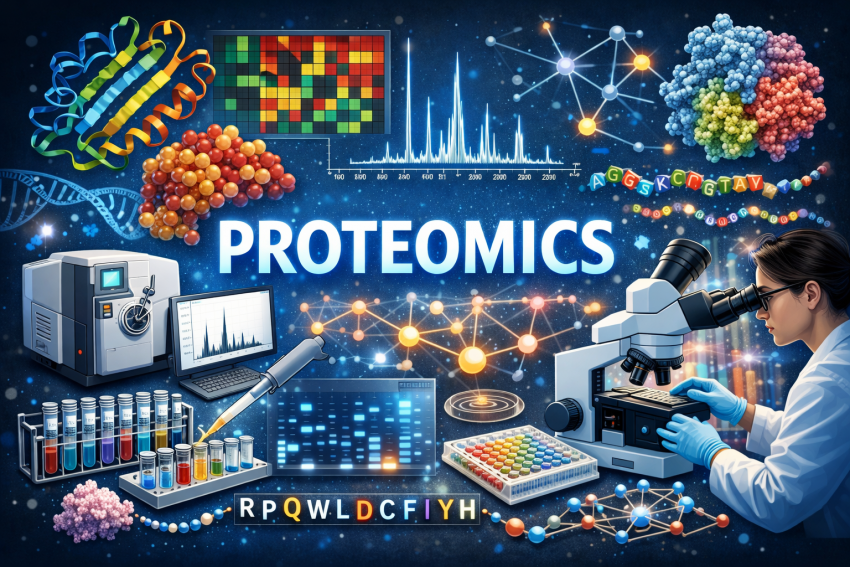
In the era of precision medicine, proteomics is emerging as a transformative field that goes beyond genomics to study the structure, function, and interactions of proteins. Since proteins are the primary drivers of biological processes, understanding them is crucial for disease diagnosis, drug development, and personalized treatment strategies.
The global proteomics market, valued at US$33.63 billion in 2024, stood at US$36.32 billion in 2025 and is projected to advance at a resilient CAGR of 12.6% from 2025 to 2030, culminating in a forecasted valuation of US$65.80 billion by the end of the period.
What is Proteomics?
Proteomics is the large-scale study of proteins, including their expression levels, modifications, and interactions within a biological system. Unlike genes, proteins are dynamic and change based on environmental and physiological conditions, making proteomics essential for real-time biological insights.
Why Proteomics Matters in Healthcare
Proteomics plays a vital role in modern medicine by:
- Early Disease Detection: Identifying protein biomarkers for diseases like cancer and neurological disorders
- Drug Development: Helping pharmaceutical companies discover and validate new drug targets
- Personalized Medicine: Tailoring treatments based on individual protein profiles
- Understanding Disease Mechanisms: Revealing how diseases progress at the molecular level
Download PDF Brochure @ https://www.marketsandmarkets.com/pdfdownloadNew.asp?id=731
Key Technologies Used in Proteomics
Advancements in technology have accelerated proteomics research. Some of the most widely used techniques include:
- Mass Spectrometry (MS)
A powerful tool for identifying and quantifying proteins in complex samples.
- Protein Microarrays
Used for studying protein interactions and functions on a large scale.
- Chromatography Techniques
Helps in separating proteins before analysis.
- Bioinformatics Tools
Essential for managing and analyzing large proteomic datasets.
Applications of Proteomics
Proteomics is widely used across various industries:
- Clinical Diagnostics
- Detection of biomarkers for early-stage diseases
- Monitoring disease progression
- Drug Discovery
- Identifying therapeutic targets
- Studying drug-protein interactions
- Agriculture
- Improving crop resistance and yield
- Studying plant protein responses
- Biotechnology
- Developing innovative biologics and vaccines
Market Trends and Growth
The global proteomics market is experiencing rapid growth due to:
- Increasing demand for personalized medicine
- Rising prevalence of chronic diseases
- Technological advancements in analytical tools
- Growing investment in life sciences research
Experts predict strong market expansion over the next decade, driven by innovations in AI and data analytics.
Challenges in Proteomics
Despite its potential, proteomics faces several challenges:
- High complexity of protein structures
- Expensive instrumentation
- Data interpretation difficulties
- Standardization issues across platforms
Future of Proteomics
The future of proteomics looks promising with:
- Integration with AI and machine learning
- Advances in single-cell proteomics
- Increased use in precision medicine
- Expansion in clinical applications
Conclusion
Proteomics is revolutionizing how we understand biology and disease. By providing deeper insights into protein behavior, it is paving the way for breakthroughs in diagnostics, therapeutics, and personalized healthcare. As technology continues to evolve, proteomics will remain at the forefront of scientific innovation.
Request Sample Pages@ https://www.marketsandmarkets.com/requestsampleNew.asp?id=731