

The global modified starch market is projected to grow at a robust compound annual growth rate (CAGR) of 3.0%, rising from USD 14.92 billion in 2025 to USD 17.30 billion by 2030. This growth is fueled by increasing consumer preference for clean-label, natural, and plant-based ingredients; the expansion of processed and convenience foods, and heightened awareness of digestive health, texture optimization, and functional nutrition. Modified starch is widely utilized to enhance stability, viscosity, mouthfeel, and shelf-life, while serving as a replacement for synthetic additives across a variety of products. Emerging applications in low-fat formulations, gluten-free products, ready-to-eat meals, and personalized nutrition are creating additional avenues for market expansion. Furthermore, growing adoption in non-food sectors such as paper, textiles, adhesives, and biodegradable packaging is reinforcing market momentum.
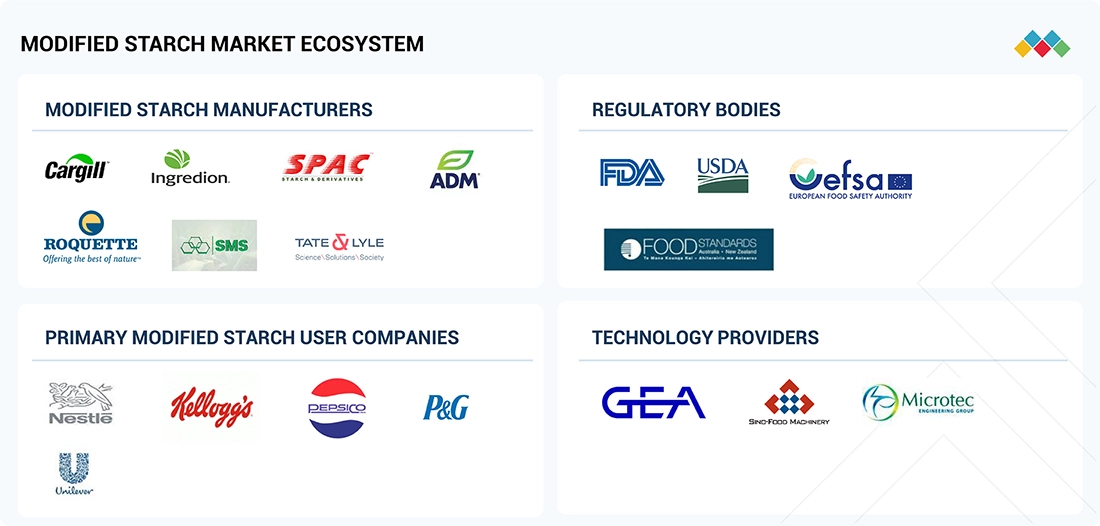
Innovation within the modified starch ecosystem is being driven by collaborations between global starch processors, biotechnology firms, research institutions, and food manufacturers. Companies are developing enzyme-modified, physically modified, and clean-label starches capable of withstanding extreme processing conditions such as high heat, shear, pressure, and freeze-thaw cycles. There is an increasing demand for solutions tailored to specific end-use industries, including bakery, dairy, meat processing, confectionery, and industrial manufacturing. Modified starches are becoming essential in formulation optimization due to their improved stability, consistency, and compatibility with modern processing technologies such as extrusion, high-temperature cooking, and retort sterilization. With a growing emphasis on sustainable sourcing and plant-based innovation, the market is poised for significant expansion over the coming years.
The trend toward premiumization and science-backed nutrition is prompting food manufacturers to reformulate products with safer, natural alternatives to synthetic additives, boosting the demand for physically, enzymatically, or clean-label processed starches. Enhanced understanding of starch functionality—such as freeze–thaw stability, thermal resistance, and controlled viscosity—is driving adoption across bakery, confectionery, dairy, meat processing, beverages, and nutritional supplements. Modified starch is also gaining traction in non-food applications, including paper coatings, adhesives, textiles, and biodegradable packaging, due to its superior binding strength, film-forming properties, and environmental compatibility. With widening applications and strong demand from both food and industrial sectors, the modified starch market is expected to experience sustained growth.
Download PDF Brochure: https://www.marketsandmarkets.com/pdfdownloadNew.asp?id=511
Key global players driving the market include ADM (US), Cargill (US), Ingredion (US), Tate & Lyle (UK), Roquette Frères (France), Avebe U.A. (Netherlands), Grain Processing Corporation (US), Emsland (Germany), AGRANA (Austria), SMS Corporation (Thailand), Global Bio-Chem Technology Group (Hong Kong), SPAC Starch (India), Qindao CBIH Company (China), Tereos (France), and KMC (Denmark). These companies are employing a combination of organic and inorganic growth strategies, including partnerships, acquisitions, product launches, strategic collaborations, and R&D expansion, to enhance their market position and meet the increasing demand for functional and sustainable food solutions.
Scientific research, clinical validation, and advanced strain stabilization and fermentation technologies are increasingly being adopted to improve product efficacy, shelf stability, and processing compatibility, particularly for dry and extruded pet food formats. With the growth of e-commerce and the shift toward personalized and preventive pet care, major players are expanding their modified starch portfolios across pet food, treats, supplements, and veterinary prescription diets to establish a strong global presence.
ADM, a recognized global leader in nutrition, provides a wide range of ingredients and solutions for human and animal nutrition. Utilizing natural crop resources, ADM develops ingredients for the food, beverage, and supplement industries worldwide. Its operations are organized into three main segments: Ag Services and Oilseeds, Nutrition, and Carbohydrate Solutions. With more than 330 manufacturing facilities across over 200 countries, ADM’s Carbohydrate Solutions segment specializes in starches and sweeteners, including native, functional, innovative, modified, resistant, and molding starches. These modified starches offer superior process stability and versatility, performing reliably under high acid, heat, shear, freezing, and retort conditions. Non-GMO, grain-free, and gluten-free variants are widely used in specialty foods such as dairy alternatives, sauces, dressings, baked goods, and frozen meals. In May 2022, ADM announced an expansion of starch production at its Marshall, Minnesota, facility to meet rising food, beverage, and industrial demand while supporting its sustainable BioSolutions platform.
Request Sample Pages: https://www.marketsandmarkets.com/requestsampleNew.asp?id=511
Leading Modified Starch Companies:
Cargill has grown from a single grain warehouse into a global leader in food ingredients and agricultural solutions. The company offers an extensive portfolio of starches and texturizers, including thinned modified starch, stabilized starch, roll-dried starch, and cold-water swelling (CWS) starches. Cargill’s advanced CWS starches, produced using spray-cooking technology, improve texture and stability in spreads, fillings, and sauces. Operating in approximately 70 countries and with a sales presence in nearly 125, Cargill continues to expand through strategic partnerships, such as its 2021 collaboration with Starpro in Thailand to grow specialty tapioca starch offerings across the Asia Pacific.
Roquette, a family-owned global leader in plant-based ingredients, operates in over 100 countries with more than 40 manufacturing sites and an annual turnover of approximately EUR 4.5 billion (USD 4.68 billion). Its Core Ingredients business serves food and nutrition, animal nutrition, and industrial sectors, offering modified starches, dextrins, maltodextrins, fibers, and organic acids. Over 50% of Roquette’s sales in this segment come from specialty products like modified starches, widely used in foods, beverages, infant formulas, and nutritional bars. The company emphasizes sustainability and innovation, supported by more than 20 R&D labs and innovation centers. In April 2024, Roquette introduced four new hydroxypropylated tapioca starches under the CLEARLAM TR line, enhancing viscosity, consistency, and elasticity in sauces, dairy desserts, yogurts, and bakery fillings.
Ingredion is a global provider of ingredient solutions, producing sweeteners, starches, nutrition ingredients, and biomaterials from plant-based sources. Serving 17,000 customers across 120 countries, Ingredion’s Texture & Healthful Solutions segment focuses on delivering high-value starches and texturizers aligned with trends such as health, wellness, clean label, and sustainability. The company is investing USD 160 million in global expansion, including a major facility in China, to increase production of modified and specialty starches and ensure efficient regional supply chains.
Collectively, these market leaders are driving the modified starch market forward through innovation, sustainability, and tailored solutions, ensuring the industry continues to grow across both food and industrial applications over the coming years.