
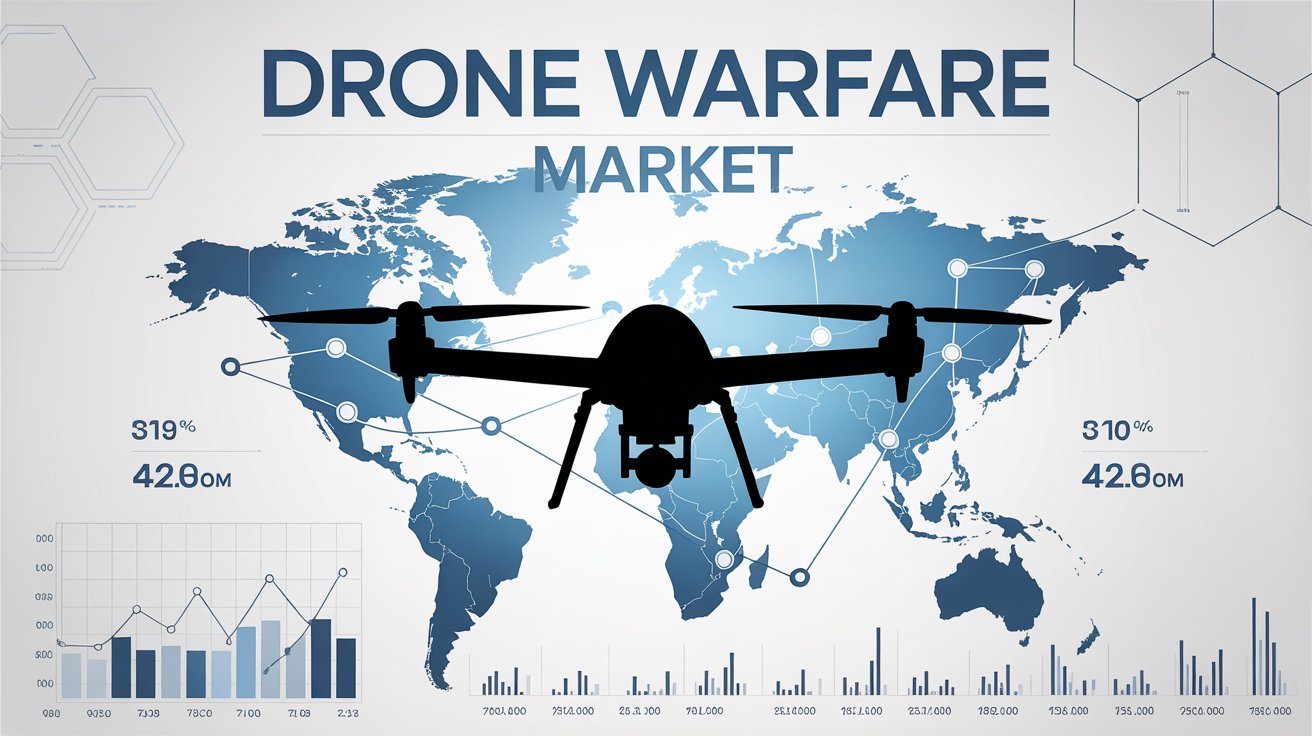
The global drone warfare market has entered a phase of accelerated transformation, shaped by rapid technological progress, evolving battlefield doctrines, and changing geopolitical realities. Valued at USD 20.1 billion in 2023, the market is expected to expand from USD 22.93 billion in 2025 to USD 30.5 billion by 2028, registering a compound annual growth rate of 8.6 percent during the forecast period. This growth trajectory reflects the increasing reliance of defense forces on unmanned aerial systems as critical assets for modern warfare, where speed, precision, and information dominance are decisive factors.
One of the most powerful forces driving the expansion of the drone warfare market is the deep integration of artificial intelligence and machine learning into military drones. These technologies have significantly enhanced the ability of drones to process vast amounts of data in real time, enabling advanced surveillance, target identification, and decision support. AI powered drones can analyze sensor inputs, detect patterns, and prioritize threats far more efficiently than traditional systems. This capability is especially important in complex, multi domain battlefields where rapid responses can determine mission success. As militaries increasingly adopt network centric warfare concepts, drones equipped with AI act as intelligent nodes within larger command and control networks, sharing data seamlessly with ground forces, naval assets, and manned aircraft.
Download PDF Brochure @ https://www.marketsandmarkets.com/pdfdownloadNew.asp?id=117992027
Cost efficiency is another fundamental factor fueling market growth. Compared with traditional manned aircraft, drones require significantly lower operational, maintenance, and training expenditures. Their smaller size and lighter weight result in reduced fuel consumption, making them ideal for long endurance missions. Maintenance requirements are less complex, which translates into lower lifecycle costs. Training drone operators is generally faster and more affordable than training fighter pilots, while the absence of onboard crew eliminates the human risk factor associated with combat missions. From a defense planning perspective, these advantages make drones an attractive solution for countries seeking to enhance military capabilities while managing constrained budgets.
The increasing use of drones for intelligence, surveillance, and reconnaissance missions represents a major application trend shaping the market. Advances in sensors, electro optical systems, infrared imaging, and synthetic aperture radar have dramatically improved the quality and reliability of data collected by UAVs. Modern drones can provide persistent situational awareness across vast areas, enabling commanders to monitor troop movements, secure borders, and identify emerging threats. The ability to conduct continuous surveillance without exposing personnel to danger has made drones indispensable in counterterrorism operations, border security, and conflict zones.
In terms of end users, defense forces worldwide are accelerating the adoption of UAVs for both reconnaissance and precision strike missions. The growing complexity of modern conflicts, often involving asymmetric warfare and non state actors, has increased the demand for flexible platforms capable of rapid deployment and precision engagement. Armed drones allow militaries to neutralize high value targets with minimal collateral damage, supporting more controlled and calculated military operations. This has reinforced their role as strategic assets rather than supplementary tools.
Regional dynamics further illustrate the evolving nature of the drone warfare market. Europe is projected to experience the fastest growth during the forecast period, with an expected compound annual growth rate of 9.6 percent. This expansion is driven by rising investments in drone technology, defense modernization initiatives, and heightened security concerns. Ongoing geopolitical tensions, including the conflict in Ukraine and increased strategic competition with Russia and China, have underscored the importance of advanced surveillance and strike capabilities. European defense forces increasingly view drone warfare systems as essential components of their security architecture, capable of delivering real time intelligence and rapid response options.
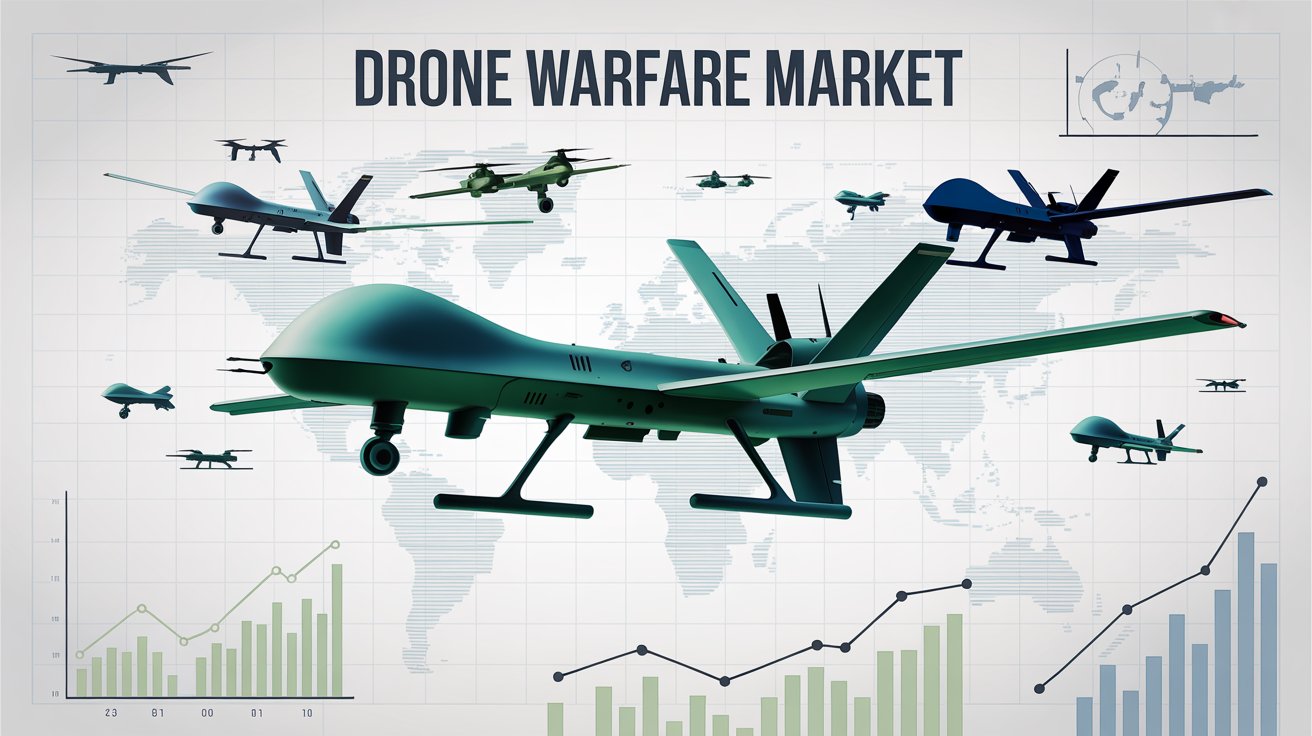
North America, particularly the United States, continues to hold a dominant position in the global drone warfare market. The United States remains the largest user of military drones, supported by a substantial defense budget and a strong focus on technological superiority. US defense forces have extensively deployed UAVs in counterinsurgency and counterterrorism operations worldwide, reinforcing their operational value. Rising investments in research and development have further strengthened the domestic drone ecosystem, driving innovations in propulsion, materials, sensors, and autonomous capabilities. The declining cost of fiber composite materials used in drone hardware has also contributed to more cost effective production and wider deployment.
Despite its strong growth outlook, the drone warfare market faces important restraints related to international legal and ethical frameworks. The global regulatory environment governing the use of lethal autonomous weapons systems remains under development, with differing national perspectives complicating consensus. Questions surrounding accountability, human oversight, and decision making by autonomous systems continue to generate debate. This regulatory uncertainty can slow investment and adoption, as governments and defense contractors seek clarity on compliance and ethical responsibilities. Public concern over the use of autonomous weapons also influences policy decisions, potentially limiting deployment in certain regions. Addressing these challenges through international cooperation, transparent guidelines, and the inclusion of meaningful human control is essential for the sustainable growth of the market.
At the same time, the market presents significant opportunities linked to advancements in electronic warfare systems, anti air laser technologies, and drone hunting drones. Electronic warfare capabilities that disrupt enemy communications and sensors are becoming increasingly important as drone usage proliferates. Anti air laser systems offer precise and cost effective solutions for countering hostile drones with minimal collateral damage. Drone hunting drones, designed to intercept or neutralize adversarial UAVs, represent an emerging area of innovation. These technologies not only expand the functional scope of drone warfare but also open new revenue streams for defense contractors through government partnerships and long term procurement programs.
Operational challenges such as weather sensitivity and payload limitations continue to affect drone effectiveness in certain scenarios. Adverse weather conditions can restrict flight operations and require additional investments in robust, weather resistant designs. Payload constraints, particularly for smaller drones, limit the range of equipment and munitions they can carry, affecting mission versatility. However, ongoing research focuses on enhancing endurance, improving materials, and adopting swarm based approaches where multiple smaller drones operate collaboratively to overcome individual limitations.
Within the market ecosystem, defense agencies and governments remain the principal consumers, driving demand for advanced and customized drone solutions. Their requirements for enhanced surveillance, secure communication, and operational flexibility shape the development priorities of manufacturers and technology providers. Collaboration between governments, defense contractors, and technology firms plays a critical role in advancing drone warfare capabilities.
From a segmentation perspective, stealth drones are projected to grow at the highest rate during the forecast period. Their ability to conduct covert surveillance and precision strikes makes them highly valuable in contested environments. Equipped with beyond visual line of sight capabilities, stealth drones are also finding applications in search and rescue missions across remote and inaccessible regions. Platforms such as Boeing’s Phantom Ray exemplify the demand for durable, low observable unmanned combat air vehicles capable of performing diverse missions, including autonomous refueling and ground attack.
In terms of operational modes, semi autonomous drones accounted for the largest market share in 2023. These systems represent a balance between automation and human control, enabling drones to perform complex tasks independently while remaining under human supervision. Semi autonomous drones enhance battlefield awareness, improve mission efficiency, and reduce risks to personnel. While challenges related to cybersecurity, ethics, and human machine coordination persist, responsible integration of these systems has the potential to redefine future warfare.
Ask for Sample Report @ https://www.marketsandmarkets.com/requestsampleNew.asp?id=117992027
Recent developments highlight the active evolution of the drone warfare market. Contracts such as the USD 389 million award to General Atomics Aeronautical Systems for MQ 1C Gray Eagle systems demonstrate continued investment in advanced UAV platforms. Ongoing conflicts have further underscored the operational importance of drones, with extensive use for reconnaissance, targeting, and strike missions reinforcing their strategic relevance.
Overall, the global drone warfare market is positioned for sustained growth as technological innovation, cost efficiency, and evolving military strategies converge. As regulatory frameworks mature and ethical considerations are addressed, drones are expected to become even more integral to defense operations worldwide. The shift toward autonomous and semi autonomous systems signals a future in which drone warfare plays a central role in shaping modern military power and global security dynamics.