
The rapid expansion of artificial intelligence (AI), cloud computing, generative AI, and hyperscale data centers is creating significant commercial opportunities for semiconductor manufacturers worldwide. As organizations increasingly depend on data-intensive applications, the demand for high-performance processors, advanced memory, networking chips, and power-efficient semiconductor components is accelerating. These developments are positioning the Data Center Chip Market as a critical growth engine for the global semiconductor industry.
Data center chips are essential components that enable computing, data storage, networking, power management, and signal processing across modern data center infrastructure. The increasing complexity of AI workloads and large-scale computing operations is encouraging technology companies to invest in advanced GPUs, CPUs, AI accelerators, high-bandwidth memory (HBM), and specialized integrated circuits.
According to MarketsandMarkets, the global Data Center Chip Market is projected to grow from USD 283.16 billion in 2026 to USD 687.65 billion by 2032, registering a compound annual growth rate (CAGR) of 15.9% during the forecast period. Increasing investments in AI infrastructure, rapid hyperscale data center expansion, and growing demand for energy-efficient computing are among the major factors supporting market growth.
The Data Center Chip Market Opportunities are expanding beyond traditional processor manufacturing. Companies are exploring revenue opportunities across custom AI accelerators, advanced memory architectures, networking technologies, power management solutions, and application-specific semiconductor platforms.
AI Infrastructure Expansion Creates Significant Revenue Opportunities
The increasing deployment of artificial intelligence is one of the most important factors driving the Data Center Chip Market Opportunities. Generative AI applications, large language models, machine learning platforms, and real-time analytics require enormous computing resources.
Traditional data center processors are increasingly being supplemented by specialized hardware designed to accelerate complex AI workloads. GPUs and AI accelerators enable parallel processing, allowing data centers to train and operate sophisticated AI models more efficiently.
Companies such as NVIDIA, AMD, Intel, and Google are investing in advanced computing architectures to address the growing requirements of AI infrastructure.
The expansion of AI training and inference workloads creates multiple revenue opportunities for semiconductor manufacturers. These include developing high-performance GPUs, specialized AI processors, advanced memory solutions, and high-speed interconnect technologies.
Furthermore, enterprises are increasingly adopting AI-powered applications across healthcare, financial services, manufacturing, telecommunications, and retail. This adoption is increasing the need for scalable computing infrastructure and creating long-term demand for specialized data center chips.
For semiconductor companies, the opportunity lies in developing processors that deliver higher computing performance, lower latency, improved energy efficiency, and optimized total cost of ownership.
Download PDF Brochure @ https://www.marketsandmarkets.com/pdfdownloadNew.asp?id=39999570
Hyperscale Data Centers Accelerate Semiconductor Demand
The rapid expansion of hyperscale data centers is another major factor creating attractive Data Center Chip Market Opportunities. Cloud service providers and technology companies are continuously expanding their infrastructure to support increasing volumes of digital information, enterprise applications, and AI workloads.
Hyperscale data centers require large numbers of processors, memory chips, networking components, and power management integrated circuits. Their infrastructure also needs to support high availability, rapid data transfer, and efficient resource utilization.
The growing demand for cloud services is encouraging companies such as Amazon Web Services, Microsoft, and Google to invest in advanced data center infrastructure.
These investments are generating demand for next-generation CPUs, GPUs, memory technologies, networking chips, and custom-designed processors.
The expansion of hyperscale facilities also creates opportunities for semiconductor manufacturers to establish long-term supply agreements with cloud service providers.
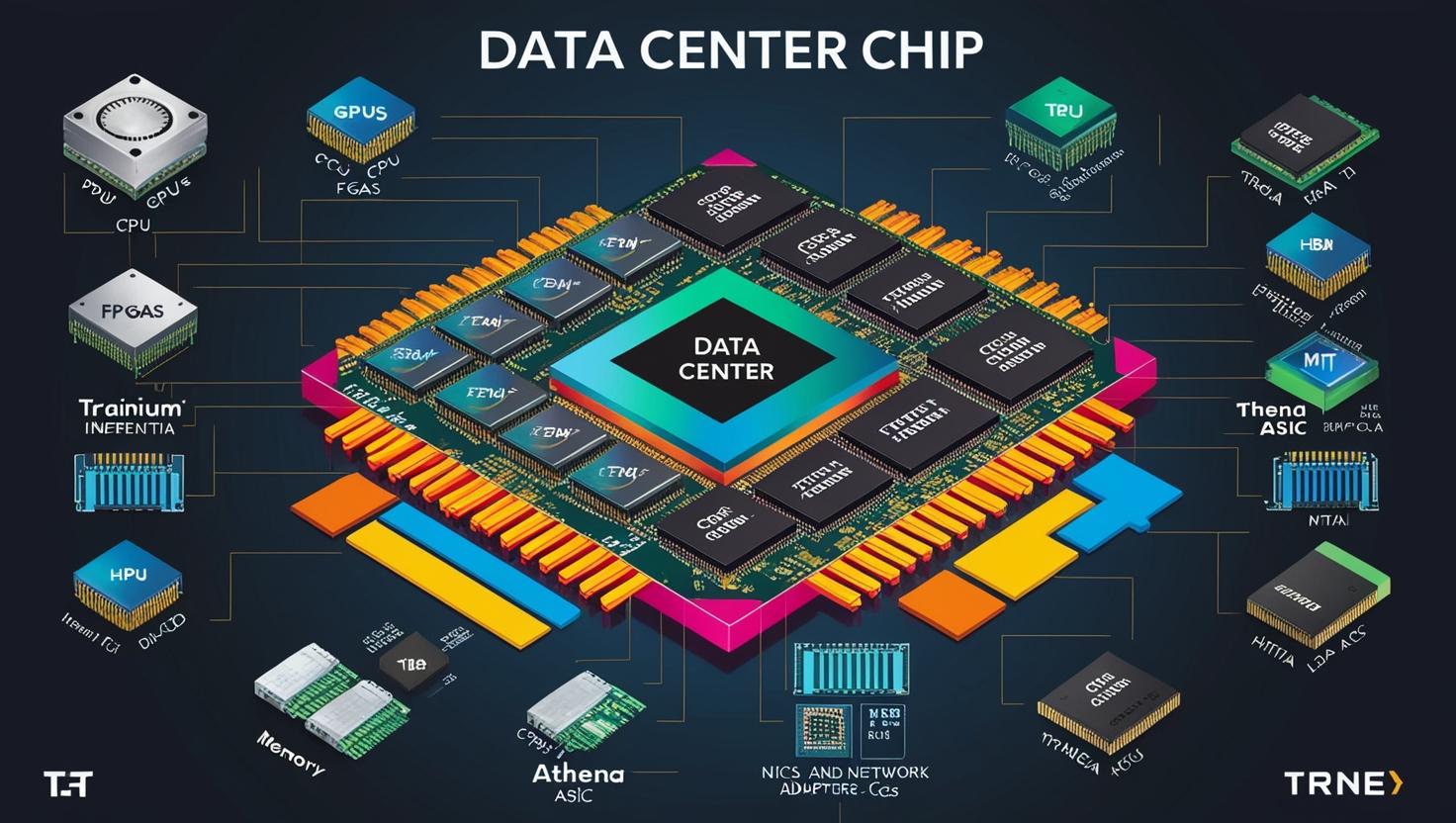
Additionally, the increasing complexity of data center workloads is encouraging operators to adopt heterogeneous computing architectures that combine CPUs, GPUs, FPGAs, and application-specific integrated circuits (ASICs).
This shift is creating new business opportunities for companies capable of delivering specialized chips optimized for different computing applications.
Advanced Memory Technologies Open New Growth Avenues
Memory is becoming an increasingly important component of modern data center infrastructure. AI workloads and high-performance computing applications require rapid access to large volumes of data, making memory bandwidth and capacity critical performance factors.
According to MarketsandMarkets, the memory segment is expected to register the highest CAGR of 16.7% during the forecast period.
The growing adoption of generative AI and large language models is increasing demand for high-bandwidth memory, DDR memory, and advanced memory architectures.
High-bandwidth memory enables faster data transfer between processors and memory, helping improve the performance of AI accelerators and GPUs. As AI models become more complex, the need for advanced memory technologies is expected to increase.
Leading semiconductor manufacturers, including Samsung, SK hynix, and Micron Technology, are investing in advanced memory production and next-generation semiconductor technologies.
These developments create significant Data Center Chip Market Opportunities for companies involved in memory manufacturing, packaging technologies, and semiconductor integration.
Manufacturers that can deliver higher memory bandwidth, improved power efficiency, and increased storage capacity are positioned to benefit from the growing requirements of AI and hyperscale computing.
Custom AI Accelerators and FPGA Adoption Create Emerging Opportunities
The increasing diversity of data center workloads is encouraging operators to move beyond general-purpose processors toward specialized computing architectures.
Custom AI accelerators and field-programmable gate arrays (FPGAs) are becoming important solutions for optimizing specific workloads. These technologies can be designed or configured to deliver improved performance, lower latency, and better energy efficiency for selected applications.
Custom accelerators are particularly valuable for AI inference, recommendation systems, image processing, and large-scale data analytics.
Cloud service providers are also investing in internally developed semiconductor platforms to optimize their infrastructure and reduce dependence on external hardware suppliers.
For example, custom processor and accelerator development creates opportunities for companies to differentiate their computing platforms and improve operating economics.
FPGA adoption is another promising area. These chips offer hardware flexibility and can be reconfigured for different workloads, making them useful for networking, signal processing, and specialized computing applications.
The increasing adoption of customized semiconductor architectures is creating revenue opportunities for chip designers, IP providers, foundries, and semiconductor packaging companies.
Networking Chips Enable High-Speed Data Center Connectivity
Modern data centers depend on high-speed networking infrastructure to transfer large volumes of information between processors, memory systems, storage devices, and external networks.
The growing use of distributed AI computing and large-scale model training is increasing demand for advanced networking chips and connectivity solutions.
Networking components such as network interface controllers (NICs), switches, adapters, and high-speed interconnect technologies play an important role in reducing communication bottlenecks.
As data center architectures become more interconnected, operators require solutions capable of delivering higher bandwidth, lower latency, and reliable data transmission.
This creates significant Data Center Chip Market Opportunities for manufacturers developing advanced networking semiconductors, connectivity ICs, and high-speed data transfer solutions.
Companies investing in next-generation networking technologies can benefit from the increasing demand for AI clusters, hyperscale computing environments, and cloud infrastructure.
Furthermore, the integration of networking and processing capabilities is encouraging innovation in advanced semiconductor architectures and system-level solutions.
Energy-Efficient Chips Become a Strategic Investment Priority
The growing energy consumption of AI and hyperscale data centers is creating pressure on operators to improve power efficiency.
High-performance GPUs and AI accelerators require substantial electricity and generate considerable heat during operation. As computing requirements increase, energy consumption and cooling expenses are becoming important considerations for data center operators.
This challenge is creating opportunities for semiconductor manufacturers to develop energy-efficient processors, advanced power management chips, and optimized computing architectures.
Power management integrated circuits help regulate voltage, improve power distribution, and maintain stable operating conditions across data center infrastructure.
Companies such as Monolithic Power Systems, Texas Instruments, and Analog Devices participate in the broader semiconductor ecosystem supporting power management and analog technologies.
The increasing focus on sustainable data center operations is encouraging investment in chips that deliver higher performance per watt.
Manufacturers that can improve energy efficiency without compromising computing performance may gain competitive advantages through stronger customer demand and long-term commercial partnerships.
Sovereign AI Infrastructure Creates New Market Opportunities
The emergence of sovereign AI infrastructure initiatives is creating another important growth avenue for the Data Center Chip Market.
Governments and enterprises are increasingly investing in localized computing infrastructure to strengthen data security, support regulatory compliance, and reduce dependence on external technology ecosystems.
These initiatives involve building domestic data centers, developing national AI capabilities, and expanding local semiconductor and computing ecosystems.
Such investments create demand for processors, memory chips, networking components, and specialized AI accelerators.
For semiconductor manufacturers, sovereign AI infrastructure creates opportunities to establish regional partnerships, supply domestic cloud providers, and participate in government-supported technology programs.
It also encourages investments in semiconductor research and development, advanced packaging, and local manufacturing capabilities.
As more countries prioritize digital sovereignty and AI infrastructure independence, demand for specialized data center semiconductor solutions could expand across multiple regions.
Cloud Service Providers Remain Key End Users
Cloud service providers are expected to dominate the Data Center Chip Market by end user, supported by their extensive investments in computing infrastructure.
Companies operating cloud platforms require advanced semiconductor components to support virtual machines, enterprise applications, AI services, data storage, and high-performance computing.
Their infrastructure expansion creates recurring demand for processors, memory, networking chips, and power management components.
Large cloud providers are also increasingly developing proprietary processors and accelerators to optimize their computing platforms.
This creates opportunities for semiconductor manufacturers through direct partnerships, customized chip development, and long-term supply agreements.
Enterprises also represent an important customer segment as businesses modernize their IT infrastructure and adopt private cloud, hybrid cloud, and AI-powered applications.
The increasing adoption of data-intensive enterprise workloads is expected to strengthen demand for advanced semiconductor components.
Asia Pacific Emerges as a High-Growth Regional Market
Regional expansion is creating additional Data Center Chip Market Opportunities for semiconductor manufacturers and technology suppliers.
According to MarketsandMarkets, Asia Pacific is expected to register the highest CAGR during the forecast period. Rapid data center development, semiconductor manufacturing investments, and growing adoption of cloud computing and AI are supporting regional market growth.
Countries such as China, Japan, South Korea, and India are strengthening their digital infrastructure and investing in advanced computing capabilities.
The presence of semiconductor manufacturing, assembly, and testing facilities across the region also supports the development of the broader data center chip ecosystem.
North America remains a major market, accounting for 36.7% of global Data Center Chip Market revenue in 2025. The region benefits from the presence of leading semiconductor manufacturers, hyperscale cloud providers, and major AI technology companies.
Europe also presents opportunities through investments in cloud infrastructure, enterprise digitalization, and advanced semiconductor technologies.
For industry participants, regional manufacturing partnerships, supply chain diversification, and localized product development will be important strategies for capturing emerging demand.
Competitive Landscape and Strategic Industry Positioning
The Data Center Chip Market is characterized by intense competition, continuous product innovation, and strategic investments in semiconductor technologies.
Leading companies are focusing on developing high-performance processors, advanced memory products, AI accelerators, and networking solutions to strengthen their competitive positions.
Key players operating in the market include:
- NVIDIA Corporation
- Advanced Micro Devices, Inc.
- Intel Corporation
- Samsung Electronics
- SK hynix Inc.
- Amazon Web Services
- Micron Technology
- Texas Instruments
- Analog Devices
- Microsoft
- Monolithic Power Systems
NVIDIA maintains a strong position in GPU-based computing and AI accelerators, while AMD and Intel continue to develop advanced processors and data center computing solutions.
Samsung, SK hynix, and Micron Technology are important participants in the advanced memory ecosystem.
Meanwhile, cloud service providers such as Google and Amazon Web Services are investing in custom semiconductor architectures to optimize their infrastructure.
Emerging companies, including Blaize, Kneron, Rebellions, and Groq, are also developing specialized computing solutions for AI and data center applications.
Strategic partnerships, product innovation, advanced packaging, and investments in energy-efficient semiconductor technologies will remain important competitive strategies.
Challenges Influencing Market Expansion
Despite strong growth prospects, the Data Center Chip Market faces several challenges that could influence commercialization and adoption.
The high cost and limited supply of advanced GPUs and AI accelerators remain significant restraints. These components require sophisticated manufacturing processes and advanced packaging technologies, which can increase production costs and limit availability.
The concentration of advanced semiconductor manufacturing capacity also creates supply chain risks for chip manufacturers and data center operators.
Another important challenge is the high energy consumption of data center infrastructure. Increasing AI workloads are raising electricity requirements and creating additional pressure on cooling systems.
Hardware security vulnerabilities also require attention as data centers process sensitive enterprise information and critical workloads.
Addressing these challenges through supply chain diversification, semiconductor innovation, energy-efficient architectures, and advanced hardware security will be essential for sustainable market growth.
Future Outlook: Unlocking Long-Term Revenue Potential
The future of the Data Center Chip Market will be shaped by the convergence of artificial intelligence, hyperscale computing, advanced memory technologies, and next-generation semiconductor architectures.
As generative AI, cloud computing, and enterprise digital transformation continue to expand, demand for specialized and energy-efficient chips is expected to increase.
The projected growth from USD 283.16 billion in 2026 to USD 687.65 billion by 2032 highlights the significant commercial potential of this industry.
The most attractive Data Center Chip Market Opportunities are emerging across AI accelerators, high-bandwidth memory, custom processors, networking chips, power management ICs, and sovereign AI infrastructure.
For semiconductor manufacturers, the ability to deliver high-performance computing solutions while reducing power consumption and overall operating costs will be a major competitive differentiator.
Investments in research and development, strategic partnerships with cloud providers, and expansion into specialized computing applications will help companies capture new revenue streams.
Overall, the Data Center Chip Market is becoming a foundational part of the global AI economy. Its expanding role in hyperscale computing, cloud infrastructure, and intelligent digital services is expected to create substantial business opportunities for semiconductor manufacturers and technology providers worldwide.
Frequently Asked Questions (FAQs)
1. What is the projected size of the Data Center Chip Market by 2032?
The global Data Center Chip Market is projected to reach USD 687.65 billion by 2032, growing from USD 283.16 billion in 2026 at a CAGR of 15.9%.
2. What are the major growth drivers of the Data Center Chip Market?
Major growth drivers include increasing AI and machine learning workloads, rapid hyperscale data center expansion, rising cloud computing adoption, demand for high-performance processors, and the need for energy-efficient computing.
3. Which component segment is expected to grow fastest in the Data Center Chip Market?
The memory segment is expected to register the highest CAGR of 16.7%, driven by increasing demand for high-bandwidth memory and advanced memory technologies for AI computing.
4. Which region is expected to experience the fastest growth in the Data Center Chip Market?
Asia Pacific is expected to register the highest CAGR during the forecast period, supported by expanding data center infrastructure, semiconductor investments, and increasing adoption of AI and cloud computing.
5. Who are the key players in the Data Center Chip Market?
Major players include NVIDIA, AMD, Intel, Samsung, SK hynix, Google, Amazon Web Services, Micron Technology, Texas Instruments, and Analog Devices.