
The global Valve Positioners Market is witnessing steady growth as industries increasingly invest in industrial automation, advanced process control systems, and intelligent flow management technologies. The growing need for operational efficiency, accurate valve control, equipment reliability, and reduced maintenance costs is encouraging manufacturers to adopt advanced valve positioning solutions across critical industrial applications.
The Valve Positioners Market Analysis 2030 highlights the growing importance of digitalization, smart manufacturing, and connected industrial equipment. Valve positioners play a critical role in regulating valve movement by ensuring that control valves accurately respond to signals from process control systems. These devices are widely utilized across oil & gas, chemicals, energy & power, pharmaceuticals, water treatment, and manufacturing industries.
According to MarketsandMarkets, the global valve positioner market is projected to grow from USD 2.07 billion in 2025 to USD 2.56 billion by 2030, registering a compound annual growth rate (CAGR) of 4.4% during 2025–2030. Increasing industrial automation and the adoption of digital valve positioners are expected to support market expansion.
1. Rising Industrial Automation Drives Valve Positioners Market Growth
One of the major factors driving the Valve Positioners Market is the increasing adoption of industrial automation across process industries. Manufacturers are investing in automated control systems to improve production efficiency, minimize operational errors, and maintain consistent process performance.
Valve positioners help regulate the movement of control valves by adjusting actuator positions according to signals received from control systems. This enables precise control of liquids, gases, and steam across industrial processes.
Industries such as oil & gas, chemicals, power generation, and pharmaceuticals require accurate flow regulation to maintain operational safety and product quality. The growing deployment of automated production facilities is therefore creating opportunities for valve positioner manufacturers.
Additionally, increasing investments in smart factories and process optimization technologies are expected to strengthen market demand through 2030.
2. Digital Valve Positioners Transform Industrial Process Control
The growing adoption of digital valve positioners is one of the most important trends shaping the global industry.
Digital valve positioners offer advanced capabilities, including real-time diagnostics, remote configuration, automated calibration, and predictive maintenance. These features enable industrial operators to monitor valve performance, identify potential issues, and reduce unexpected equipment downtime.
Unlike conventional pneumatic solutions, digital positioners can communicate with modern industrial automation systems through advanced communication protocols and connected platforms.
According to MarketsandMarkets, the digital valve positioner segment is projected to register the highest CAGR during the forecast period. Increasing investments in Industry 4.0, intelligent manufacturing, and connected industrial infrastructure are supporting this growth.
Download PDF Brochure @ https://www.marketsandmarkets.com/pdfdownloadNew.asp?id=138950854
3. Oil & Gas Industry Maintains Strong Demand for Valve Positioners
The oil & gas industry represents a major application area for valve positioners due to the extensive use of automated flow control systems across upstream, midstream, and downstream operations.
Oil refineries, pipelines, LNG facilities, and petrochemical plants require precise control of fluid and gas movement to maintain operational reliability and safety.
Valve positioners help improve control valve accuracy, optimize process conditions, and support efficient equipment performance in demanding industrial environments.
Furthermore, increasing investments in pipeline infrastructure, refinery modernization, and energy production facilities are creating additional opportunities for valve positioner manufacturers.
The growing focus on operational safety, emissions management, and predictive maintenance is expected to support the adoption of advanced valve positioning technologies across the oil & gas industry.
4. Increasing Adoption of IoT and Industry 4.0 Technologies
The integration of the Industrial Internet of Things (IIoT), artificial intelligence, and advanced analytics is transforming traditional valve control systems.
Smart valve positioners equipped with connected sensors and diagnostic capabilities enable industrial operators to collect real-time information about valve performance and operating conditions.
This information helps organizations identify abnormal operating behavior, schedule maintenance activities, and improve equipment reliability.
The integration of valve positioners with distributed control systems (DCS), supervisory control and data acquisition (SCADA) platforms, and asset management systems is also improving industrial process visibility.
As manufacturers increasingly transition toward connected production environments, demand for intelligent valve positioning technologies is expected to increase.
5. Digital Segment Leads Technological Transformation
Based on type, the valve positioner market is categorized into:
-
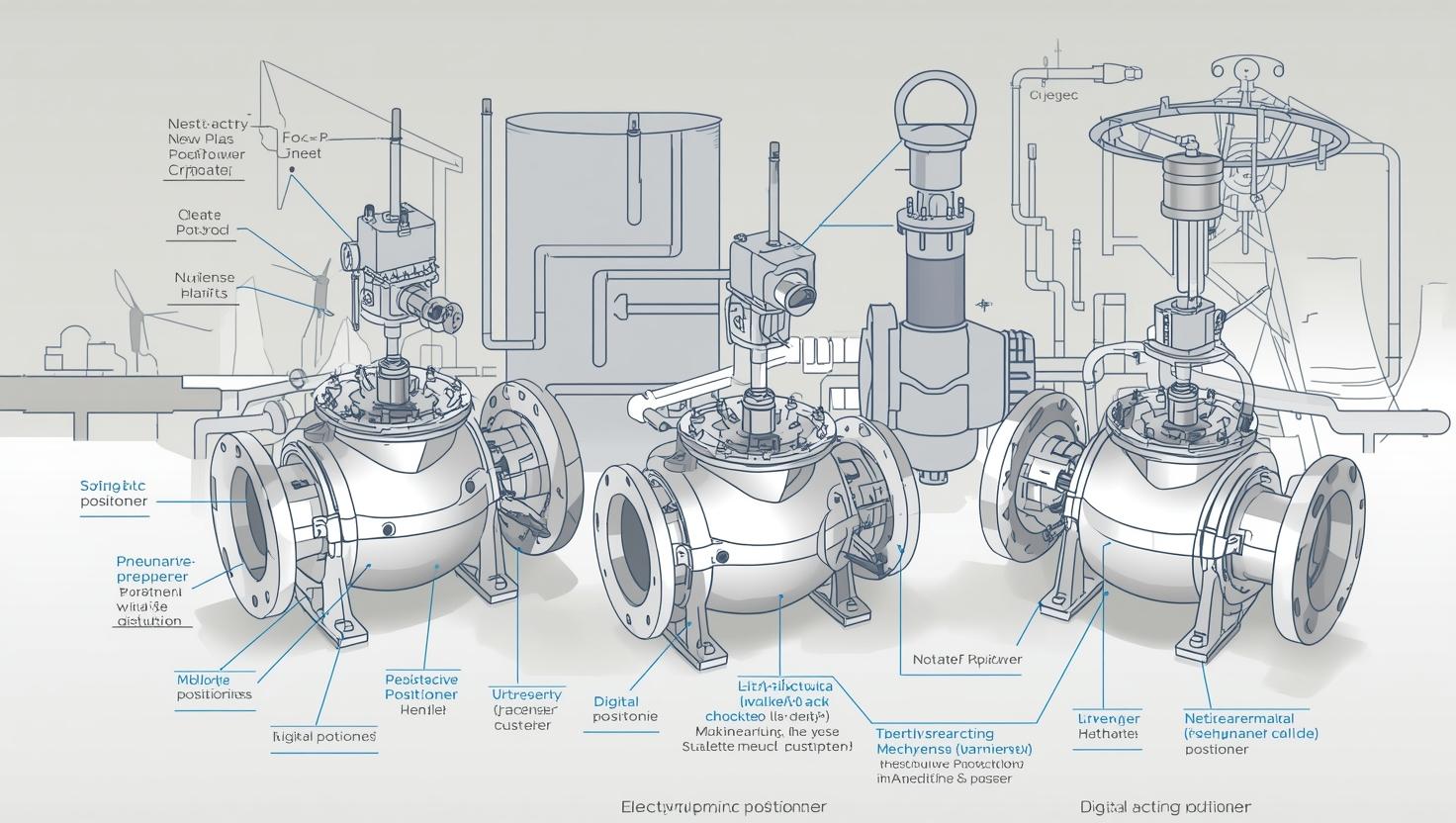
Pneumatic positioners
-
Electro-pneumatic positioners
-
Digital positioners
Among these, digital valve positioners are gaining significant attention because of their advanced monitoring, communication, and diagnostic capabilities.
Pneumatic positioners continue to serve applications requiring conventional pneumatic control, while electro-pneumatic positioners provide an interface between electronic control systems and pneumatic actuators.
Digital positioners are increasingly preferred in modern industrial environments because they support remote monitoring, automated diagnostics, and predictive maintenance.
The transition from traditional positioning technologies toward intelligent digital solutions is expected to remain a significant market development through 2030.
6. Single-Acting Positioners Support Reliable Industrial Operations
Based on actuation, the market is segmented into single-acting and double-acting positioners.
Single-acting positioners are widely used in applications where simple operation, reliable performance, and fail-safe functionality are important. These systems typically use a single air output to control actuator movement, with a spring or other mechanism providing the return action.
Double-acting positioners regulate actuators using air pressure in both directions, making them suitable for applications requiring controlled movement in both directions.
The selection of actuator and positioner configurations depends on process requirements, operating conditions, safety considerations, and equipment specifications.
Increasing demand for reliable industrial automation and efficient valve operation is supporting opportunities across both actuation categories.
7. Asia Pacific Emerges as a Key Growth Region
Asia Pacific represents an important regional market for valve positioners, supported by increasing industrialization, expanding manufacturing activities, and growing investments in energy infrastructure.
Countries such as China, India, Japan, and South Korea are witnessing increasing demand for advanced process automation solutions across oil & gas, chemicals, power generation, water treatment, and manufacturing industries.
The expansion of industrial facilities and modernization of existing production infrastructure are encouraging manufacturers to adopt intelligent valve control technologies.
According to MarketsandMarkets, Asia Pacific is the fastest-growing regional market for valve positioners. Strong energy demand, expanding refinery infrastructure, industrial automation investments, and supportive government initiatives are contributing to regional growth.
8. Remote Operations Create New Market Opportunities
The growing focus on remote industrial operations and decentralized plant setups is creating new opportunities for valve positioner manufacturers.
Industries operating offshore facilities, remote pipelines, energy installations, and geographically distributed processing plants increasingly require automated control solutions that can be monitored and managed remotely.
Advanced digital valve positioners enable operators to access diagnostic information, configure equipment, and monitor valve performance without requiring frequent physical inspections.
These capabilities can reduce maintenance requirements, improve workforce productivity, and minimize operational interruptions.
The increasing adoption of remote monitoring and decentralized industrial operations is expected to create attractive opportunities for companies developing connected valve positioning solutions.
9. Challenges Affecting the Valve Positioners Market
Despite promising growth opportunities, the valve positioner industry faces several technical and operational challenges.
One important challenge involves positioner overshoot and oversized valves. Improper valve sizing and control system configuration can result in unstable operation, inaccurate positioning, and inefficient process performance.
Additionally, the installation and integration of advanced digital positioners may require significant investment, particularly for industrial facilities operating legacy control infrastructure.
The growing connectivity of industrial equipment also creates cybersecurity considerations, requiring manufacturers to develop secure and interoperable solutions.
Addressing these challenges through improved product design, advanced diagnostics, standardized communication protocols, and technical training will remain important for market participants.
10. Competitive Landscape and Key Market Players
The global valve positioner market includes established industrial automation companies focusing on product innovation, digital transformation, strategic partnerships, and portfolio expansion.
Major companies operating in the market include:
-
Emerson Electric Co. (US)
-
Siemens AG (Germany)
-
ABB Ltd. (Switzerland)
-
Flowserve Corporation (US)
-
Schneider Electric (France)
These companies are investing in advanced valve positioning technologies, intelligent process control systems, and digital diagnostic capabilities to strengthen their market positions.
Product development, research and development investments, strategic collaborations, and expansion into emerging industrial markets are expected to remain important competitive strategies.
Future Outlook: What to Expect by 2030?
The global valve positioner industry is expected to experience steady growth through 2030 as industries increasingly prioritize automation, process optimization, and operational reliability.
The Valve Positioners Market Analysis 2030 indicates that digital positioners, IIoT integration, predictive maintenance, and remote monitoring will play increasingly important roles in shaping the industry’s future.
Increasing investments in oil & gas infrastructure, power generation, chemicals, pharmaceuticals, and water treatment facilities are expected to support market demand.
Asia Pacific is likely to remain a significant growth region, supported by industrial expansion and increasing adoption of smart manufacturing technologies.
With the global market projected to reach USD 2.56 billion by 2030, manufacturers focusing on intelligent positioning technologies, advanced diagnostics, and connected industrial automation solutions are well-positioned to capitalize on emerging opportunities.
Frequently Asked Questions (FAQs)
1. What is the projected size of the global Valve Positioners Market by 2030?
According to MarketsandMarkets, the global valve positioner market is projected to grow from USD 2.07 billion in 2025 to USD 2.56 billion by 2030, registering a CAGR of 4.4% during the forecast period.
2. What are the major factors driving Valve Positioners Market growth?
Key growth drivers include increasing industrial automation, rising demand for efficient process control systems, growing investments in oil & gas infrastructure, adoption of smart manufacturing technologies, and increasing demand for digital valve positioners.
3. Which type of valve positioner is expected to witness the fastest growth?
Digital valve positioners are projected to register the highest CAGR during the forecast period due to their advanced diagnostic capabilities, remote monitoring features, automated calibration, and integration with industrial automation systems.
4. Which industries are the major end users of valve positioners?
Major end-use industries include oil & gas, chemicals, energy & power, pharmaceuticals, water and wastewater treatment, and manufacturing. These industries use valve positioners to improve flow regulation, process accuracy, and operational reliability.
5. Which region is expected to witness the fastest growth in the Valve Positioners Market?
Asia Pacific is expected to register the fastest growth, supported by rapid industrialization, expanding manufacturing facilities, increasing energy demand, and rising investments in industrial automation across China, India, Japan, and South Korea.