
The LiDAR Market Growth is gaining significant momentum as industries increasingly adopt advanced sensing technologies, autonomous systems, and intelligent infrastructure solutions. Light Detection and Ranging (LiDAR) technology plays an important role in capturing precise three-dimensional information about surrounding environments. By using laser pulses to measure distances and generate highly accurate 3D maps, LiDAR enables machines, vehicles, and infrastructure systems to understand their surroundings with greater precision.
The growing adoption of autonomous vehicles, advanced driver assistance systems (ADAS), robotics, drones, and smart city solutions is creating new opportunities for the LiDAR industry. Automotive manufacturers are integrating LiDAR sensors to improve vehicle perception, object detection, and road safety. Similarly, infrastructure developers and geospatial organizations are using LiDAR technology for surveying, mapping, construction planning, and environmental monitoring.
Technological advancements in solid-state LiDAR, sensor miniaturization, artificial intelligence (AI), and real-time data processing are further supporting market expansion. As industries move toward automation and data-driven operations, the LiDAR Market Growth outlook remains promising, with applications expanding across automotive, industrial, aerospace, defense, and infrastructure sectors.
Understanding the LiDAR Market and Its Growing Importance
LiDAR is a remote sensing technology that uses laser light to measure distances between a sensor and surrounding objects. It generates detailed point-cloud data that can be processed into three-dimensional representations of buildings, roads, landscapes, vehicles, and other physical environments.
Unlike conventional imaging technologies, LiDAR provides accurate depth information and spatial measurements, making it valuable for applications that require precise environmental perception. This capability is particularly important for autonomous vehicles, which need to detect obstacles, identify road boundaries, recognize nearby objects, and navigate complex driving environments.
The increasing need for accurate mapping and real-time environmental awareness is strengthening demand across several industries. Automotive manufacturers are adopting LiDAR systems to enhance autonomous driving capabilities, while construction and surveying companies use the technology to improve measurement accuracy and project efficiency.
Moreover, the integration of LiDAR with AI, machine learning, cloud computing, and geographic information systems (GIS) is expanding its capabilities. These developments are positioning LiDAR as an essential technology for next-generation mobility and intelligent infrastructure.
This growth reflects the increasing importance of LiDAR in applications requiring accurate distance measurement, environmental perception, and 3D visualization. The automotive industry is emerging as a major demand generator as manufacturers integrate LiDAR sensors into advanced driver assistance systems and autonomous driving platforms.
Furthermore, growing investments in smart infrastructure, digital twins, urban development, and geospatial intelligence are creating additional revenue opportunities for technology providers. The increasing deployment of drone-based surveying and automated mapping solutions is also contributing to the expansion of the global LiDAR industry.
Download PDF Brochure @ https://www.marketsandmarkets.com/pdfdownloadNew.asp?id=1261
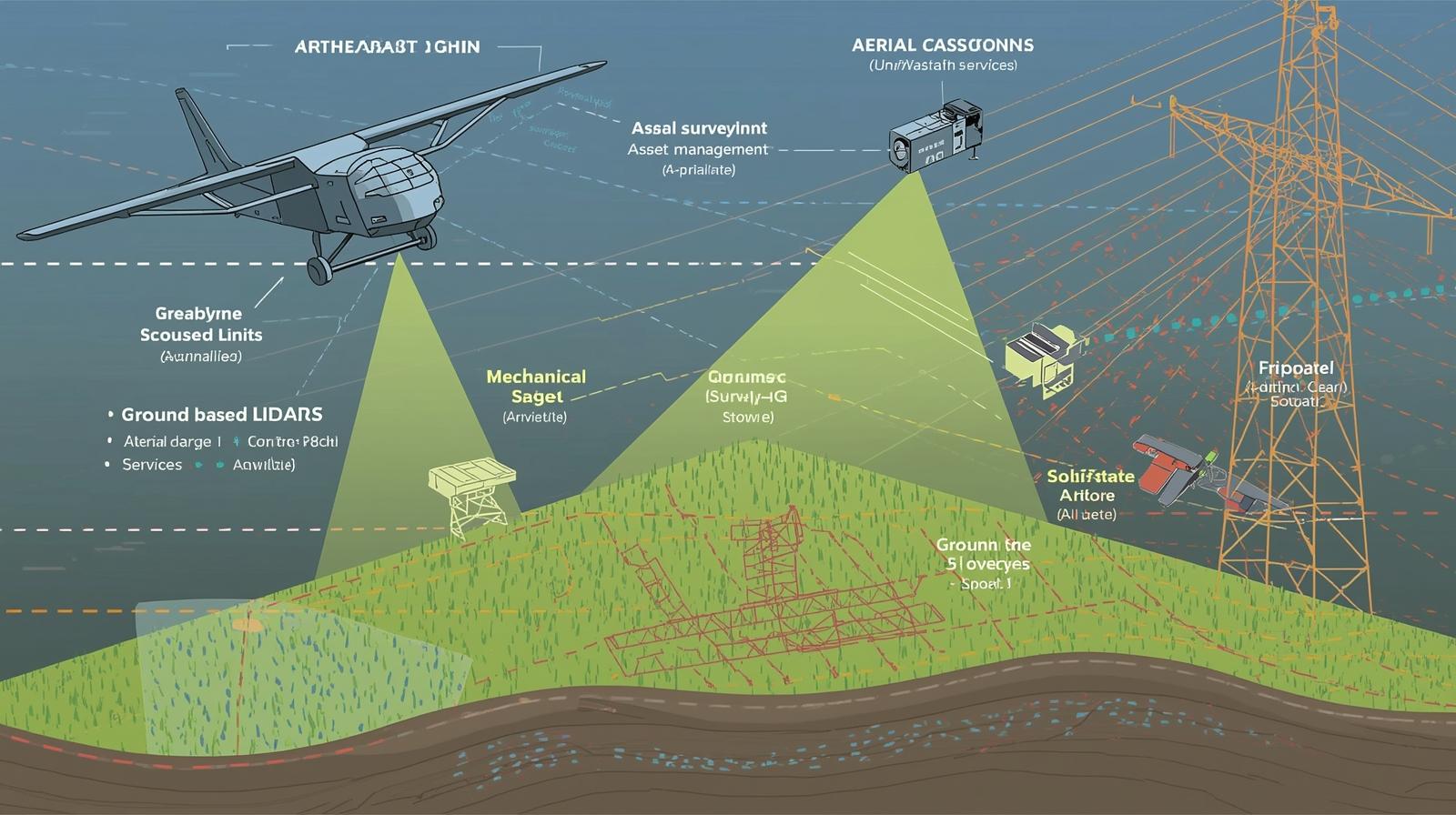
Key Factors Driving LiDAR Market Growth
1. Increasing Adoption of Autonomous Vehicles and ADAS
The growing development of autonomous vehicles is one of the major factors supporting LiDAR Market Growth. Autonomous driving systems require accurate environmental information to identify pedestrians, vehicles, road boundaries, traffic signs, and potential obstacles.
LiDAR sensors generate detailed 3D representations of surrounding environments, helping vehicles understand road conditions and make informed navigation decisions. Automotive manufacturers are increasingly integrating LiDAR into advanced driver assistance systems to improve collision avoidance, adaptive cruise control, lane detection, and automated parking.
The development of Level 2, Level 3, and higher-level autonomous driving technologies is creating opportunities for LiDAR manufacturers. Companies are focusing on developing compact, high-performance sensors that offer improved detection ranges, resolution, and reliability.
2. Growing Demand for Smart Infrastructure and Smart Cities
Smart city development is creating significant opportunities for LiDAR technology. Urban planners and infrastructure developers require accurate spatial information to design transportation networks, monitor construction activities, and manage public infrastructure.
LiDAR systems support the creation of detailed 3D city models, enabling authorities to analyze buildings, roads, bridges, utilities, and other infrastructure assets. These models can also be integrated with digital twin platforms to improve infrastructure monitoring and urban planning.
Additionally, LiDAR-based mapping supports traffic management, flood risk assessment, environmental monitoring, and infrastructure maintenance. As governments increase investments in smart city initiatives, demand for advanced surveying and mapping technologies is expected to rise.
3. Rising Adoption of UAV-Based LiDAR Systems
Unmanned aerial vehicles (UAVs), commonly known as drones, are expanding the applications of LiDAR technology. UAV-based LiDAR systems enable organizations to collect accurate geographical information across large, difficult-to-access, and hazardous areas.
These systems are increasingly used in forestry, mining, construction, agriculture, and infrastructure inspection. They can generate detailed terrain models, digital elevation models, and 3D point clouds that support better project planning and decision-making.
Compared with traditional surveying methods, drone-based LiDAR can improve data collection efficiency and reduce the time required for large-scale mapping projects. Growing demand for aerial surveying and remote-area monitoring is therefore supporting market expansion.
4. Technological Advancements in LiDAR Sensors
Continuous innovation in sensor technology is improving the performance and usability of LiDAR solutions. Manufacturers are developing compact, lightweight, and energy-efficient sensors that can be integrated into vehicles, drones, robots, and industrial equipment.
Solid-state LiDAR is gaining attention because of its potential to reduce mechanical complexity and support compact sensor designs. Improvements in laser technology, detection capabilities, scanning speed, and signal processing are also enhancing system performance.
The integration of artificial intelligence and machine learning is further improving LiDAR data interpretation. These technologies help identify objects, classify environmental features, and process large volumes of spatial information more efficiently.
Emerging Technology Trends Transforming the LiDAR Market
Solid-State LiDAR Gaining Momentum
Solid-state LiDAR is becoming an important area of innovation, particularly in the automotive industry. Unlike conventional mechanical systems, solid-state solutions reduce or eliminate moving components, supporting smaller form factors and potentially improving durability.
These characteristics make solid-state LiDAR suitable for integration into modern vehicle designs. Automotive manufacturers are exploring these systems to improve object detection and environmental perception while supporting advanced autonomous driving capabilities.
AI and Machine Learning Integration
Artificial intelligence is transforming how LiDAR data is processed and analyzed. AI-powered algorithms can interpret point-cloud data, recognize objects, detect changes in surroundings, and support automated decision-making.
In autonomous vehicles, AI integration helps identify pedestrians, cyclists, vehicles, and road infrastructure. In construction and surveying, intelligent processing tools support automated feature extraction and improve mapping workflows.
Digital Twin and 3D Mapping Applications
Digital twin technology is creating new opportunities for LiDAR adoption. LiDAR-generated 3D data enables organizations to develop accurate virtual representations of physical environments.
These digital models help infrastructure operators monitor asset conditions, identify structural changes, and improve maintenance planning. The combination of LiDAR, cloud computing, GIS, and digital twin platforms is supporting more efficient infrastructure management.
Miniaturization and Lightweight Sensor Development
The demand for smaller and more affordable sensing solutions is encouraging manufacturers to develop compact LiDAR systems. Miniaturized sensors can be integrated into drones, robotics platforms, industrial equipment, and passenger vehicles.
Improvements in sensor design and manufacturing processes are also helping expand the potential use of LiDAR across applications that previously faced size, weight, or cost limitations.
LiDAR Market Segmentation Analysis
According to MarketsandMarkets, the LiDAR Market is segmented by installation, type, range, service, end-use application, and region. Each segment addresses different requirements across automotive, infrastructure, surveying, and industrial applications.
By Installation: Ground-Based and Airborne LiDAR
The installation segment includes ground-based and airborne LiDAR systems.
Ground-based LiDAR holds a larger market share and is projected to grow at a higher rate than airborne LiDAR during the forecast period. Its comparatively lower cost and simpler approval requirements make it suitable for surveying, mapping, environmental monitoring, corridor mapping, and infrastructure applications.
Airborne LiDAR is widely used for large-scale geographical data collection. These systems are installed on aircraft, helicopters, and drones to capture terrain information, generate elevation models, and support environmental analysis.
By Type: Mechanical and Solid-State LiDAR
The market is divided into mechanical and solid-state LiDAR technologies.
Mechanical LiDAR accounted for the largest market share in 2024, supported by its wide field of view, long detection range, and established applications in engineering, military operations, corridor mapping, and volumetric surveying.
Solid-state LiDAR is gaining importance as automotive manufacturers seek compact, reliable, and scalable sensing solutions. Its reduced mechanical complexity makes it attractive for next-generation vehicle platforms and other applications requiring integrated sensors.
By Range: Short-, Medium-, and Long-Range LiDAR
The range segment includes short-range, medium-range, and long-range LiDAR systems.
Short-range LiDAR is projected to lead the market because of its growing adoption in automobiles, security systems, and robotics. These sensors support nearby object detection, obstacle identification, and environmental monitoring.
Medium-range LiDAR is expected to experience strong growth, particularly in engineering and construction applications. Long-range systems are important for applications requiring extended detection capabilities, including large-scale mapping and specialized automotive and industrial environments.
By Service: Aerial Surveying and Asset Management
The service segment includes aerial surveying, asset management, geographic information systems (GIS), ground-based surveying, and other services.
Aerial surveying is expected to account for the largest market share. LiDAR-based aerial surveying provides accurate inspection of roads, highways, railways, and bridges using manned and unmanned aircraft.
Asset management and GIS services are also gaining traction as organizations increasingly use spatial information to monitor infrastructure, manage geographical assets, and improve operational planning.
By End-Use Application: ADAS and Driverless Cars
Major end-use applications include corridor mapping, engineering, environment, ADAS and driverless cars, exploration, urban planning, cartography, and meteorology.
The ADAS and driverless cars segment is expected to lead the market. Increasing adoption of autonomous driving technologies and investments in vehicle safety systems are encouraging automotive manufacturers to integrate advanced LiDAR sensors.
Other applications, including engineering, environmental monitoring, and urban planning, are also contributing to market demand through increasing requirements for accurate 3D mapping and spatial data collection.
Regional Analysis of the LiDAR Market
Asia Pacific: Fastest-Growing Regional Market
Asia Pacific is projected to register the highest CAGR in the global LiDAR Market during the forecast period. Increasing infrastructure development, urbanization, mining activities, and investments in smart city projects are supporting regional demand.
Countries such as China, Japan, South Korea, and India are witnessing growing adoption of LiDAR across automotive manufacturing, robotics, surveying, and infrastructure development. Investments in autonomous and electric vehicles are also encouraging manufacturers to develop advanced sensing technologies.
China’s expanding automotive ecosystem and increasing deployment of drone-based surveying solutions are creating additional opportunities for LiDAR providers. Similarly, infrastructure modernization and smart city initiatives across India and Southeast Asia are expected to strengthen regional demand.
North America: Strong Adoption of Autonomous Driving Technologies
North America represents an important market for LiDAR technology, supported by investments in autonomous vehicles, ADAS, robotics, and geospatial intelligence.
The presence of established automotive manufacturers, technology companies, and LiDAR solution providers is encouraging innovation and commercialization. Growing demand for infrastructure inspection, aerial surveying, and industrial automation is also contributing to regional market development.
Europe: Increasing Focus on Smart Mobility and Infrastructure
Europe is witnessing growing adoption of LiDAR technology across automotive, transportation, environmental monitoring, and infrastructure applications.
Government initiatives promoting road safety, intelligent transportation systems, and sustainable urban development are supporting demand. Automotive manufacturers are also investing in advanced sensing technologies to improve vehicle automation and safety.
Furthermore, the increasing use of LiDAR in environmental assessment, agriculture, and infrastructure planning is creating new growth opportunities across European markets.
Challenges and Opportunities in the LiDAR Market
Despite strong growth potential, the LiDAR industry faces several challenges that may influence adoption across different applications.
High System and Software Costs: LiDAR hardware and post-processing software can involve significant investment. These costs may limit adoption among smaller surveying companies and organizations operating with restricted technology budgets.
Competition from Alternative Technologies: Photogrammetry and other sensing technologies offer cost-effective alternatives for certain mapping and surveying applications. Their availability can create competitive pressure on LiDAR providers.
Sensor Miniaturization: Developing compact LiDAR sensors without compromising accuracy, range, and performance remains an important technical challenge.
However, several opportunities are emerging. Increasing investments in autonomous driving, advanced driver assistance systems, drone-based surveying, digital twins, and smart infrastructure are creating new demand for LiDAR solutions.
The development of advanced detectors, AI-enabled processing software, and cost-efficient solid-state sensors is also expected to expand the addressable market.
Future Outlook of the LiDAR Market
The future of the LiDAR Market will be shaped by the growing convergence of artificial intelligence, automation, autonomous mobility, and advanced sensing technologies. As industries increasingly depend on accurate environmental information, LiDAR will play an important role in improving operational efficiency, safety, and decision-making.
Automotive manufacturers are expected to continue investing in LiDAR-enabled ADAS and autonomous driving platforms. At the same time, smart city developers and infrastructure operators will increasingly use 3D mapping and digital twin technologies to improve urban planning and asset management.
The growing deployment of UAVs, robotics, and industrial automation systems will further expand the applications of LiDAR sensors. Improvements in sensor miniaturization, processing speed, and affordability are likely to make these technologies accessible to a wider range of industries.
Asia Pacific is expected to remain an important growth region, supported by infrastructure expansion, automotive innovation, and increasing adoption of geospatial technologies.
With the global market projected to reach USD 12.79 billion by 2030, the LiDAR Market Growth outlook highlights significant opportunities for technology developers, automotive manufacturers, infrastructure companies, and service providers. Continuous innovation and expanding commercial applications will position LiDAR as a key technology in the future of autonomous mobility and smart infrastructure.
FAQs
Q1. What is driving LiDAR Market Growth?
LiDAR Market Growth is driven by increasing adoption of autonomous vehicles, advanced driver assistance systems (ADAS), smart city projects, drone-based surveying, robotics, and 3D mapping technologies.
Q2. What is the projected size of the LiDAR Market by 2030?
According to MarketsandMarkets, the global LiDAR Market is projected to grow from USD 3.27 billion in 2025 to USD 12.79 billion by 2030, registering a CAGR of 31.3% during the forecast period.
Q3. Which region is expected to witness the highest growth in the LiDAR Market?
Asia Pacific is projected to register the highest CAGR during the forecast period, driven by infrastructure development, automotive innovation, smart city initiatives, and increasing adoption of advanced sensing technologies.
Q4. What are the key applications of LiDAR technology?
Major applications include ADAS and driverless cars, corridor mapping, engineering, environmental monitoring, urban planning, cartography, exploration, and aerial surveying.
Q5. Who are the key players in the LiDAR Market?
Major companies operating in the LiDAR Market include Hesai Group, RoboSense, SICK AG, Ouster, Luminar Technologies, Leica Geosystems, Trimble, Teledyne Optech, FARO Technologies, and RIEGL.