
The growing frequency of cyberattacks, data breaches, identity theft, and digital payment fraud is increasing the need for advanced cybersecurity solutions across industries. As organizations continue to adopt cloud computing, digital banking, connected devices, and enterprise applications, protecting sensitive information and cryptographic keys has become a critical priority. Hardware Security Modules (HSMs) are emerging as essential security technologies for strengthening data protection and ensuring secure digital transactions.
The Hardware Security Modules Market is experiencing significant growth as businesses invest in hardware-based encryption, secure authentication, and advanced cryptographic key management. HSMs are specialized physical devices designed to generate, store, manage, and protect cryptographic keys while performing secure operations such as encryption, decryption, digital signing, and authentication.
Technological advancements in cloud-based security, quantum cryptography, digital identity management, and zero-trust security frameworks are transforming the HSM industry. Financial institutions, government organizations, healthcare providers, telecommunications companies, and technology enterprises are increasingly adopting HSM solutions to strengthen their cybersecurity infrastructure.
According to MarketsandMarkets, the global Hardware Security Modules Market is projected to grow from USD 2.04 billion in 2026 to USD 4.80 billion by 2032, registering a CAGR of 15.3% during 2026–2032. Increasing cybersecurity threats, regulatory requirements, digital payment expansion, and cloud adoption are among the major factors supporting market growth.
1. Cloud-Based Hardware Security Modules Transforming Data Protection
Cloud computing is transforming how organizations store, process, and manage business information. As enterprises migrate applications and workloads to public, private, and hybrid cloud environments, securing encryption keys and sensitive data has become increasingly important.
Cloud-based Hardware Security Modules provide cryptographic services through cloud infrastructure, allowing organizations to manage encryption keys without maintaining all security hardware within their own facilities.
These solutions support secure key generation, encryption, digital signatures, and authentication across distributed computing environments. They also help businesses simplify security management and scale cryptographic operations according to changing requirements.
The growing adoption of cloud services among financial institutions, technology companies, and government organizations is creating new opportunities for cloud-based HSM providers. Integration with cloud platforms and enterprise security applications is expected to remain an important industry trend.
2. Quantum Cryptography Driving Next-Generation HSM Innovation
Quantum computing is creating new challenges for traditional cryptographic systems. As quantum computing capabilities advance, organizations are increasingly evaluating the long-term security of existing encryption algorithms.
Quantum-resistant cryptography and post-quantum cryptography (PQC) are emerging as important areas of innovation within the Hardware Security Modules Market. These technologies aim to protect sensitive information against potential threats from future quantum computers.
HSM manufacturers are focusing on developing cryptographic solutions that can support new algorithms, flexible key management, and secure algorithm transitions.
Quantum cryptography is also gaining attention as organizations explore advanced approaches to protecting digital communications and sensitive information.
According to MarketsandMarkets, the quantum cryptography segment is projected to register the highest CAGR during the forecast period. This creates opportunities for HSM manufacturers to develop next-generation security products that address evolving cryptographic requirements.
Download PDF Brochure @ https://www.marketsandmarkets.com/pdfdownloadNew.asp?id=162277475
3. Increasing Cyberattacks Accelerating Demand for Hardware-Based Security
Cyberattacks are becoming more sophisticated as organizations expand their digital operations. Ransomware, phishing, financial fraud, unauthorized access, and data theft are creating significant security challenges for enterprises.
Hardware Security Modules provide a dedicated and protected environment for managing cryptographic keys and executing sensitive security operations. By isolating critical cryptographic processes from general-purpose computing environments, HSMs help reduce the risk of unauthorized key access.
Industries handling confidential information, including banking, healthcare, government, and telecommunications, are increasingly adopting HSM solutions to strengthen their security infrastructure.
Furthermore, growing concerns about financial fraud and identity-related cyberattacks are encouraging organizations to invest in advanced encryption and authentication technologies.
The increasing need to protect digital assets and maintain customer trust is expected to remain a major driver of HSM adoption.
4. Zero-Trust Security Frameworks Strengthening HSM Adoption
Zero-trust security is becoming an important cybersecurity strategy as organizations move toward distributed networks, remote working environments, and cloud-based applications.
The zero-trust approach requires continuous identity verification and access validation rather than automatically trusting users or devices within a network.
HSMs support zero-trust architectures by protecting encryption keys, authentication credentials, digital certificates, and other sensitive cryptographic assets.
They also help organizations establish secure identity management systems and protect communication between applications, users, and connected devices.
As enterprises strengthen their cybersecurity strategies, integrating HSMs with identity and access management (IAM), public key infrastructure (PKI), and privileged access management solutions is creating additional market opportunities.
5. Digital Payments and Banking Increasing HSM Requirements
The rapid expansion of digital banking, mobile wallets, contactless payments, and online financial transactions is increasing demand for secure cryptographic infrastructure.
Financial institutions process large volumes of sensitive customer information and payment data. Protecting these transactions requires reliable encryption, secure authentication, and effective cryptographic key management.
Hardware Security Modules play an important role in payment processing by protecting payment credentials, generating cryptographic keys, and supporting secure transaction authentication.
HSM solutions are also used in payment card security, digital banking platforms, financial messaging, and payment infrastructure.
As digital financial services expand globally, banks, payment processors, and fintech companies are expected to increase investments in hardware-based security technologies.
6. IoT and Edge Computing Expanding HSM Applications
The proliferation of Internet of Things (IoT) devices and edge computing infrastructure is creating new cybersecurity requirements. Connected devices used in industrial automation, smart cities, healthcare, transportation, and energy systems generate and exchange large amounts of information.
Securing these connected environments requires reliable device authentication, encryption, and identity management.
HSM technologies can protect cryptographic keys and device identities, helping organizations establish secure communication between connected systems.
Edge computing also increases the importance of localized security because sensitive information is increasingly processed closer to its source. Hardware-based cryptographic protection can help secure data and operations across distributed environments.
The growing adoption of connected devices, industrial IoT, and 5G networks is expected to create additional opportunities for HSM manufacturers.
7. Digital Identity and Public Key Infrastructure (PKI) Modernization
Digital identity management is becoming increasingly important as businesses and governments expand online services. Digital certificates, authentication credentials, and encryption keys are essential for establishing trusted communication between users, devices, and applications.
Hardware Security Modules support Public Key Infrastructure by securely generating and storing private keys, managing digital certificates, and performing cryptographic operations.
PKI-based security is widely used in enterprise authentication, secure email communication, document signing, website security, and digital identity verification.
The increasing adoption of electronic signatures, digital identity platforms, and secure government services is creating new demand for HSM solutions. Organizations are also investing in centralized cryptographic management to improve security governance and reduce risks associated with compromised credentials.
8. Advanced Encryption and Cryptographic Key Management
Encryption is a fundamental component of modern cybersecurity infrastructure. Organizations require reliable technologies to protect sensitive information throughout its lifecycle, including data creation, storage, transmission, and processing.
HSMs provide secure environments for generating, storing, distributing, and managing cryptographic keys. They also support advanced encryption standards and digital signing operations.
The increasing complexity of enterprise IT infrastructure is encouraging organizations to adopt centralized key management solutions. These systems help businesses maintain control over encryption keys across multiple applications, cloud platforms, and data centers.
Additionally, growing regulatory requirements related to data privacy and information security are increasing the importance of cryptographic governance.
Innovations in automated key lifecycle management, cryptographic agility, and secure encryption are expected to strengthen the role of HSMs in enterprise cybersecurity.
9. Growing Adoption of LAN-Based and Network-Attached HSMs
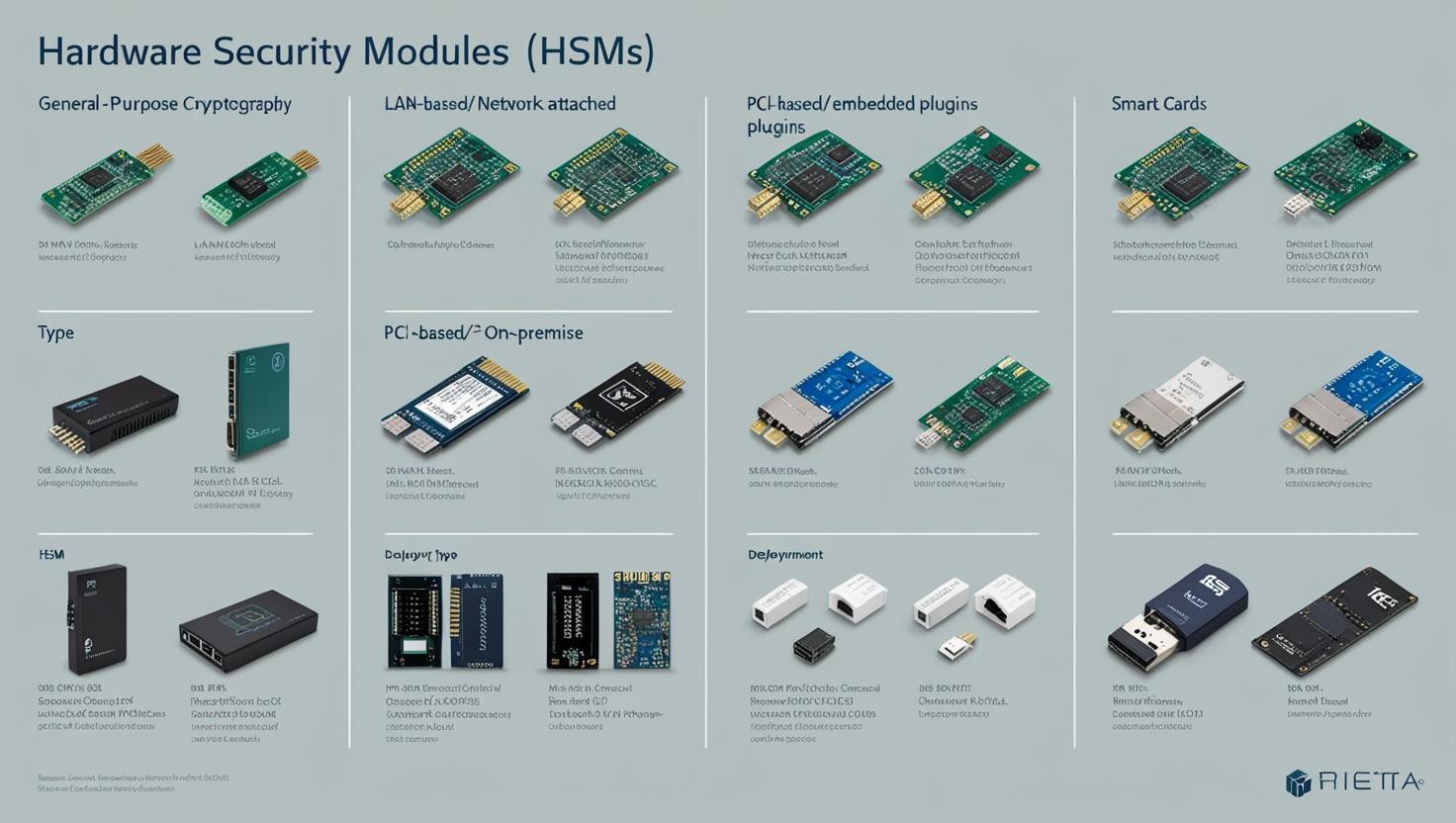
Hardware Security Modules are available in different configurations to meet varying enterprise security requirements. LAN-based or network-attached HSMs are designed to provide cryptographic services across connected enterprise networks.
These solutions allow multiple applications and systems to access centralized cryptographic resources while maintaining secure key management processes.
According to MarketsandMarkets, the LAN-based/network-attached segment is expected to account for the largest share of the Hardware Security Modules Market in 2032.
Their ability to support enterprise-wide encryption, payment processing, authentication, and digital certificate management makes them suitable for organizations handling large volumes of sensitive information.
As enterprises expand their digital infrastructure, demand for scalable and centrally managed cryptographic hardware is expected to support this segment.
10. Regulatory Compliance Driving Enterprise Security Investments
Governments and regulatory authorities across the world are introducing stricter data protection and cybersecurity requirements. Regulations and industry standards such as the General Data Protection Regulation (GDPR), Payment Card Industry Data Security Standard (PCI DSS), and healthcare data protection requirements are encouraging organizations to strengthen information security practices.
HSMs help businesses implement secure cryptographic controls for protecting sensitive information, managing encryption keys, and securing financial transactions.
Financial institutions, healthcare organizations, government agencies, and technology companies are increasingly adopting hardware-based security solutions to support compliance initiatives.
Regulatory compliance is also encouraging enterprises to improve security monitoring, access controls, encryption policies, and cryptographic governance.
As data protection requirements continue to evolve, compliance-driven investments are expected to create sustainable opportunities for HSM providers.
Hardware Security Modules Market Segmentation and Growth Opportunities
The Hardware Security Modules Market is segmented by type, technology, deployment type, organization size, application, vertical, and region. Each segment addresses specific cybersecurity requirements across enterprise and government environments.
By Type
-
LAN-based/Network-attached: Supports centralized cryptographic services across enterprise networks and data centers.
-
PCI-based/Embedded Plugins: Integrates cryptographic security directly into compatible computing systems.
-
USB-based/Portable: Provides portable hardware-based security for authentication and cryptographic operations.
-
Smart Cards: Supports secure authentication, digital identity, and protected credential storage.
By Technology
-
General Purpose Cryptography: Supports encryption, decryption, digital signatures, and cryptographic key management.
-
Quantum Cryptography: Addresses emerging requirements for quantum-resistant and advanced cryptographic security.
By Deployment Type
-
On-premises: Enables organizations to maintain direct control over their cryptographic infrastructure and security policies.
-
Cloud-based: Provides scalable cryptographic services for cloud applications and distributed IT environments.
By Application
-
Payment Processing
-
Code and Document Signing
-
Security Sockets Layer (SSL) and Transport Layer Security (TLS)
-
Authentication
-
Database Encryption
-
Public Key Infrastructure (PKI) and Credential Management
-
Application-Level Encryption
By Vertical
-
Banking, Financial Services, and Insurance (BFSI)
-
IT and Telecommunications
-
Public Sector and Government
-
Industrial Manufacturing
-
Energy and Power
-
Consumer Goods and Retail
-
Medical and Life Sciences
-
Aerospace and Defense
-
Transportation
By Region
The market covers North America, Europe, Asia Pacific, and the Rest of the World. Increasing digitalization, cybersecurity investments, and regulatory developments are influencing regional adoption.
Key Challenges in the Hardware Security Modules Market
Despite increasing adoption, the HSM industry faces several challenges that could influence market expansion.
High Implementation and Ownership Costs: Hardware Security Modules require investment in specialized equipment, integration, maintenance, and security management. These costs can create adoption barriers, particularly for smaller organizations.
Shortage of Skilled Professionals: Managing cryptographic infrastructure requires specialized knowledge of encryption technologies, cybersecurity, and key management. A shortage of experienced professionals can affect implementation and operational efficiency.
Complex Integration Processes: Integrating HSMs with existing enterprise applications, cloud platforms, databases, and security infrastructure can increase deployment complexity.
Evolving Cybersecurity Threats: Organizations must continuously update cryptographic algorithms, security policies, and key management practices to address emerging threats.
Addressing these challenges through cloud-delivered services, automation, simplified integration, and cryptographic innovation will be important for future industry development.
The Hardware Security Modules Market is becoming an essential part of the evolving cybersecurity ecosystem. Increasing cyberattacks, digital payment adoption, cloud computing, and regulatory requirements are encouraging organizations to invest in reliable hardware-based cryptographic protection.
Innovations in cloud-based HSMs, quantum-resistant cryptography, zero-trust security, and digital identity management are transforming how organizations protect sensitive information and secure digital transactions.
As businesses continue their digital transformation journeys, demand for advanced encryption, secure authentication, and centralized cryptographic key management is expected to increase. With the market projected to reach USD 4.80 billion by 2032, HSM manufacturers have significant opportunities to develop innovative solutions and strengthen the global cybersecurity landscape.
Frequently Asked Questions (FAQs)
1. What is the projected size of the Hardware Security Modules Market by 2032?
The global Hardware Security Modules Market is projected to reach USD 4.80 billion by 2032, growing at a CAGR of 15.3% from 2026 to 2032.
2. What are the key trends shaping the Hardware Security Modules Market?
Major trends include cloud-based HSM adoption, quantum-resistant cryptography, zero-trust security, digital identity management, advanced encryption, and IoT security.
3. Which type segment is expected to hold the largest market share?
The LAN-based/network-attached segment is expected to account for the largest market share in 2032, supported by increasing demand for centralized enterprise cryptographic security.
4. Which industry accounts for the largest share of the Hardware Security Modules Market?
The BFSI sector accounted for 37.8% of the market in 2025, driven by the growing need for secure payment processing, encryption, and financial transaction authentication.
5. Who are the key players in the Hardware Security Modules Market?
Key companies include Thales, Utimaco, IBM, Entrust, Eviden, Futurex, STMicroelectronics, Microchip Technology, Infineon Technologies, and Yubico.