
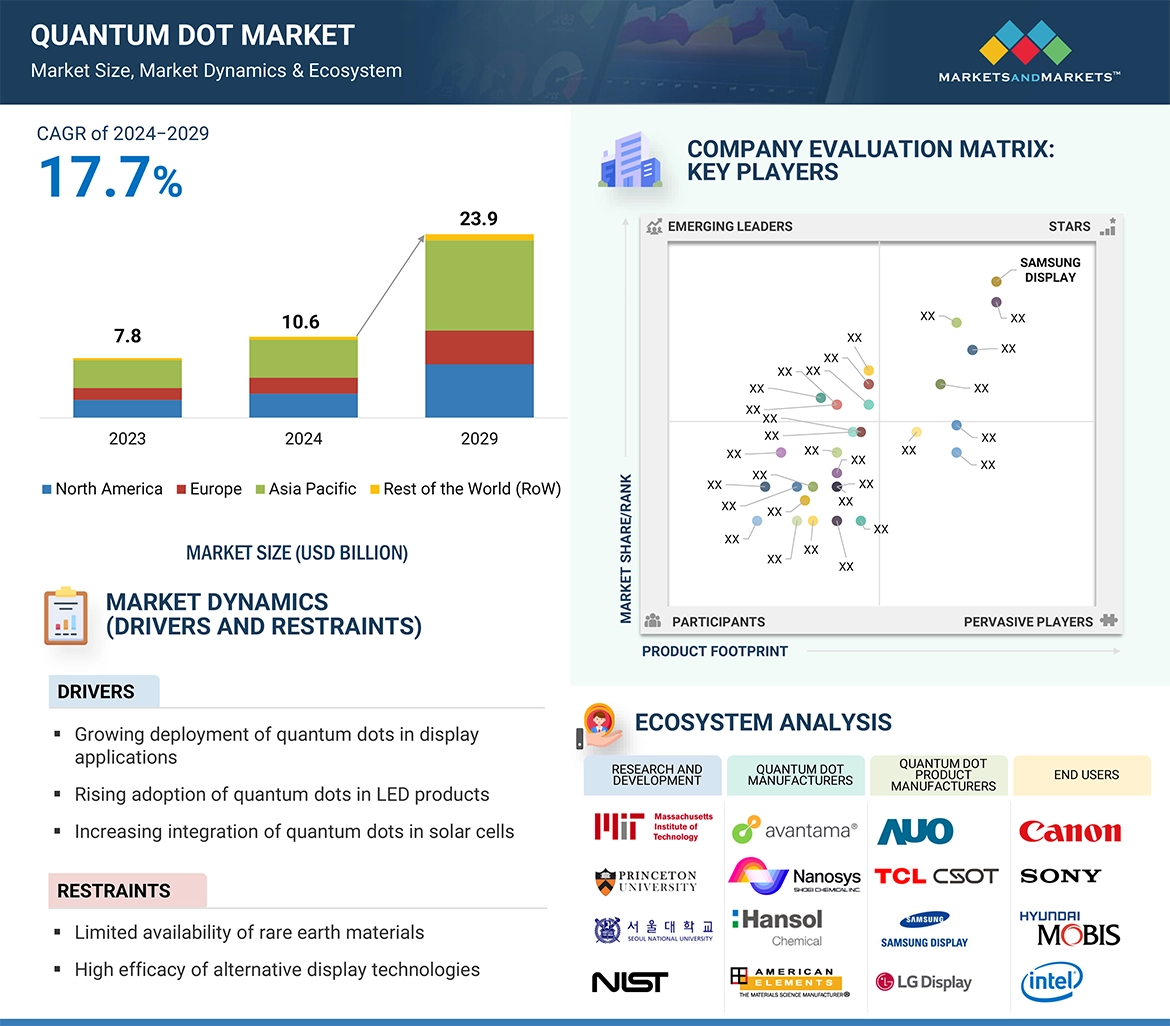
Introduction to Photodetector Applications in Quantum Dot Technology
The growing demand for advanced optical sensing solutions is creating new opportunities for quantum dot technology across multiple industries. Photodetectors play an important role in converting incoming light into electrical signals, supporting applications such as imaging, optical communication, environmental monitoring, industrial inspection, and medical diagnostics. As these applications require greater sensitivity, improved spectral response, and compact device designs, quantum dots are attracting attention as promising materials for next-generation photodetectors.
Quantum dots are semiconductor nanocrystals whose optical and electronic properties can be adjusted by changing their size, composition, and structure. Their tunable absorption and emission characteristics allow researchers to develop photodetectors that respond to specific wavelengths, including visible, ultraviolet, and infrared regions. These capabilities are expanding research and development opportunities in the quantum dot market, particularly in applications that require customized light detection.
Download PDF Brochure @ https://www.marketsandmarkets.com/pdfdownloadNew.asp?id=694
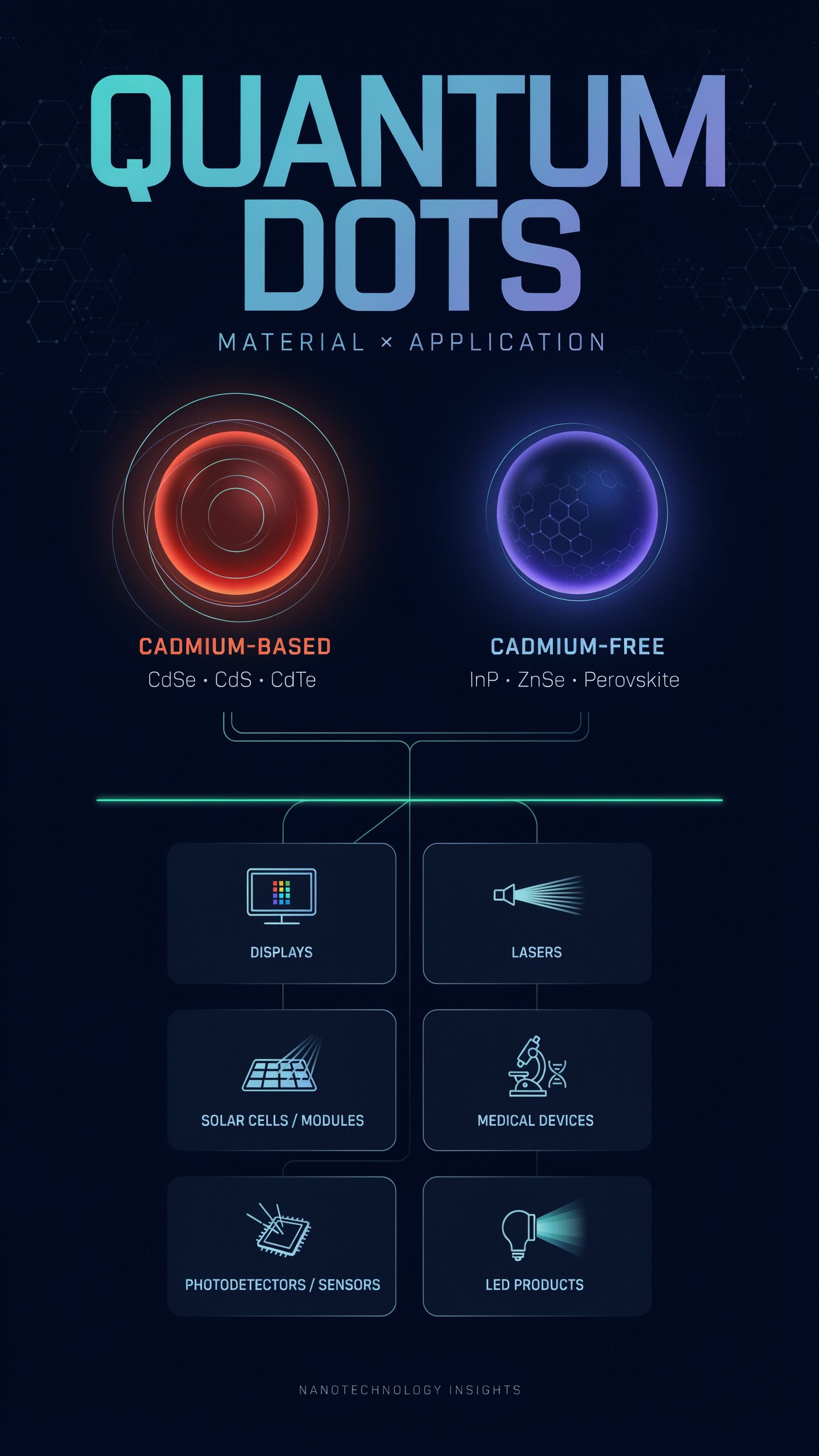
Quantum Dot Materials Enhance Photodetector Performance
One of the major advantages of quantum dots is their ability to provide wavelength-selective optical responses. Conventional photodetectors may require different materials or complex structures to detect specific wavelength ranges. Quantum dot materials offer an alternative approach because their optical properties can be engineered through changes in particle size and composition.
Quantum dot photodetectors can be designed to absorb selected wavelengths and convert optical energy into electrical signals. This flexibility supports the development of specialized sensors for low-light imaging, multispectral detection, and optical measurement. Researchers are also investigating quantum dot integration with silicon and other semiconductor platforms to combine the light absorption capabilities of quantum dots with established electronic manufacturing technologies.
Advances in material synthesis, surface treatment, and device fabrication are further supporting this development. Improving the quality of quantum dot films and reducing defects can help enhance charge transport, signal response, and device stability. These improvements are important for moving laboratory research toward practical commercial applications.
Infrared Detection Expands Industrial and Security Applications
Infrared photodetection represents an important opportunity for quantum dot technology. Infrared sensors are used in thermal imaging, night vision, industrial inspection, surveillance, and environmental monitoring. Quantum dots with appropriately engineered compositions may support infrared detection across selected wavelength ranges, creating possibilities for alternative photodetector designs.
In industrial environments, infrared photodetectors can help identify temperature variations, monitor equipment conditions, and detect abnormalities in manufacturing processes. Quantum dot-based approaches may offer opportunities to develop compact and potentially cost-effective sensing components, although their suitability depends on sensitivity, operating temperature, stability, and manufacturing requirements.
Security and defense applications also require reliable infrared detection for imaging and surveillance under limited visibility conditions. Quantum dot photodetectors are being explored for these uses because their spectral response can be tailored to specific detection requirements. However, commercial adoption will depend on further improvements in performance, reliability, and environmental durability.
Inquiry Before Buying @ https://www.marketsandmarkets.com/Enquiry_Before_BuyingNew.asp?id=694
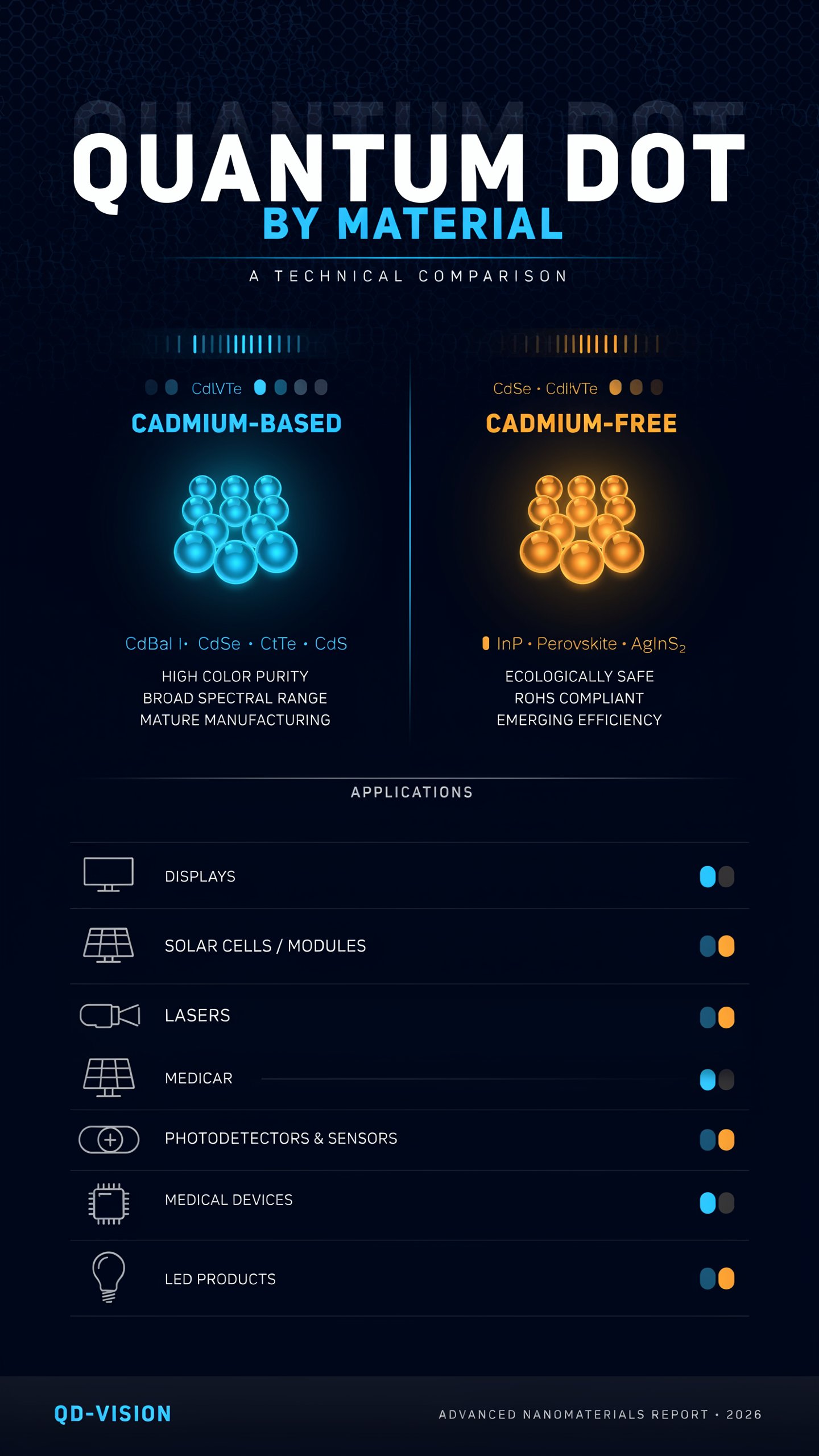
Healthcare and Biomedical Imaging Create New Opportunities
Healthcare is another application area supporting innovation in quantum dot photodetectors. Medical imaging and diagnostic technologies depend on accurate detection of optical signals to identify biological structures, monitor physiological conditions, and support disease assessment. Quantum dots have attracted research interest because of their tunable optical characteristics and potential use in sensitive detection systems.
When incorporated into suitable optical devices, quantum dot materials may support imaging systems that detect weak light signals or operate across multiple wavelength ranges. These capabilities could contribute to specialized biomedical imaging, fluorescence detection, and laboratory diagnostic instruments. Quantum dot-based photodetection may also support the development of compact optical sensors for selected medical applications.
Nevertheless, healthcare applications require strict evaluation of material safety, device reliability, and regulatory compliance. Researchers and manufacturers must address issues such as material toxicity, encapsulation, long-term stability, and compatibility with medical equipment before these technologies can achieve wider adoption.
Optical Communication and Consumer Electronics Drive Innovation
The expansion of high-speed optical communication is creating additional opportunities for advanced photodetectors. Data transmission systems rely on components that can detect optical signals accurately and convert them into electrical information. Quantum dot materials may offer opportunities to develop wavelength-specific photodetectors for selected optical communication applications.
Consumer electronics also represent a potential growth area. Smartphones, cameras, wearable devices, and smart sensing systems increasingly require compact optical components with improved detection capabilities. Quantum dot photodetectors could support future imaging and sensing designs where spectral selectivity and integration flexibility are important.
Research into hybrid photodetectors that combine quantum dots with established semiconductor materials is particularly relevant. Such structures may help manufacturers balance optical sensitivity, electronic performance, and compatibility with existing production processes.
View detailed Table of Content here – https://www.marketsandmarkets.com/Market-Reports/quantum-dots-qd-market-694.html
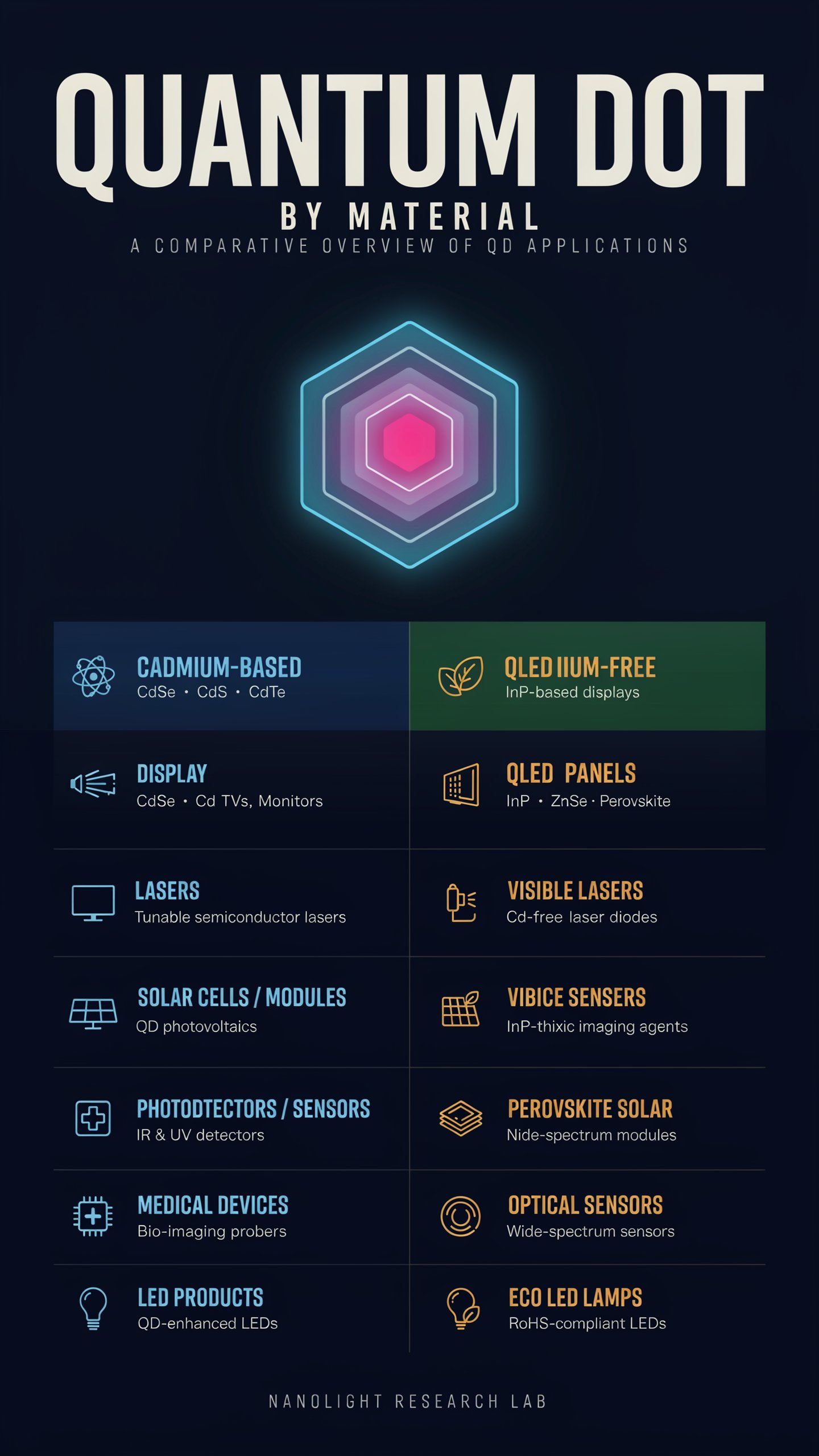
Challenges and Future Outlook for Quantum Dot Photodetectors
Despite promising research developments, several challenges influence the commercialization of quantum dot photodetectors. Material stability, charge transport, manufacturing consistency, production costs, and environmental considerations remain important concerns. Some quantum dot compositions also contain heavy metals, creating additional requirements for material selection, handling, and regulatory compliance.
Future progress will depend on advances in safer material alternatives, surface engineering, device architecture, and scalable manufacturing techniques. Collaboration among semiconductor manufacturers, research institutions, photonics companies, and end users can help accelerate product development and establish practical application requirements.
Overall, photodetector applications are creating new opportunities in quantum dot technology across industrial sensing, healthcare imaging, infrared detection, optical communication, and consumer electronics. As research improves material performance and manufacturing processes, quantum dot-based photodetectors may become increasingly relevant to specialized optical sensing markets. Their long-term commercial potential will depend on demonstrating measurable advantages in sensitivity, spectral selectivity, reliability, and cost compared with established photodetector technologies.