
The global mining industry is undergoing a significant transformation as mining companies increasingly adopt automation, artificial intelligence (AI), robotics, and digital technologies to improve operational efficiency, workplace safety, and productivity. Traditional mining operations often involve hazardous working environments, labor-intensive activities, equipment limitations, and high operating costs. Mining automation is addressing these challenges by introducing autonomous machinery, intelligent monitoring systems, and remote-controlled equipment across mining operations.
Mining automation involves minimizing or eliminating human intervention in activities such as exploration, drilling, excavation, loading, hauling, and material transportation. Advanced technologies, including autonomous mining trucks, automated drilling rigs, underground loaders, smart ventilation systems, and fleet management software, are helping mining companies optimize operations and improve resource utilization.
According to MarketsandMarkets, the global mining automation market is projected to grow from USD 3.96 billion in 2025 to USD 5.93 billion by 2030, registering a compound annual growth rate (CAGR) of 8.4% during the forecast period. Increasing emphasis on worker safety, operational efficiency, cost optimization, and smart connected mining solutions is expected to drive market growth.
Rising Focus on Worker Safety Accelerates Mining Automation Adoption
Worker safety remains one of the most important priorities for mining companies worldwide. Mining operations, particularly underground activities, involve significant risks associated with rockfalls, equipment collisions, hazardous gases, extreme temperatures, and limited visibility. These conditions create challenges for workers and increase the possibility of workplace accidents.
Mining automation is helping address these challenges by reducing direct human involvement in dangerous activities. Autonomous haul trucks, robotic drilling systems, remote-controlled loaders, and automated material-handling equipment allow mining companies to perform critical operations with fewer workers exposed to hazardous environments.
Remote operation centers also enable operators to control mining equipment from safer locations. These facilities provide real-time information about equipment performance, environmental conditions, and operational activities.
Additionally, smart ventilation systems equipped with sensors can monitor air quality, temperature, and gas concentrations. These systems help maintain safer working conditions while optimizing ventilation energy consumption.
As mining companies increasingly prioritize employee safety and regulatory compliance, investments in automated equipment and remote monitoring technologies are expected to support the expansion of the mining automation market.
Increasing Demand for Operational Efficiency and Cost Optimization
Mining companies are continuously looking for ways to improve productivity while reducing operational expenditure. Fluctuating commodity prices, rising labor costs, equipment maintenance expenses, and increasing energy requirements are encouraging operators to adopt technologies that improve operational performance.
Mining automation helps organizations optimize equipment utilization, reduce operational delays, and improve the efficiency of mining workflows. Autonomous haulage systems can operate continuously with optimized transportation routes, while automated drilling equipment improves drilling accuracy and consistency.
Fleet management software also plays an important role in improving productivity. These platforms collect and analyze real-time information about equipment location, fuel consumption, operating conditions, and maintenance requirements. Mining operators can use this information to optimize equipment allocation, reduce idle time, and improve production planning.
Predictive maintenance is another important application of mining automation. AI-powered analytics and IoT sensors can identify abnormal equipment behavior and detect potential mechanical issues before they result in equipment failures. This approach helps reduce unplanned downtime, extend equipment life, and lower maintenance costs.
As mining companies focus on improving operational efficiency and maximizing returns on infrastructure investments, demand for automated mining solutions is expected to increase.
Download PDF Brochure @ https://www.marketsandmarkets.com/pdfdownloadNew.asp?id=257609431
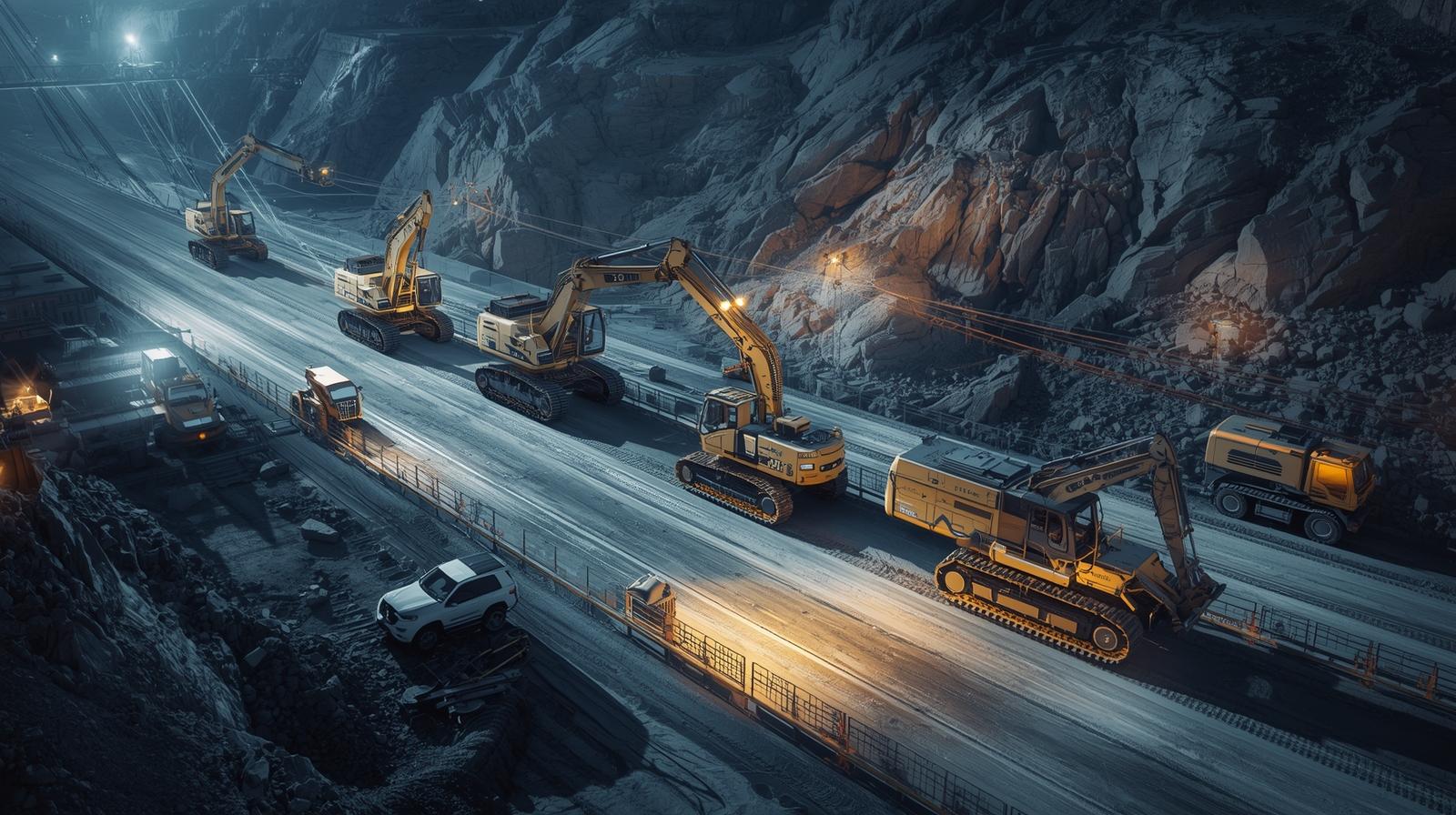
Artificial Intelligence and IoT Transform Mining Operations
The integration of artificial intelligence and the Internet of Things (IoT) is transforming traditional mining operations into intelligent and connected environments.
AI-powered mining systems analyze large volumes of operational data to support decision-making, optimize equipment performance, and improve production planning. Machine learning algorithms can identify patterns in equipment performance, predict potential failures, and support automated operational adjustments.
IoT sensors installed in mining machinery collect real-time information about temperature, vibration, pressure, fuel consumption, and equipment health. This information enables operators to monitor machinery remotely and improve maintenance planning.
Digital twin technology is also gaining attention in the mining industry. Digital twins create virtual representations of physical mining assets, equipment, and operational environments. Mining companies can use these models to simulate operating conditions, evaluate equipment performance, and identify opportunities to improve productivity.
Furthermore, cloud computing and advanced communication technologies are supporting the integration of mining equipment, software platforms, and remote operation centers. These technologies enable more effective information sharing across geographically distributed mining operations.
The growing adoption of AI, IoT, digital twins, and connected technologies is creating significant opportunities for mining automation solution providers.
Autonomous Mining Equipment Drives Technological Advancements
Autonomous equipment is becoming an important component of modern mining operations. Mining companies are increasingly investing in advanced machinery that can perform repetitive and hazardous activities with limited human intervention.
Autonomous mining trucks are transforming material transportation by using advanced sensors, positioning technologies, navigation systems, and fleet management software. These vehicles can operate along predefined routes, improve transportation efficiency, and reduce the risks associated with manual driving.
Autonomous drilling rigs are improving drilling precision and operational consistency. These systems can execute drilling patterns with greater accuracy while allowing operators to monitor activities remotely.
Underground load-haul-dump (LHD) loaders are also gaining importance as mining companies seek to improve material handling in confined underground environments. Remote-controlled and automated loaders help reduce worker exposure to hazardous areas while improving loading and transportation efficiency.
Smart ventilation systems represent another important technological advancement. These systems use sensors and automated controls to adjust airflow according to operational requirements, helping improve underground air quality and energy efficiency.
The increasing deployment of autonomous trucks, drilling rigs, underground loaders, tunneling equipment, and smart ventilation systems is expected to strengthen demand for mining automation hardware and software.
Mining Automation Market Segmentation: Offering, Technique, Workflow, and Application
The mining automation market is segmented by offering, technique, workflow, application, and region. Each segment plays an important role in supporting the transition toward intelligent and automated mining operations.
By Offering: The market includes hardware, software, and communication systems. Hardware includes autonomous hauling and mining trucks, autonomous drilling rigs, underground LHD loaders, tunneling equipment, and smart ventilation systems. The equipment segment accounted for a significant market share in 2024 because automated machinery forms the foundation of mining automation.
Software and communication systems support equipment monitoring, asset management, fleet optimization, and data exchange. Remote monitoring and asset management platforms help operators improve equipment utilization and operational visibility.
By Technique: The market is divided into underground mining and surface mining. Underground mining held the largest market share in 2024 due to the increasing need to improve worker safety, operational precision, and productivity in hazardous underground environments.
The underground mining segment is also expected to register the highest CAGR during the forecast period. Increasing deployment of automated drilling, hauling, loading, and monitoring systems is supporting the adoption of automation in underground mining activities.
Surface mining automation is also gaining momentum as operators increasingly adopt autonomous haulage systems, automated drilling equipment, and intelligent fleet management solutions to improve large-scale extraction operations.
By Workflow: Mining automation supports mine development, mining processes, and mine maintenance. Mine development accounted for the largest market share in 2024, as automation improves precision, safety, and efficiency during planning, excavation, and infrastructure development.
Mine maintenance is gaining traction through predictive maintenance, remote diagnostics, and asset health monitoring technologies. These solutions help reduce equipment downtime and improve operational reliability.
By Application: The market includes mineral mining, metal mining, and coal mining. Mineral mining accounted for the largest market share in 2024, supported by increasing demand for rare earth elements, industrial minerals, and aggregates used in construction, electronics, and renewable energy applications.
Metal mining is also experiencing increasing automation adoption as demand for copper, iron, and other industrial metals continues to support investments in advanced extraction technologies.
Asia Pacific to Experience Significant Mining Automation Market Growth
The mining automation market is expanding across North America, Europe, Asia Pacific, and the Rest of the World. Regional growth is influenced by mining investments, mineral demand, technological advancements, labor availability, and workplace safety requirements.
Asia Pacific is projected to register the highest growth in the global mining automation market, with a CAGR of 8.9% during the forecast period. The region benefits from extensive mineral and metal reserves, increasing industrialization, and growing investments in smart mining technologies.
China, India, and Australia are important markets supporting regional development. Increasing demand for minerals, expansion of mining activities, and investments in autonomous equipment are encouraging mining companies to modernize their operations.
India is witnessing increasing demand for advanced mining technologies as infrastructure development, industrial expansion, and energy requirements support mineral extraction activities. The adoption of automated equipment, remote monitoring, and digital mine management solutions can help improve productivity and workplace safety.
North America continues to benefit from established mining technology providers, advanced industrial infrastructure, and strong adoption of autonomous equipment. Mining companies in the region are investing in AI-powered fleet management, autonomous haulage systems, and predictive maintenance technologies.
Europe is also emphasizing mining digitalization, operational efficiency, and sustainable resource extraction. The adoption of advanced automation technologies is helping mining operators improve equipment performance and reduce operational inefficiencies.
Key Challenges Affecting the Mining Automation Market
Despite strong growth opportunities, the mining automation market faces several challenges that may influence adoption across different regions.
High initial investment requirements remain a major concern for mining companies. Implementing autonomous trucks, automated drilling equipment, communication infrastructure, and advanced software platforms requires significant capital expenditure. Smaller mining operators may face difficulties adopting these technologies due to budget limitations.
Interoperability is another important challenge. Mining sites often operate equipment from multiple manufacturers, and integrating different hardware and software platforms can be complex. Compatibility issues may limit data sharing and reduce the effectiveness of automated systems.
Workforce shortages and skill gaps also affect market development. Mining automation requires professionals with expertise in robotics, AI, software engineering, data analytics, and equipment maintenance. Mining companies must invest in employee training and workforce development to ensure successful implementation.
Additionally, automation-induced job disruptions may create resistance among workers and communities that depend heavily on mining employment. Organizations need to establish effective reskilling programs and workforce transition strategies to support the adoption of advanced technologies.
Addressing these challenges through standardized communication systems, workforce training, strategic partnerships, and scalable automation solutions will be essential for long-term market expansion.
Competitive Landscape and Key Market Players
The mining automation market includes established mining equipment manufacturers and industrial technology providers that are investing in autonomous machinery, digital platforms, and intelligent mining solutions.
Major companies operating in the market include Caterpillar (US), Komatsu (Japan), Sandvik AB (Sweden), Epiroc AB (Sweden), and Hitachi Construction Machinery Co., Ltd. (Japan).
These companies are focusing on product innovation, strategic partnerships, acquisitions, and technology integration to strengthen their market positions.
Caterpillar is expanding its autonomous mining equipment portfolio, including autonomous haul trucks and drilling systems designed to improve mining productivity and operational safety.
Komatsu is focusing on autonomous haulage systems, intelligent equipment, and digital mining technologies that support efficient material transportation and fleet management.
Sandvik AB and Epiroc AB are strengthening their portfolios through automated underground mining equipment, drilling technologies, remote operation solutions, and digital services.
Hitachi Construction Machinery is also investing in fleet management and digital monitoring solutions to improve equipment visibility and operational efficiency across mining sites.
The increasing integration of AI, robotics, IoT, and advanced communication technologies is expected to intensify competition among mining automation providers.
Future Outlook: The Rise of Smart and Autonomous Mining
The future of the mining automation market will be shaped by increasing investments in autonomous equipment, AI-powered analytics, connected mining infrastructure, and advanced robotics. Mining companies are expected to move toward integrated digital ecosystems that connect equipment, workers, software platforms, and operational management systems.
The adoption of 5G and advanced wireless communication networks will support faster data transmission and improved connectivity across mining sites. These technologies can enable more reliable remote equipment operation, real-time monitoring, and coordination between autonomous machines.
AI-powered predictive maintenance will continue to improve equipment reliability by identifying potential failures before they disrupt mining activities. Digital twins will support operational simulation, asset management, and mine planning, while autonomous vehicles and robotic systems will reduce the need for human involvement in hazardous activities.
Growing demand for minerals used in electric vehicles, renewable energy systems, batteries, and electronic devices will further encourage mining companies to improve extraction efficiency and resource utilization.
Additionally, smart connected mining solutions will create opportunities for technology providers offering integrated hardware, software, communication, and analytics platforms.
With the global mining automation market projected to reach USD 5.93 billion by 2030, companies that deliver scalable, reliable, and intelligent automation solutions are expected to benefit from emerging industry opportunities.
The mining automation market is experiencing steady growth as mining companies increasingly prioritize worker safety, operational efficiency, productivity, and cost optimization. The adoption of autonomous mining trucks, automated drilling rigs, underground loaders, AI-powered analytics, and IoT-enabled monitoring systems is transforming traditional mining operations.
Although high implementation costs, interoperability issues, and workforce skill gaps remain challenges, advancements in robotics, digital twins, cloud computing, and connected mining technologies are creating new opportunities for market participants.
As the mining industry continues to embrace digital transformation, automation will play an increasingly important role in developing safer, more efficient, and intelligent mining operations.
FAQ :
Q1. What is driving the growth of the mining automation market?
The mining automation market is driven by increasing demand for operational efficiency, improved worker safety, cost optimization, and the adoption of advanced technologies such as AI, robotics, IoT, and autonomous mining equipment.
Q2. What is the projected growth of the mining automation market?
According to MarketsandMarkets, the global mining automation market is projected to grow from USD 3.96 billion in 2025 to USD 5.93 billion by 2030, at a CAGR of 8.4%.
Q3. Which region is expected to experience the highest growth in the mining automation market?
Asia Pacific is expected to register the highest CAGR of 8.9% during the forecast period, driven by increasing mining investments, industrialization, and the adoption of automated mining technologies.
Q4. Which segment dominates the mining automation market?
Underground mining held the largest market share in 2024, supported by increasing demand for automated equipment, improved worker safety, and efficient underground mining operations.
Q5. Who are the key players in the mining automation market?
Major players include Caterpillar, Komatsu, Sandvik AB, Epiroc AB, and Hitachi Construction Machinery. These companies focus on autonomous equipment, robotics, digital mining platforms, and intelligent fleet management solutions.