
Smart Switchgear in Digital Substations is transforming how electrical utilities and industrial facilities monitor, control, and protect modern power networks. As electricity demand increases due to industrial electrification, renewable energy integration, electric vehicles, and data center expansion, conventional electrical infrastructure must become more intelligent and responsive. Smart switchgear combines advanced switching equipment with digital sensors, intelligent electronic devices, automated protection systems, and real time communication capabilities. These technologies enable operators to identify abnormal operating conditions, isolate electrical faults, and improve the reliability of power distribution networks.
Unlike conventional switchgear, which primarily relies on traditional protection devices and manual inspection, smart switchgear supports continuous monitoring and data driven decision making. It can communicate operating conditions to substation automation systems, control centers, and asset management platforms. This connectivity helps utilities improve maintenance planning, reduce unnecessary site visits, and identify equipment deterioration before a failure occurs. Through 2032, the development of digital substations is expected to increase the importance of intelligent switchgear as power networks become more automated, interconnected, and dependent on reliable digital infrastructure.
What Is Smart Switchgear in Digital Substations?
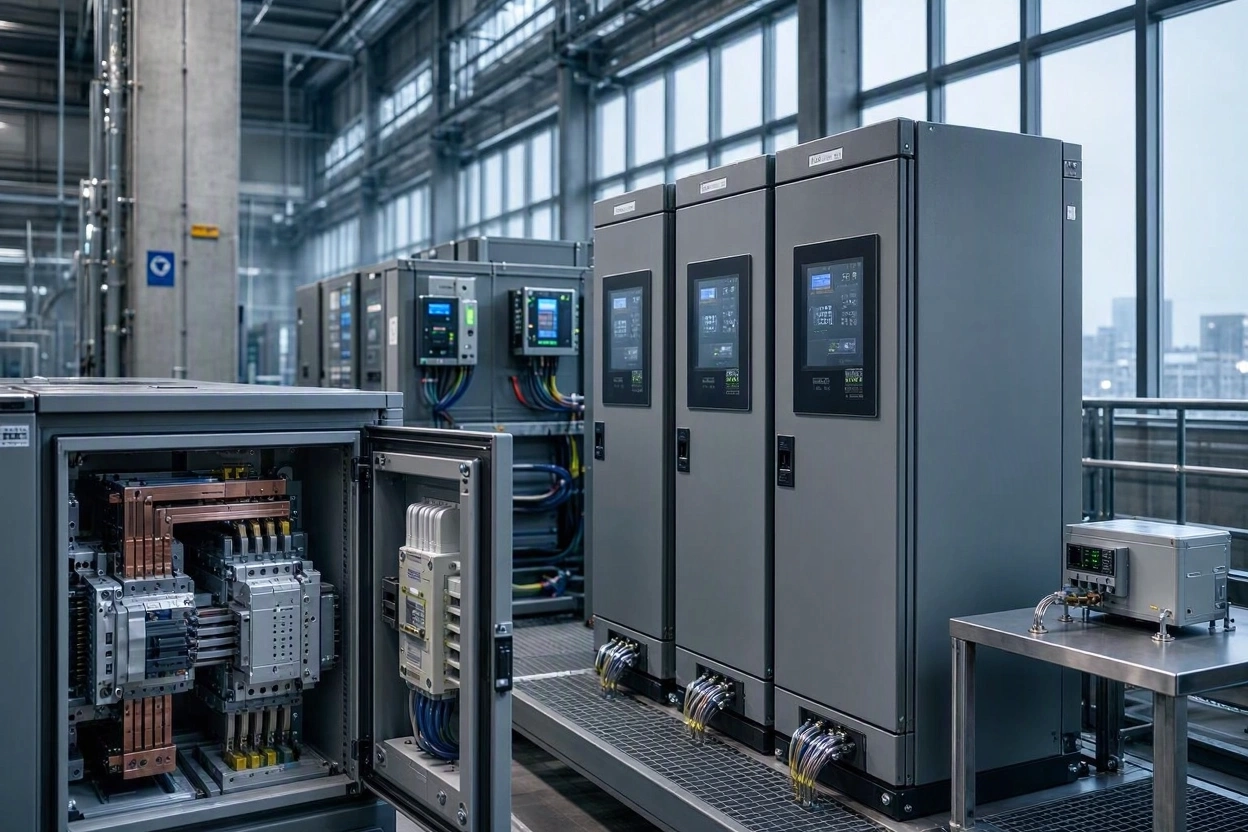
Smart switchgear refers to electrical switching and protection equipment enhanced with digital monitoring, communication, and automation capabilities. It includes circuit breakers, disconnectors, earthing switches, instrument transformers, sensors, protection relays, and control devices that work together to manage electrical circuits safely. In digital substations, these components exchange information through standardized communication networks, allowing operators to monitor equipment status and coordinate protection functions more efficiently. Smart switchgear supports medium voltage and high voltage applications across transmission networks, distribution systems, renewable energy installations, and industrial power infrastructure.
The main difference between traditional and smart switchgear lies in its ability to collect and communicate operational information. Conventional equipment often depends on periodic inspections and hardwired signals, while digitally enabled equipment can provide continuous measurements, diagnostic alerts, and event records. These capabilities help engineers understand equipment performance under changing electrical loads and environmental conditions. By integrating switchgear with digital substation automation, utilities can improve operational visibility, support faster fault analysis, and make more informed decisions about maintenance and equipment replacement.
According to a MarketsandMarkets announcement published in October 2026, the global digital substation market is projected to grow from USD 15.62 billion in 2026 to USD 23.39 billion by 2032, representing a compound annual growth rate of 7.0%.
Download PDF Brochure @ https://www.marketsandmarkets.com/pdfdownloadNew.asp?id=43227003
Key Technologies Driving Smart Switchgear Adoption
Digital Sensors and Intelligent Electronic Devices
Digital sensors and intelligent electronic devices are essential components of Smart Switchgear in Digital Substations. Sensors measure electrical current, voltage, temperature, humidity, and mechanical operating conditions, while intelligent electronic devices process this information to support protection, control, and monitoring functions. These devices can identify abnormal conditions and transmit alerts to substation automation systems. By collecting detailed operational data, utilities can improve equipment visibility and identify potential faults before they develop into major disruptions.
Modern digital switchgear also incorporates electronic trip units, numerical protection relays, and condition monitoring modules. These technologies help operators evaluate circuit breaker performance, contact wear, operating mechanisms, and insulation conditions. In addition, digital measurement systems can reduce dependence on extensive conventional copper wiring when supported by suitable network architecture. The result is a more flexible substation design that supports faster commissioning, simplified diagnostics, and improved asset management throughout the equipment lifecycle.
IEC 61850 Communication and Process Bus Architecture
IEC 61850 is a key communication standard for digital substation automation. It enables compatible intelligent electronic devices from different manufacturers to exchange information using standardized data models and communication services. Smart Switchgear in Digital Substations can use this architecture to share protection signals, circuit breaker status, measurements, alarms, and control commands. The process bus supports digital transmission
A digital substation typically includes station level communication for supervisory control and process level communication for exchanging data with field equipment. Merging units can convert measurements from conventional instrument transformers into digital signals for transmission over the process bus. This architecture allows protection and control functions to access information through a coordinated communication system. Utilities must nevertheless engineer network redundancy, precise time synchronization, device interoperability, and dependable communication performance to ensure that critical protection functions remain reliable.
Artificial Intelligence and Predictive Maintenance
Artificial intelligence is extending the capabilities of smart switchgear beyond basic monitoring and alarm generation. AI based analytics can examine historical operating records, temperature trends, switching frequency, vibration measurements, and other equipment parameters to identify patterns associated with deterioration. Smart Switchgear in Digital Substations can provide the data required for predictive maintenance platforms, helping asset managers prioritize inspections and plan interventions according to equipment condition rather than fixed schedules alone.
Digital twins can complement these capabilities by creating virtual representations of physical switchgear and associated substation assets. Engineers can compare measured operating conditions with expected performance, evaluate maintenance scenarios, and investigate potential failure mechanisms. Edge computing can process time sensitive information close to the equipment, while cloud platforms can support fleet wide analysis and long term asset planning. The effectiveness of these technologies depends on sensor quality, sufficient historical data, reliable models, and validation by experienced electrical engineers.
Advanced Circuit Breakers and Insulation Technologies
Circuit breakers are fundamental to switchgear because they interrupt fault currents and isolate electrical circuits when protection systems detect dangerous conditions. Smart circuit breakers integrate electronic controls, diagnostic capabilities, and communication interfaces that provide more detailed information about operating status and performance. Their integration with digital substation systems helps coordinate protection activities, record switching events, and support faster investigation of electrical disturbances. This is particularly important in networks where power continuity and equipment protection are critical.
Insulation technology is another important area of development. Air insulated switchgear remains relevant for installations where space and environmental conditions permit, while gas insulated and hybrid configurations can support compact substation designs. Manufacturers are also developing alternatives to conventional sulfur hexafluoride based insulation because of its high global warming potential. The choice of insulation technology depends on voltage level, environmental requirements, safety considerations, maintenance practices, and lifecycle cost. Smart monitoring can improve asset visibility across different switchgear configurations without replacing the fundamental need for sound electrical design.
Major Applications of Smart Switchgear in Digital Substations
Power Transmission and Distribution Networks
Electric utilities are among the most important users of Smart Switchgear in Digital Substations. Transmission substations require dependable protection and control equipment to manage high voltage electricity flows between generation facilities and regional networks. At the distribution level, intelligent switchgear helps operators isolate faults, monitor feeder conditions, and restore service more efficiently. Digital information also supports better coordination between substations and network control centers, improving situational awareness during planned switching operations and unexpected disturbances.
As distribution networks become more complex, utilities need equipment capable of supporting changing demand, distributed energy resources, and bidirectional power flows. Smart switchgear can provide operational data that helps engineers assess loading conditions and identify equipment operating near its limits. When integrated with supervisory control and data acquisition systems, it can also support remote operation and coordinated network management. These functions are increasingly valuable for utilities seeking to improve reliability while managing aging infrastructure and expanding electricity demand.
Renewable Energy and Battery Storage
Solar farms, wind power installations, and battery energy storage systems require reliable electrical equipment to connect generation assets with the grid. Smart Switchgear in Digital Substations supports these installations by monitoring electrical conditions, isolating faults, and coordinating protection across interconnected equipment. Renewable generation can fluctuate with weather conditions, creating operational challenges for grid operators. Intelligent monitoring and automated switching help engineers respond to changing operating conditions while maintaining electrical safety and system stability.
Battery energy storage facilities introduce additional requirements because their power conversion systems can change operating modes as they charge and discharge. Digital switchgear can communicate with plant control systems to provide equipment status and protection information. At renewable energy facilities, remote monitoring also reduces the need for routine on site inspections and helps maintenance teams prioritize critical assets. However, protection settings and communication arrangements must be engineered for the specific electrical characteristics of each installation.
Industrial Facilities and Data Centers
Manufacturing plants, semiconductor facilities, hospitals, and data centers depend on stable electricity supplies to maintain essential operations. Electrical faults or unexpected outages can interrupt production, affect sensitive equipment, and create significant financial losses. Smart Switchgear in Digital Substations helps facility operators monitor electrical distribution equipment, detect abnormal operating conditions, and coordinate protective responses. Its integration with industrial energy management platforms can also improve visibility into power consumption and equipment utilization.
Data centers are a particularly relevant application because their electrical infrastructure supports servers, cooling systems, backup power equipment, and uninterrupted power supplies. Smart switchgear can provide information about circuit loading, breaker status, temperature, and maintenance requirements. Industrial facilities can similarly use digital monitoring to identify recurring electrical disturbances and improve maintenance planning. Although intelligent switchgear can strengthen operational visibility, overall power availability still depends on system redundancy, protection coordination, backup power design, and disciplined maintenance procedures.
Benefits of Smart Switchgear in Digital Substations
Improved Reliability and Faster Fault Management
One of the primary benefits of Smart Switchgear in Digital Substations is improved visibility into electrical system performance. Real time monitoring enables operators to detect abnormal measurements, receive equipment alarms, and investigate developing problems before they escalate. Digital protection devices can exchange information quickly, helping coordinated protection systems respond appropriately to electrical faults. Detailed event records also make it easier to determine the sequence of operations and identify the causes of unexpected equipment behavior.
These capabilities can reduce the time required to diagnose faults and support more effective service restoration. However, actual response times depend on protection settings, communication performance, equipment design, and the wider network configuration. Digital monitoring does not eliminate electrical faults, but it can help utilities understand them more quickly and manage their consequences more effectively. This makes intelligent switchgear valuable for networks where continuity of service is a major operational priority.
Lower Maintenance Costs and Better Asset Utilization
Traditional maintenance programs often depend on periodic inspections or fixed replacement schedules. These approaches may overlook equipment that is deteriorating between inspections or result in unnecessary maintenance on assets that remain in good condition. Smart Switchgear in Digital Substations enables condition based maintenance by supplying information about equipment performance, switching activity, and developing anomalies. Maintenance teams can use these insights to schedule inspections according to operational risk and asset condition.
The potential benefits include fewer unnecessary site visits, more effective allocation of maintenance resources, and improved planning for spare parts and equipment replacement. Digital records can also support lifecycle cost assessments by showing how assets behave under different loading conditions. Achieving these outcomes requires investment in sensors, data management, analytics, and workforce training. Organizations should therefore evaluate the total lifecycle value of digital switchgear rather than relying exclusively on its initial purchase price.
Challenges Affecting Smart Switchgear Implementation
High Initial Investment and Integration Complexity
Despite its advantages, Smart Switchgear in Digital Substations can require substantial initial investment in intelligent devices, sensors, communication networks, engineering services, and cybersecurity infrastructure. Retrofitting existing substations may be particularly complex because utilities must integrate new equipment with legacy protection relays, control systems, and communication protocols. The cost of installation, testing, workforce training, and system validation can influence investment decisions, especially for smaller utilities and industrial operators with limited modernization budgets.
Successful implementation requires a clear assessment of technical requirements and expected operational benefits. Organizations should evaluate the condition of existing assets, the availability of communication infrastructure, future capacity requirements, and the feasibility of phased deployment. A staged modernization strategy can help spread capital expenditure while allowing operators to gain experience with digital monitoring and protection technologies. Careful commissioning and compatibility testing are essential to ensure that new systems operate reliably alongside existing equipment.
Cybersecurity and Interoperability Risks
Greater connectivity creates new cybersecurity considerations for electrical infrastructure. Smart Switchgear in Digital Substations exchanges operational information across interconnected devices and networks, increasing the importance of protecting communication channels, engineering workstations, and remote access systems. Unauthorized access, malicious commands, compromised devices, or manipulated measurements could affect monitoring and control functions. Utilities must therefore treat cybersecurity as a core engineering requirement rather than an additional feature.
- The most important implementation priorities include:
Implementing network segmentation, role based access controls, and strong authentication for operational technology systems. - Monitoring communication traffic, maintaining secure device configurations, and applying controlled firmware updates.
- Establishing redundant communication paths and validated recovery procedures for critical protection and control functions.
- Testing interoperability between equipment from different manufacturers before deployment and during major system upgrades.
These measures should be supported by regular security assessments, incident response plans, and workforce training. Utilities also need to maintain reliable operating procedures for situations involving communication failures or compromised digital systems. International standards and guidance can help establish consistent engineering practices, but each installation requires a cybersecurity assessment based on its architecture, operational risks, and applicable regulations.
Smart Switchgear in Digital Substations Industry Outlook Through 2032
Market Growth Drivers and Investment Opportunities
The outlook for Smart Switchgear in Digital Substations through 2032 is closely linked to investment in grid modernization, transmission expansion, renewable energy integration, and industrial electrification.
Several trends are likely to influence product development and purchasing decisions through 2032. More advanced condition monitoring will help maintenance teams assess equipment health, while digital twins will support engineering and operational analysis. Environmentally preferable insulation technologies may gain attention as manufacturers and utilities assess the environmental impact of electrical equipment. Greater standardization and improved communication security will also be important as digital substations become more interconnected. These are expected development directions rather than guarantees that every technology will achieve widespread commercial adoption by 2032.
Conclusion
Smart Switchgear in Digital Substations is becoming an important component of modern electrical infrastructure because it combines switching, protection, monitoring, and communication capabilities within a more connected operating environment. Its applications extend across transmission networks, distribution utilities, renewable energy installations, industrial facilities, and data centers. By improving equipment visibility and supporting condition based maintenance, smart switchgear can help organizations manage electrical assets more effectively while strengthening fault analysis and operational planning.
Through 2032, adoption will be influenced by grid modernization investment, increasing electricity demand, renewable energy integration, and advancements in digital technologies. However, realizing the full value of Smart Switchgear in Digital Substations requires careful attention to cybersecurity, interoperability, engineering standards, and lifecycle economics. Utilities and industrial operators that align equipment selection with clearly defined reliability and maintenance objectives will be better positioned to benefit from the continuing digital transformation of power infrastructure.
Frequently Asked Questions
1. What is smart switchgear in digital substations?
Smart switchgear is electrical switching and protection equipment equipped with digital sensors, intelligent electronic devices, communication interfaces, and monitoring capabilities. It enables real time equipment supervision, automated protection, remote operation, and condition based maintenance within digital substations.
2. How does smart switchgear differ from conventional switchgear?
Conventional switchgear primarily performs switching and electrical protection through traditional equipment and control arrangements. Smart switchgear adds digital measurement, equipment diagnostics, communication, and integration with automation platforms, providing greater operational visibility and supporting data driven maintenance.
3. What are the key technologies used in smart switchgear?
The main technologies include digital sensors, numerical protection relays, intelligent electronic devices, electronic trip units, IEC 61850 communication, process bus architecture, condition monitoring, and AI enabled predictive maintenance. Digital twins and edge computing can provide additional diagnostic and asset management capabilities.
4. What are the major applications of smart switchgear?
Smart switchgear is used in power transmission and distribution networks, renewable energy plants, battery storage facilities, industrial manufacturing plants, commercial buildings, hospitals, and data centers. These applications benefit from improved equipment monitoring, fault management, and maintenance planning.
5. How does IEC 61850 support smart switchgear?
IEC 61850 provides standardized communication and data models for substation automation devices. It supports information exchange between protection relays, control systems, and other intelligent devices, helping improve interoperability and enabling coordinated monitoring and protection functions.
6. What are the main benefits of smart switchgear in digital substations?
The major benefits include improved equipment visibility, faster fault diagnosis, remote monitoring, condition based maintenance, reduced dependence on extensive copper wiring in suitable architectures, and better lifecycle planning. Actual performance improvements depend on system design and implementation quality.
7. What challenges limit smart switchgear adoption?
Major challenges include high initial investment, integration with legacy equipment, cybersecurity risks, interoperability issues, shortages of specialized technical skills, and the complexity of commissioning digital protection systems. Careful planning and lifecycle cost evaluation can help address these challenges.
8. How does artificial intelligence improve smart switchgear performance?
Artificial intelligence can analyze equipment measurements, operating history, and diagnostic alerts to identify abnormal patterns and potential deterioration. When appropriately validated, these insights can help maintenance teams prioritize inspections and improve asset management decisions.
9. What is the industry outlook for smart switchgear through 2032?
The outlook is supported by digital substation modernization, renewable energy integration, industrial electrification, and demand for reliable electricity networks. The broader digital substation market is projected to reach USD 23.39 billion by 2032, according to MarketsandMarkets. This is a broader market forecast, not a forecast for smart switchgear alone.
10. Which factors should buyers consider when selecting smart switchgear?
Buyers should evaluate voltage and fault current ratings, protection requirements, communication compatibility, cybersecurity provisions, insulation technology, environmental conditions, maintenance support, expansion flexibility, and total lifecycle cost. Equipment should also meet applicable technical standards and the specific requirements of the installation.