
On Site Energy Storage Gains Importance in US Data Centers
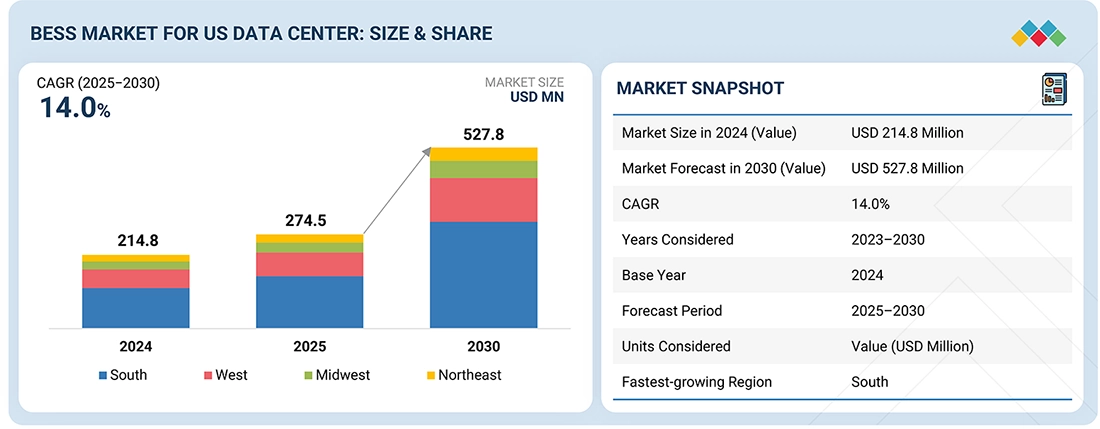
On site battery energy storage system (BESS) deployment is becoming an important trend in the US Data Center Market as operators seek reliable electricity supplies, improved energy management, and greater flexibility in meeting growing power requirements. The rapid expansion of artificial intelligence, cloud computing, hyperscale infrastructure, and digital services is increasing electricity consumption across data center facilities. At the same time, grid capacity constraints, electricity price fluctuations, and sustainability commitments are encouraging operators to invest in energy storage technologies that can be integrated directly into their electrical infrastructure.
On site BESS installations allow data centers to store electricity for later use, manage peak demand, and coordinate energy consumption with renewable generation. These systems can operate alongside utility connections, solar installations, uninterruptible power supplies, and backup generators, depending on facility requirements. By integrating storage into their power infrastructure, operators can improve control over electricity resources and develop more flexible strategies for balancing cost, reliability, and environmental performance.
Download PDF Brochure @ https://www.marketsandmarkets.com/pdfdownloadNew.asp?id=121216276
Rising Electricity Demand Accelerates Storage Deployment
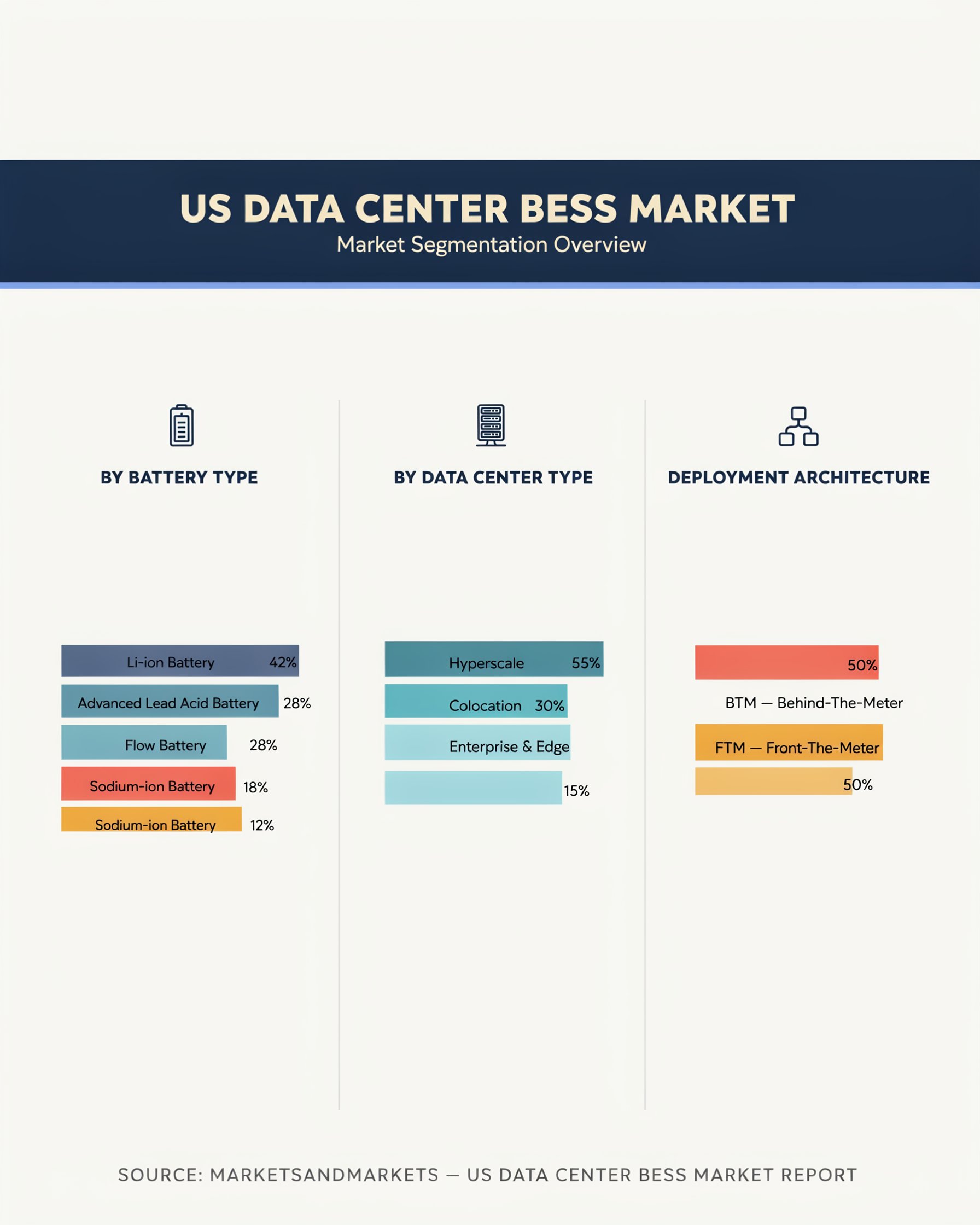
The growth of AI workloads and high performance computing is increasing the need for dependable electricity across US data centers. AI training and inference systems can require substantial computing power, while cooling infrastructure adds to overall facility demand. As operators expand capacity, they must consider how to maintain stable power delivery while managing electricity costs and potential grid constraints.
On site battery storage provides an additional resource for managing these requirements. Batteries can charge when electricity is available or less expensive and discharge during periods of elevated facility demand. This approach can help reduce grid electricity consumption during selected peak periods and may lower demand charges where utility tariffs support such savings.
Storage deployment can also provide flexibility when operators expand data center capacity in phases. However, battery systems cannot independently resolve all grid connection limitations or replace required electrical infrastructure upgrades. Their effectiveness depends on available capacity, discharge duration, facility load profiles, and integration with the wider power system.
Renewable Energy Integration Supports On Site BESS Adoption
Renewable energy procurement is an increasingly important part of data center sustainability planning. US operators are exploring on site solar installations, wind power purchase agreements, and other clean electricity arrangements to reduce the emissions associated with their operations. However, renewable generation can fluctuate throughout the day, while data centers typically require continuous electricity.
On site battery storage helps address this challenge by storing surplus renewable electricity and making it available when generation decreases. For example, a data center with solar panels can store excess daytime generation for use during evening hours or periods of reduced sunlight. This can increase the flexibility of renewable energy utilization and reduce dependence on immediate grid supply when stored electricity is available.
The combination of renewable generation and battery storage also enables operators to coordinate energy resources according to facility demand. Intelligent controls can monitor solar production, battery charge levels, and electricity consumption to optimize charging and discharging schedules. The environmental benefits depend on the source of charging electricity, storage efficiency, and the timing of battery operation.
Inquiry Before Buying @ https://www.marketsandmarkets.com/Enquiry_Before_BuyingNew.asp?id=121216276
Power Resilience Strengthens Demand for On Site Storage
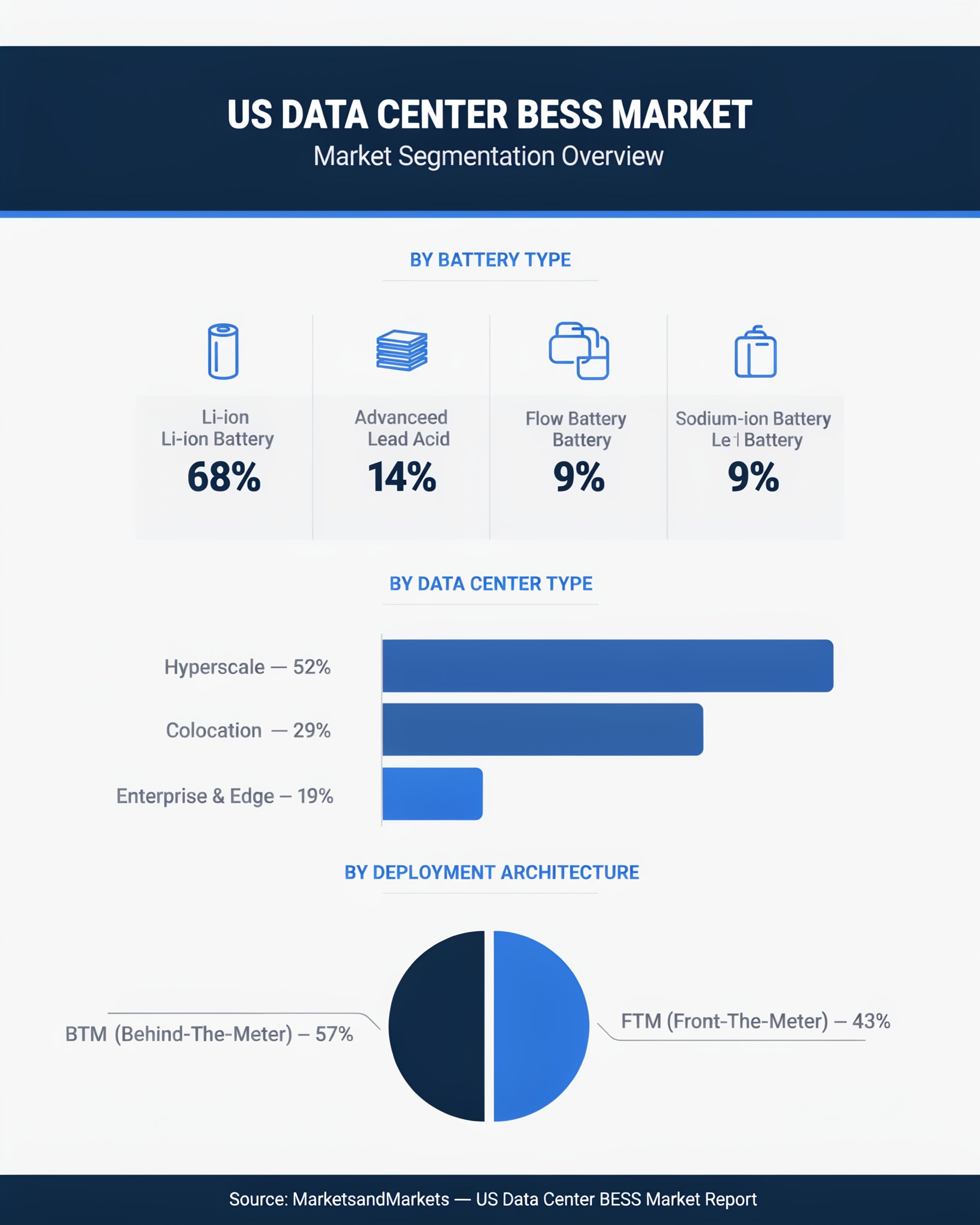
Data centers support critical digital services, making power continuity a major operational priority. Unexpected electricity interruptions can affect servers, networking equipment, cooling systems, and business applications. On site BESS installations can strengthen power management by providing a controllable source of stored electricity that responds rapidly to changing conditions.
When appropriately designed, battery systems can complement uninterruptible power supply equipment and backup generators. They may support selected loads during short term disruptions, help manage fluctuations in electricity supply, and provide additional flexibility when switching between power sources. Their role depends on system configuration, response time, available capacity, and discharge duration.
Battery storage should not be considered an automatic replacement for conventional backup systems. Data center operators must determine how storage fits into their redundancy requirements, outage response plans, and critical load priorities. Safety controls, monitoring, maintenance, and regular testing are essential for reliable operation.
Intelligent Energy Management Improves Storage Efficiency
Advanced energy management software is influencing how on site BESS installations are deployed and operated. These platforms monitor electricity consumption, battery performance, renewable generation, and grid conditions to help operators make informed decisions about energy use.
Predictive analytics can estimate future demand and identify periods when charging or discharging batteries may be most beneficial. Automated controls can coordinate storage with cooling systems, power conversion equipment, and facility management platforms. This can help operators manage electricity costs while preserving sufficient battery capacity for reliability needs.
As data centers adopt increasingly complex electrical architectures, interoperability and cybersecurity are also becoming important considerations. Secure communication systems, accurate monitoring, and clear control priorities help ensure that storage operates effectively within the facility’s power infrastructure.
View detailed Table of Content here – https://www.marketsandmarkets.com/Market-Reports/us-data-center-bess-market-121216276.html
Future Outlook for On Site Energy Storage Deployment
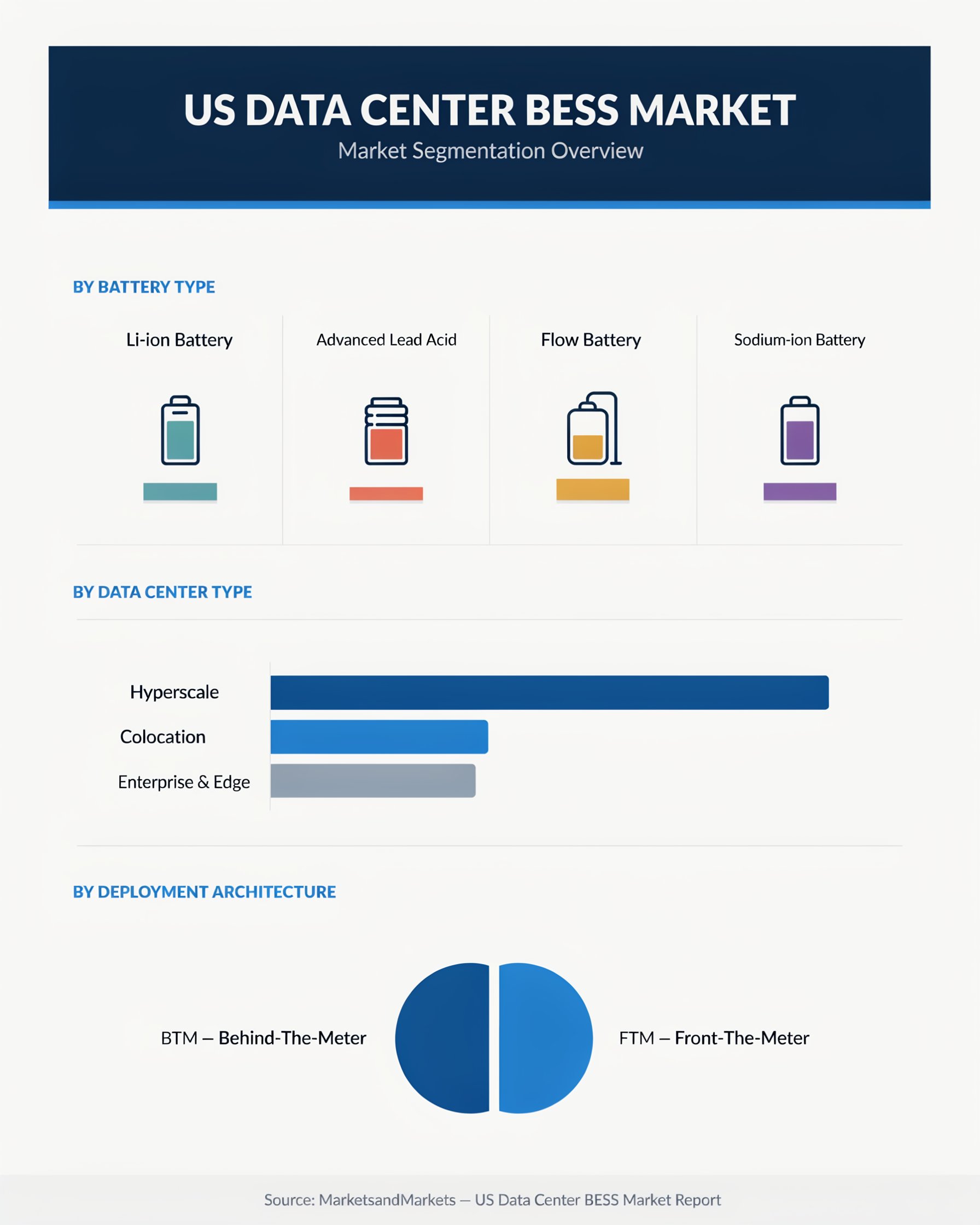
On site energy storage is expected to remain an important investment area in the US Data Center BESS Industry as electricity demand grows and operators prioritize flexible power management. Rising AI workloads, renewable energy integration, grid constraints, and the need for operational resilience are supporting interest in battery installations located directly at data center facilities.
Future deployment will depend on battery costs, site conditions, utility tariffs, safety requirements, and the ability to integrate storage with existing power systems. Advances in battery chemistry, power electronics, and intelligent controls will further shape adoption.
As US data centers expand to support digital services, on site BESS solutions can help operators manage electricity consumption, improve renewable energy utilization, and complement established backup infrastructure. With appropriate system design and energy planning, battery storage can contribute to more efficient, resilient, and sustainable data center operations.