
Data Center Battery (UPS & BESS) Market: Overview
The global Data Center Battery (UPS & BESS) Market is experiencing significant growth as organizations expand their digital infrastructure and prioritize reliable, uninterrupted power supply. According to MarketsandMarkets, the market is projected to grow from USD 4.82 billion in 2026 to USD 10.23 billion by 2032, registering a compound annual growth rate (CAGR) of 13.4% during the forecast period. Increasing investments in artificial intelligence (AI), cloud computing, hyperscale data centers, and colocation facilities are strengthening demand for advanced battery technologies.
Data center batteries are essential for maintaining operational continuity, protecting critical IT infrastructure, and supporting efficient power management. Uninterruptible power supply (UPS) batteries provide immediate backup during power interruptions, while battery energy storage systems (BESS) support broader energy management, peak-load optimization, and renewable energy integration. As data centers become more power-intensive, battery systems are evolving from conventional backup solutions into strategic components of modern energy infrastructure.
Download PDF Brochure @ https://www.marketsandmarkets.com/pdfdownloadNew.asp?id=254269420
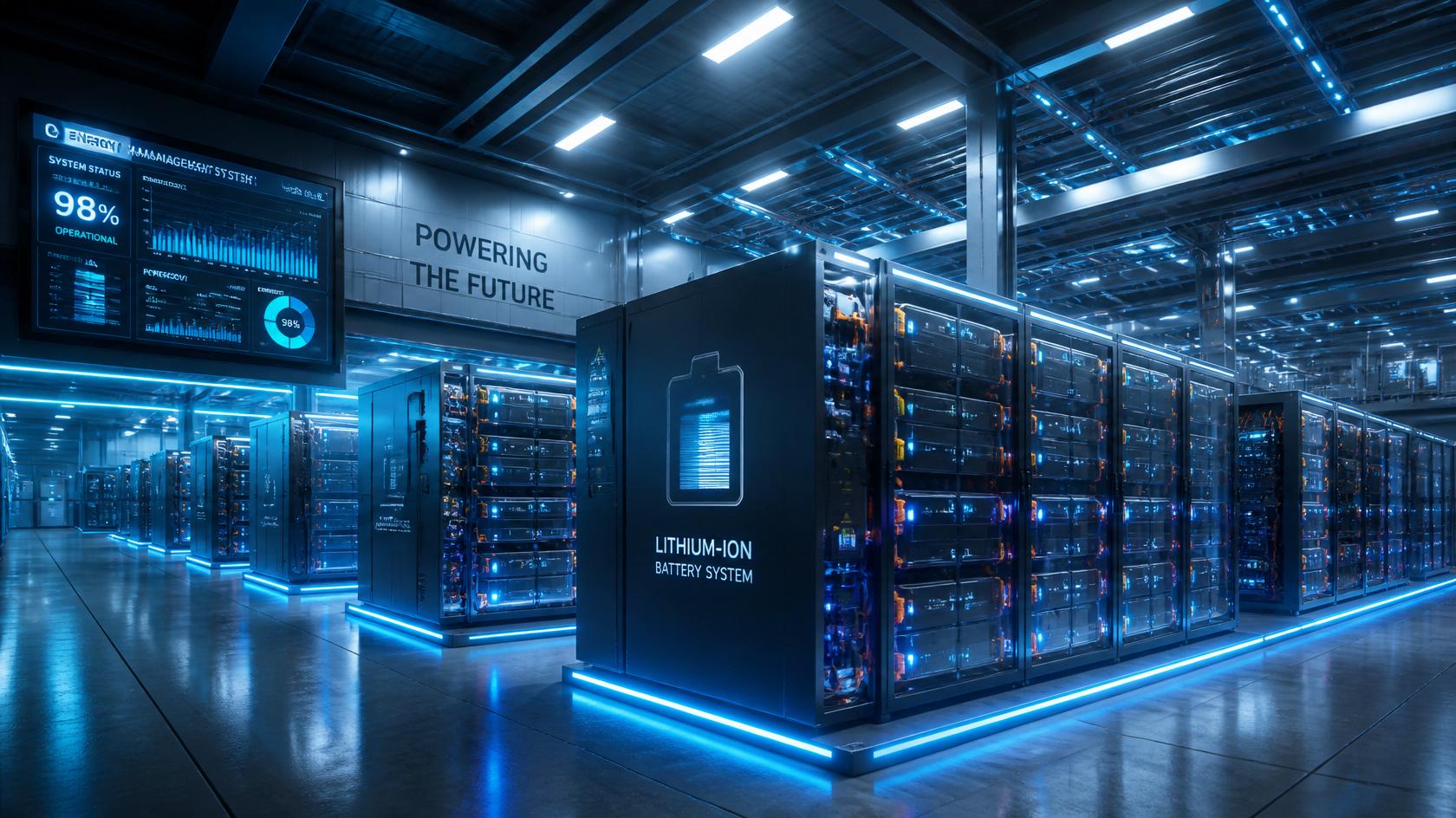
Key Factors Driving the Data Center Battery (UPS & BESS) Market
Rising Demand for AI and Hyperscale Data Centers
The rapid expansion of AI applications, generative AI, cloud services, and high-performance computing is increasing the need for data centers with higher power capacity and reliability. AI workloads require substantial computing resources, creating greater demand for resilient electrical infrastructure. Data center operators are investing in advanced battery systems to minimize downtime, protect sensitive equipment, and maintain service availability. The expansion of hyperscale and cloud data centers is expected to create opportunities for battery manufacturers and power infrastructure providers.
Growing Focus on Uninterrupted Power Supply
Continuous power availability is critical for data centers that support financial transactions, enterprise applications, telecommunications, healthcare platforms, and digital services. Even brief power interruptions can disrupt operations, damage equipment, and affect customer confidence. UPS battery systems help bridge the gap between a power failure and the activation of backup generators or restoration of the main supply. Growing emphasis on business continuity, data protection, and service-level commitments is supporting investment in reliable battery technologies.
Increasing Adoption of Battery Energy Storage Systems
Battery energy storage systems are gaining importance as data center operators seek greater control over electricity consumption and energy costs. BESS can store electricity for use during periods of high demand, help manage peak loads, and support the integration of renewable energy sources. These capabilities are becoming increasingly relevant as data centers face grid capacity constraints and growing electricity requirements. Integrating energy storage with power management systems can improve energy flexibility and strengthen overall infrastructure resilience.
Data Center Battery Market: Technology Trends
Increasing Adoption of Lithium-Ion Batteries
Lithium-ion batteries are gaining traction because of their high energy density, compact footprint, long service life, and relatively low maintenance requirements. These characteristics make them suitable for modern data centers where space utilization and operational efficiency are important considerations. Advanced battery management systems also help monitor battery health, temperature, charging performance, and potential faults. However, deployment decisions depend on total cost of ownership, thermal management, safety requirements, and facility-specific operating conditions.
Continued Role of Advanced Lead-Acid Batteries
Advanced lead-acid batteries continue to serve an important role in data center backup applications because of their established supply chains, proven performance, and compatibility with existing UPS infrastructure. They remain a practical option for facilities prioritizing established technologies and upfront cost considerations. Battery selection will increasingly depend on the balance between capital expenditure, lifecycle costs, maintenance requirements, footprint, and reliability.
Integration of Renewable Energy and Intelligent Monitoring
Data center operators are exploring battery storage alongside solar power, other renewable energy sources, and intelligent energy management platforms. Digital monitoring and predictive maintenance can help identify battery degradation, improve maintenance planning, and reduce the risk of unexpected failures. These developments are creating opportunities for manufacturers that combine battery technology with monitoring software, power conversion equipment, and integrated energy management solutions.
Data Center Battery (UPS & BESS) Market: Segmentation and Regional Opportunities
The market is segmented by UPS capacity, BESS capacity, battery type, data center type, and region. UPS capacity categories include less than 100 kWh, 100–500 kWh, 500 kWh–1 MWh, and above 1 MWh. BESS installations are categorized into less than 1 MWh, 1–30 MWh, and above 30 MWh. Battery technologies include lithium-ion, lead-acid, sodium-ion, and flow batteries, serving the requirements of enterprise, hyperscale, and colocation data centers.
North America is a major regional market, supported by investments in hyperscale infrastructure, cloud computing, and AI-related facilities. Meanwhile, Asia Pacific offers growth opportunities as digital transformation, internet usage, and data center investments expand across major economies. Europe is also creating opportunities through energy-efficiency initiatives, renewable energy integration, and growing interest in sustainable digital infrastructure.
Competitive Landscape and Strategic Opportunities
The competitive landscape includes battery manufacturers and energy storage providers such as Contemporary Amperex Technology Co. Limited (CATL), LG Energy Solution, Samsung SDI, Tesla, and Panasonic Holdings Corporation. Market participants are focusing on product innovation, improved battery performance, energy storage integration, and strategic partnerships to address evolving data center requirements.
Opportunities are emerging in high-capacity battery installations, advanced battery management systems, predictive maintenance, and integrated UPS and BESS solutions. Companies that deliver reliable, scalable, and energy-efficient products can strengthen their competitive positioning as data center operators modernize existing facilities and develop new infrastructure.
Future Outlook for the Data Center Battery (UPS & BESS) Market
The Data Center Battery (UPS & BESS) Market is expected to remain an important growth area as digital infrastructure becomes increasingly dependent on reliable and efficient power systems. Rising AI workloads, cloud adoption, and hyperscale data center investments will continue to support demand for backup power and energy storage technologies. At the same time, renewable energy integration and intelligent power management will expand the role of batteries beyond conventional backup applications.
Manufacturers that combine battery reliability, operational safety, lifecycle efficiency, and scalable energy storage capabilities will be well positioned to address future requirements. Although battery costs, thermal management, recycling, and safety considerations remain important challenges, technological innovation and expanding data center capacity are expected to create substantial opportunities through 2032.
For more info: https://www.marketsandmarkets.com/Market-Reports/data-center-battery-market-254269420.html