
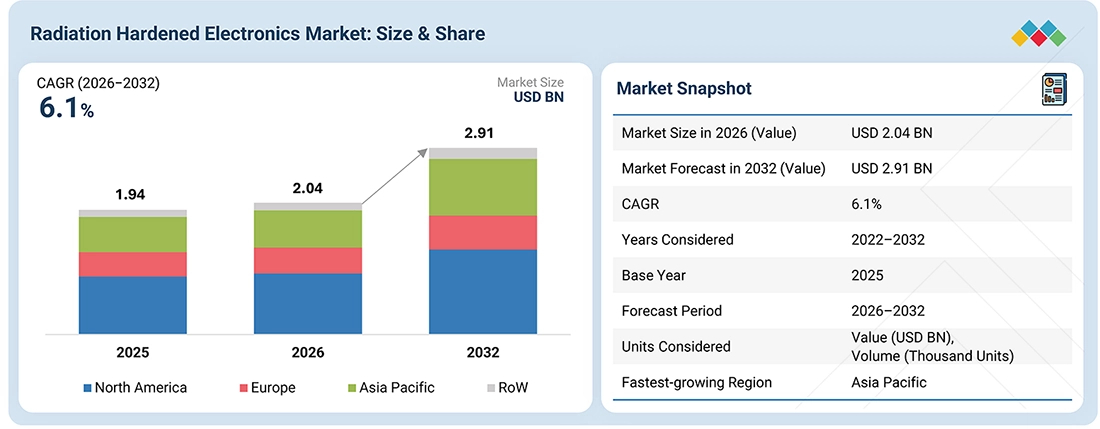
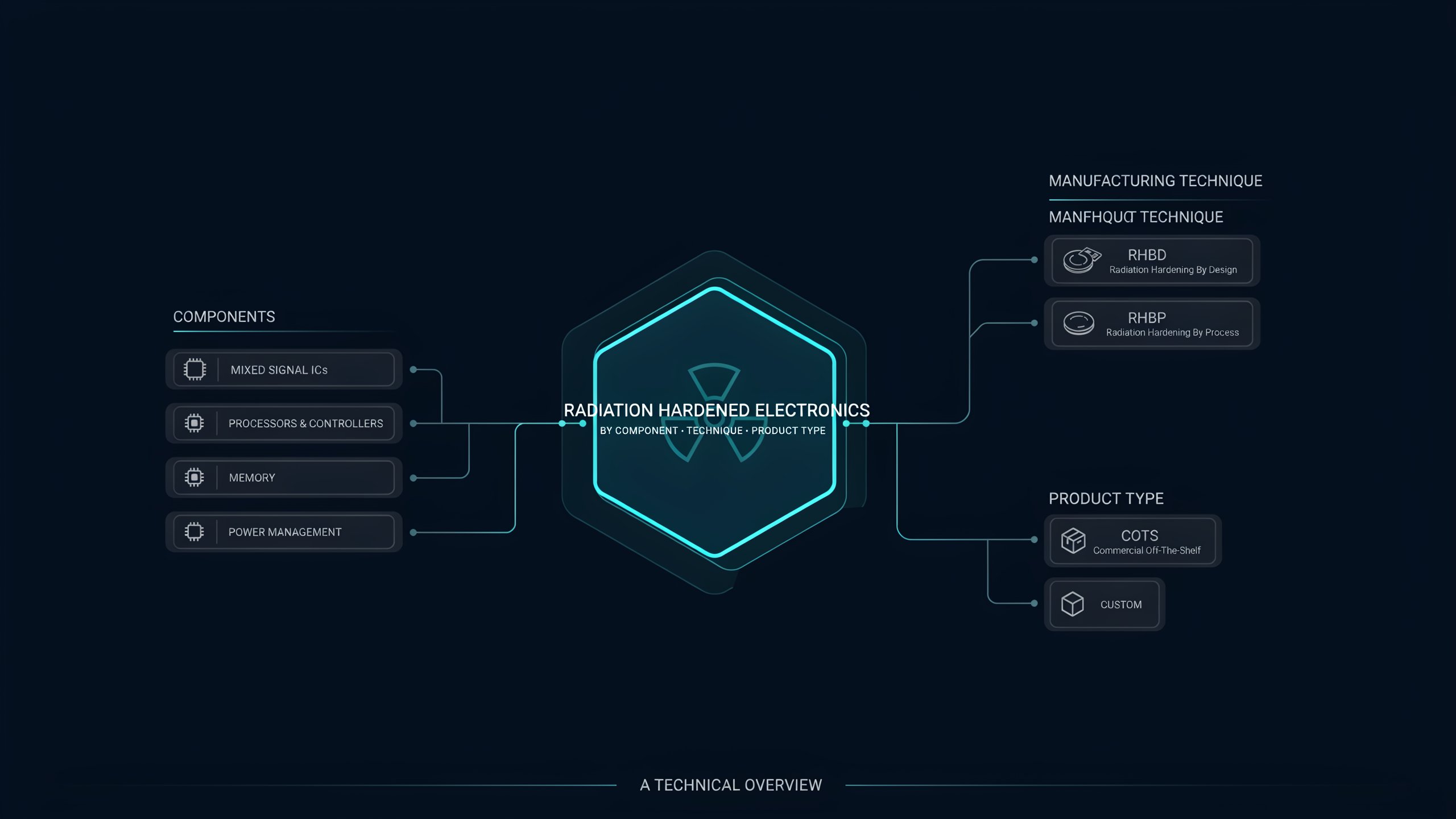
The Radiation Hardened Electronics Market is gaining opportunities from the growing deployment of scientific space instruments used for astronomy, planetary exploration, Earth observation, solar research, and fundamental space science. These instruments collect and process sensitive measurements in environments exposed to cosmic rays, solar particle events, and trapped radiation. Radiation-induced disturbances can affect sensor accuracy, corrupt scientific data, and reduce instrument reliability. As space agencies, research institutions, and commercial space organizations expand scientific missions, demand for radiation hardened processors, memory devices, signal processing circuits, and control electronics is increasing.
Expansion of Scientific Space Missions
Scientific space missions are becoming more sophisticated as researchers seek detailed information about distant planets, stars, galaxies, solar activity, and Earth’s changing environment. Space telescopes, planetary probes, orbiting observatories, and scientific satellites depend on advanced electronic systems to operate instruments and manage collected data.
Radiation hardened electronics support critical functions such as instrument control, telemetry, timing, data acquisition, and onboard processing. These components help reduce the risk of radiation-related malfunctions that could interrupt measurements or compromise mission objectives. As scientific missions become longer and more technologically advanced, reliable electronic components are expected to remain essential.
Download PDF Brochure @ https://www.marketsandmarkets.com/pdfdownloadNew.asp?id=44047967
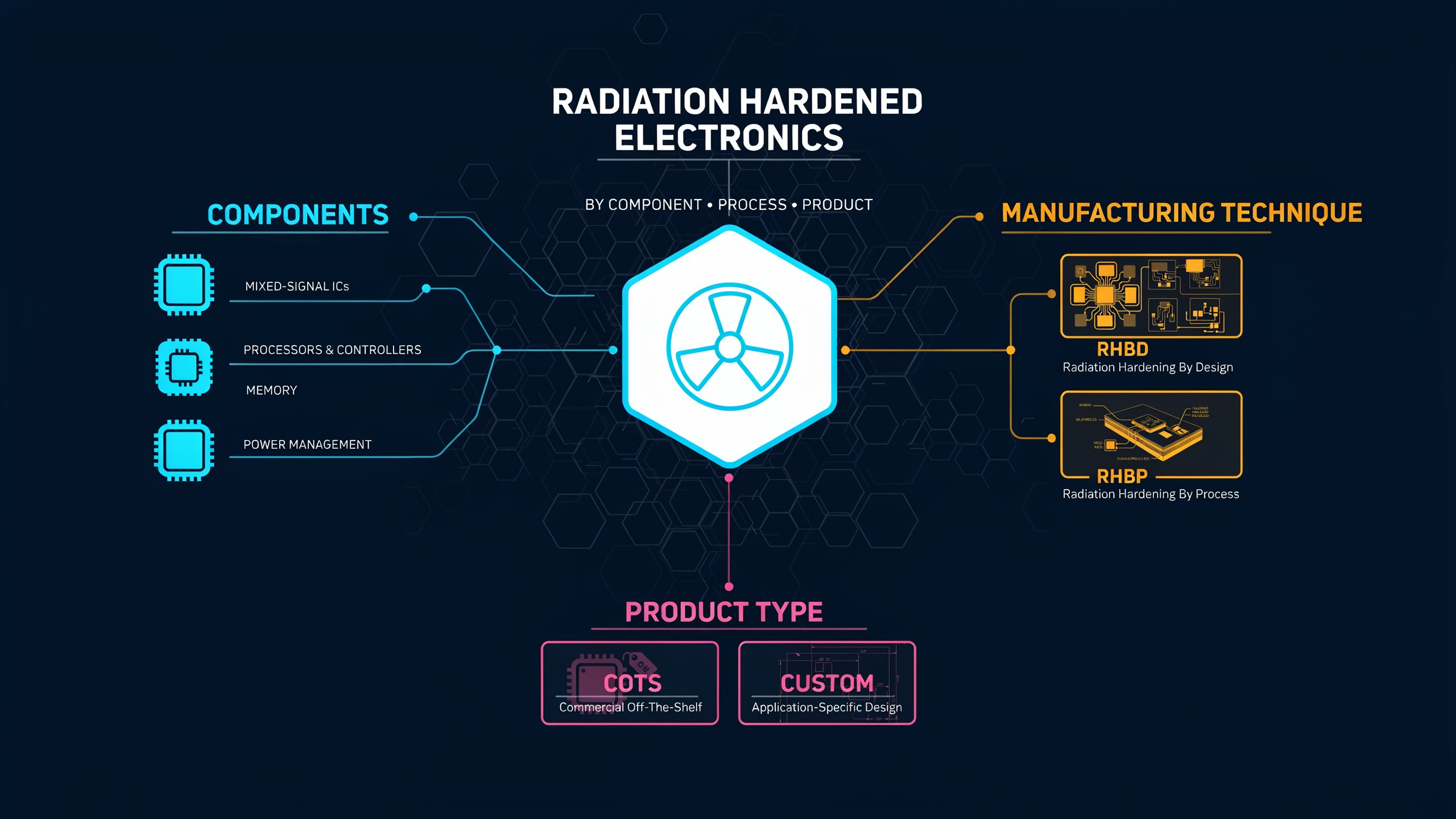
Space Telescopes and Astronomical Instruments
Space telescopes use optical, infrared, ultraviolet, and other sensing technologies to observe astronomical objects beyond the limitations of ground-based observations. Their instruments often contain highly sensitive detectors and complex electronic systems that must operate with minimal interference.
Radiation hardened electronics can support detector readout, image processing, data storage, and instrument coordination. Reliable processors and memory devices help maintain data integrity during prolonged exposure to space radiation. These capabilities are particularly important for missions where repairs are difficult or impossible after launch.
The development of next-generation space observatories is creating opportunities for suppliers that can deliver radiation-resistant electronics with low power consumption, compact designs, and predictable performance.
Planetary Exploration and Deep-Space Research
Planetary exploration missions require electronic systems capable of operating far from Earth, where communication delays and limited maintenance options create additional challenges. Spacecraft exploring the Moon, Mars, asteroids, and other planetary bodies depend on scientific instruments to analyze surface composition, atmospheric conditions, magnetic fields, and geological features.
Radiation hardened processors, programmable logic, memory, and control circuits can help these instruments function reliably under demanding conditions. Deep-space missions may experience different radiation environments depending on their trajectories and destinations, making mission-specific component selection and qualification important.
As governments expand planetary exploration and sample analysis programs, demand for reliable radiation-resistant electronics is expected to create further market opportunities.
Inquiry Before Buying @ https://www.marketsandmarkets.com/Enquiry_Before_BuyingNew.asp?id=44047967
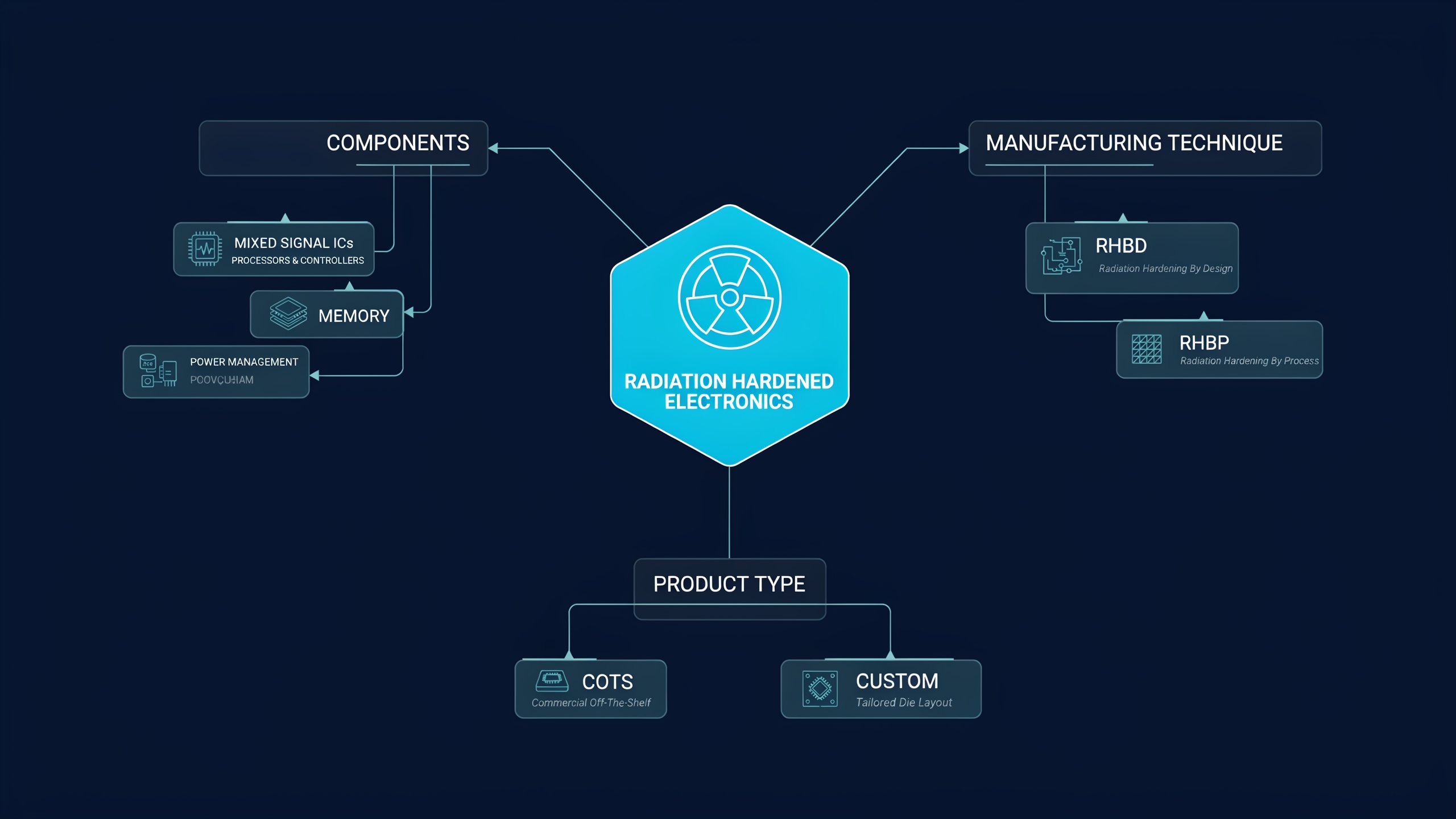
Scientific Sensor and Detector Applications
Scientific instruments use a wide range of sensors and detectors to measure radiation, temperature, pressure, magnetic fields, particles, and chemical characteristics. These devices generate signals that must be amplified, converted, processed, and transmitted accurately.
Radiation hardened signal conditioning circuits, analog-to-digital converters, processors, and memory devices can help protect the measurement chain against radiation-related errors. Maintaining reliable electronics is important because instrument malfunctions can reduce measurement accuracy or create gaps in scientific datasets.
Advances in detector integration and electronic miniaturization are encouraging manufacturers to develop compact radiation-resistant solutions for increasingly sophisticated scientific payloads.
Solar Physics and Space Weather Monitoring
Solar observation satellites monitor solar flares, energetic particles, magnetic activity, and other phenomena that influence conditions throughout the solar system. These missions support scientific research and improve understanding of space weather events that can affect satellites, communication systems, navigation services, and terrestrial infrastructure.
Radiation hardened electronics are important for monitoring instruments that operate in radiation-intensive environments. Reliable processing and control components help maintain data collection during periods of increased solar activity, when radiation exposure may be particularly challenging.
Growing interest in space weather forecasting and solar research is therefore creating opportunities for advanced radiation-resistant electronic components.
View detailed Table of Content here – https://www.marketsandmarkets.com/Market-Reports/radiation-hardened-electronics-market-44047967.html
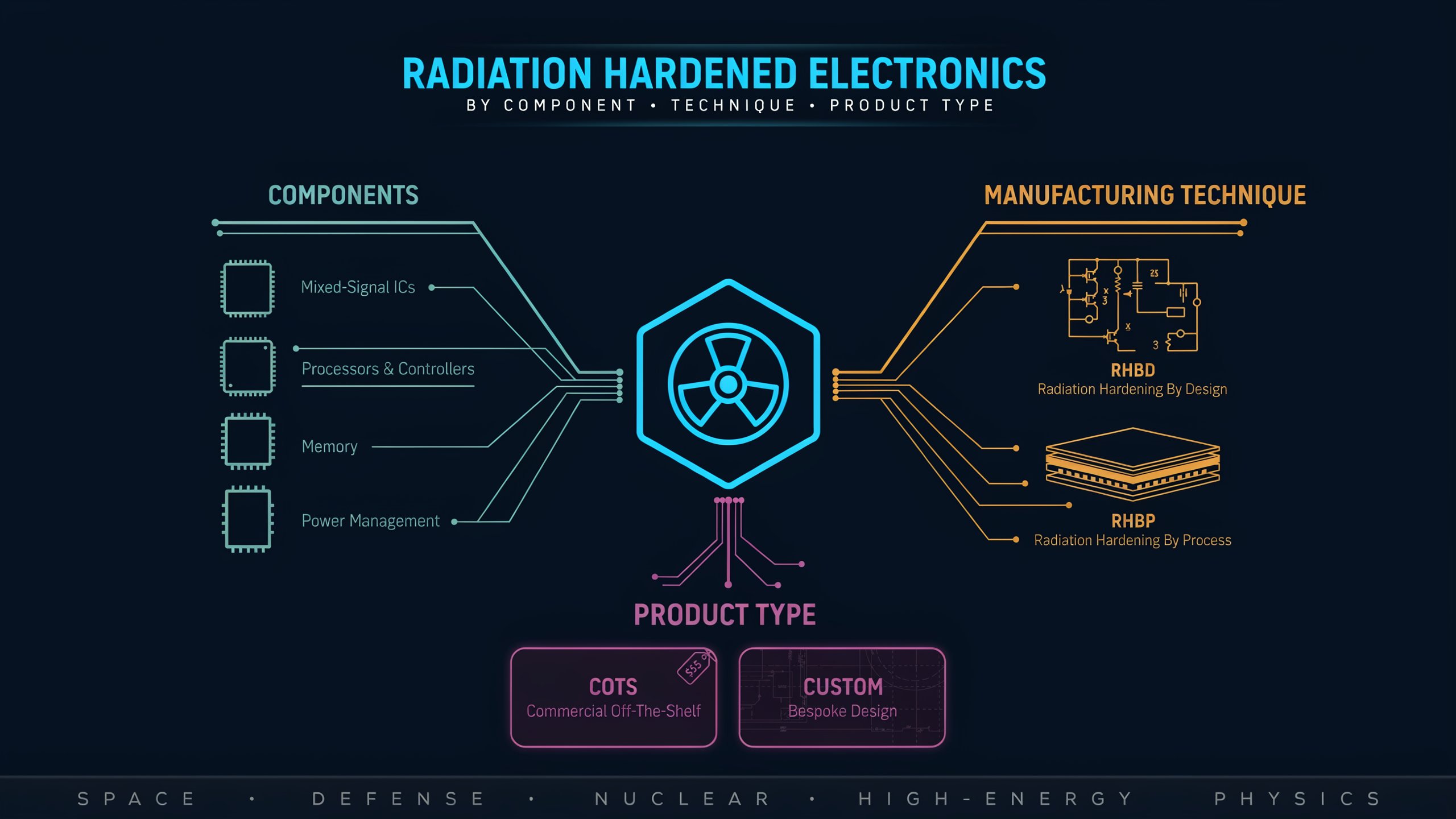
Artificial Intelligence and Onboard Data Processing
Scientific spacecraft increasingly generate large volumes of information that cannot always be transmitted immediately to ground stations. Onboard processing can help prioritize observations, filter data, identify anomalies, and reduce communication requirements.
Artificial intelligence is creating additional opportunities for automated scientific analysis. Radiation hardened processors and programmable devices can support selected onboard computing functions when appropriately designed and qualified. Combining radiation-resistant hardware with fault-tolerant software can improve the reliability of autonomous scientific operations.
As missions adopt more advanced data processing capabilities, demand for high-performance, energy-efficient radiation hardened electronics is expected to increase.
Miniaturization and Energy Efficiency
Space instruments must operate within strict limits on mass, volume, electrical power, and thermal dissipation. Smaller and more efficient electronics can allow spacecraft designers to allocate additional resources to scientific sensors and instruments.
Advances in radiation hardening by design, semiconductor integration, and advanced packaging are supporting compact electronic architectures. Manufacturers are also working to improve processing performance while controlling power consumption and heat generation.
These developments are particularly valuable for small scientific satellites, planetary probes, and instruments that require high functionality within limited spacecraft resources.
Qualification and Reliability Challenges
Radiation hardened electronics often require specialized manufacturing, extensive testing, and mission-specific qualification. Developers must assess total ionizing dose, single-event effects, displacement damage, and expected operating conditions.
These requirements can increase costs and lengthen development schedules. Scientific mission designers must balance reliability, measurement accuracy, computing performance, and budget constraints when selecting components. Suppliers that provide consistent quality, documented radiation characteristics, and long-term product availability can gain advantages in this specialized market.
Future Market Outlook
The Radiation Hardened Electronics Industry is expected to benefit from continued investment in space telescopes, planetary exploration, scientific satellites, solar physics, and advanced scientific sensing. Demand for radiation-resistant processors, memory, detector interfaces, programmable logic, and signal processing electronics will grow as scientific instruments become more complex and data intensive.
Continued improvements in semiconductor integration, power efficiency, onboard computing, and radiation tolerance will support future mission requirements. As researchers pursue more ambitious space science objectives, radiation hardened electronics will remain an important foundation for reliable measurements, accurate data processing, and long-duration scientific operations.