
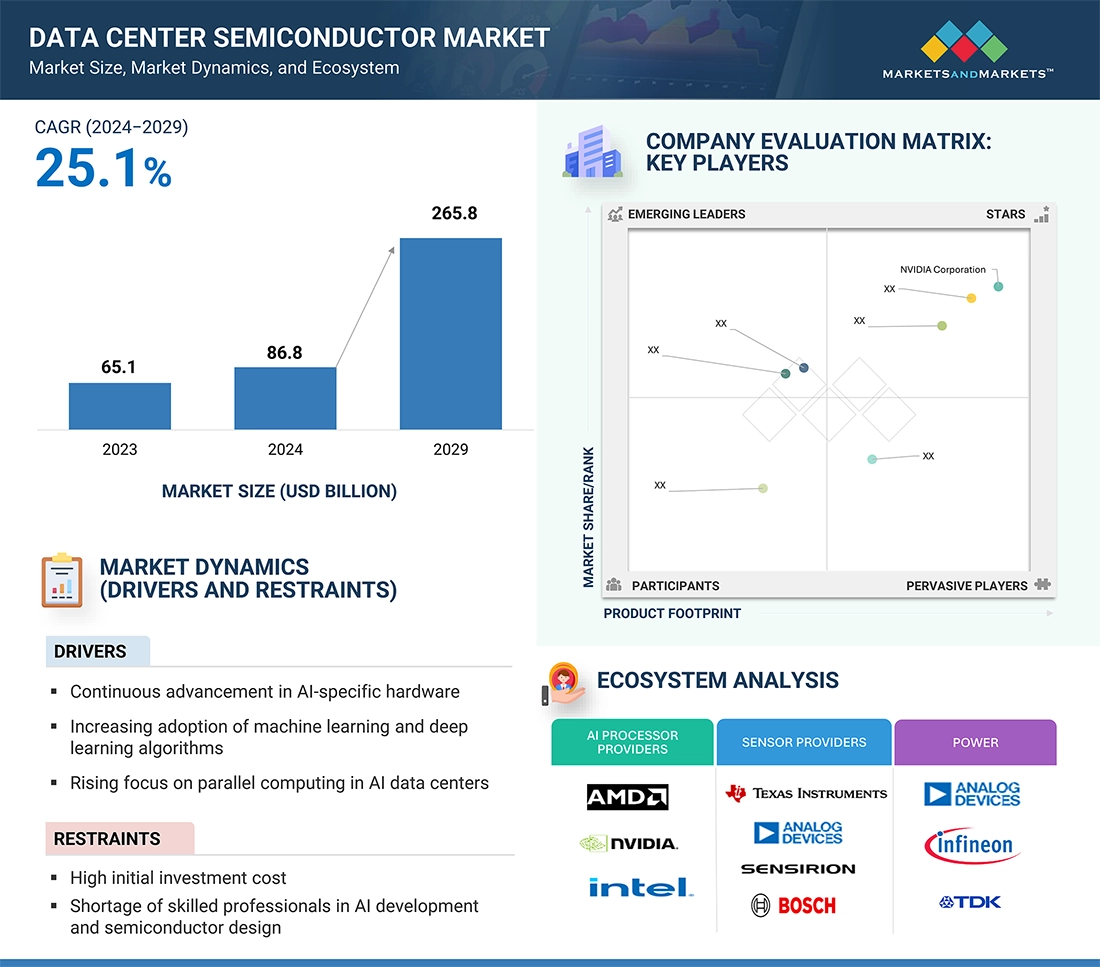
The Data Center Semiconductor Market is expanding as cloud infrastructure becomes increasingly optimized for artificial intelligence workloads. The rapid adoption of generative AI, machine learning, deep learning, large language models, and advanced analytics is encouraging cloud service providers to deploy specialized computing architectures capable of delivering high performance at greater efficiency. This transformation is increasing demand for GPUs, AI accelerators, high performance CPUs, high bandwidth memory, networking processors, storage controllers, and power management semiconductors across modern cloud data centers.
Growing Demand for AI Cloud Computing
Cloud platforms are becoming a primary environment for organizations seeking access to artificial intelligence capabilities without making large investments in dedicated computing infrastructure. Businesses across financial services, healthcare, manufacturing, retail, telecommunications, and media are increasingly using cloud-based AI for analytics, automation, content generation, and decision-making.
This growth is increasing the computational requirements of cloud data centers. Semiconductor technologies that provide high processing performance, rapid data movement, and efficient power consumption are becoming essential for supporting expanding AI workloads.
Download PDF Brochure @ https://www.marketsandmarkets.com/pdfdownloadNew.asp?id=47625470
Expansion of AI Accelerators
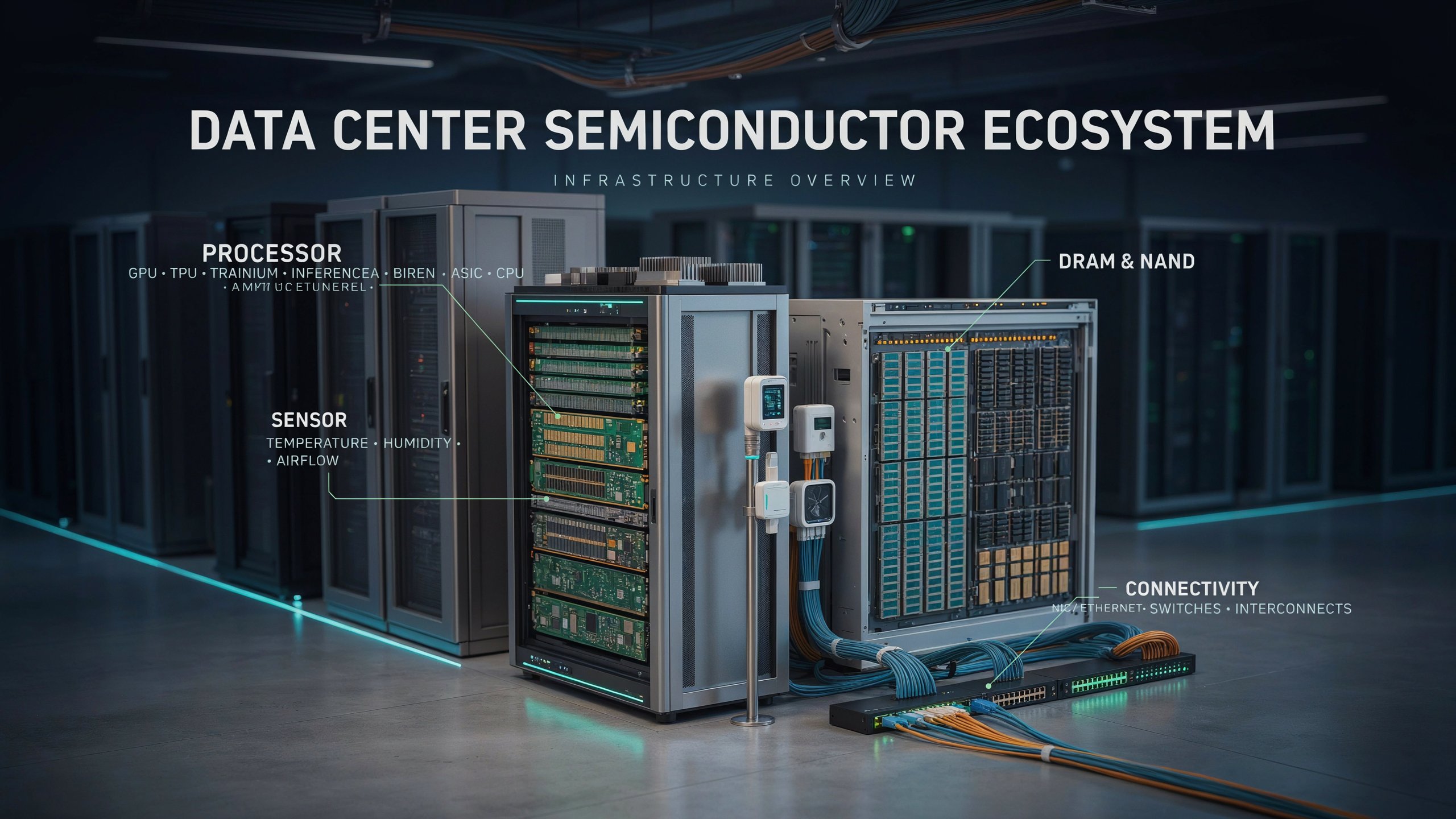
AI accelerators are becoming a central component of AI-optimized cloud infrastructure. These specialized processors are designed to execute parallel mathematical operations efficiently, making them suitable for neural networks and machine learning applications.
Cloud providers are deploying accelerator-based servers for both AI training and inference. As workloads become more diverse, demand is also increasing for specialized accelerator architectures optimized for particular AI models, inference requirements, and enterprise applications.
Role of High Performance CPUs
CPUs continue to serve as an important foundation for cloud infrastructure even as AI accelerators become more widely deployed. They manage operating systems, application workloads, data orchestration, virtualization, and communication between different computing resources.
Emerging server CPUs are incorporating improved vector processing, memory capabilities, integrated acceleration, and enhanced performance per watt. These developments enable CPUs and AI accelerators to operate as complementary components within heterogeneous cloud computing architectures.
High Bandwidth Memory Integration
AI workloads require rapid access to large datasets, making memory bandwidth a critical performance factor. High bandwidth memory is increasingly being integrated with AI accelerators to support faster movement of data between processing and memory resources.
The adoption of HBM is creating additional demand for advanced semiconductor packaging, memory controllers, interconnect technologies, and high density memory solutions. As AI models become larger, high performance memory will remain an important component of AI-optimized cloud infrastructure.
Inquiry Before Buying @ https://www.marketsandmarkets.com/Enquiry_Before_BuyingNew.asp?id=47625470
Advanced Networking for AI Clusters
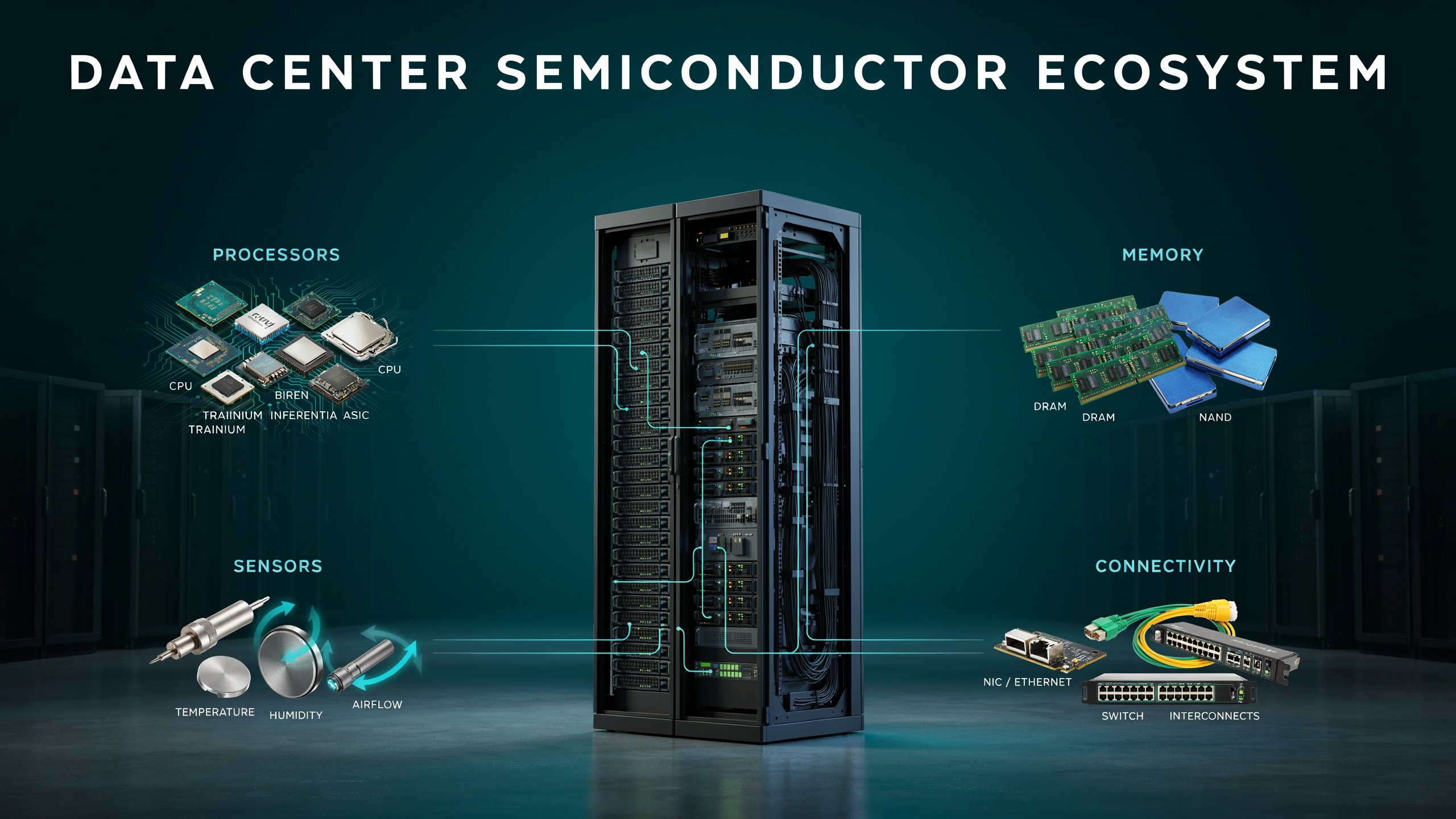
AI workloads often operate across clusters containing large numbers of accelerators and servers. High speed networking is therefore essential for transferring data between computing nodes while minimizing latency and communication bottlenecks.
Advanced switches, network processors, data processing units, Ethernet controllers, and optical interconnect semiconductors are becoming increasingly important. These technologies enable cloud providers to scale AI clusters and support high throughput communication across distributed computing infrastructure.
Custom Cloud Silicon
The growing scale of AI cloud infrastructure is encouraging major cloud providers to develop custom semiconductor solutions. Application-specific processors can be optimized for particular cloud workloads and can provide greater control over performance, energy consumption, and operating costs.
Custom silicon can also complement commercially available GPUs and CPUs by handling specialized workloads. This trend is creating opportunities for semiconductor design companies, foundries, packaging providers, and technology partners involved in customized cloud computing platforms.
Energy Efficient AI Infrastructure
Energy efficiency is becoming a critical consideration as AI increases cloud data center power requirements. High-density accelerator systems generate significant electrical and thermal loads, encouraging cloud operators to improve performance per watt.
Advanced semiconductor processes, efficient power management, specialized accelerators, and improved voltage regulation can help reduce energy consumption. Silicon carbide and gallium nitride technologies may also support efficient power conversion in selected data center applications.
View detailed Table of Content here – https://www.marketsandmarkets.com/Market-Reports/data-center-semiconductor-market-47625470.html
Advanced Packaging and Chiplets
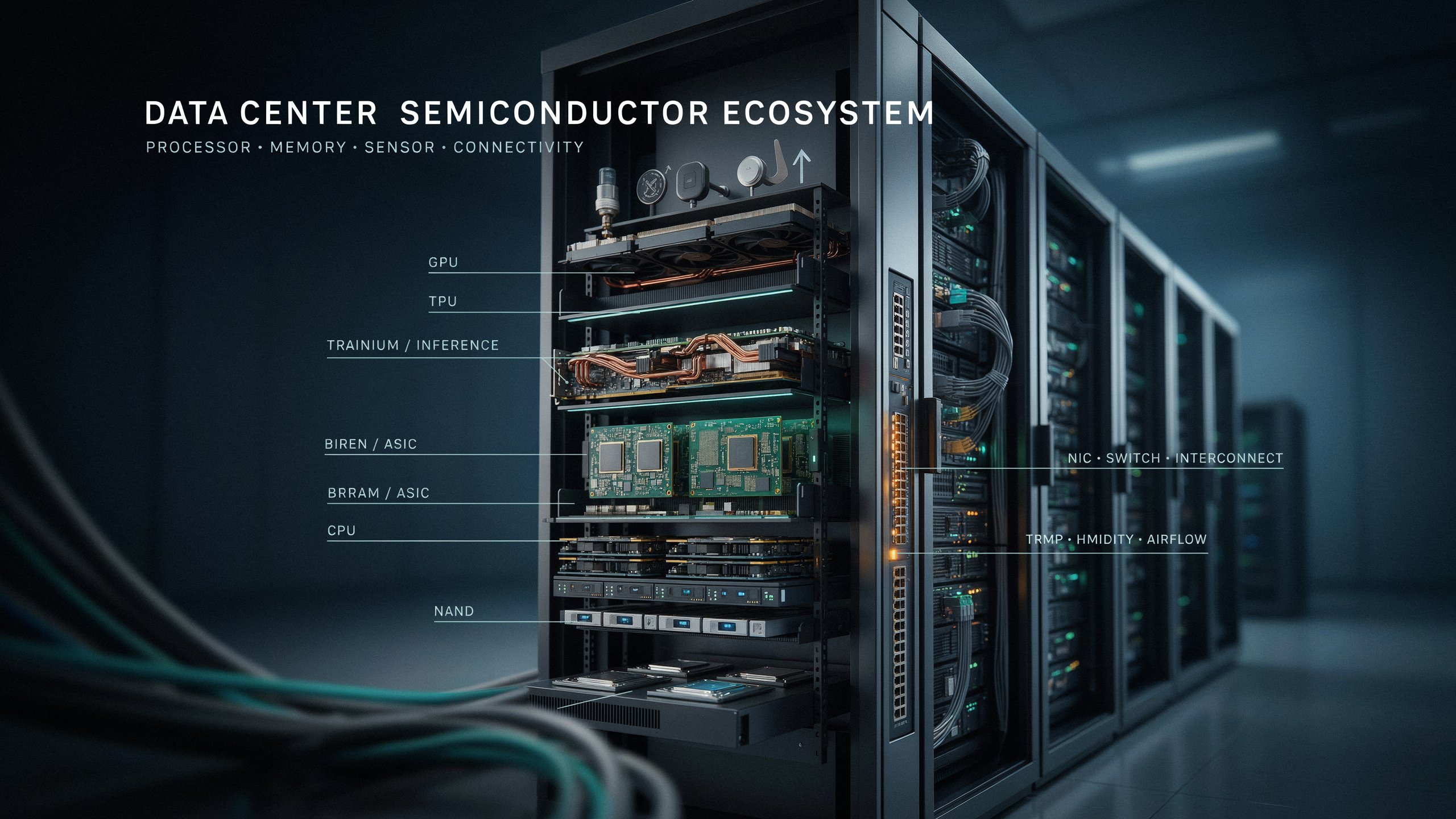
The increasing complexity of AI processors is driving innovation in chiplet architectures and advanced packaging. Multiple computing dies, memory interfaces, accelerators, and connectivity components can be integrated within compact packages.
Chiplet-based architectures provide greater flexibility for designing processors around specific cloud workloads. Advanced packaging can also improve communication between processing and memory components, supporting the performance requirements of AI-optimized infrastructure.
Edge Cloud Integration
AI-optimized cloud infrastructure is increasingly extending toward distributed and edge computing environments. Edge cloud facilities require compact and energy-efficient semiconductor platforms capable of processing AI workloads closer to users and connected devices.
These architectures support applications such as Industrial IoT, autonomous systems, telecommunications, smart cities, and real-time analytics. The expansion of distributed AI services can therefore create additional opportunities for data center semiconductor technologies.
Future Market Outlook
The Data Center Semiconductor Industry is expected to benefit from continued investment in AI-optimized cloud infrastructure as enterprises increasingly adopt cloud-based artificial intelligence. AI accelerators, high performance CPUs, HBM, networking semiconductors, custom silicon, advanced packaging, and energy-efficient power technologies will remain important areas of development.
As cloud providers expand AI computing capacity, semiconductor architecture will increasingly determine performance, scalability, power efficiency, and service economics. Continued innovation in heterogeneous computing, chiplets, high speed interconnects, memory technologies, and specialized AI processors is expected to support sustained growth of AI-optimized cloud infrastructure and the broader Data Center Semiconductor Market.