
Smart infrastructure is increasingly focused on creating buildings that respond intelligently to changing environmental conditions, occupant requirements, and energy priorities. Smart glass is becoming an important part of this transition because it can dynamically control light transmission, solar heat, glare, and privacy. Unlike conventional glazing, smart glass can change its optical characteristics in response to electrical signals, temperature, sunlight, or other control inputs. This capability allows windows and glazed façades to become active components of building performance rather than passive architectural elements. Current Smart Glass Market Trends therefore reflect a broader movement toward connected, adaptive, and energy conscious infrastructure.
The growing emphasis on energy efficient buildings is also changing how architects and facility managers evaluate glazing systems. Large glass façades can provide daylight and attractive views, but they may also increase solar heat gain, cooling requirements, and glare when they are not properly designed. Smart glass can help address these challenges by adjusting its optical properties according to environmental conditions and building requirements. Recent research highlights the importance of combining glazing controls with daylight management, thermal comfort strategies, and building level automation. These developments are making adaptive glazing increasingly relevant to offices, hospitals, hotels, educational facilities, transportation buildings, and high performance commercial spaces.
Dynamic Glazing Becomes a Core Building Envelope Technology
One of the most important Smart Glass Market Trends in 2026 is the transition from static glazing toward dynamic building envelopes. Dynamic glazing can modify visible light transmission, near infrared transmission, and solar heat gain in response to different stimuli. Electrochromic systems typically use electrical signals, while thermochromic systems respond to temperature and photochromic technologies respond to sunlight. This flexibility allows buildings to respond to changing weather and occupancy conditions throughout the day. As a result, smart glazing is increasingly being considered as part of an integrated building envelope rather than simply an advanced window product.
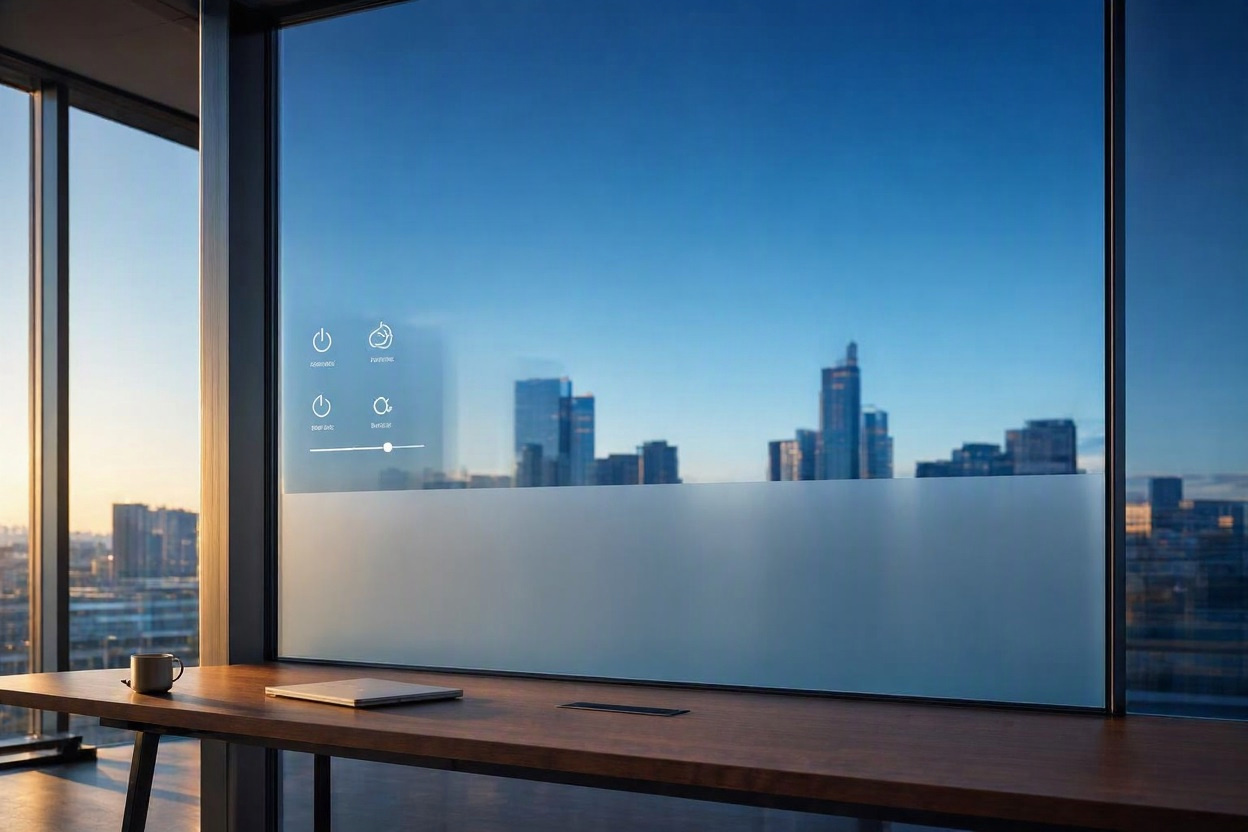
According to Marketsandmarkets, the global smart glass market size is projected to grow from USD 7.10 billion in 2026 to USD 12.91 billion by 2032, growing at a CAGR of 10.5% from 2026 to 2032.
Download PDF Brochure @ https://www.marketsandmarkets.com/pdfdownloadNew.asp?id=907
The move toward dynamic façades is also closely connected with building automation. Sensors can monitor sunlight, temperature, indoor illuminance, occupancy, and other environmental parameters before sending information to a control system. The control system can then determine an appropriate glazing state based on building conditions and operational priorities. This approach can reduce the need for manual adjustments while improving consistency across large buildings. The combination of adaptive glazing, sensors, automated shading, lighting controls, and heating and cooling systems represents an important direction for smart infrastructure development.
Energy Efficiency Drives Smart Glass Adoption
Energy efficiency remains one of the strongest forces influencing Smart Glass Market Trends. Windows are a major interface between indoor environments and outdoor conditions, making them important for managing solar radiation and thermal comfort. Conventional glazing may allow unwanted heat to enter during warm periods or heat to escape during colder conditions. Smart glazing provides a mechanism for dynamically controlling solar transmission and can therefore support more responsive building energy management. Research published in 2026 continues to examine how optimized electrochromic control can balance energy consumption, daylight availability, glare, and thermal comfort.
However, smart glass does not automatically guarantee lower energy consumption in every building or climate. Performance depends on factors such as orientation, window size, local weather, glazing characteristics, control logic, lighting operation, and occupant behavior. Recent studies demonstrate that control strategies can significantly influence the results achieved by electrochromic windows. This means building designers are increasingly looking beyond the glass itself and focusing on how the glazing interacts with other building systems. The trend is consequently moving toward climate responsive and application specific smart glass deployment rather than one standard solution for every building.
Advanced Electrochromic Glass Improves Solar Control
Electrochromic technology continues to attract significant attention because it can provide controllable changes in optical transmission. A major development within Smart Glass Market Trends is the increasing focus on controlling visible and near infrared radiation more independently. Traditional approaches may alter visible light and solar heat together, creating compromises between daylight and thermal management. Newer approaches are investigating spectral selectivity to manage different portions of sunlight according to specific building requirements. This can support more sophisticated control of glare, daylight, solar heat, and indoor comfort.
Spectral engineering is becoming especially relevant because building performance cannot be evaluated through energy consumption alone. The quality and color characteristics of transmitted daylight can influence occupant experience and visual conditions. Research in 2026 has highlighted the need to consider energy, daylight, color quality, and non visual lighting effects together when designing advanced glazing. This broader approach is creating opportunities for smart glass systems that provide more precise control over the solar spectrum. The development could make future dynamic windows more responsive to the specific requirements of different spaces and climates.
Thermochromic Glass Gains Attention for Passive Control
Another important direction within Smart Glass Market Trends is the advancement of thermochromic glazing. Thermochromic materials can change their optical characteristics according to temperature, potentially allowing solar control without continuous electrical operation. This characteristic makes the technology attractive for buildings seeking passive or low energy responses to changing outdoor conditions. Recent research is examining thermochromic systems for climate resilient and energy efficient buildings while addressing challenges related to durability, regulation, climate adaptability, and architectural integration.
Thermochromic technology can become particularly valuable when passive solar management is an important design objective. The glazing can respond to temperature changes without requiring the same type of active electrical control used by electrochromic systems. However, temperature based switching also creates design challenges because the desired optical state may differ according to building orientation, occupancy, season, and daylight requirements. Continued material development is therefore focusing on improving switching behavior, optical selectivity, durability, and compatibility with architectural applications. These developments could expand the role of thermochromic glass in adaptive building envelopes.
Smart Glass Integrates With Building Automation
The integration of smart glass with building automation systems is becoming a defining feature of modern infrastructure. Instead of operating independently, dynamic windows can communicate with sensors, lighting systems, climate control equipment, shading systems, and centralized building management platforms. This enables coordinated decisions based on indoor and outdoor conditions. For example, a glazing system can respond to strong solar radiation while lighting controls compensate for changes in daylight availability. Such coordination can help buildings manage comfort and energy performance as a connected system rather than through isolated components.
Automation also enables more responsive operation throughout the day. Sensors can detect changes in solar intensity, indoor temperature, occupancy, and illuminance, while control algorithms determine appropriate glazing states. Advanced control strategies are increasingly being evaluated using multiple performance objectives instead of focusing on a single energy metric. Research indicates that solar radiation based controls can support cooling efficiency, while illuminance based approaches can provide advantages for visual comfort and glare reduction.
Artificial Intelligence Supports Smarter Glazing Controls
Artificial intelligence is emerging as another technology influencing Smart Glass Market Trends. Conventional control systems generally depend on predefined thresholds, schedules, or sensor inputs. AI based approaches can potentially analyze larger sets of building data and identify patterns related to weather, occupancy, energy demand, daylight, and user preferences. This can support more adaptive control strategies that respond to changing conditions rather than relying exclusively on fixed settings. The integration of AI with building automation could therefore make smart glass operation more dynamic and context aware.
AI can also support predictive control by anticipating changes before they occur. Weather information, occupancy patterns, solar radiation, and historical building performance can be processed to determine when glazing should change state. Such systems may help avoid unnecessary switching and coordinate window behavior with heating, cooling, and lighting equipment. The value of this approach depends on data quality, system integration, cybersecurity, and appropriate control design. As connected infrastructure expands, intelligent glazing controls are likely to become increasingly connected with broader building optimization platforms.
Daylight Management Becomes a Major Priority
Daylight management is another central factor shaping Smart Glass Market Trends in 2026. Natural daylight can improve the visual environment and reduce dependence on artificial lighting under suitable conditions. However, excessive daylight can cause glare, unwanted brightness, and solar heat gain. Smart glass can dynamically adjust its transmission to maintain a more suitable balance between daylight availability and visual comfort. Recent research emphasizes that dynamic glazing should be evaluated together with daylight control rather than considering energy performance independently.
The growing attention to daylight quality is also changing the design objectives for smart windows. Building designers increasingly need to consider how glazing affects visual comfort, thermal comfort, color perception, and occupant experience. A window that blocks excessive sunlight but reduces useful daylight may not provide the desired overall outcome. Consequently, Smart Glass Market Trends are moving toward multifunctional glazing systems capable of balancing multiple performance requirements. This approach supports more sophisticated building designs where daylight is treated as an actively managed resource.
Privacy Glass Expands Smart Interior Applications
Privacy is another important application area for smart glass technology. Switchable glazing can change between transparent and privacy states, allowing spaces to be visually separated when required. This capability can be useful in offices, healthcare facilities, meeting rooms, hospitality environments, residential interiors, and other spaces where flexible privacy is important. The ability to replace or complement conventional blinds and curtains can also contribute to cleaner interior designs. As smart buildings become more flexible, electronically controlled privacy glazing can support changing space configurations.
Privacy applications are also benefiting from improvements in control interfaces. Users can operate smart glass through wall mounted controls, centralized building systems, mobile interfaces, or automated schedules depending on system design. In commercial environments, privacy settings can potentially be coordinated with occupancy and room booking information. This creates opportunities for glass partitions and interior windows to become part of connected workplace infrastructure. The trend demonstrates that Smart Glass Market Trends extend beyond energy management into comfort, functionality, and space utilization.
Smart Glass Supports Sustainable Building Design
Sustainability is becoming increasingly important in the selection of building materials, and smart glass can contribute to this objective when properly integrated into building design. Adaptive glazing can help manage solar exposure, daylight, and thermal conditions while supporting broader energy efficiency strategies. However, sustainability should also consider material durability, manufacturing requirements, maintenance, recyclability, and system lifespan. Recent reviews of electrochromic technologies highlight durability, recyclability, color neutrality, and integration as continuing areas of development.
The sustainability discussion is therefore becoming more comprehensive. Building owners are increasingly interested in technologies that deliver operational benefits without creating excessive maintenance or replacement requirements. Smart glazing systems must provide reliable switching performance over extended periods and remain compatible with building envelope requirements. Standards such as ISO 18543 provide accelerated aging test requirements for electrochromic glazing, demonstrating the importance of durability evaluation for building applications.
Climate Responsive Design Gains Importance
Climate responsive glazing is becoming one of the most practical Smart Glass Market Trends because the performance of dynamic windows varies according to environmental conditions. A strategy that works effectively in a cooling dominated climate may not provide the same outcome in a heating dominated environment. Window orientation, solar exposure, humidity, seasonal temperature variation, and daylight availability can all influence the appropriate glazing strategy. Designers are therefore increasingly using climate specific analysis before selecting smart glazing technologies.
Climate responsive design also encourages the use of different control strategies for different façades. A south facing window may require a different tinting response than a north facing window, while east and west façades can experience strong morning and afternoon solar exposure. Smart glazing can provide more flexibility than static solutions because its state can change according to conditions. The growing emphasis on climate specific performance is making simulation, sensor data, and intelligent controls increasingly important components of smart building design.
Smart Glass Enters More Building Types
The application base for smart glass is expanding as infrastructure becomes increasingly connected and performance oriented. Commercial offices remain an important environment because large glazed façades can create challenges related to solar heat, glare, and occupant comfort. Healthcare facilities can use smart glazing for privacy and daylight management, while hotels and residential buildings can apply the technology to façades, bathrooms, partitions, and specialized interior spaces. Educational buildings can also benefit from daylight management and thermal comfort improvements.
Other infrastructure categories are also exploring adaptive glazing. Airports, transportation hubs, high rise buildings, retail spaces, conference facilities, and specialized industrial environments can benefit from controllable transparency and solar management. The variety of applications demonstrates that Smart Glass Market Trends are no longer limited to premium architectural projects. As system integration improves and designers become more familiar with dynamic glazing, the technology can become relevant to a wider range of building requirements.
Key Smart Glass Market Trends to Watch in 2026
The following developments represent important areas influencing smart infrastructure adoption and technology development:
• Integration of smart glass with building automation, sensors, lighting controls, and climate management systems.
• Greater emphasis on electrochromic and thermochromic technologies for adaptive solar and thermal control.
• Increased focus on visible and near infrared spectral management for balancing daylight and heat control.
• Growth of privacy applications in offices, healthcare facilities, hospitality spaces, and flexible interiors.
• Greater use of AI based control strategies for predictive and responsive glazing operation.
• Increasing importance of climate responsive design and application specific control strategies.
• Stronger attention to durability, recyclability, maintenance, and complete building life cycle performance.
These Smart Glass Market Trends demonstrate that smart glazing is becoming a multifunctional infrastructure technology. Instead of treating windows as isolated architectural components, building designers are increasingly connecting them with sensors, automation platforms, lighting systems, and energy management technologies. The result is a more responsive building envelope capable of adapting to changing environmental and operational conditions. Future development will depend not only on material innovation but also on effective integration with the wider building ecosystem.
Challenges Affecting Smart Glass Deployment
Despite its potential, smart glass adoption still faces several technical and practical challenges. Initial installation costs can be higher than conventional glazing, while electrical systems and control infrastructure can increase project complexity. Long term performance, switching speed, optical clarity, durability, and maintenance requirements also influence technology selection. Building owners need to evaluate the complete system rather than considering the glazing material alone.
Control complexity is another important consideration. Poorly configured smart glass can produce unwanted tinting, insufficient daylight, or unnecessary switching. Recent studies show that control strategies can have a significant influence on energy and comfort outcomes, which means commissioning and optimization are important. Building teams must therefore consider sensors, controls, occupant preferences, maintenance, and integration requirements during the design stage.
Future Direction of Smart Infrastructure
The future direction of smart glazing is likely to focus on greater adaptability, improved spectral control, stronger automation, and better integration with sustainable building systems. Research is increasingly exploring glazing that can independently manage different portions of solar radiation while preserving useful daylight. Other developments are focusing on passive thermal responses, multilayer materials, advanced electrochromic systems, and improved control strategies. These innovations are broadening the functional possibilities of dynamic building envelopes.
The next stage of Smart Glass Market Trends will likely involve deeper integration between materials, sensors, software, and building management platforms. Smart glass will increasingly be evaluated as part of a complete building performance strategy rather than as a standalone window technology. The most important consideration will be how effectively the glazing responds to climate, occupancy, daylight, energy requirements, and user preferences. This integrated approach can help transform conventional façades into adaptive components of smart infrastructure.
Key Takeaways
Smart glass is becoming an increasingly important component of intelligent and energy conscious building design. The major Smart Glass Market Trends in 2026 include dynamic glazing, electrochromic innovation, thermochromic materials, AI enabled controls, daylight optimization, privacy applications, climate responsive design, and building automation integration. At the same time, developers are paying greater attention to durability, lifecycle performance, material sustainability, and system reliability. These developments indicate a shift from passive windows toward adaptive building envelope technologies.
The strongest opportunities are emerging where smart glazing is designed as part of a connected infrastructure strategy. Successful implementation requires coordination between glazing characteristics, façade design, lighting, heating and cooling systems, sensors, controls, and occupant requirements. Rather than applying the same technology to every building, designers are increasingly evaluating climate, orientation, building use, and operational objectives. This application specific approach will remain important as smart infrastructure continues to evolve.
FAQs About Smart Glass Market Trends
What are the major Smart Glass Market Trends in 2026?
The major Smart Glass Market Trends include dynamic glazing, electrochromic and thermochromic technologies, AI based controls, daylight management, privacy glazing, building automation integration, spectral solar control, and climate responsive building design. These developments are expanding the role of smart glass from a specialized window technology into an integrated component of smart infrastructure.
How does smart glass support energy efficient buildings?
Smart glass can dynamically regulate the transmission of sunlight and solar heat entering a building. By adjusting its optical characteristics according to environmental conditions, it can support daylight management, glare reduction, and thermal comfort. Its effectiveness depends on building orientation, climate, control strategy, glazing properties, lighting systems, and interaction with heating and cooling equipment.
What is electrochromic smart glass?
Electrochromic smart glass changes its optical transmission when an electrical stimulus is applied. This allows the glass to move between different optical states and regulate sunlight entering a building. Current development is increasingly focused on improving spectral selectivity so that visible light and near infrared radiation can be controlled more effectively.
What is thermochromic smart glass?
Thermochromic smart glass changes its optical properties in response to temperature. This provides a form of passive solar response that can help regulate solar radiation without relying on continuous electrical switching. Current research is examining improvements in durability, climate adaptability, performance regulation, and architectural integration.
Can smart glass reduce glare?
Yes, smart glass can help manage glare by adjusting visible light transmission. However, glare performance depends on window orientation, control settings, daylight conditions, building geometry, and the characteristics of the glazing system. Research indicates that illuminance based control can provide benefits for visual comfort and glare reduction when appropriately configured.
How is AI influencing smart glass technology?
AI can support smart glass by analyzing information from sensors, weather conditions, occupancy patterns, daylight levels, and building energy systems. These insights can be used to develop more responsive control strategies. AI based systems may also support predictive operation by anticipating environmental changes and coordinating glazing behavior with other building systems.
What challenges affect smart glass adoption?
Important challenges include installation cost, control complexity, durability, switching performance, maintenance, electrical integration, recyclability, and compatibility with building systems. Performance can also vary significantly according to climate and building design. Appropriate commissioning and climate responsive control are therefore important for achieving the intended benefits.
Why is smart glass important for smart infrastructure?
Smart glass allows the building envelope to respond dynamically to environmental and operational conditions. When integrated with sensors, automation, lighting, and climate management systems, it can contribute to a more responsive building environment. This makes smart glazing an important technology for buildings seeking improved comfort, daylight management, privacy, and energy performance.