
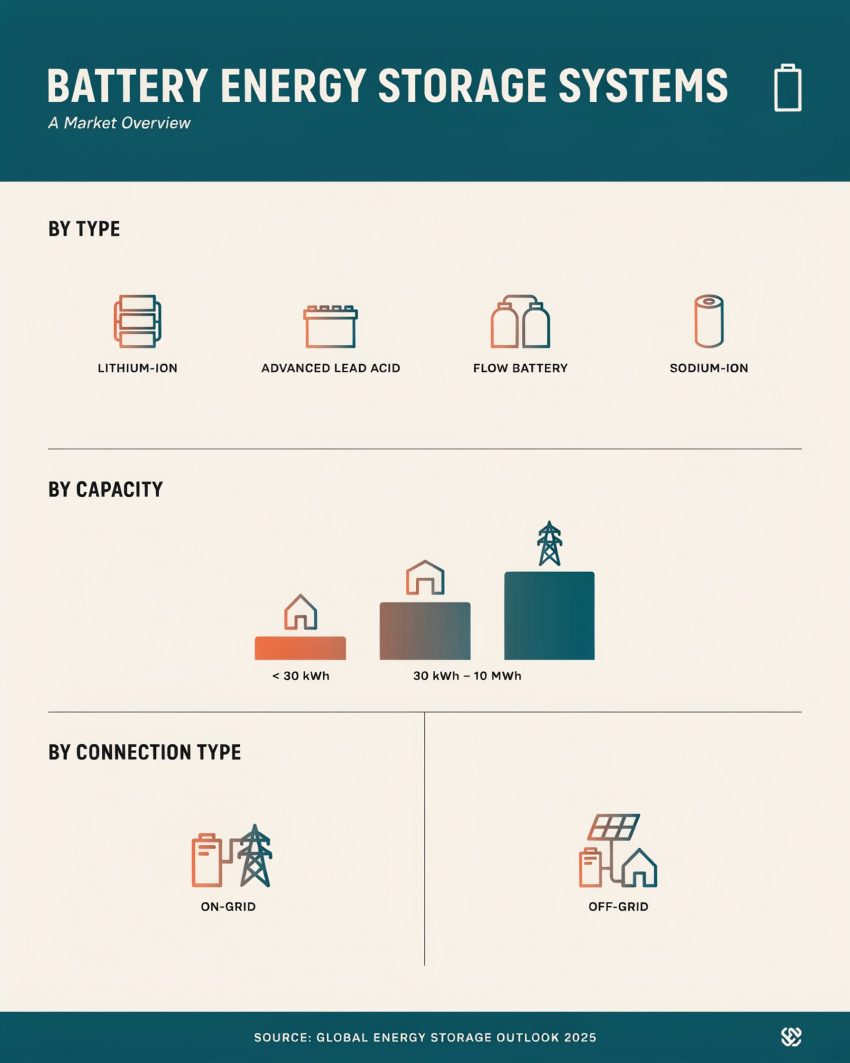
The Battery Energy Storage System (BESS) Market is experiencing growing demand for above 10 MWh systems as utilities, renewable energy developers, industrial operators, and large commercial facilities require higher-capacity storage solutions. Large-scale battery systems can support grid balancing, renewable energy integration, peak demand management, and long-duration energy requirements. The expansion of utility-scale solar and wind projects, grid modernization, and increasing electricity demand is creating favorable opportunities for high-capacity BESS installations.
Rising Demand for Large-Scale Energy Storage
Electricity systems are becoming more complex as renewable energy sources account for a growing share of generation. Solar and wind power are variable resources, creating a need for flexible storage that can absorb excess electricity and release it when generation declines or demand increases.
Above 10 MWh BESS systems can provide substantial energy storage capacity for large electricity networks and energy-intensive facilities. These systems are increasingly being deployed where storage requirements extend beyond the capabilities of smaller commercial and residential battery installations.
Download PDF Brochure @ https://www.marketsandmarkets.com/pdfdownloadNew.asp?id=112809494
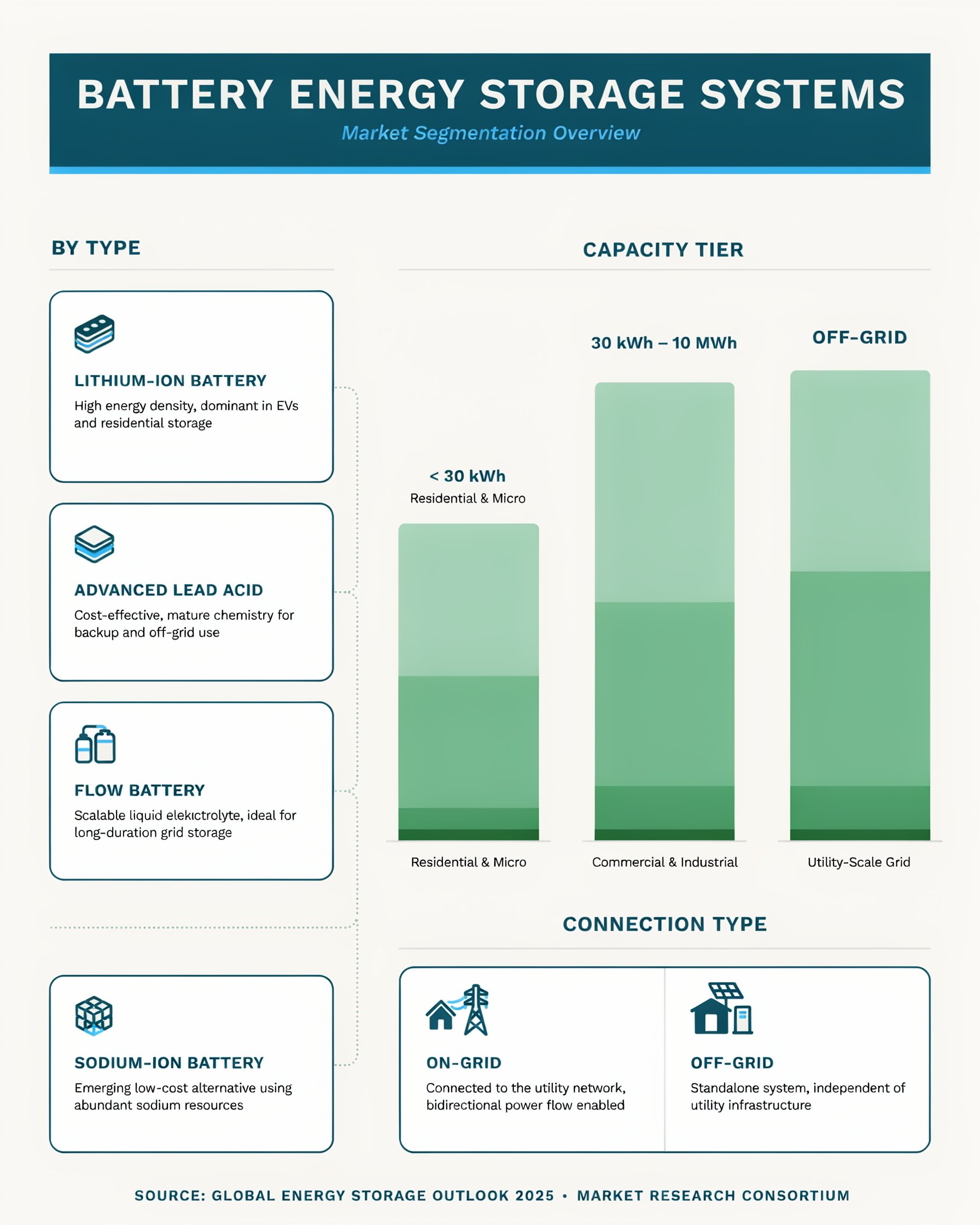
Utility-Scale Renewable Energy Integration
Utility-scale renewable energy projects represent an important growth area for above 10 MWh BESS systems. Large solar farms can generate significant electricity during daylight hours, while electricity demand may remain high after solar production decreases.
High-capacity BESS can store surplus renewable electricity and dispatch it during evening peak periods. Wind projects can also use large battery systems to manage variations in generation and improve the predictability of electricity supply. This capability can support greater integration of renewable generation into electricity networks.
Grid Balancing and Stability
Grid operators require flexible resources to maintain a balance between electricity generation and consumption. Large BESS systems can respond rapidly to changes in grid conditions, making them suitable for selected grid balancing applications.
Above 10 MWh systems can support frequency regulation, peak demand management, renewable energy smoothing, and other grid flexibility requirements depending on system configuration and market conditions. Their fast response can complement conventional generation and other energy management resources.
Peak Demand Management
Large industrial facilities and commercial campuses can experience substantial electricity demand during peak operating periods. High-capacity BESS can supply stored energy during these periods, reducing reliance on grid electricity.
For utilities and large energy consumers, this capability can help manage peak loads and improve the utilization of existing electrical infrastructure. As electricity demand grows, particularly from data centers, manufacturing facilities, and electrification projects, large-scale battery storage can provide additional flexibility.
Inquiry Before Buying @ https://www.marketsandmarkets.com/Enquiry_Before_BuyingNew.asp?id=112809494
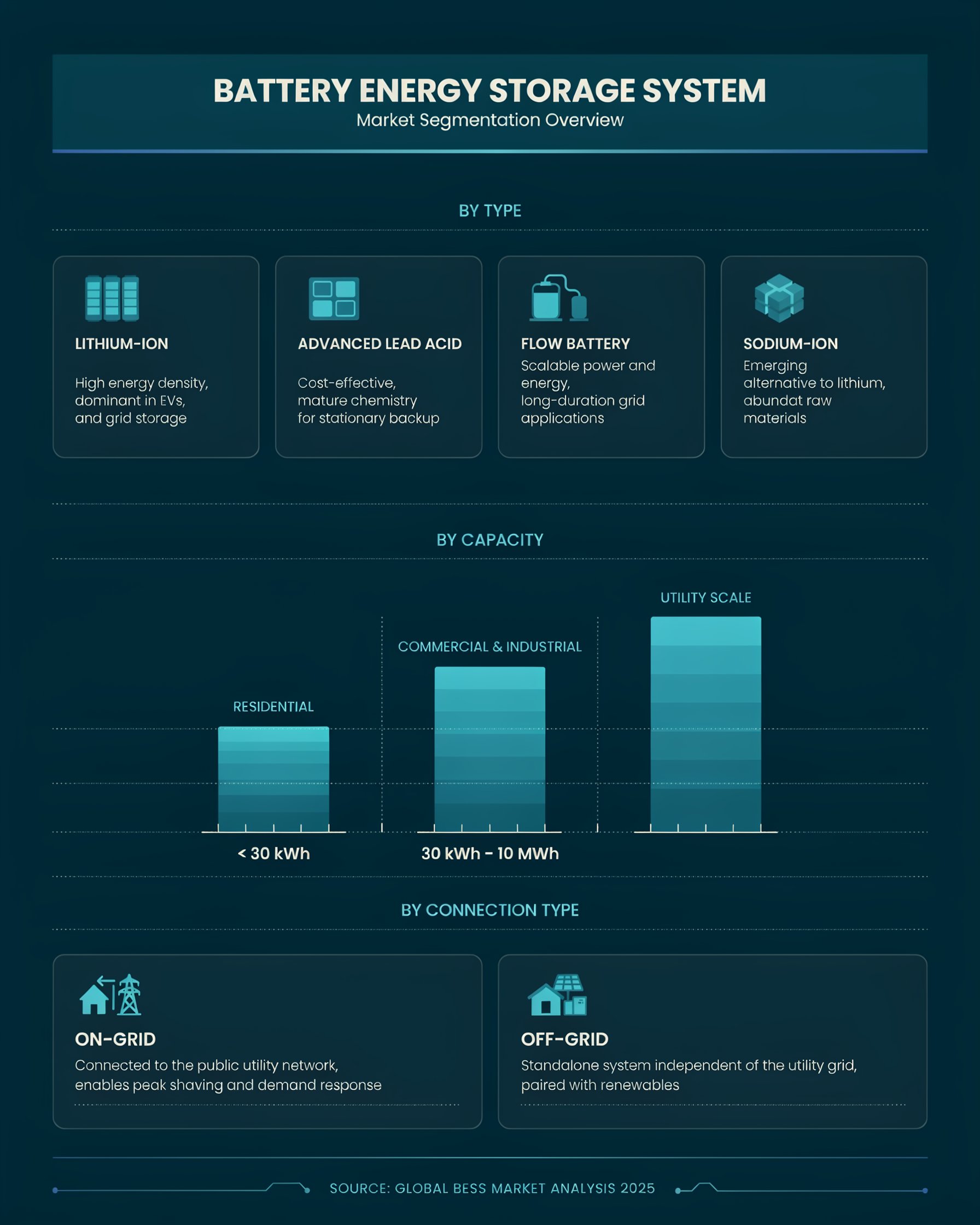
Growth of Energy Storage Hubs
The development of energy storage hubs and large renewable energy campuses is supporting demand for above 10 MWh BESS installations. These projects can combine multiple battery containers, power conversion systems, transformers, energy management platforms, and grid interconnection equipment.
Modular system architectures allow developers to expand capacity according to project requirements. Multiple battery units can be coordinated through centralized controls, enabling large storage facilities to provide flexible power across different operating conditions.
Data Center and Industrial Applications
The growth of high-energy-demand data centers and industrial facilities is creating additional opportunities for high-capacity BESS. Artificial intelligence, cloud computing, semiconductor manufacturing, and automated production are increasing electricity requirements while placing greater emphasis on power reliability.
Large BESS systems can support backup power, peak demand management, renewable energy integration, and energy cost optimization. When integrated with UPS systems and advanced power management platforms, high-capacity batteries can contribute to more resilient energy infrastructure.
Advances in Battery Technology
Technology improvements are supporting the deployment of larger BESS systems. Lithium-ion batteries remain widely used because of their energy density, established manufacturing ecosystem, and expanding deployment experience. Improvements in cell chemistry, thermal management, battery management systems, and power conversion equipment are supporting larger installations.
Alternative battery technologies may also gain attention for applications requiring longer discharge durations, enhanced safety characteristics, or different lifecycle performance. These developments can broaden the range of applications suitable for above 10 MWh systems.
View detailed Table of Content here – https://www.marketsandmarkets.com/Market-Reports/battery-energy-storage-system-market-112809494.html
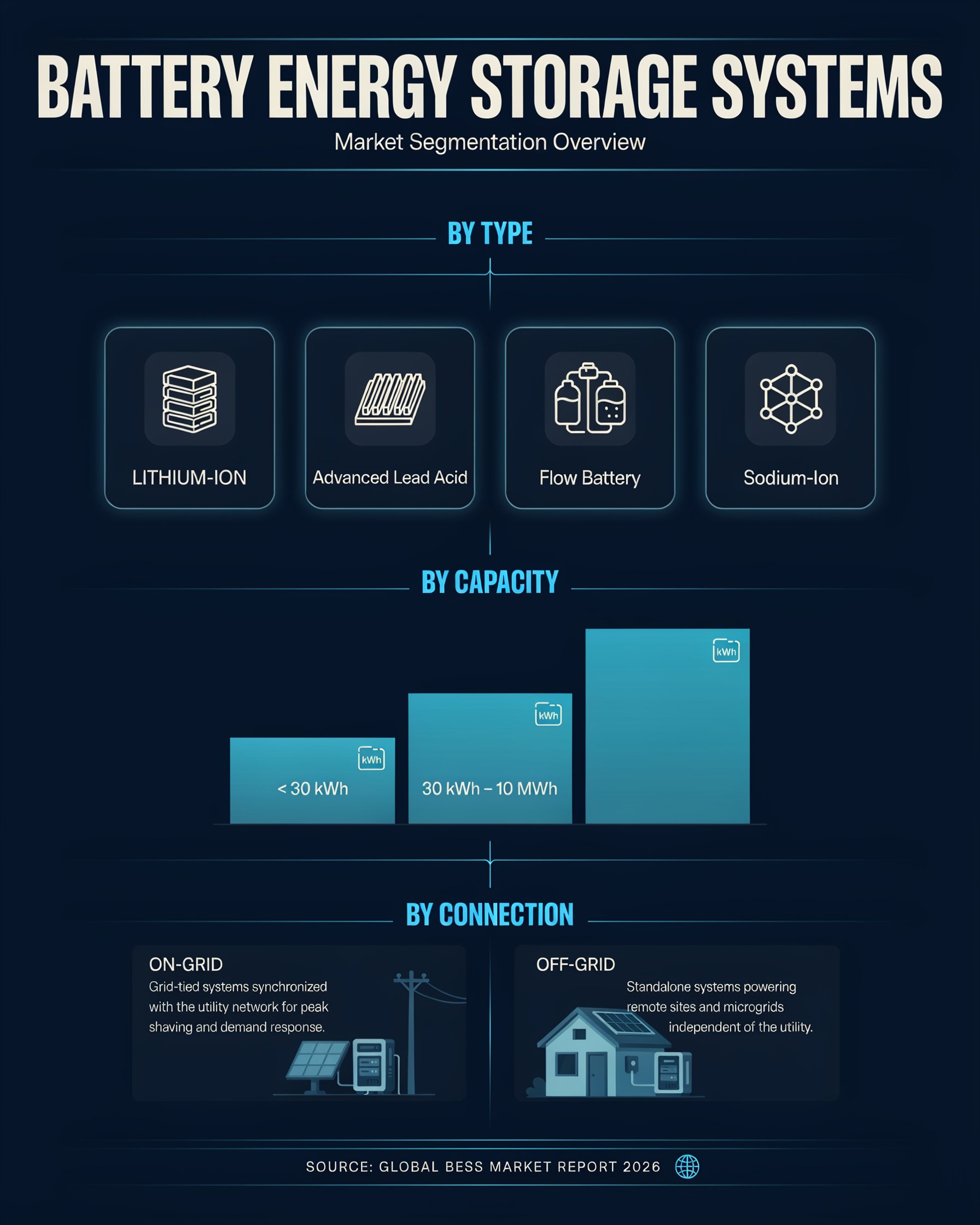
Safety and Thermal Management
Safety is becoming increasingly important as battery capacity and installation scale increase. Large BESS projects require coordinated approaches to thermal monitoring, cooling, fire detection, electrical protection, and emergency response.
Advanced battery management systems can continuously monitor temperature, voltage, current, state of charge, and battery health. Digital monitoring platforms can help operators identify abnormal operating conditions and support predictive maintenance.
Digital Energy Management
Large-scale BESS installations are increasingly connected to sophisticated energy management software. These platforms can analyze electricity prices, renewable generation forecasts, grid conditions, and energy demand to optimize battery operation.
Artificial intelligence and predictive analytics can improve charging and discharging strategies while helping operators manage battery degradation. Digital controls can also coordinate BESS with solar, wind, generators, and other distributed energy resources.
Future Market Outlook
The Battery Energy Storage System (BESS) Industry is expected to continue benefiting from the expansion of above 10 MWh systems across utility-scale renewable energy, grid modernization, industrial power management, commercial campuses, and data center infrastructure. Growing electricity demand and increasing renewable energy deployment are strengthening the need for high-capacity and flexible storage resources.
As battery technology, safety systems, power electronics, and digital energy management platforms continue to advance, above 10 MWh BESS installations are expected to become increasingly important in modern electricity infrastructure. Their ability to provide large-scale energy shifting, grid flexibility, backup power, and renewable integration will support continued investment in high-capacity battery storage projects.