
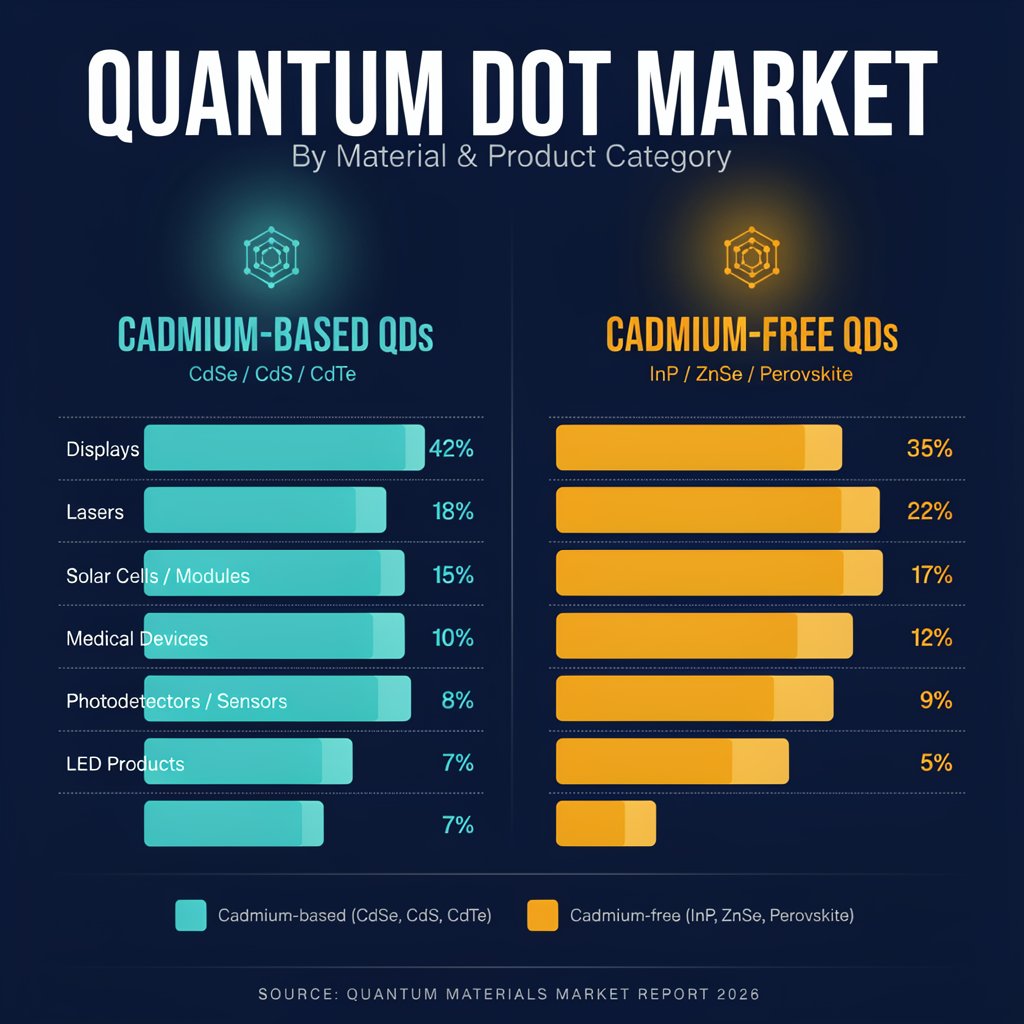
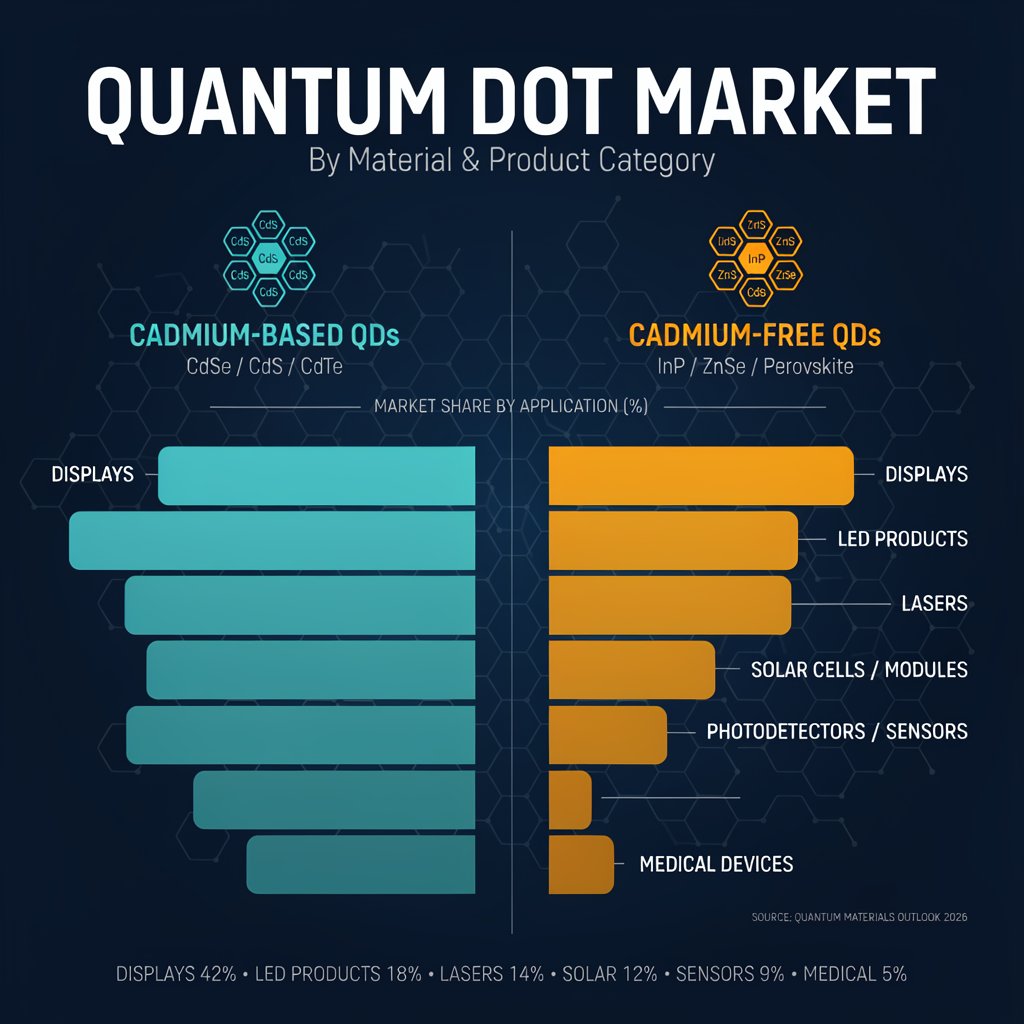
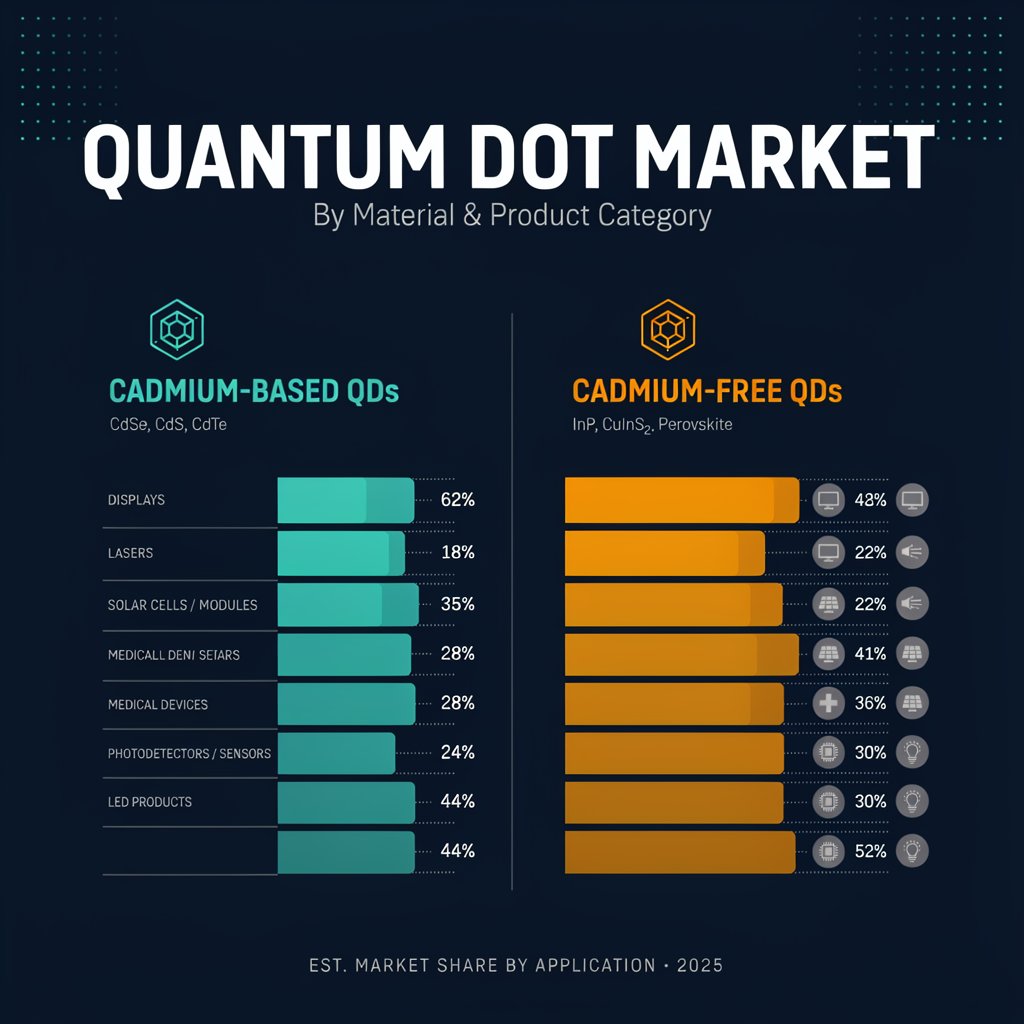
The Quantum Dot Market is gaining opportunities from the growing demand for high output power lasers across industrial, telecommunications, defense, healthcare, automotive, and scientific applications. Quantum dots are nanoscale semiconductor materials with tunable electronic and optical properties that can be engineered to produce controlled light emission. Their potential for efficient optical gain, wavelength flexibility, compact device architectures, and improved thermal characteristics is driving research into quantum dot based laser technologies. As industries require higher optical power, better efficiency, and stable operation, quantum dots are emerging as an important material platform for advanced laser development.
Rising Demand for High Output Power Lasers
High output power lasers are increasingly used for industrial material processing, cutting, welding, marking, additive manufacturing, medical procedures, defense systems, remote sensing, and scientific research. These applications require laser sources capable of delivering consistent power while maintaining beam quality and operational stability.
Quantum dot based active regions can provide engineered electronic states that support efficient light generation. Their optical properties can be tailored through quantum dot composition, size, and density, creating opportunities for laser manufacturers seeking specialized high power performance.
Download PDF Brochure @ https://www.marketsandmarkets.com/pdfdownloadNew.asp?id=694
Efficient Optical Gain
Efficient optical gain is a major consideration in high output power laser development. Quantum dots provide discrete energy states that can support population inversion and optical amplification. This can contribute to efficient laser operation when appropriate material structures and device designs are used.
Higher optical efficiency can help reduce energy consumption and thermal loads in laser systems. As manufacturers seek to improve power conversion efficiency, quantum dot materials are attracting interest for applications requiring sustained high intensity optical output.
Thermal Performance and Stability
High power laser systems generate significant heat during operation, making thermal management critical to reliability. Excessive temperature can affect emission wavelength, efficiency, beam quality, and component lifetime.
Quantum dot laser structures are being investigated for their potential temperature stability and reduced sensitivity to certain thermal effects. Improved thermal characteristics could enable more consistent output under demanding operating conditions and support applications involving continuous or high duty cycle operation.
Industrial Material Processing
Industrial manufacturing represents a significant opportunity for high output power quantum dot lasers. Laser systems are used for cutting metals, welding components, engraving surfaces, drilling, and additive manufacturing.
Manufacturers increasingly require precise energy delivery and reliable operation for automated production environments. Quantum dot based lasers could support specialized high power sources with engineered wavelengths and compact architectures. Integration with robotics and automated machine tools could further expand their industrial applications.
Inquiry Before Buying @ https://www.marketsandmarkets.com/Enquiry_Before_BuyingNew.asp?id=694
Telecommunications and Optical Networks
High output power is also relevant to optical communication systems where efficient light sources are needed for signal transmission and amplification. Data centers, telecommunications networks, and fiber optic infrastructure are experiencing increasing bandwidth requirements due to cloud computing, artificial intelligence, video services, and connected devices.
Quantum dot lasers can provide tunable emission characteristics and may support efficient optical transmitters and amplifiers. Their integration with photonic platforms and silicon photonics could create opportunities for compact optical components capable of supporting high speed data transmission.
Defense and Aerospace Applications
Defense and aerospace systems use high power lasers for sensing, targeting, range finding, communications, and directed energy research. These applications require optical sources with stable output, precise wavelength control, and reliable operation under demanding environmental conditions.
Quantum dot materials offer wavelength engineering capabilities that could support specialized laser systems. Their potential integration with compact semiconductor platforms may also benefit applications where size, weight, power consumption, and thermal performance are important design considerations.
Automotive and LiDAR Technologies
Automotive sensing is another emerging opportunity. Advanced driver assistance systems and autonomous vehicles increasingly use LiDAR and other optical sensing technologies to identify objects and measure distances.
Quantum dot based lasers could potentially provide compact and wavelength controlled sources for next generation LiDAR architectures. High output power can improve signal strength and sensing range in suitable system configurations, while quantum dot integration may support smaller optical modules.
View detailed Table of Content here – https://www.marketsandmarkets.com/Market-Reports/quantum-dots-qd-market-694.html
Healthcare and Medical Lasers
Medical applications provide additional opportunities for quantum dot laser technologies. High power lasers are used in surgery, dermatology, ophthalmology, dentistry, and therapeutic procedures.
Different medical applications require specific wavelengths and carefully controlled optical power. The tunability of quantum dot materials could support development of application-specific laser sources. Improved thermal stability and compact integration could also contribute to more reliable medical laser systems.
Advanced Manufacturing and Automation
The convergence of high power lasers with robotics, artificial intelligence, and Industry 4.0 is creating additional market opportunities. Automated laser processing systems can use sensors and machine learning algorithms to adjust power, speed, and beam characteristics according to production conditions.
Quantum dot lasers could become part of these intelligent laser platforms as device efficiency, power handling, and manufacturing scalability improve. Integration with digital production systems could support real time process monitoring and adaptive material processing.
Materials and Manufacturing Advances
Advances in quantum dot synthesis, epitaxial growth, surface passivation, packaging, thermal management, and semiconductor fabrication are supporting the development of high performance laser devices. Researchers are also exploring alternative material compositions that can provide improved stability and address environmental considerations.
Scalable manufacturing and consistent quantum dot quality will remain important for commercial deployment. Improvements in device lifetime, optical efficiency, output power, and production cost could expand the addressable market.
Future Market Outlook
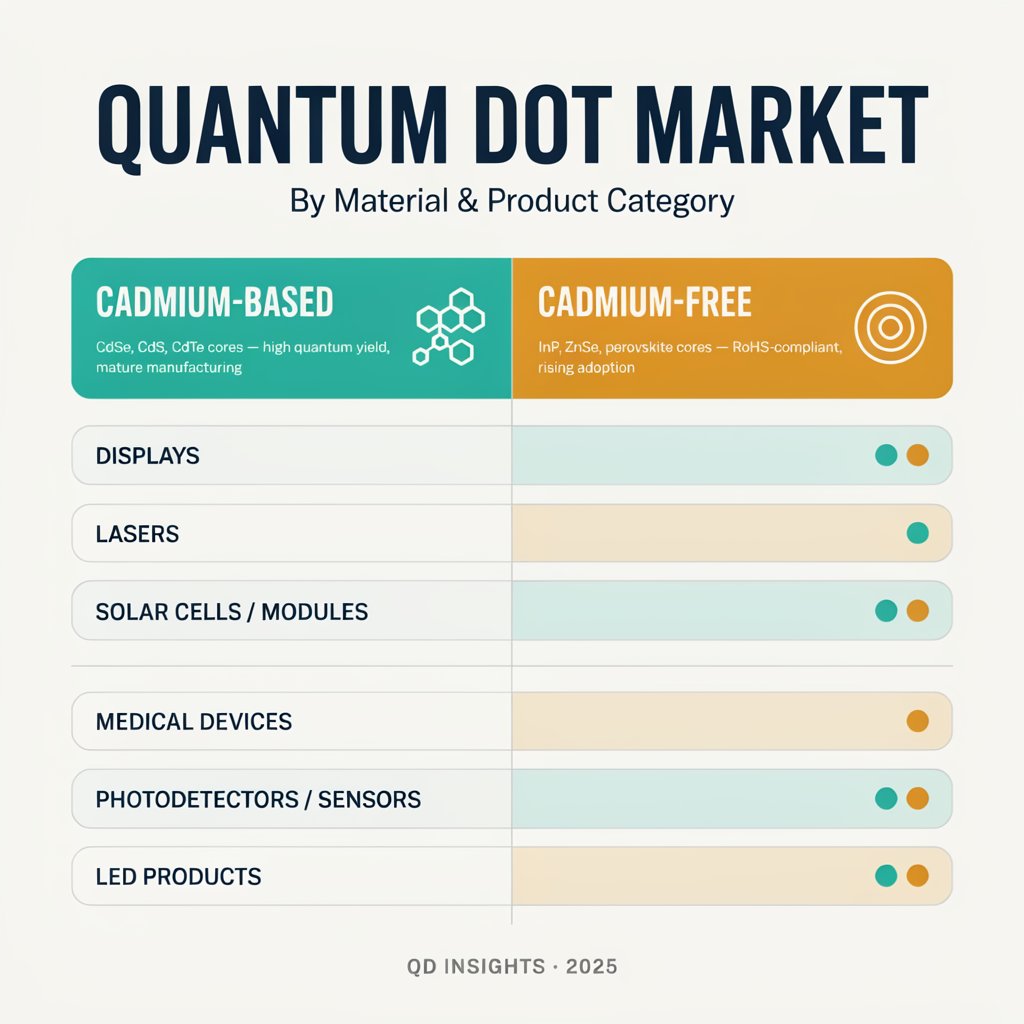
The Quantum Dot Industry is expected to benefit from opportunities in high output power lasers across industrial processing, telecommunications, defense, automotive sensing, healthcare, and scientific applications. Demand for efficient, compact, wavelength controlled, and thermally stable laser sources is encouraging continued research into quantum dot technologies.
The integration of quantum dots with silicon photonics, robotics, AI based process control, LiDAR, and advanced semiconductor manufacturing could further expand their role in high power optical systems. Continued progress in materials engineering, thermal management, device architecture, power scalability, and manufacturing efficiency will influence the broader commercialization of quantum dot based high output power lasers.