
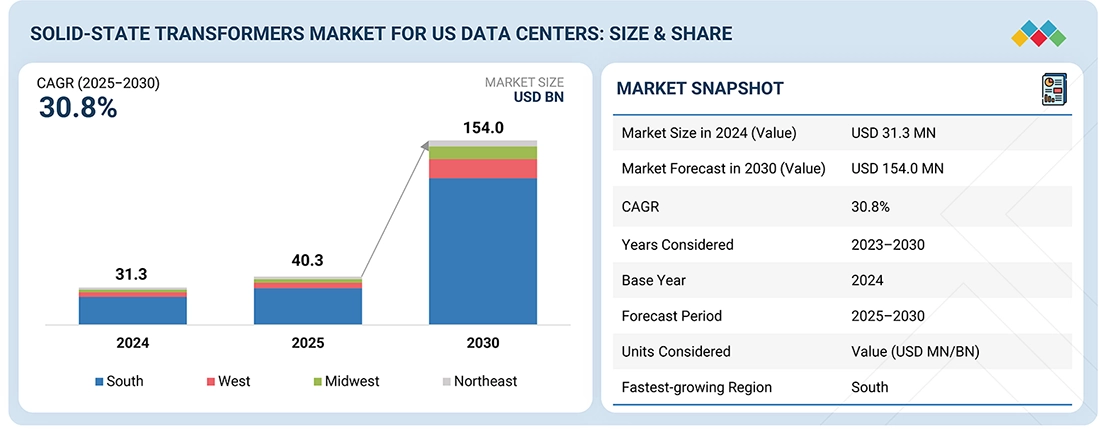
The US Data Center Solid-State Transformers Market is being shaped by rapid innovation in power electronics as data centers transition toward higher power density, intelligent energy management, and more flexible electrical architectures. The expansion of artificial intelligence, cloud computing, high performance computing, and accelerated computing is increasing the demand for reliable and efficient power conversion. Solid-state transformers can address these requirements by combining semiconductor based conversion, digital control, monitoring, and advanced power management within a single technology platform.
Growing Demand for Advanced Power Conversion
Modern data centers require multiple stages of power conversion to deliver electricity from utility infrastructure to sensitive computing equipment. Conventional transformer systems provide reliable voltage transformation but offer limited opportunities for dynamic digital control.
Power electronics innovation is enabling solid-state transformers to perform voltage conversion with greater controllability. Semiconductor switches, high speed controllers, advanced converters, and digital monitoring systems can work together to regulate electrical parameters and respond to changing load conditions. This creates opportunities for solid-state transformers in facilities where power quality and efficiency are increasingly important.
Download PDF Brochure @ https://www.marketsandmarkets.com/pdfdownloadNew.asp?id=51807964
AI Computing Driving Power Electronics Innovation
The growth of AI infrastructure is one of the major factors influencing data center power requirements. AI servers and GPU clusters can consume substantial amounts of electricity and operate with dynamic load profiles. These conditions require power infrastructure capable of responding rapidly to changing electrical demand.
Power electronic solid-state transformers can provide digitally controlled conversion and power management. Advanced switching technologies can help improve response characteristics and enable more precise control of power delivered to high density computing systems. As AI data center deployments expand, these capabilities can create additional opportunities for innovative solid-state transformer solutions.
Advanced Semiconductor Technologies
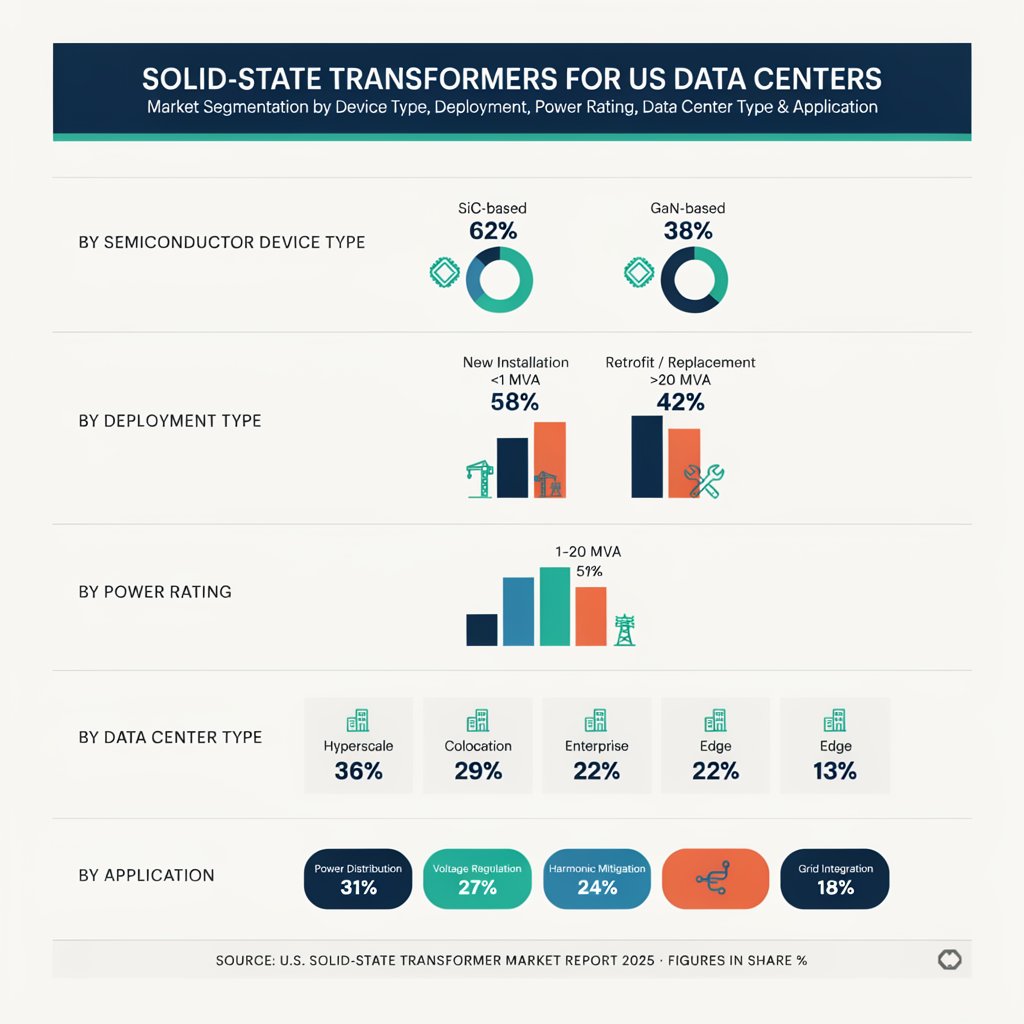
Power semiconductor innovation is central to the development of next generation solid-state transformers. Silicon carbide and gallium nitride devices are gaining attention because of their ability to support efficient switching at higher frequencies and demanding electrical conditions.
Silicon carbide can be suitable for high voltage and high power conversion stages, while gallium nitride can support high frequency operation in selected applications. These semiconductor technologies can help reduce switching losses, improve power density, and enable smaller power conversion components when appropriately integrated into solid-state transformer architectures.
Higher Power Density and Miniaturization
Space utilization is an important consideration for data center operators. Increasing computing density requires electrical systems that can deliver more power without creating a proportional increase in equipment footprint.
Power electronics innovation can enable higher frequency switching, improved thermal performance, and more compact converter architectures. Smaller magnetic components and optimized power modules can contribute to more compact solid-state transformers. This can provide data center designers with greater flexibility when planning electrical rooms, power distribution systems, and modular infrastructure.
Inquiry Before Buying @ https://www.marketsandmarkets.com/Enquiry_Before_BuyingNew.asp?id=51807964
Digital Control and Intelligent Power Management
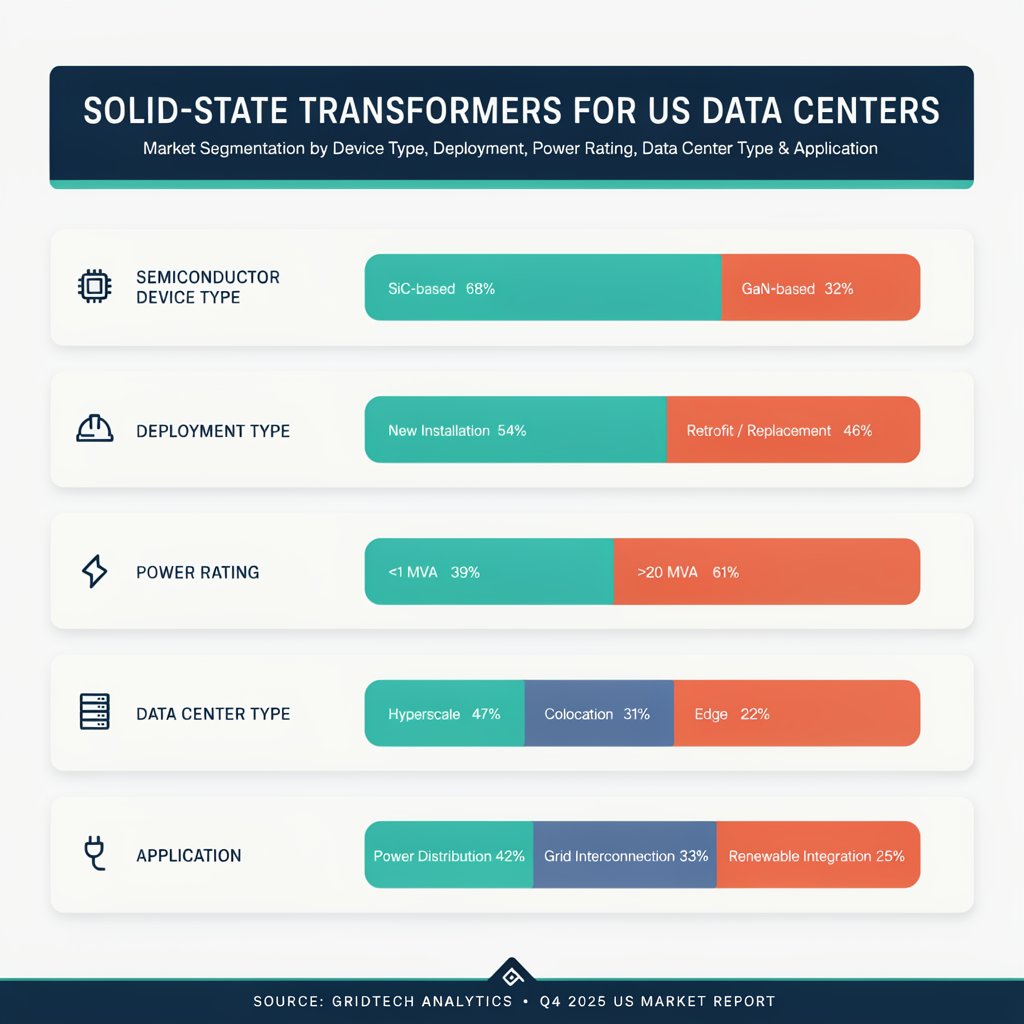
Another important opportunity is the integration of digital intelligence into power conversion systems. Solid-state transformers can incorporate sensors, microcontrollers, communication interfaces, and software based control systems to monitor electrical performance.
Real time monitoring can provide information about voltage, current, temperature, load behavior, and power quality. Data center operators can use this information to support predictive maintenance, fault detection, load balancing, and energy optimization. The integration of power electronics and digital control can therefore transform solid-state transformers from passive electrical equipment into intelligent power management platforms.
Renewable Energy Integration
Power electronics innovation is also supporting the integration of renewable energy into data center electricity systems. Solar generation, wind power procurement, battery energy storage, and other distributed energy resources require sophisticated power conversion and control.
Solid-state transformers can provide interfaces between utility grids, renewable generation, energy storage systems, and data center loads. Advanced converter technologies can support bidirectional power flow and coordinated energy management. This creates opportunities for solid-state transformers to contribute to more flexible and resilient data center power architectures.
Battery Energy Storage Opportunities
Battery energy storage systems are becoming increasingly relevant for data center backup power, peak demand management, renewable integration, and grid support. These systems require efficient conversion between stored direct current and alternating current electrical systems.
Innovative power electronics can enable solid-state transformers to manage these conversion requirements more efficiently. Bidirectional converters can allow energy to move between batteries and facility electrical systems according to operating requirements, creating additional opportunities for integrated power management solutions.
View detailed Table of Content here – https://www.marketsandmarkets.com/Market-Reports/us-data-centers-solid-state-transformers-market-51807964.html
Thermal Management and Reliability
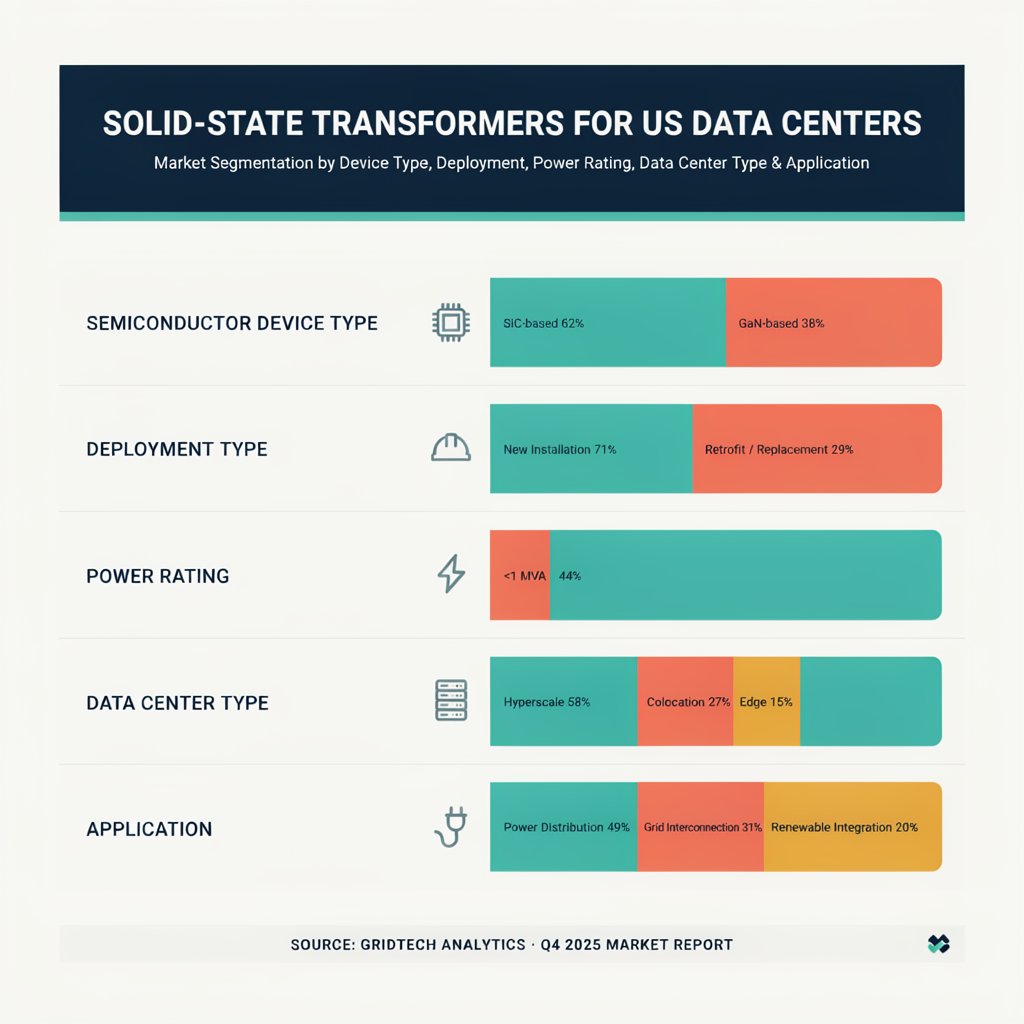
Higher switching frequencies and increased power density also create challenges related to heat generation and component reliability. Effective thermal management is essential for maintaining semiconductor performance and system longevity.
Manufacturers are developing advanced packaging, cooling methods, insulation materials, and converter topologies to address these challenges. Improved thermal design can help solid-state transformers operate reliably under demanding data center conditions while supporting higher efficiency and power density.
Future Market Outlook
The US Data Center Solid-State Transformers Industry is expected to benefit from continued power electronics innovation as data centers pursue higher efficiency, greater power density, intelligent control, and flexible energy integration. Advanced semiconductors, digital control systems, high frequency conversion, improved thermal management, and bidirectional power architectures are creating new opportunities across the data center power ecosystem.
As AI and high performance computing continue to increase electrical demand, power electronics will remain a critical technology enabler for next generation data center infrastructure. Continued innovation in semiconductor devices, converter architectures, digital monitoring, thermal management, and system integration can support broader adoption of solid-state transformers across the US market.