
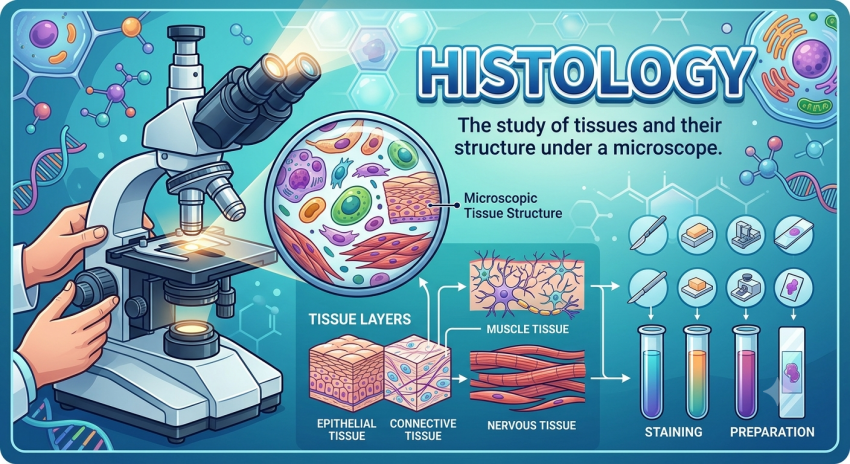
The global Histology Market is projected to grow from USD 8.9 billion in 2026 to USD 14.5 billion by 2031, registering a CAGR of 10.2% during the forecast period. Market growth is being driven by the increasing global burden of cancer and chronic diseases, rising adoption of precision medicine, growing demand for biomarker-driven disease characterization, and investments in advanced pathology infrastructure and diagnostic workflows.
Know More:- Download PDF Brochure
Rising Cancer Burden and Precision Medicine Drive Market Expansion
The increasing prevalence of cancer and other chronic diseases is generating higher demand for histopathology, cytopathology, tissue analysis, and specialized pathology services. Histology plays a critical role in disease diagnosis, tumor classification, staging, and characterization, making it an essential component of modern cancer care.
The growing adoption of precision medicine and biomarker-driven diagnostics is further expanding demand for advanced pathology workflows. Tissue specimens are increasingly analyzed to identify molecular and cellular characteristics that can support treatment selection and clinical decision-making.
In parallel, investments in laboratory capacity, accredited diagnostic facilities, pathology infrastructure, and specialized diagnostic services are supporting market development across developed and emerging healthcare systems.
Consumables Segment Held the Largest Market Share in 2025
Based on product, the Histology market is segmented into consumables, instruments, software, and storage systems.
The consumables segment accounted for the largest share of the Histology market in 2025.
Consumables include antibodies, probes, stains, reagents, assay kits, fixatives, solvents, and other products used throughout histopathology and cytopathology workflows.
The segment’s leading position is supported by the recurring requirement for consumables across tissue preparation, staining, biomarker assessment, and diagnostic interpretation. Unlike instruments and software, consumables are required repeatedly as pathology laboratories process individual tissue and cellular specimens.
Growing pathology examination volumes, increasing biomarker testing, and the adoption of advanced staining and tissue-analysis techniques are expected to sustain demand for pathology consumables throughout the forecast period.
Hospitals Represented the Largest End-User Segment in 2025
By end user, the market is segmented into hospitals, research laboratories, pharmaceutical companies, contract research organizations (CROs), and other end users.
Hospitals accounted for the largest share of the Histology market in 2025.
Hospitals perform high volumes of histopathology, cytopathology, surgical pathology, and tissue-based diagnostic procedures, particularly in cancer diagnosis and disease characterization.
The increasing need for timely diagnostic information to support clinical decisions is reinforcing the role of hospital pathology laboratories. Investments in pathology infrastructure, advanced staining and tissue-analysis technologies, automation, and digital pathology are also supporting adoption.
The integration of digital pathology solutions into hospital laboratories is further enabling more efficient image management, remote consultation, workflow optimization, and pathology data utilization.
Asia Pacific Expected to Register the Highest Growth Rate
Asia Pacific is expected to register the highest growth rate in the Histology market from 2026 to 2031.
The regional market includes China, Japan, India, and other Asia Pacific countries, with these major economies providing significant opportunities for pathology technology and service providers.
Japan’s established healthcare infrastructure, rising cancer burden, and increasing adoption of digital pathology technologies are supporting market expansion. In China, healthcare modernization and investments in pathology laboratories, cancer diagnostic services, and advanced tissue-analysis technologies are increasing demand across healthcare institutions.
India is also emerging as an important growth market due to the expansion of tertiary-care hospitals, cancer centers, diagnostic laboratories, and automated pathology workflows. Increasing disease diagnosis volumes are creating demand for advanced tissue-analysis and diagnostic technologies.
Meanwhile, North America held the largest regional share in 2025, supported by mature pathology infrastructure, established diagnostic workflows, widespread adoption of advanced technologies, and the presence of major industry participants.
Digital Pathology and Advanced Tissue Analysis Create New Opportunities
The evolution of Histology is increasingly linked to digital pathology, workflow automation, image analysis, biomarker testing, and advanced tissue characterization.
Digital pathology enables laboratories to digitize tissue slides and use digital platforms for storage, analysis, consultation, and collaboration. These capabilities can support remote pathology services and improve access to specialized expertise.
The growing volume and complexity of pathology data are also creating opportunities for software-based solutions, image analysis, and artificial intelligence-enabled pathology workflows. These technologies can complement pathologists by supporting image interpretation, workflow prioritization, and quantitative tissue assessment.
As pathology laboratories seek to improve turnaround times, standardization, and operational efficiency, demand for integrated instruments, consumables, software, and pathology services is expected to increase.
Competitive Landscape
The global Histology market features established diagnostics, life sciences, medical technology, and pathology companies competing across consumables, instruments, software, and services.
Major players covered in the report include F. Hoffmann-La Roche Ltd., Danaher Corporation, PHC Holdings Corporation, Hologic, Inc., Agilent Technologies, Inc., Becton, Dickinson and Company, Koninklijke Philips N.V., Merck KGaA, Bio SB, and Sakura Finetek Japan Co., Ltd.
These companies are positioned across areas such as histopathology, cytopathology, tissue diagnostics, laboratory automation, digital pathology, biomarker testing, and pathology workflow technologies.
Competition is increasingly focused on diagnostic accuracy, workflow automation, digital pathology capabilities, advanced tissue analysis, biomarker testing, and integrated pathology solutions.