
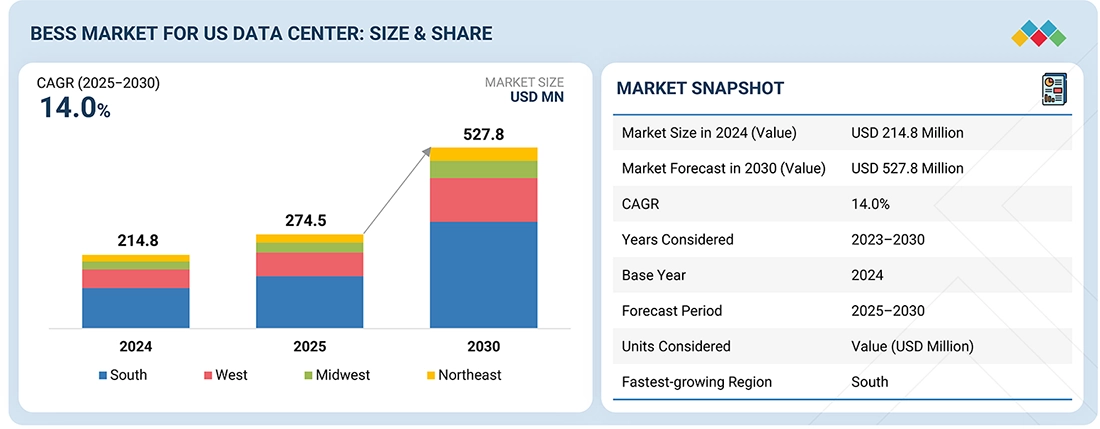
The US Data Center BESS Market is opening new opportunities in edge data center power management as businesses increasingly deploy computing resources closer to users, devices, and data sources. The expansion of 5G networks, Internet of Things applications, autonomous systems, artificial intelligence, content delivery, and real-time analytics is increasing demand for distributed computing infrastructure. Edge data centers require reliable and flexible electricity systems because they are often deployed in locations where grid capacity, backup infrastructure, and space availability can vary significantly. Battery energy storage systems can address these requirements while supporting operational resilience, energy efficiency, and renewable integration.
Rising Edge Data Center Deployment
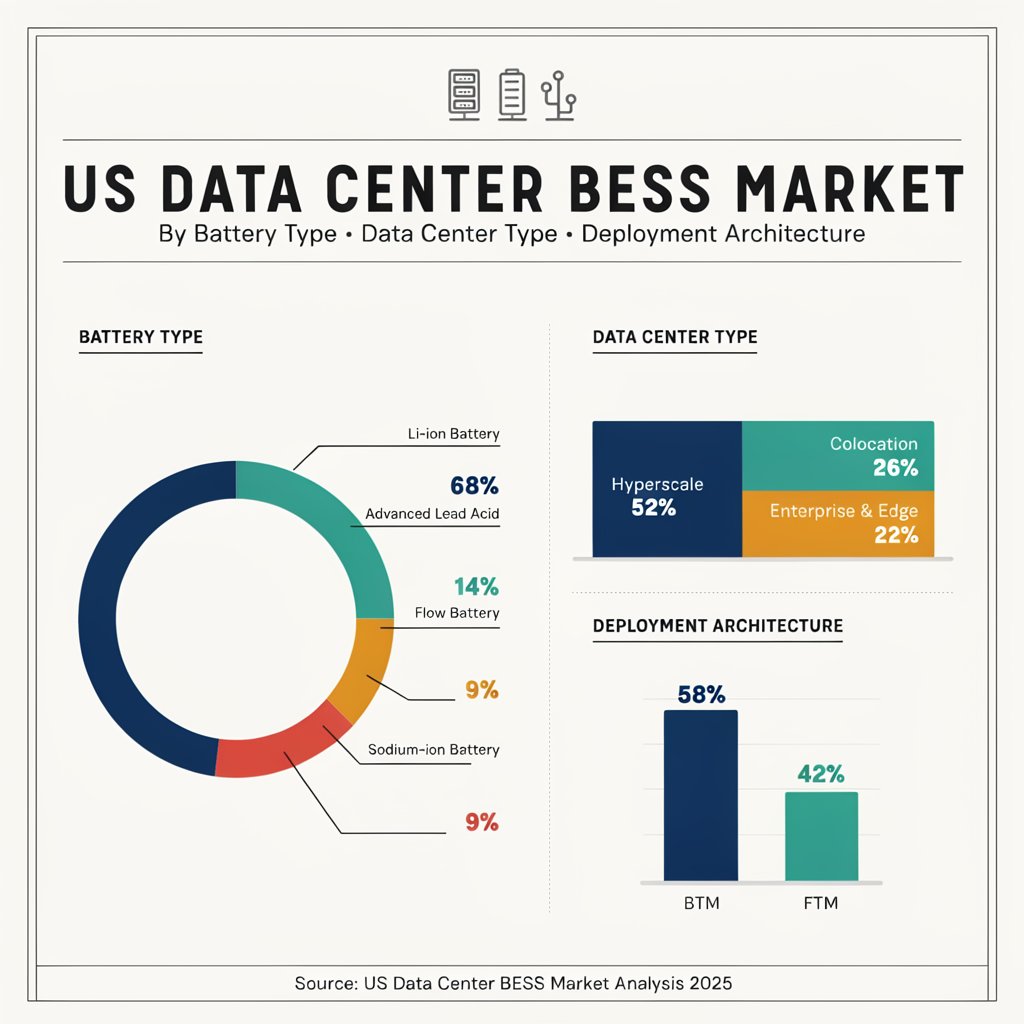
Edge data centers are becoming increasingly important as organizations seek to reduce latency and process data closer to connected devices. Unlike large hyperscale facilities, edge sites can be distributed across urban areas, industrial locations, telecommunications networks, transportation hubs, and remote environments.
This distributed deployment model creates new requirements for compact and reliable power management. BESS can provide localized energy storage that supports critical loads during grid disturbances while also helping operators manage fluctuations in electricity demand.
BESS for Edge Power Resilience
Power continuity is particularly important for edge facilities supporting applications that require real-time processing. Telecommunications, industrial automation, healthcare systems, smart transportation, security platforms, and connected infrastructure can depend on uninterrupted computing services.
BESS can provide rapid-response backup power to critical edge equipment during short-duration grid interruptions. Battery systems can also work alongside UPS equipment and generators to create layered power protection. This approach can improve resilience while allowing operators to optimize the role of different backup technologies.
Download PDF Brochure @ https://www.marketsandmarkets.com/pdfdownloadNew.asp?id=121216276
Managing Distributed Electricity Demand
The increasing number of edge facilities can create a distributed electricity management challenge. Individual sites may have relatively small loads, but the combined demand across a large network can become significant.
BESS can help operators manage these distributed loads by charging batteries during lower-demand periods and discharging them during peak consumption. Intelligent controls can coordinate storage across multiple edge sites, enabling operators to improve load management and potentially reduce demand-related electricity costs.
Edge AI and Increasing Power Density
The growth of edge artificial intelligence is creating additional opportunities for BESS adoption. AI-enabled cameras, industrial systems, autonomous machines, robotics, and connected devices increasingly require local processing capabilities.
Edge AI workloads can create higher power requirements than conventional low-intensity computing applications. BESS can provide flexible capacity during periods of intensive processing and support power quality for sensitive computing equipment. As edge AI deployments become more widespread, storage could become an important element of localized energy architectures.
Inquiry Before Buying @ https://www.marketsandmarkets.com/Enquiry_Before_BuyingNew.asp?id=121216276
Integration with Renewable Energy
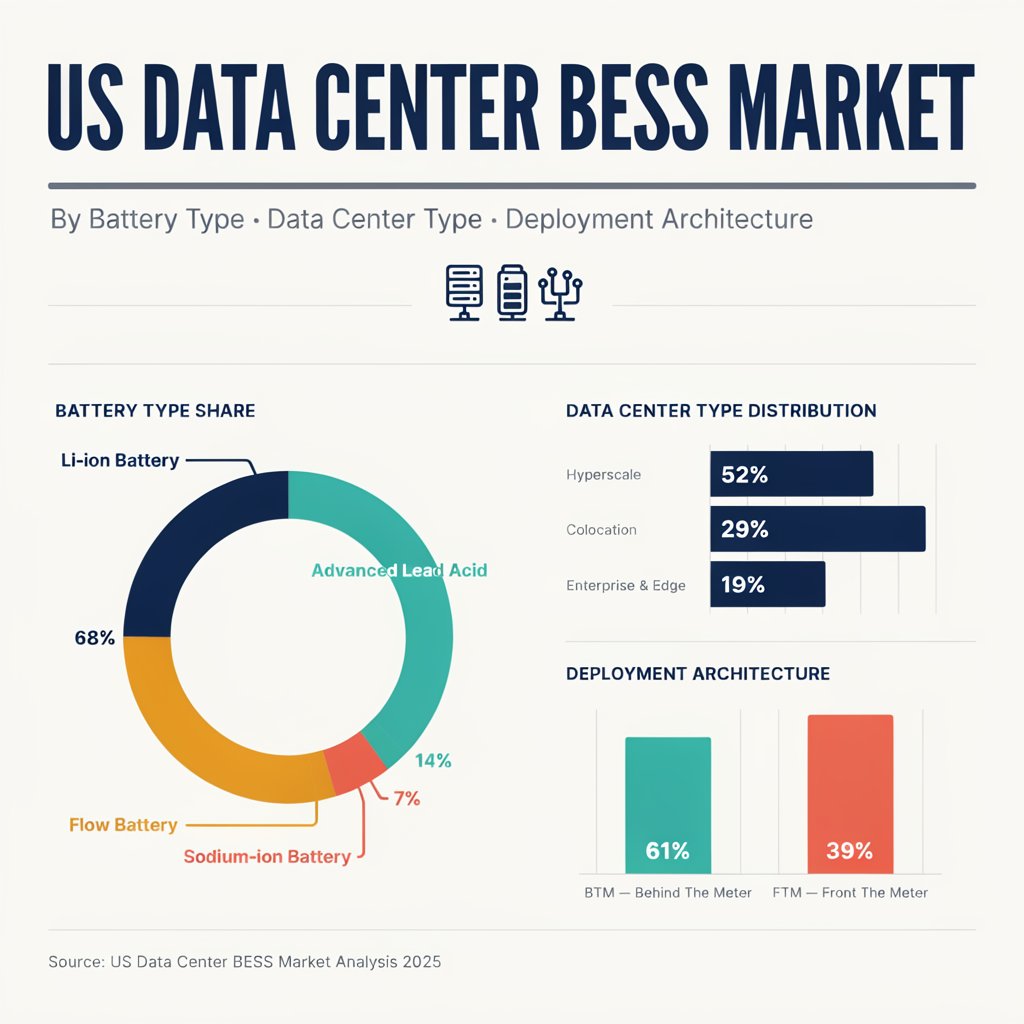
Renewable energy integration represents another opportunity for BESS in edge data centers. Distributed facilities may be located near solar installations, commercial renewable projects, or other localized generation resources.
Battery storage can capture excess renewable electricity and make it available when generation declines. This can improve renewable utilization and reduce reliance on grid electricity during selected periods. Solar-plus-storage configurations could become particularly attractive for edge facilities located in regions with strong solar resources.
Microgrids for Edge Facilities
Microgrid architectures can provide additional value for distributed edge data centers. A microgrid can coordinate utility power, BESS, renewable generation, generators, power conversion equipment, and intelligent controls.
For remote or grid-constrained edge locations, microgrids can improve energy resilience and operational flexibility. BESS can serve as a central resource within these systems, supporting normal energy management while providing backup power during grid disruptions.
View detailed Table of Content here – https://www.marketsandmarkets.com/Market-Reports/us-data-center-bess-market-121216276.html
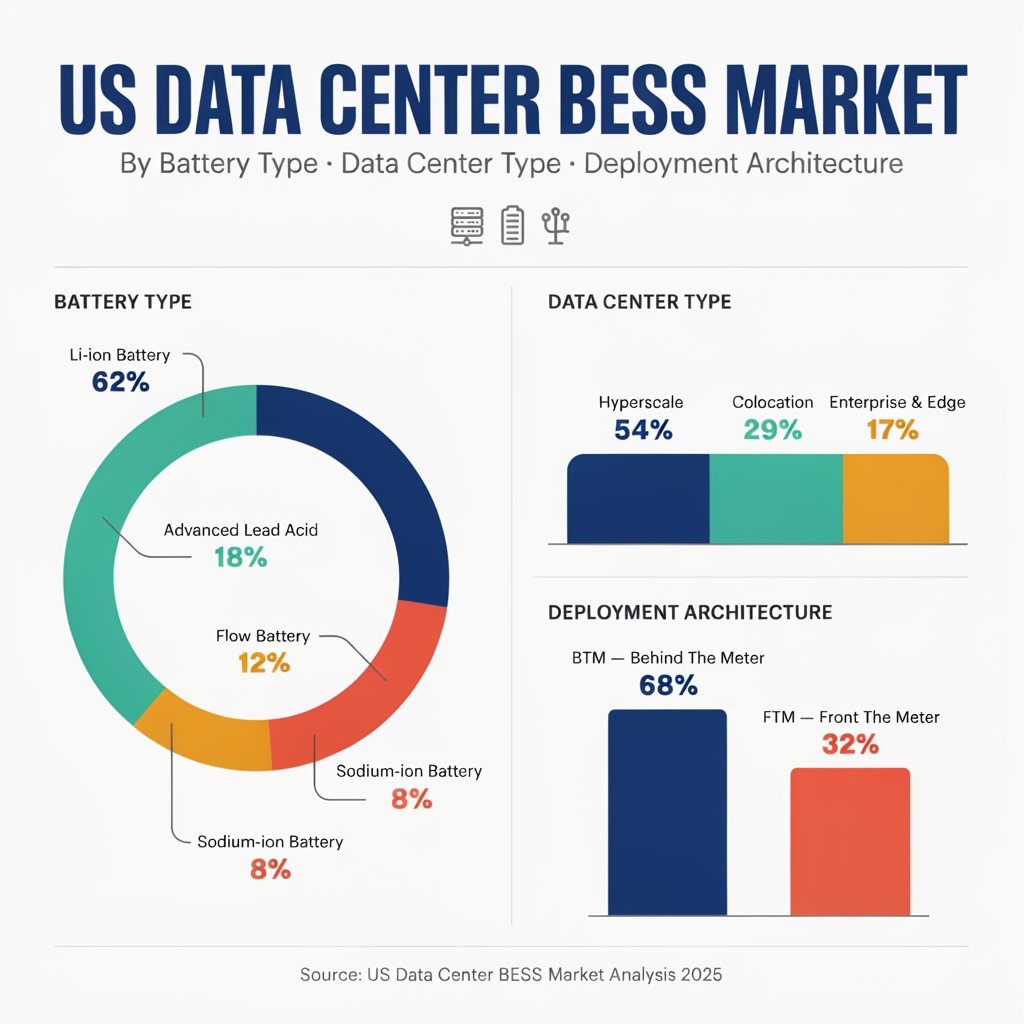
Intelligent Energy Management
The combination of BESS with AI-based energy management can improve the efficiency of edge power systems. Software platforms can monitor facility demand, electricity prices, weather conditions, renewable generation, battery state of charge, and operational requirements.
These systems can determine optimal charging and discharging schedules while maintaining sufficient energy reserves for emergency conditions. Advanced battery management systems can also monitor voltage, temperature, state of health, and other parameters to improve safety and lifecycle performance.
Compact and Modular Storage Solutions
Space limitations are an important consideration for edge data centers. Many facilities are deployed in smaller buildings, telecommunications sites, industrial locations, or modular enclosures where conventional large-scale energy infrastructure may be difficult to accommodate.
Compact and modular BESS solutions can provide greater deployment flexibility. Modular designs allow storage capacity to be matched to individual site requirements and expanded as computing workloads increase. This can create opportunities for manufacturers offering scalable systems with high energy density and simplified installation.
Future Market Outlook
The US Data Center BESS Industry is expected to benefit from the growing deployment of edge computing infrastructure across telecommunications, industrial automation, healthcare, transportation, retail, security, and smart city applications. Increasing edge AI workloads and demand for low-latency services will further strengthen requirements for reliable localized power.
BESS providers that combine compact battery systems with advanced BMS, intelligent energy management, renewable integration, microgrids, and power electronics could capture emerging opportunities in edge data center power management. As computing becomes increasingly distributed across the US, battery energy storage is expected to play a growing role in creating resilient, scalable, and energy-efficient edge infrastructure.