
The wearables market has transformed from a niche consumer electronics segment into a dynamic and multifaceted industry that touches nearly every aspect of modern life. From health and fitness tracking to enterprise productivity and immersive entertainment, wearable devices have become indispensable tools for millions of users worldwide. The wearables market encompasses a wide range of products including smartwatches, fitness bands, hearables, smart rings, augmented reality glasses, medical patches, and industrial safety wearables. This remarkable expansion reflects a fundamental shift in consumer behavior, as people increasingly seek continuous, data-driven insights about their health, performance, and environment. The wearables market is no longer limited to early adopters; it has achieved mainstream acceptance across diverse demographics and geographies. As technology continues to advance and consumer expectations evolve, the wearables market is poised for sustained growth, driven by innovations in artificial intelligence, sensor miniaturization, and connectivity.
According to Marketsandmarkets, the global wearable technology market size is projected to grow from USD 104.95 Billion in 2026 to USD 238.71 billion by 2032, growing at a CAGR of 14.7% from 2026 to 2032.
Download PDF Brochure @ https://www.marketsandmarkets.com/pdfdownloadNew.asp?id=983
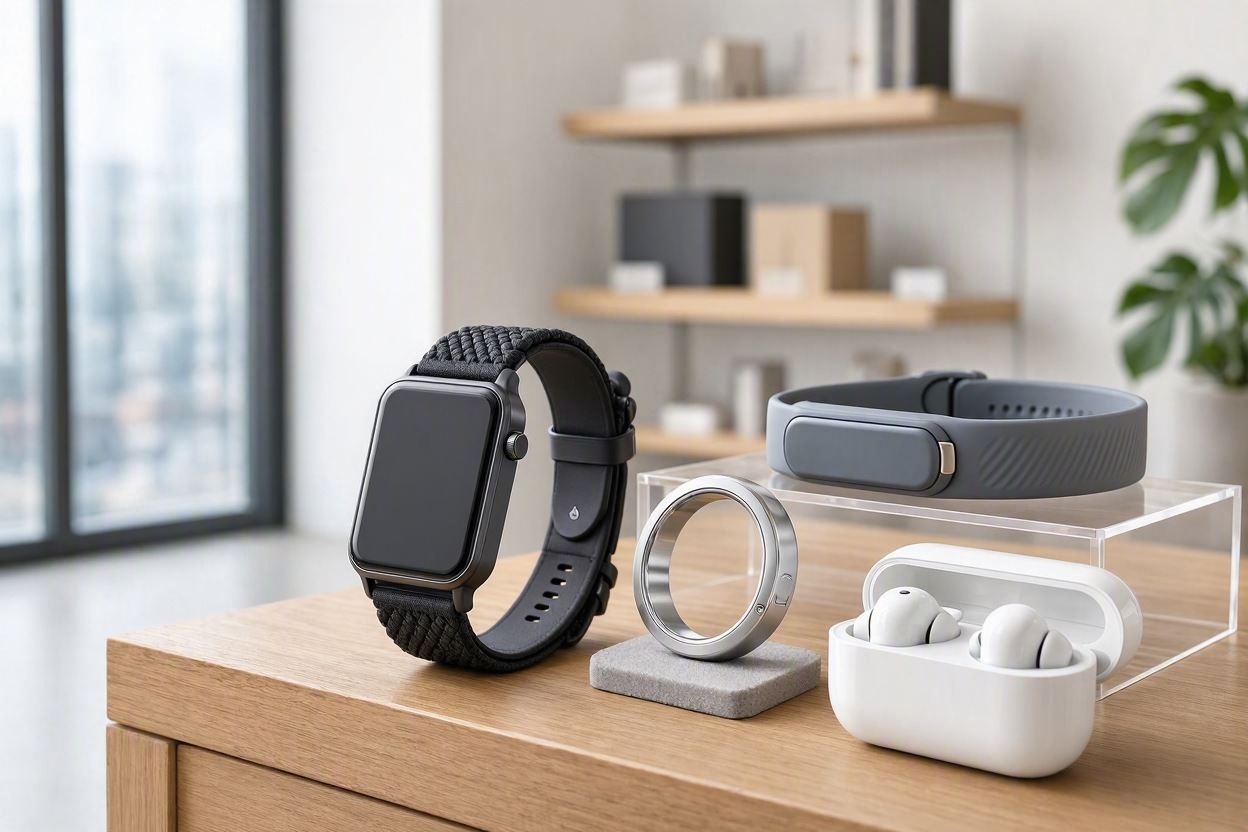
Understanding the Wearables Market Ecosystem
The wearables market comprises a diverse array of product categories, each serving distinct use cases and consumer preferences. Smartwatches and fitness trackers remain the most recognizable segments of the wearables market, offering comprehensive health monitoring, notification management, and lifestyle integration. However, the wearables market has expanded significantly to include hearables that combine audio functionality with biometric sensing, smart rings that provide discreet health tracking, and augmented reality glasses that overlay digital information onto the physical world. The wearables market also includes medical-grade devices used for remote patient monitoring, as well as industrial wearables designed to enhance worker safety and operational efficiency. This broad spectrum of products within the wearables market demonstrates how the industry has matured to address specific needs across consumer, healthcare, and enterprise domains. The interconnected nature of these devices, often working in tandem with smartphones and cloud platforms, creates a seamless ecosystem that enhances the overall value proposition of the wearables market.
Key Growth Drivers Shaping the Wearables Market
Several powerful forces are propelling the wearables market forward, creating a robust foundation for continued expansion. The growing global emphasis on preventive healthcare and wellness has positioned wearables as essential tools for individuals seeking to take proactive control of their health. Consumers in the wearables market are increasingly demanding devices that can monitor heart rate variability, track sleep quality, detect irregular heart rhythms, and provide early warnings of potential health issues. This shift toward continuous health monitoring has been further accelerated by the aging population and the rising prevalence of chronic conditions worldwide. Another significant driver of the wearables market is the integration of artificial intelligence, which transforms raw sensor data into actionable, personalized insights that enhance user engagement and device utility. The wearables market is also benefiting from rapid advancements in battery technology, low-power connectivity, and miniaturized sensors that make devices more comfortable, durable, and practical for everyday use. Additionally, the growing adoption of mobile applications and cloud-based analytics has created a seamless ecosystem where wearable devices effortlessly synchronize with other digital platforms.
The Transformative Role of Artificial Intelligence in the Wearables Market
Artificial intelligence is fundamentally reshaping the wearables market by elevating devices from passive data collectors to proactive health and productivity companions. Machine learning algorithms deployed within the wearables market can analyze continuous streams of biometric data to identify patterns, detect anomalies, and generate predictive alerts that were previously impossible. These AI capabilities enable the wearables market to offer personalized coaching, stress management recommendations, and early detection of potential health conditions such as atrial fibrillation or sleep disorders. Edge AI, which processes data directly on the device, is gaining traction in the wearables market as it reduces latency, preserves battery life, and addresses growing consumer concerns about data privacy. The wearables market is witnessing a value-driven evolution where intelligent software and data analytics are becoming as important as hardware specifications. By converting raw sensor outputs into context-aware insights, artificial intelligence is making the wearables market more relevant to everyday life and more indispensable to users seeking to optimize their health and productivity.
Health Monitoring as a Pillar of the Wearables Market
The health monitoring segment represents one of the most significant and fastest-growing areas within the wearables market, driven by increasing consumer awareness and regulatory validation. Regulatory authorities around the world have cleared several consumer-facing health features, including electrocardiogram capabilities, irregular rhythm notifications, and blood oxygen monitoring, which have significantly enhanced the clinical credibility of the wearables market. These developments have narrowed the gap between consumer fitness trackers and medical diagnostic devices, opening new avenues for the wearables market in remote patient monitoring and digital therapeutics. Healthcare providers are increasingly viewing the wearables market as a valuable source of longitudinal health data that can support earlier intervention, reduce hospital readmissions, and improve chronic disease management. The wearables market is also benefiting from partnerships between technology companies and healthcare organizations, which are developing integrated solutions that combine wearable sensors with clinical workflows. This convergence of consumer wellness and clinical healthcare is perhaps the most transformative trend shaping the wearables market, expanding its addressable audience from fitness enthusiasts to patients and seniors.
Emerging Form Factors Expanding the Wearables Market
The wearables market is experiencing significant diversification beyond traditional wrist-worn devices, with new form factors creating specialized growth opportunities and appealing to broader consumer segments. Smart rings have emerged as a compelling category within the wearables market, offering discreet and comfortable health tracking that appeals to users who prefer minimalistic designs. These rings in the wearables market are evolving beyond basic activity tracking to include advanced features such as voice notes, meeting transcription, and gesture control, making them productivity companions as well. Smart eyewear represents another fast-growing frontier in the wearables market, with augmented reality glasses and display-less smart glasses gaining traction among consumers and enterprises alike. The wearables market is also witnessing the rise of AI-powered pendants and advanced hearables that deliver hands-free experiences and continuous health monitoring without the need for a screen. This diversification within the wearables market reflects a fundamental shift away from screen-heavy wrist computers toward compact, AI-driven devices designed for extended battery life and seamless integration into daily routines. As these new form factors mature, they are expected to attract new user demographics and expand the overall addressable market.
Regional Dynamics of the Wearables Market
The wearables market exhibits distinct regional characteristics, with different geographies contributing to global growth in unique ways. North America has historically been a dominant force in the wearables market, driven by high consumer awareness, strong healthcare infrastructure, and early adoption of advanced technologies. The North American wearables market is characterized by a mature consumer base that readily embraces premium devices with comprehensive health monitoring features. Europe represents another substantial market for wearables, with consumers showing strong interest in fitness tracking, wellness, and privacy-conscious devices that comply with stringent data protection regulations. The Asia-Pacific region is emerging as a high-growth area for the wearables market, fueled by large smartphone user bases, rising disposable incomes, expanding middle-class consumption, and strong domestic electronics manufacturing capabilities. Countries such as China, India, Japan, South Korea, and Australia are witnessing rapid adoption of wearables, supported by new product launches, e-commerce promotions, and government initiatives that stimulate consumer demand. The wearables market in Asia-Pacific is also benefiting from the region’s tech-savvy population and growing awareness of health and fitness.
Enterprise Adoption and Industrial Applications in the Wearables Market
Beyond consumer applications, the wearables market is gaining significant traction in enterprise and industrial settings where wearable technology enhances productivity, safety, and operational efficiency. Industrial augmented reality headsets are improving efficiency in hazardous or distributed settings, allowing workers to access real-time information, remote expert guidance, and step-by-step instructions without taking their hands off the task. The wearables market is seeing measurable returns on investment in enterprise deployments, with organizations reporting significant reductions in assembly times, error rates, and training costs through the use of wearable guidance systems. Worker safety programs are another important driver of the wearables market, as sensors can monitor fatigue, fall risk, environmental conditions, and workplace safety parameters to prevent accidents and injuries. The wearables market is also being adopted in logistics, warehousing, and field service operations, where wearable scanners, headsets, and smart glasses streamline workflows and improve accuracy. As enterprises increasingly recognize the productivity and safety benefits of wearables, the wearables market is poised for sustained growth in the business-to-business segment, complementing the already strong consumer demand.
Challenges and Hurdles Facing the Wearables Market
Despite its impressive growth trajectory, the wearables market faces several challenges that could temper its expansion and require strategic responses from industry participants. Data privacy and security concerns represent a significant hurdle for the wearables market, as these devices continuously collect sensitive biometric information that falls under stringent regulations such as the General Data Protection Regulation in Europe and health data protection laws in various jurisdictions. Manufacturers in the wearables market must invest in robust consent management, data encryption, and on-device anonymization features, which can increase development costs and complexity. Cross-border data transfer restrictions further complicate cloud analytics for the wearables market, particularly for global manufacturers serving multiple regulatory regions. Another challenge facing the wearables market is user engagement and retention, as many consumers abandon their devices after initial excitement fades, reducing the long-term value of recurring revenue models. Supply chain constraints, particularly in specialized components such as advanced sensors and memory chips, can also impact the wearables market by limiting production and potentially raising prices. Addressing these challenges will be essential for the wearables market to realize its full potential.
Consumer Preferences and Behavioral Trends in the Wearables Market
Consumer preferences within the wearables market are evolving rapidly, with discernible trends that manufacturers must address to remain competitive and capture market share. The wearables market is experiencing a pronounced polarization, with consumers either gravitating toward premium, feature-rich devices or opting for minimalist, screenless trackers that focus on core functionality. This bifurcation in the wearables market reflects differing consumer priorities, with some users seeking comprehensive health monitoring, ecosystem integration, and advanced analytics, while others prefer simplicity, affordability, and long battery life. The wearables market is also seeing consumers become more discerning about data accuracy and clinical validation, demanding devices that provide reliable and meaningful health insights. Brand loyalty and ecosystem lock-in are becoming increasingly important in the wearables market, as consumers who are satisfied with a particular brand’s ecosystem are more likely to upgrade within that ecosystem. The wearables market is benefiting from consumers’ growing willingness to replace devices regularly as new features and capabilities become available, turning wearables from occasional purchases into regularly updated personal technology.
Future Outlook and Strategic Opportunities in the Wearables Market
The future of the wearables market appears exceptionally bright, with multiple growth vectors converging to create sustained expansion opportunities across consumer, healthcare, and enterprise segments. Innovations in flexible display technologies, advanced sensor materials, and energy harvesting are expected to enable lighter, thinner, and more durable devices that enhance user comfort and aesthetics. The wearables market is also poised for growth through the integration of wearable technology with broader Internet of Things ecosystems, enabling seamless communication between devices and creating new use cases in smart homes, connected vehicles, and smart cities. The convergence of wearables with artificial intelligence and machine learning will continue to drive value, transforming devices from passive trackers into proactive health and productivity assistants. The wearables market is also seeing emerging opportunities in smart clothing, exoskeletons, and implantable devices that expand the definition of wearable technology and open entirely new application domains. As the wearables market matures, strategic opportunities will arise for companies that can deliver clinically validated health solutions, enterprise-grade productivity tools, and compelling consumer experiences that foster long-term engagement.
Investment and Innovation Hotspots in the Wearables Market
The wearables market presents compelling opportunities for innovation and investment across multiple segments and value chain positions. Sensor development, particularly in areas such as optical heart rate monitoring, continuous glucose monitoring, and environmental sensing, represents a critical innovation hotspot within the wearables market. Advances in processor design and energy-efficient chips are enabling more sophisticated on-device processing, which is essential for the wearables market to deliver real-time insights while maintaining long battery life. Software and data analytics platforms are capturing increasing value in the wearables market, with opportunities in personalized health coaching, predictive analytics, and subscription-based premium services. The healthcare segment of the wearables market offers significant potential for companies that can develop clinically validated solutions and navigate regulatory pathways to secure reimbursement from healthcare payers. Emerging categories such as smart rings, smart eyewear, and AI pendants represent high-growth niches within the wearables market that could generate substantial returns for early innovators. The wearables market is also attracting investment in manufacturing capabilities, supply chain optimization, and distribution channels to meet growing global demand.
Sustainability and Ethical Considerations in the Wearables Market
As the wearables market continues to grow, sustainability and ethical considerations are becoming increasingly important to consumers, regulators, and industry stakeholders. The wearables market faces challenges related to electronic waste, as rapid product cycles and frequent upgrades contribute to discarded devices that contain valuable but difficult-to-recycle materials. Manufacturers in the wearables market are exploring circular economy models, including device take-back programs, modular designs for easier repair, and the use of recycled and bio-based materials in product construction. The wearables market also must address ethical concerns around data ownership, consent, and the potential for biometric data to be misused or exploited. Transparency in data practices, robust security measures, and clear consumer education are essential for maintaining trust in the wearables market. Additionally, the wearables market must consider accessibility and inclusivity, ensuring that devices are designed to accommodate diverse users including those with disabilities, varying levels of technological literacy, and different socioeconomic backgrounds. Addressing these sustainability and ethical considerations will be crucial for the long-term viability and social license of the wearables market.
Conclusion
The wearables market in the current era represents a vibrant and rapidly evolving industry that is reshaping how individuals interact with technology, manage their health, and enhance their productivity. With a diverse array of products ranging from smartwatches and fitness trackers to smart rings, augmented reality glasses, and industrial safety wearables, the wearables market caters to a broad spectrum of consumer and enterprise needs. The convergence of artificial intelligence, advanced sensors, and healthcare applications is driving the wearables market beyond simple activity tracking toward comprehensive health management, preventive medicine, and personalized coaching. As consumer preferences shift toward premium, feature-rich devices and new form factors continue to emerge, the wearables market will diversify further and attract new user demographics. Manufacturers, investors, healthcare providers, and enterprises must remain attuned to the trends shaping the wearables market to capitalize on the opportunities that lie ahead. The wearables market is not merely a technology trend; it represents a fundamental transformation in how we interact with data, monitor our well-being, and augment our daily lives with intelligent, connected devices.
FAQs
Q1: What product categories are included in the wearables market?
The wearables market includes smartwatches, fitness trackers, hearables, smart rings, augmented reality glasses, medical patches, industrial safety wearables, and AI-powered pendants, among other connected devices.
Q2: How is artificial intelligence impacting the wearables market?
Artificial intelligence enables the wearables market to convert raw sensor data into personalized, actionable insights, supporting predictive health monitoring, stress management, and proactive interventions that enhance user engagement.
Q3: What are the main drivers of growth in the wearables market?
Key drivers include increasing consumer focus on preventive healthcare, aging populations, technological advancements in sensors and connectivity, integration with mobile ecosystems, and growing enterprise adoption for safety and productivity.
Q4: Which regions are leading the wearables market?
North America and Europe are mature markets with high adoption rates, while the Asia-Pacific region is experiencing rapid growth due to large populations, rising incomes, and strong domestic manufacturing capabilities.
Q5: What are the emerging form factors in the wearables market?
Smart rings, smart eyewear, and AI pendants are emerging as fast-growing categories within the wearables market, offering discreet, hands-free, and specialized functionality beyond traditional wrist-worn devices.
Q6: What challenges does the wearables market face?
The wearables market faces challenges including data privacy and security concerns, user engagement and retention issues, supply chain constraints, regulatory compliance burdens, and the need for clinically validated health features.