

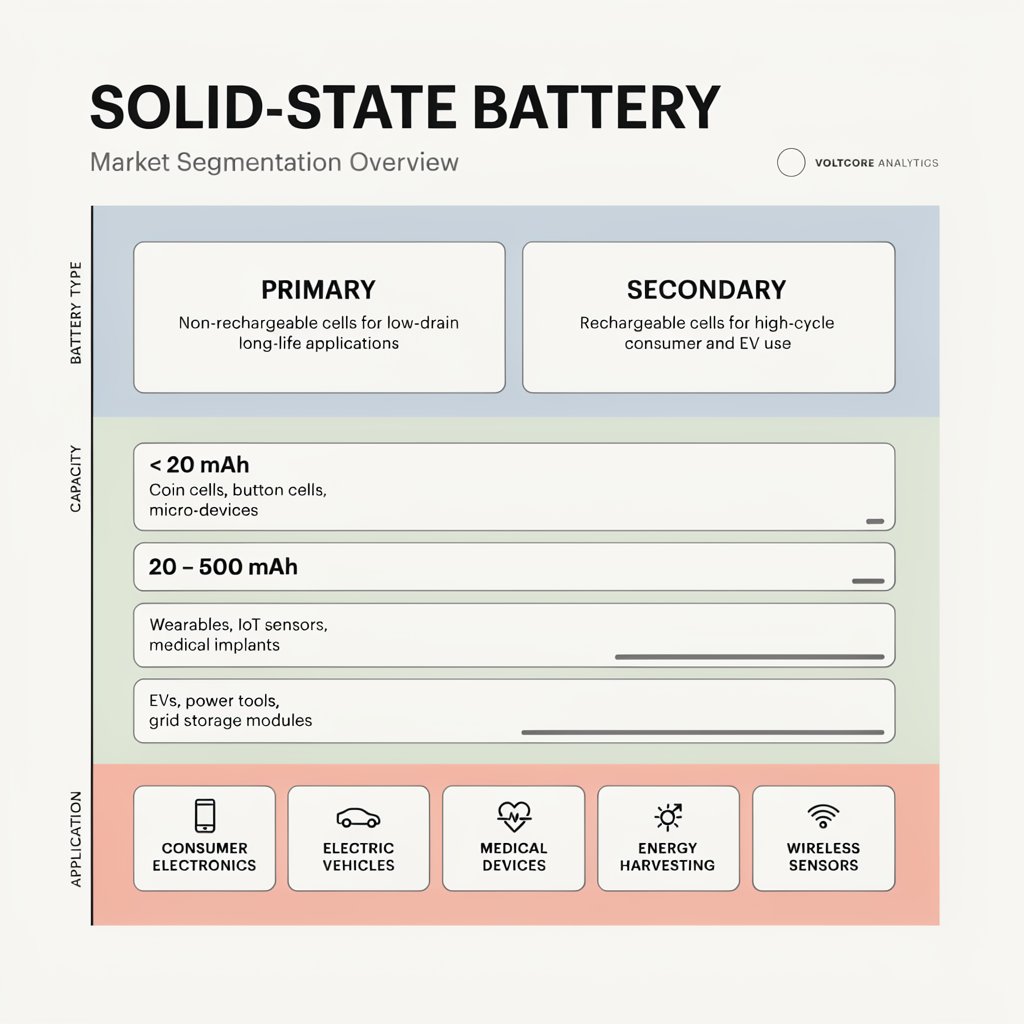
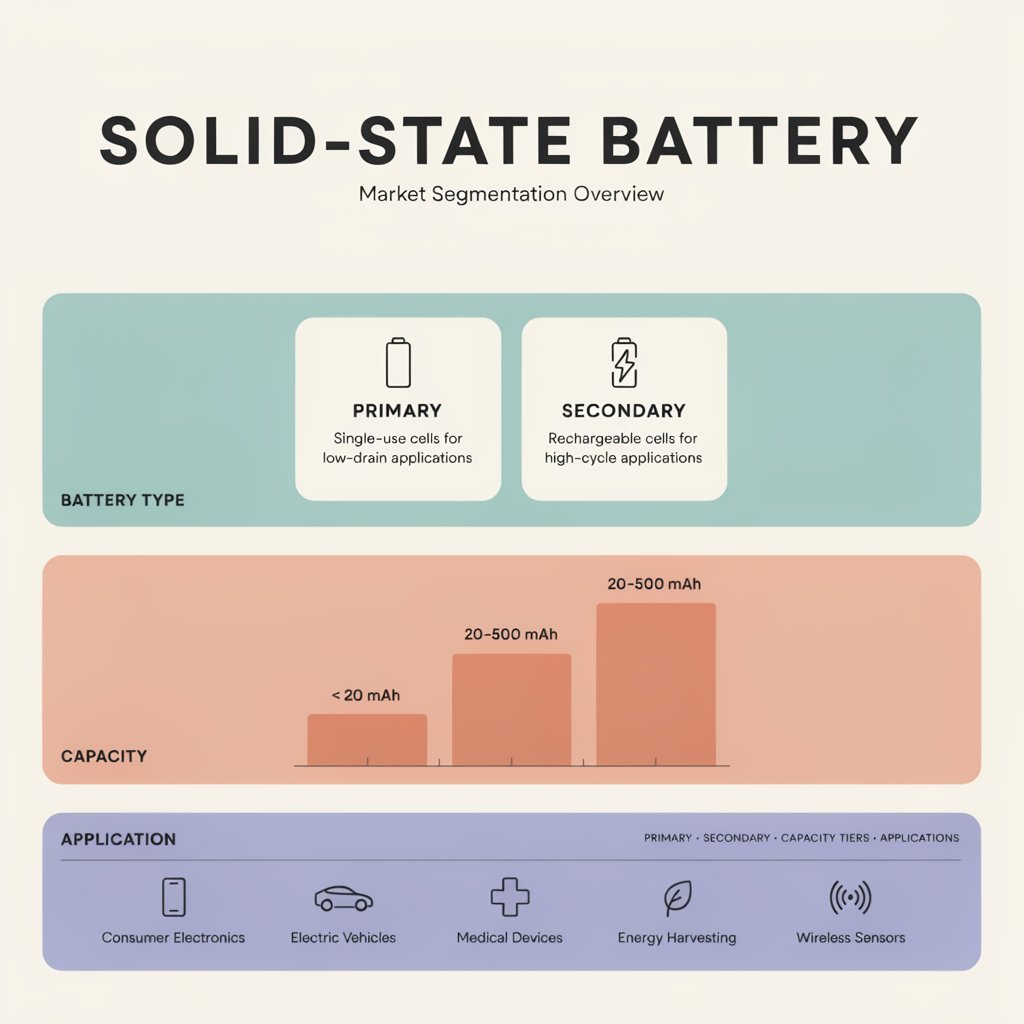
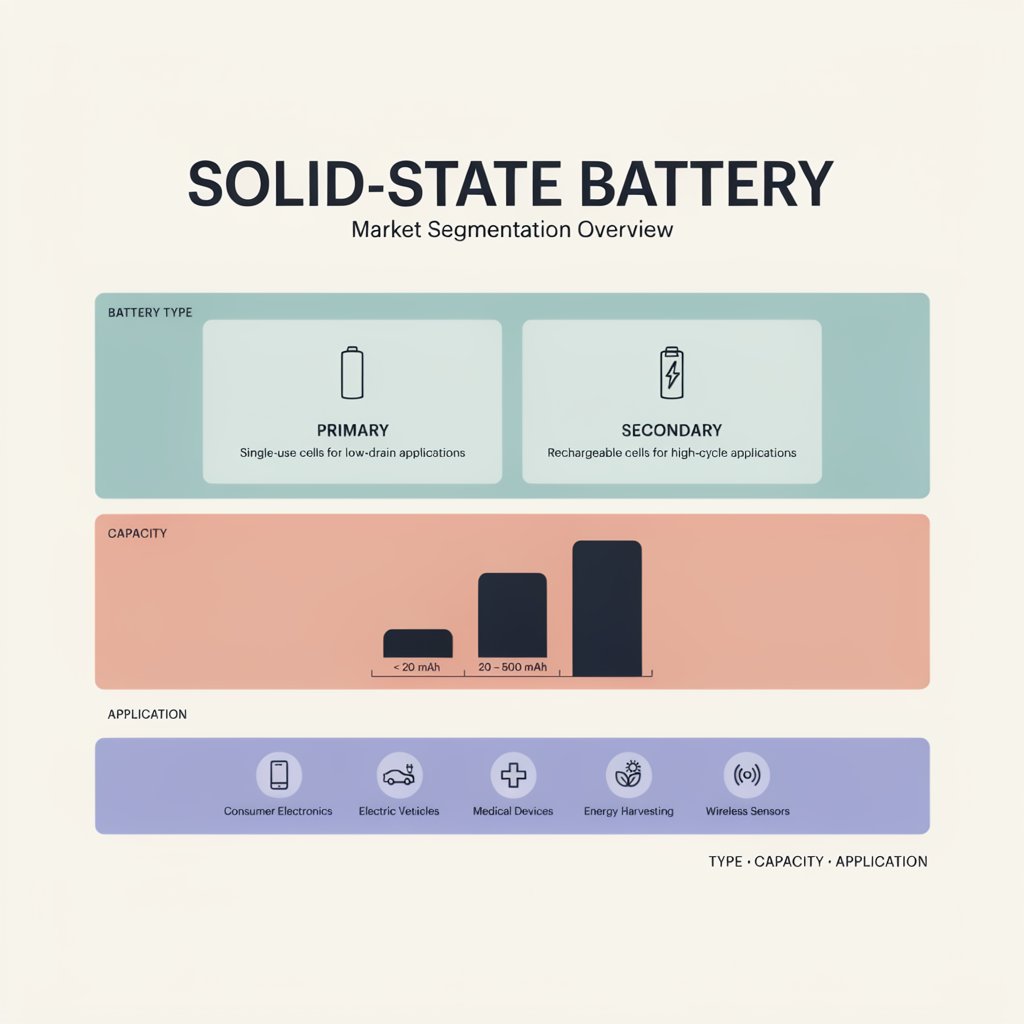
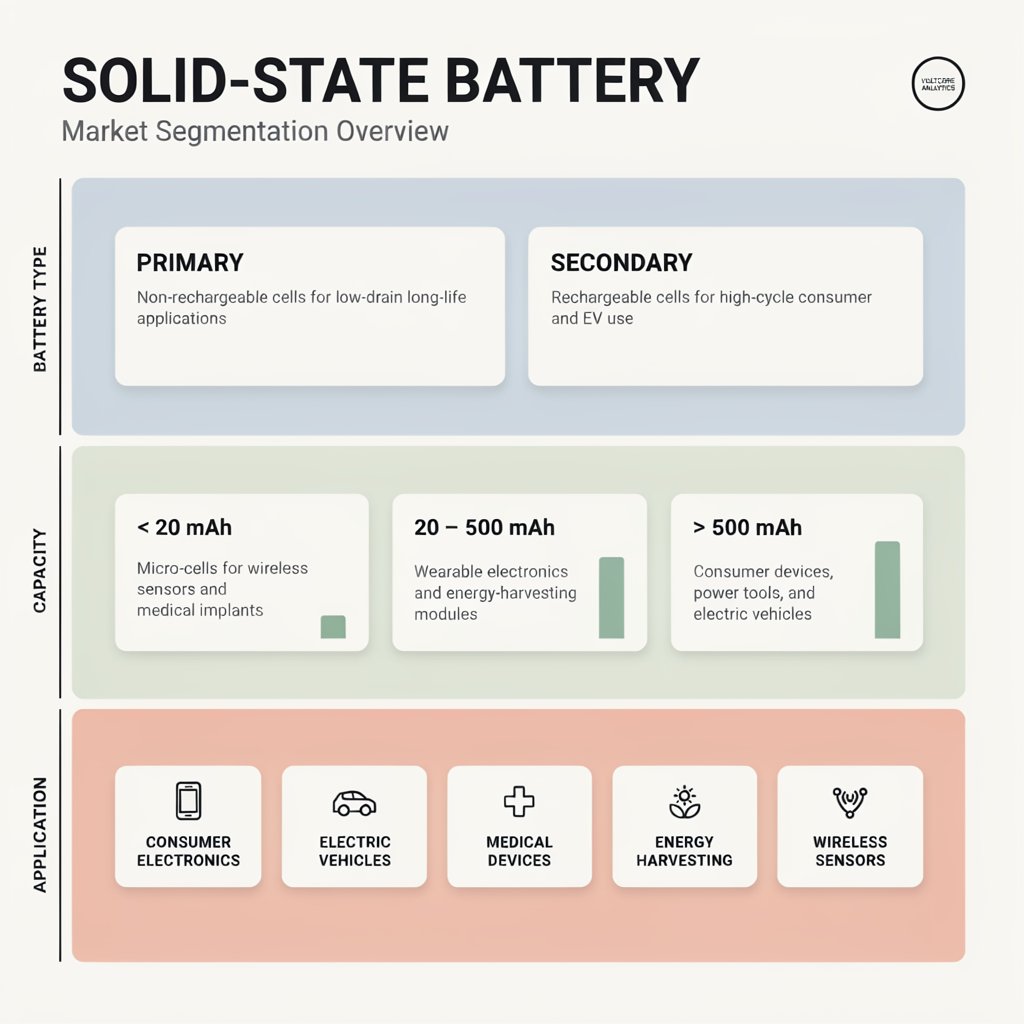
The Solid-State Battery Market is gaining new opportunities from the rapid deployment of wireless sensor networks across industrial, commercial, healthcare, transportation, and smart infrastructure environments. Wireless sensors require compact, reliable, and energy-efficient power sources that can operate for extended periods without frequent maintenance or battery replacement. Solid-state batteries, which use solid electrolytes instead of conventional liquid electrolytes, are emerging as a promising solution for applications where small size, safety, long operating life, and stable performance are important.
Growing Adoption of Wireless Sensor Networks
The expansion of Industrial IoT and connected infrastructure is increasing demand for wireless sensors. Manufacturing facilities are deploying sensors to monitor temperature, vibration, pressure, humidity, equipment condition, and energy consumption. Smart buildings use wireless sensors for occupancy detection, environmental monitoring, lighting control, and security. These applications can involve thousands of distributed devices, making battery maintenance a significant operational challenge.
Solid-state batteries can support this expanding sensor ecosystem by providing compact energy storage for low-power wireless devices. Their potential for high energy density enables manufacturers to design smaller sensor nodes while maintaining sufficient operating time.
Demand for Long-Life Sensor Power
Many wireless sensors are installed in locations that are difficult or expensive to access. Sensors embedded inside machinery, industrial equipment, infrastructure assets, or remote monitoring systems may require years of operation with limited maintenance. Frequent battery replacement can increase labor requirements and disrupt operations.
The Solid-State Battery Market can benefit from demand for batteries capable of supporting long-duration sensor operation. Solid-state technologies can offer low self-discharge characteristics and stable electrochemical performance, making them attractive for sensor nodes designed for extended deployment.
Download PDF Brochure @ https://www.marketsandmarkets.com/pdfdownloadNew.asp?id=164577856
Miniaturization of Wireless Sensor Devices
Miniaturization is becoming a major design requirement for wireless sensors. Manufacturers are developing increasingly compact sensor nodes that can be installed inside equipment, attached to products, or embedded into structures. Conventional batteries can limit device size because of their form factor and safety requirements.
Thin-film and miniature solid-state batteries provide opportunities to address these limitations. Their compact architecture can be integrated into small electronic systems, enabling developers to create smaller wireless sensors for applications such as asset tracking, condition monitoring, medical devices, and smart packaging.
Industrial IoT and Predictive Maintenance
Industrial IoT represents a particularly important opportunity for solid-state battery adoption. Wireless sensors are increasingly used for predictive maintenance by collecting continuous data from motors, pumps, bearings, compressors, production equipment, and robotic systems.
Long-lasting solid-state batteries can help reduce maintenance requirements for these sensor networks. When combined with low-power processors, energy-efficient communication protocols, and edge computing, solid-state-powered sensors can operate autonomously while transmitting critical equipment data to centralized or cloud-based analytics platforms.
Inquiry Before Buying @ https://www.marketsandmarkets.com/Enquiry_Before_BuyingNew.asp?id=164577856
Smart Buildings and Infrastructure
Smart buildings are creating another application opportunity. Wireless sensors can monitor indoor air quality, temperature, humidity, occupancy, lighting, and energy consumption. Because these devices are distributed throughout buildings, reducing battery replacement requirements can improve operating efficiency.
Solid-state batteries can provide compact power sources for these applications while supporting flexible sensor placement. Similar opportunities exist in smart infrastructure, where wireless sensors monitor bridges, pipelines, railways, roads, and other assets. Long-life battery technologies can help support continuous infrastructure monitoring in locations where wired power is difficult to install.
Healthcare and Wearable Sensors
Healthcare is another promising area for the Solid-State Battery Market. Wireless medical sensors and wearable devices increasingly require small batteries that can safely operate close to the human body. Solid-state batteries can offer advantages related to safety, compactness, and energy density.
Applications may include wearable health monitors, implantable electronics, smart patches, medical tracking devices, and remote patient monitoring systems. As healthcare providers expand connected monitoring and remote-care models, demand for miniature energy storage technologies is expected to increase.
View detailed Table of Content here – https://www.marketsandmarkets.com/Market-Reports/solid-state-battery-market-164577856.html
Energy Harvesting Integration
The integration of solid-state batteries with energy harvesting technologies could further expand market opportunities. Wireless sensors can harvest small amounts of energy from indoor light, vibration, thermal gradients, or radio-frequency sources. The harvested energy can recharge or supplement a solid-state battery, extending the operational lifetime of sensor nodes.
This combination is particularly relevant for autonomous sensing systems designed to operate with minimal human intervention. Advances in ultra-low-power electronics and wireless communication can further improve the feasibility of these architectures.
Technology and Manufacturing Advances
Advances in solid electrolyte materials, electrode design, thin-film manufacturing, packaging, and semiconductor integration are expected to influence adoption. Manufacturers are working to improve energy density, cycle life, production scalability, and cost efficiency.
The use of advanced manufacturing techniques could enable solid-state batteries to be produced in customized shapes and miniature form factors. Such developments may help battery suppliers address application-specific requirements across industrial IoT, healthcare, smart infrastructure, and consumer electronics.
Future Market Outlook
The Solid-State Battery Industry is positioned to benefit from the increasing need for autonomous, compact, and long-lasting power sources for wireless sensor applications. Industrial IoT, predictive maintenance, smart buildings, healthcare monitoring, infrastructure intelligence, and energy harvesting are creating multiple pathways for adoption.
As wireless sensor deployments expand and organizations seek to reduce maintenance costs, solid-state batteries could become an increasingly important component of next-generation sensing platforms. Continued improvements in materials, miniaturization, manufacturing scalability, energy density, and integration with energy harvesting technologies will be critical to unlocking the broader potential of solid-state batteries in wireless sensor applications.