
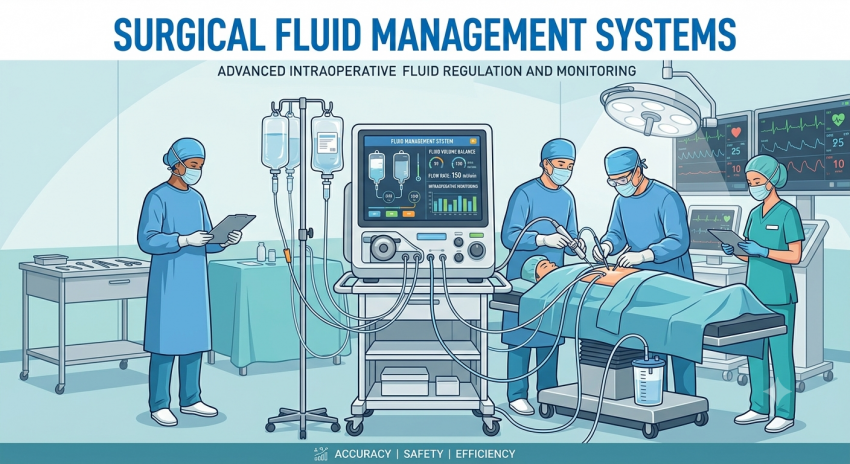
The global Surgical Fluid Management Systems Market is projected to grow from USD 13.26 billion in 2025 to USD 18.60 billion by 2030, registering a CAGR of 7.0% during the forecast period. Market growth is being driven by the increasing prevalence of kidney and urological disorders, rising adoption of minimally invasive surgical procedures, technological advancements in Suction Irrigation Systems, and growing demand for efficient Surgical Fluid Management, fluid warming, and infection-control solutions.
Download PDF Brochure:- https://www.marketsandmarkets.com/pdfdownloadNew.asp?id=153551158
Rising Demand for Advanced Surgical Fluid Management Drives Market Growth
The fluid management systems market is experiencing sustained growth as healthcare providers increasingly invest in technologies that support safe irrigation, suction, fluid warming, visualization, waste management, and fluid removal during medical and surgical procedures.
Advanced Fluid Management Systems are becoming increasingly important in hospitals and surgical centers, where efficient fluid control can support procedural accuracy, workflow efficiency, and patient safety.
The growing prevalence of chronic kidney disease and urological complications is contributing to demand for fluid management technologies, particularly in renal care and dialysis-related applications. At the same time, the increasing adoption of minimally invasive procedures is creating a need for precise Suction Irrigation Systems and integrated solutions that can maintain clear visualization and support streamlined surgical workflows.
Rising healthcare expenditure, improvements in hospital infrastructure, and technological innovation are further supporting market expansion. Digital integration and advancements in integrated Surgical Fluid Management technologies are also creating new opportunities for manufacturers to improve workflow efficiency and patient care.
Systems Segment Holds the Largest Market Share
The systems segment holds the largest share of the fluid management systems market.
A modern Fluid Management System provides comprehensive solutions for controlling irrigation, suction, warming, and waste fluids across a range of clinical and surgical settings. Their widespread adoption in hospitals and surgical centers is supported by the need for reliable and efficient fluid control during complex procedures.
The growing shift toward integrated healthcare technologies is also strengthening demand for advanced fluid management platforms that can improve workflow coordination, reduce manual intervention, and support better management of surgical fluids.
Technological developments focused on automation, precision control, real-time monitoring, and improved system integration are expected to further support the growth of the systems segment.
Dialyzers Accounted for the Largest Share of the Systems Market
The dialyzers segment accounted for the largest share of the systems market in 2024.
Dialyzers remain essential for the ongoing treatment of patients with chronic kidney disease and other conditions requiring hemodialysis. The increasing global burden of renal disorders and the growth of the aging population are contributing to sustained demand for dialysis procedures and associated fluid management technologies.
The recurring need for dialysis treatment creates consistent demand for dialyzers and related products across hospitals, dialysis centers, and specialized renal care facilities.
As healthcare systems continue to expand renal care infrastructure and improve access to chronic disease management, demand for advanced dialysis technologies and efficient fluid management systems is expected to remain a significant contributor to market growth.
Suction Irrigation Systems Support Minimally Invasive Surgery
The increasing popularity of minimally invasive surgery is transforming demand for advanced Suction Irrigation Systems.
Procedures in areas such as gastroenterology, general surgery, urology, and other surgical specialties require effective irrigation and suction capabilities to maintain clear visualization, remove fluids and debris, and support procedural efficiency.
An advanced Surgical Suction System can help healthcare providers manage fluid removal more effectively while supporting cleaner surgical fields and streamlined operating room workflows.
The continued development of minimally invasive and endoscopic procedures is expected to create opportunities for manufacturers offering advanced, integrated, and easy-to-use suction and irrigation technologies.
Fluid Warming Systems Gain Importance in Surgical Procedures
The increasing focus on patient safety and perioperative care is supporting demand for advanced Fluid Warming Systems.
These systems help maintain appropriate fluid temperatures during surgical and clinical procedures, supporting effective patient management and helping healthcare providers address the challenges associated with administering intravenous or irrigation fluids.
The growing volume of complex and minimally invasive procedures is expected to increase the adoption of integrated solutions that combine fluid management with warming capabilities.
Manufacturers are increasingly focusing on developing efficient, easy-to-use, and reliable fluid warming technologies that can be incorporated into modern surgical workflows.
Infection Control and Digital Innovation Reshape Market Demand
Healthcare providers are placing greater emphasis on infection prevention, patient safety, and efficient operating room management. This is increasing demand for Surgical Fluid Management technologies that support improved fluid containment, waste handling, suction, and clinical hygiene.
Advanced Surgical Suction Systems can also play an important role in maintaining cleaner surgical environments by supporting the effective removal and management of fluids during procedures.
Digital innovation is opening new opportunities across the market. Smart and connected fluid management technologies may enable improved monitoring, workflow integration, and operational management in surgical and clinical environments.
Manufacturers that can address requirements related to efficiency, infection control, integration, usability, precision, and cost-effectiveness are expected to benefit from the evolving needs of hospitals and healthcare facilities.
North America Maintains Market Leadership
North America accounted for the largest share of the fluid management systems market in 2024.
The region’s leadership is supported by advanced healthcare infrastructure, high adoption of minimally invasive surgical procedures, and the significant prevalence of chronic kidney and urological disorders.
Strong reimbursement frameworks, continued healthcare technology investments, and the presence of established medical device manufacturers further support market development.
North America also benefits from the early adoption of innovative Fluid Management Systems, Suction Irrigation Systems, Fluid Warming Systems, and Surgical Suction Systems, helping healthcare providers improve procedural efficiency and patient care.
Speak To Analyst:- https://www.marketsandmarkets.com/speaktoanalystNew.asp?id=153551158
Emerging Markets Offer Significant Growth Potential
While high equipment costs and limited awareness may challenge adoption in some developing economies, emerging healthcare markets offer significant long-term opportunities.
Improving hospital infrastructure, increasing healthcare expenditure, rising awareness of advanced surgical procedures, and growing investments in chronic disease management are expected to support demand for advanced Fluid Management Systems and related technologies.
The expansion of minimally invasive surgery and dialysis infrastructure across emerging economies could create additional opportunities for manufacturers, distributors, and healthcare technology providers.
Growing investments in modern operating rooms may also increase demand for integrated Surgical Fluid Management, suction irrigation, fluid warming, and surgical suction technologies.
Competitive Landscape
The global fluid management systems market includes established medical device and healthcare technology companies competing through product innovation, integrated systems, strategic partnerships, and expansion across surgical and renal care applications.
Key players profiled in the report include Fresenius Medical Care AG, Smith & Nephew Plc, B. Braun SE, Stryker, Ecolab, CONMED Corporation, Cardinal Health, Olympus Corporation, ICU Medical, Zimmer Biomet Holdings, Inc., Medtronic, Hologic, Inc., Johnson & Johnson, Baxter (Vantive), and Nipro, among others.
Market participants are increasingly focused on developing Suction Irrigation Systems, Fluid Management Systems, Surgical Fluid Management technologies, Fluid Warming Systems, and Surgical Suction Systems that improve fluid control, procedural efficiency, infection prevention, system integration, and ease of use across healthcare settings.