
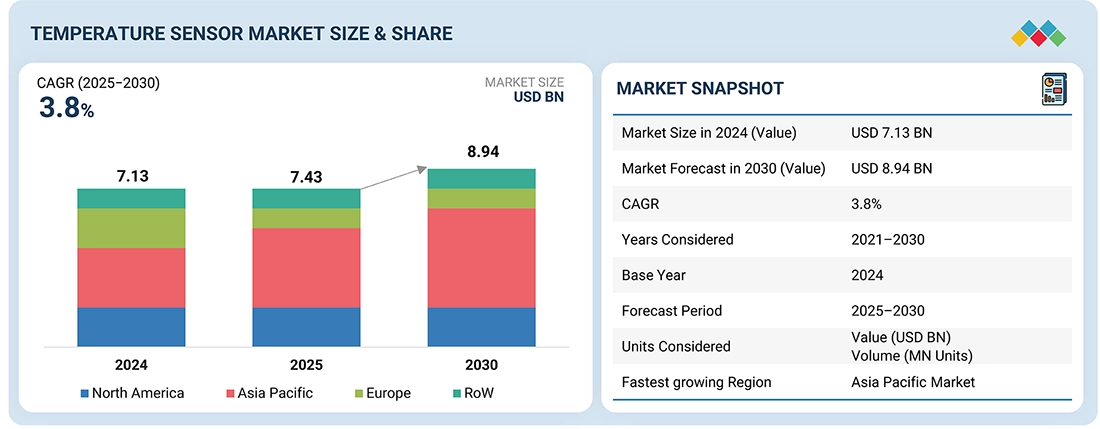
The Temperature Sensor Market is gaining significant momentum from the transition toward Industry 4.0 manufacturing, where connected machines, industrial IoT, automation, artificial intelligence, and real-time analytics are transforming conventional production environments. Temperature sensors provide essential data for monitoring equipment health, controlling manufacturing processes, improving energy efficiency, and identifying abnormal operating conditions. According to MarketsandMarkets, the global Temperature Sensor Market was valued at USD 7.43 billion in 2025 and is projected to reach USD 8.94 billion by 2030, registering a CAGR of 3.8%. The company identifies increasing adoption of Industry 4.0 and automated manufacturing processes as a key market growth driver.
Increasing Adoption of Smart Manufacturing
The expansion of smart manufacturing is one of the primary factors supporting temperature sensor demand. Industry 4.0 factories rely on interconnected machines and sensors to collect real-time operational information. Temperature measurements can reveal changes in machinery performance, process conditions, and production environments, allowing automated systems to respond rapidly.
IoT-based smart factories use interconnected sensors and software to monitor and optimize production processes. Temperature sensors can therefore function as important data-generation points within cyber-physical manufacturing systems. Their integration enables manufacturers to move from periodic inspection toward continuous monitoring and automated process control.
Download PDF Brochure @ https://www.marketsandmarkets.com/pdfdownloadNew.asp?id=522
Growth of Industrial IoT
Industrial IoT is creating a broader installed base of connected temperature sensors across manufacturing facilities. Sensors installed on motors, pumps, compressors, furnaces, production equipment, hydraulic systems, and other assets can continuously transmit temperature information to controllers, gateways, edge devices, and cloud platforms.
The increasing adoption of IIoT is also contributing to the wider industrial sensor market. MarketsandMarkets identifies Industry 4.0 and IIoT adoption as major drivers of industrial sensor market growth, reinforcing the importance of connected sensing technologies in modern manufacturing.
As manufacturers connect more equipment to industrial networks, temperature sensors can provide valuable thermal data that supports operational visibility and automated decision-making.
Predictive Maintenance Applications
Predictive maintenance is becoming a major growth driver because temperature changes can provide early indications of machinery problems. Increasing temperatures in motors, bearings, pumps, compressors, transformers, and other equipment may indicate excessive friction, electrical faults, overloading, insufficient lubrication, or cooling-system problems.
IoT sensor networks combined with machine-learning algorithms can analyze temperature and other equipment parameters to predict failures before they occur. Research on Industry 4.0 predictive maintenance demonstrates the use of sensor and production data to predict equipment failures, reduce unplanned downtime, extend equipment life, and improve reliability.
This shift toward predictive maintenance is encouraging manufacturers to install temperature sensors at more monitoring points across production assets.
Demand for Real-Time Process Control
Industry 4.0 manufacturing requires precise control of production parameters. Temperature is particularly important in processes involving heating, cooling, chemical reactions, curing, molding, heat treatment, drying, refrigeration, and material processing.
Temperature sensors provide real-time measurements that can be transmitted to automated control systems. Controllers can compare actual temperatures with desired conditions and adjust heaters, cooling systems, valves, fans, or other equipment accordingly. This closed-loop approach can improve process consistency and reduce production variability.
High-accuracy sensing is especially valuable in industries such as chemicals, pharmaceuticals, food and beverage, metals, semiconductor manufacturing, and advanced materials, where temperature variations can affect product quality.
Inquiry Before Buying @ https://www.marketsandmarkets.com/Enquiry_Before_BuyingNew.asp?id=522
Energy Efficiency and Sustainability
Energy efficiency is becoming increasingly important as manufacturers seek to reduce operating costs and meet sustainability objectives. Temperature sensors can help identify thermal inefficiencies and optimize energy-intensive equipment such as industrial ovens, furnaces, boilers, chillers, compressors, and HVAC systems.
Real-time temperature data can help control systems deliver heating or cooling only when required. This can reduce unnecessary energy consumption while maintaining process conditions. IoT-enabled factories can also combine temperature information with energy-consumption data to identify relationships between thermal conditions and power usage.
The growing emphasis on energy-efficient smart factories is therefore creating additional opportunities for connected temperature sensors.
Digital Output and Smart Sensor Integration
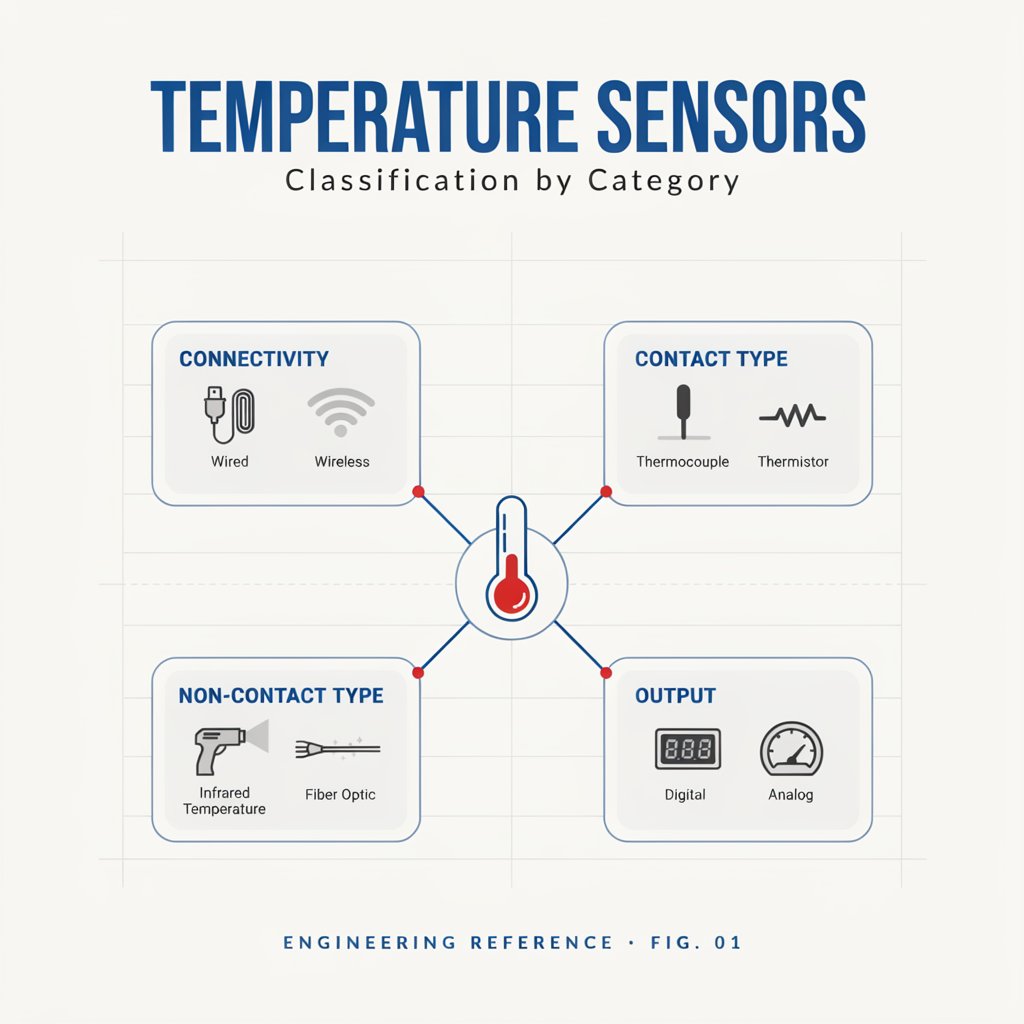
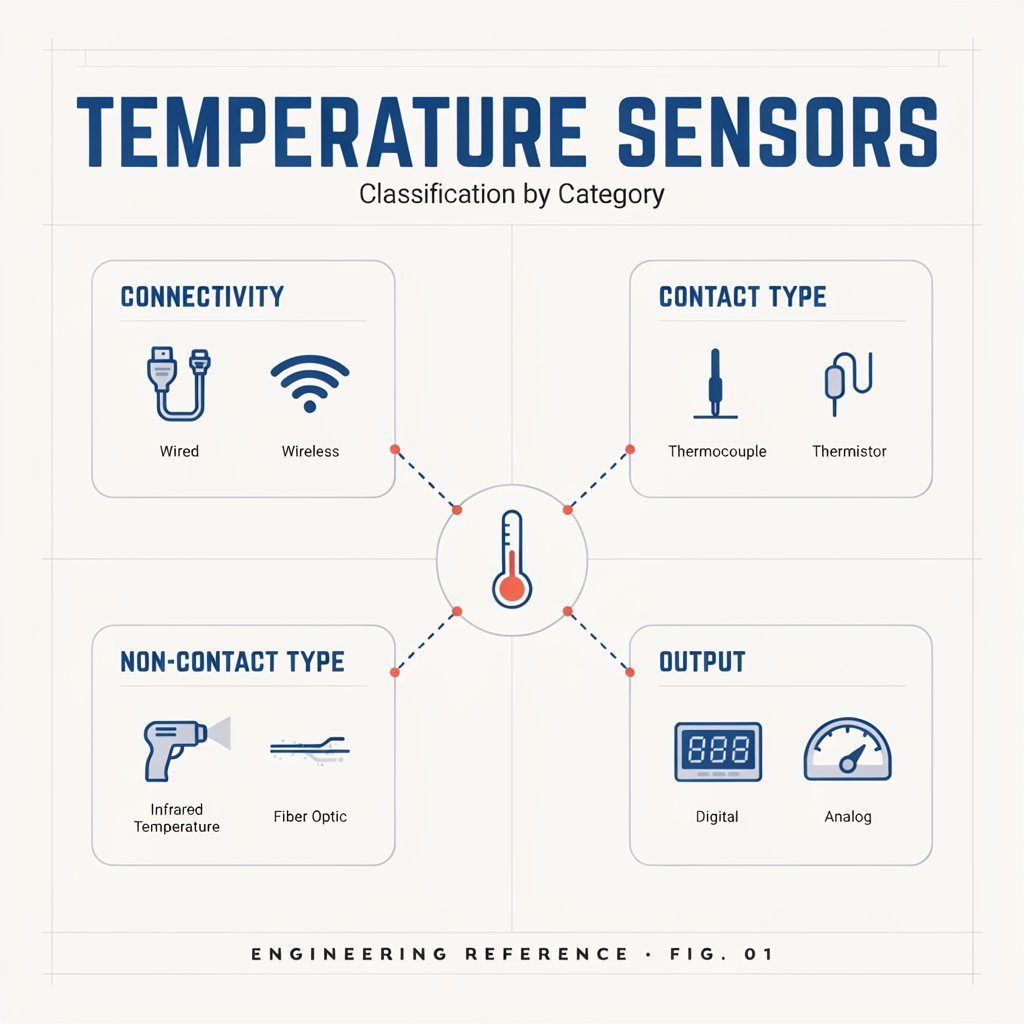
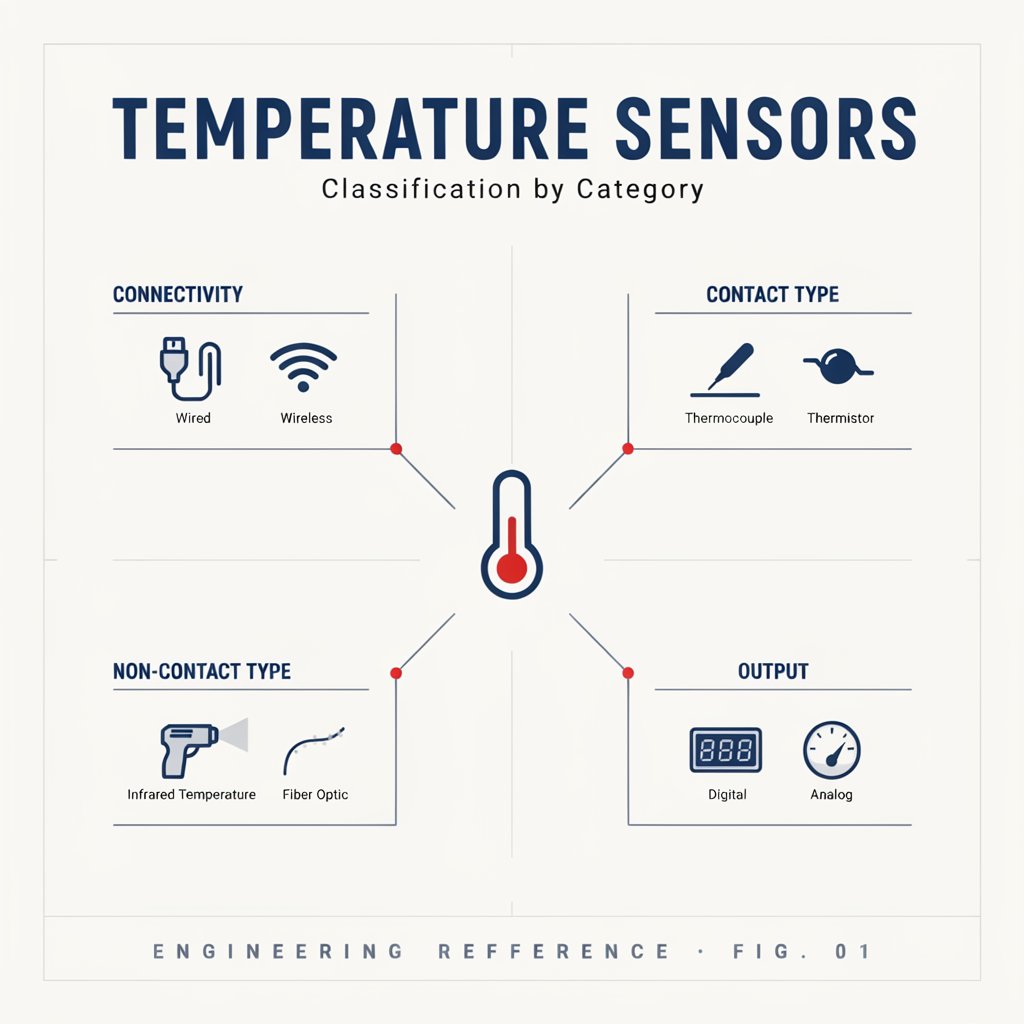
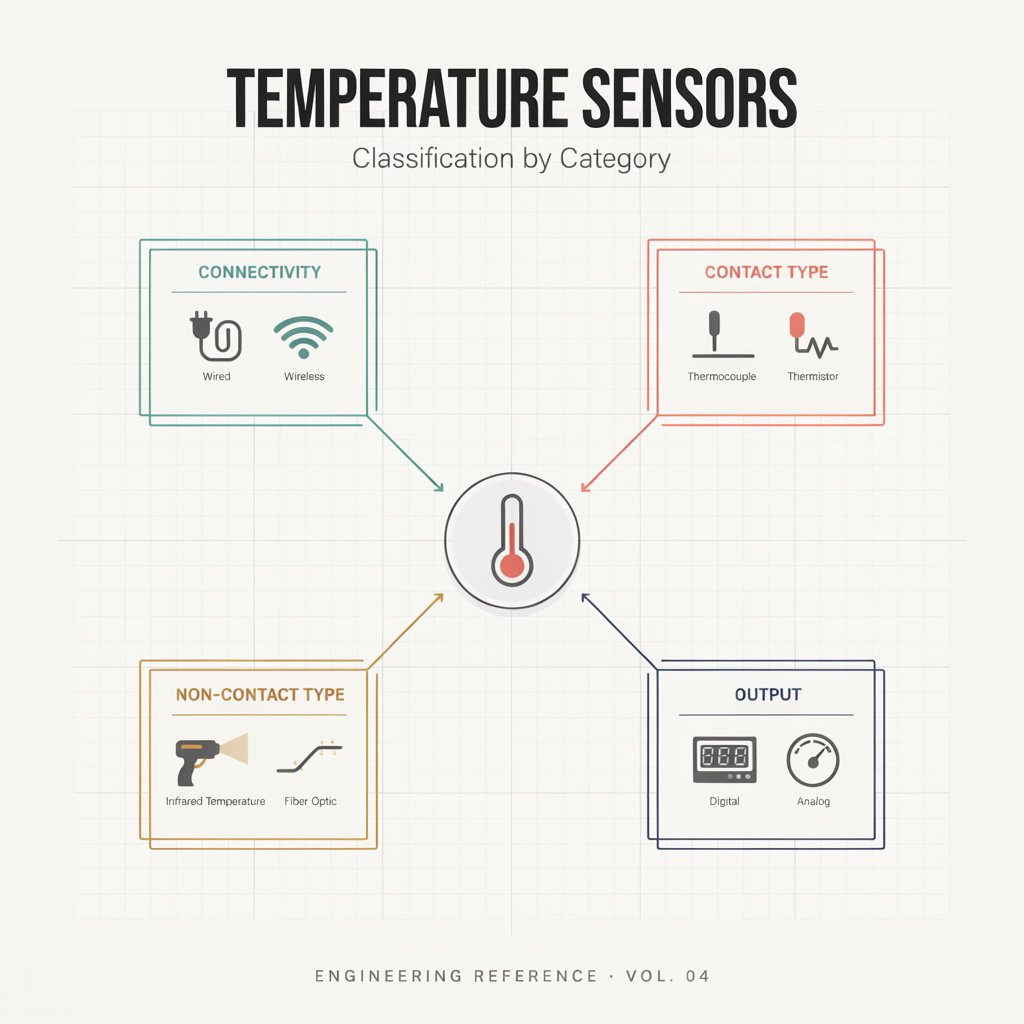
The transition toward digital manufacturing is increasing demand for temperature sensors that can communicate directly with electronic control architectures. MarketsandMarkets reports that the digital output segment accounted for 66.7% of the Temperature Sensor Market by value in 2024. Digital interfaces can simplify integration with microcontrollers, industrial controllers, IoT gateways, and automation platforms.
Smart sensors can also combine sensing with signal processing, diagnostics, calibration, and communication capabilities. These features can reduce system complexity and provide more useful information for industrial analytics.
Wireless Connectivity Expansion
Wireless connectivity is expanding the deployment possibilities for temperature sensors in Industry 4.0 factories. MarketsandMarkets projects the wireless connectivity segment of the Temperature Sensor Market to grow at a CAGR of 6.5% during the forecast period. Wireless sensors can be installed on difficult-to-access equipment or in locations where extensive cabling would be expensive or impractical.
Wireless thermal monitoring is particularly valuable for large manufacturing facilities, warehouses, rotating machinery, and distributed production assets. Additional sensors can be deployed as monitoring requirements expand, supporting scalable industrial IoT architectures.
View detailed Table of Content here – https://www.marketsandmarkets.com/Market-Reports/temperature-sensor-market-522.html
Artificial Intelligence and Edge Computing
Artificial intelligence and edge computing are expected to strengthen the role of temperature sensors in smart factories. Edge devices can process temperature information close to machinery, enabling rapid identification of abnormal thermal conditions without depending entirely on cloud processing.
AI algorithms can analyze temperature trends alongside vibration, pressure, current, humidity, production speed, and other variables. This can help manufacturers identify complex relationships between thermal behavior and machine performance. AI-based analytics can also support anomaly detection, predictive maintenance, process optimization, and automated decision-making.
Growth of Advanced Manufacturing in Asia Pacific
Asia Pacific is an important growth region because of its manufacturing base, industrial automation investments, electronics production, and expanding adoption of Industry 4.0 technologies. MarketsandMarkets projects the Asia Pacific Temperature Sensor Market to grow from USD 3.58 billion in 2025 to USD 4.51 billion by 2030 at a CAGR of 4.7%. The region’s industrialization and automation efforts across China, Japan, South Korea, and India are supporting demand for precise thermal monitoring.
India is also becoming an important market opportunity. Its Temperature Sensor Market was valued at USD 470.7 million in 2025 and is projected to reach USD 594.6 million by 2030 at a CAGR of 4.8%. MarketsandMarkets attributes this growth partly to industrial transformation, IoT adoption, manufacturing automation, and Industry 4.0 initiatives.
Future Outlook
The future growth of the Temperature Sensor Industry will remain closely connected to the development of Industry 4.0 manufacturing. Increasing machine connectivity, predictive maintenance, automated process control, energy optimization, AI-based analytics, edge computing, and wireless monitoring will expand the need for accurate and continuously available thermal data.
Temperature sensors are consequently becoming more than basic measurement components. They are evolving into critical data sources within intelligent manufacturing architectures. As factories pursue higher productivity, reduced downtime, improved quality, energy efficiency, and greater automation, advanced temperature sensors with digital connectivity, low-power operation, high accuracy, and intelligent diagnostics are expected to play an increasingly important role in the development of smart and resilient industrial environments.