
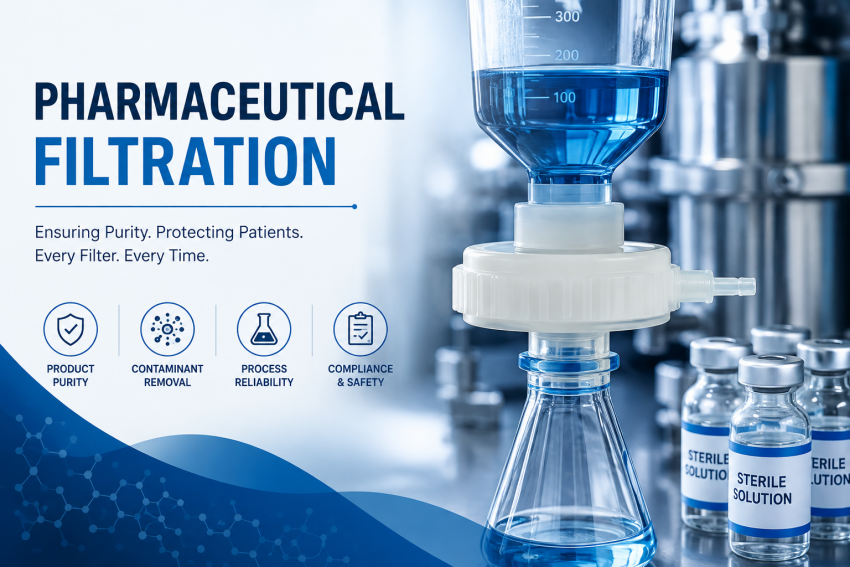
The global pharmaceutical filtration market is projected to grow from USD 14.35 billion in 2025 to USD 21.75 billion by 2030, registering a CAGR of 8.7% during the forecast period. Market growth is being fueled by the rapid expansion of biologics and biosimilars, increasing production of advanced therapeutics, and tightening regulatory requirements related to sterility, contamination control, and viral safety. As pharmaceutical manufacturers continue to modernize production processes, filtration technologies have become a critical component in ensuring product quality, process efficiency, and regulatory compliance.
Pharmaceutical filtration plays a vital role across the drug manufacturing lifecycle, from upstream bioprocessing and media preparation to downstream purification, sterile filtration, and final product filling. The increasing complexity of biologic drugs, including monoclonal antibodies (mAbs), vaccines, and cell and gene therapies, has significantly increased the demand for high-performance filtration systems capable of delivering consistent product purity and minimizing contamination risks.
Download PDF Brochure: –https://www.marketsandmarkets.com/pdfdownloadNew.asp?id=209343847
One of the primary factors driving the pharmaceutical filtration market is the growing commercialization of biologics and biosimilars. Unlike conventional small-molecule drugs, biologics require highly controlled manufacturing environments and sophisticated purification processes. Advanced membrane filters, depth filtration systems, and single-use technologies enable manufacturers to maintain sterility while improving production efficiency and reducing operational risks. As pharmaceutical companies continue expanding biologics pipelines, demand for scalable and reliable filtration solutions is expected to increase steadily.
Stringent global regulatory standards are another major contributor to market growth. Regulatory authorities continue to strengthen expectations regarding sterile manufacturing practices, viral safety, and quality assurance throughout pharmaceutical production. Manufacturers are therefore investing in advanced filtration technologies that support compliance with Good Manufacturing Practices (GMP), minimize contamination risks, and improve product consistency. These investments not only enhance patient safety but also reduce manufacturing downtime and support faster regulatory approvals.
Technological innovation is reshaping the pharmaceutical filtration landscape. Modern filtration systems now incorporate advanced membrane materials, automated process controls, and integrated single-use assemblies that simplify production workflows while increasing process flexibility. Single-use filtration technologies have gained significant popularity due to their ability to reduce cleaning requirements, eliminate cross-contamination, and accelerate changeover between production batches. These solutions are particularly valuable in facilities manufacturing multiple biologics or personalized therapies.
The pharmaceutical filtration market is characterized by a relatively consolidated competitive landscape, with several global companies holding a significant share of industry revenue. Leading manufacturers continue investing in research and development, production capacity expansion, and strategic acquisitions to strengthen their market positions and address the evolving needs of pharmaceutical and biotechnology companies.
Merck KGaA has established itself as one of the leading providers of pharmaceutical filtration technologies through its broad portfolio of membrane filters, sterile filtration systems, and single-use bioprocessing solutions. The company’s filtration technologies are widely used in biologics, vaccine production, and advanced therapeutic manufacturing, helping pharmaceutical companies improve process efficiency while maintaining stringent sterility standards. Continued investments in manufacturing facilities and production capacity further support the company’s ability to meet rising global demand for high-performance filtration solutions.
Danaher Corporation has strengthened its position in the pharmaceutical filtration market through its Cytiva and Pall businesses, which offer comprehensive filtration solutions for biopharmaceutical manufacturing. Its portfolio includes advanced membrane filters, depth filtration technologies, and integrated single-use platforms designed to improve scalability, contamination control, and manufacturing reliability. Ongoing investments in production infrastructure and filtration capacity demonstrate the company’s commitment to supporting the expanding biologics manufacturing industry.
Sartorius AG remains another major participant in the market, providing an extensive range of filtration technologies that support pharmaceutical research, process development, and commercial manufacturing. The company’s expertise in membrane filtration, depth filters, and single-use bioprocessing systems enables manufacturers to optimize production processes while meeting increasingly stringent quality and regulatory requirements. Sartorius continues to focus on scalable solutions that address the growing demand for vaccines, monoclonal antibodies, cell therapies, and other advanced biologics.
Strategic partnerships, acquisitions, and manufacturing expansions continue to shape competitive dynamics across the industry. Companies are investing in advanced membrane technologies, automation, and integrated bioprocessing platforms to improve manufacturing efficiency while supporting the industry’s transition toward flexible, high-throughput production environments. Recent investments in filtration manufacturing capacity and portfolio expansion reflect the industry’s response to growing global demand for sterile pharmaceutical manufacturing solutions.
Despite the presence of established multinational companies, a substantial portion of the pharmaceutical filtration market remains served by regional manufacturers and specialized technology providers. These organizations focus on application-specific filtration products, customized solutions, and localized customer support for pharmaceutical companies with specialized manufacturing requirements. Their ability to deliver flexible and cost-effective technologies enables them to compete effectively in niche market segments.
Looking ahead, the pharmaceutical filtration market is expected to benefit from continued investment in biologics manufacturing, expanding cell and gene therapy production, and increasing adoption of single-use processing technologies. The integration of automation, digital monitoring, and advanced process analytics is also expected to improve filtration performance while supporting greater manufacturing efficiency and regulatory compliance.
Overall, the pharmaceutical filtration market is positioned for sustained long-term growth as pharmaceutical manufacturers prioritize product quality, operational efficiency, and contamination control. Companies that continue investing in innovative filtration technologies, scalable manufacturing solutions, and integrated bioprocessing platforms will be well positioned to capitalize on the expanding demand for advanced pharmaceutical manufacturing across global healthcare markets.
Request Sample Pages: –https://www.marketsandmarkets.com/requestsampleNew.asp?id=209343847