
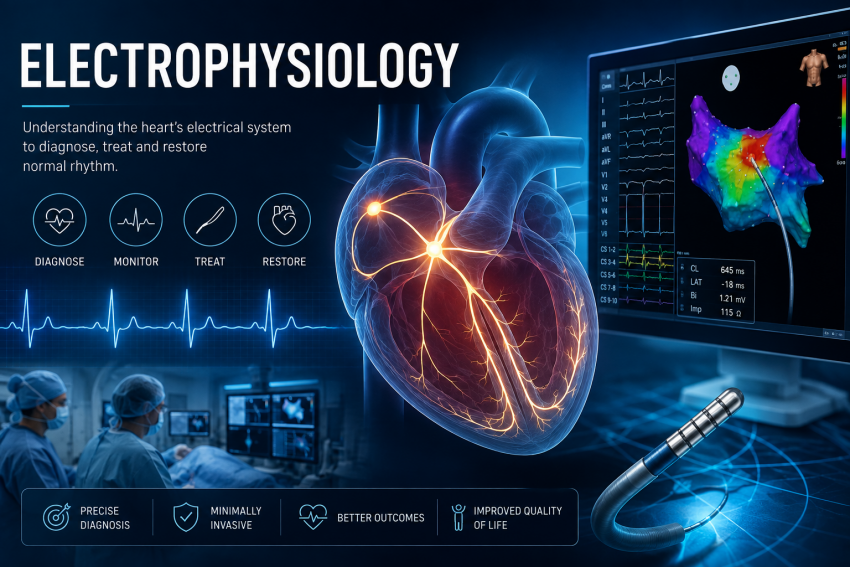
The global electrophysiology market is projected to grow significantly, reaching USD 21.72 billion by 2030 from USD 12.55 billion in 2025, registering a CAGR of 11.6% during the forecast period. This robust growth reflects the increasing importance of electrophysiology in modern cardiovascular care, supported by continuous technological advancements, rising investments in cardiac healthcare, and expanding adoption of minimally invasive procedures.
Electrophysiology has become an indispensable branch of cardiology for diagnosing and treating heart rhythm disorders, commonly known as arrhythmias. Diagnostic techniques such as electrocardiography (ECG) and advanced electrophysiological mapping have become standard clinical practices, enabling physicians to accurately identify abnormalities in the heart’s electrical system and develop personalized treatment strategies. As the prevalence of cardiovascular diseases continues to rise worldwide, healthcare providers are increasingly investing in advanced electrophysiology technologies to improve patient outcomes and procedural efficiency.
Download PDF Brochure :https://www.marketsandmarkets.com/pdfdownload.asp?id=200003281
Technological innovation remains one of the primary drivers of market expansion. Modern electrophysiology laboratories are equipped with sophisticated three-dimensional mapping systems, advanced imaging technologies, and high-performance catheters that enhance procedural precision while reducing treatment time. The integration of digital imaging, real-time navigation systems, and improved data management platforms has transformed electrophysiology procedures, allowing clinicians to perform complex interventions with greater confidence and accuracy. These innovations not only improve clinical outcomes but also contribute to shorter hospital stays and enhanced patient satisfaction.
Another significant factor fueling market growth is the increasing availability of investments, research funding, and government grants dedicated to cardiovascular care and medical technology development. Public and private organizations continue to support research initiatives focused on improving cardiac treatment options, accelerating the development of next-generation electrophysiology devices. Increased research and development spending has also encouraged manufacturers to introduce innovative products that address evolving clinical needs while improving workflow efficiency in electrophysiology laboratories.
The competitive landscape of the electrophysiology market is moderately consolidated, with several established medical technology companies maintaining strong positions through continuous product innovation and strategic investments. Competition has intensified in recent years as companies expand their research capabilities, strengthen their product portfolios, and invest in advanced technologies to meet the growing demand for cardiac electrophysiology solutions.
Among the leading participants, Abbott has established a strong presence in the electrophysiology segment through its comprehensive portfolio of advanced medical devices designed for cardiac rhythm management. The company develops sophisticated electrophysiology catheters, mapping systems, and related technologies that support the diagnosis and treatment of complex arrhythmias. Continuous investment in research and development enables Abbott to enhance procedural accuracy while introducing innovative solutions that improve clinical outcomes and operational efficiency for healthcare providers.
Koninklijke Philips N.V. is another prominent player contributing to advancements in the electrophysiology market through its broad medical technology portfolio. The company’s electrophysiology solutions combine advanced imaging, patient monitoring, and mapping technologies to support physicians during complex cardiac procedures. Philips offers integrated platforms such as the EP WorkMate system, which streamlines electrophysiology recording, reporting, and procedural data management. Additionally, its advanced X-ray imaging systems and three-dimensional mapping technologies, including the EP Navigator and EP-XT Mapping System, provide clinicians with enhanced visualization and navigation capabilities that contribute to improved procedural precision and patient care.
Beyond individual product innovation, the industry is increasingly moving toward integrated healthcare ecosystems that combine imaging, mapping, navigation, and digital data management into unified clinical workflows. This integrated approach enables hospitals and cardiac centers to optimize resource utilization, improve collaboration among healthcare professionals, and deliver more efficient patient care. The adoption of artificial intelligence, advanced analytics, and automation is expected to further enhance electrophysiology procedures by supporting clinical decision-making, improving workflow efficiency, and reducing procedural variability.
Looking ahead, the electrophysiology market is expected to benefit from continued advancements in digital healthcare, increasing awareness of cardiac arrhythmias, and expanding access to specialized cardiovascular services. Emerging economies are also creating significant growth opportunities as healthcare infrastructure improves and investments in advanced cardiac care continue to increase. Rising demand for minimally invasive procedures, combined with ongoing innovation in medical devices and imaging technologies, will continue to shape the future of the market.
Overall, the electrophysiology market is entering a period of sustained expansion driven by technological progress, increasing healthcare investments, and growing demand for precise cardiac diagnosis and treatment. As healthcare providers continue to adopt advanced electrophysiology solutions, manufacturers that prioritize innovation, clinical effectiveness, and integrated technologies will remain well-positioned to capitalize on the evolving needs of modern cardiovascular care.
Download Sample Report :https://www.marketsandmarkets.com/requestsample.asp?id=200003281