
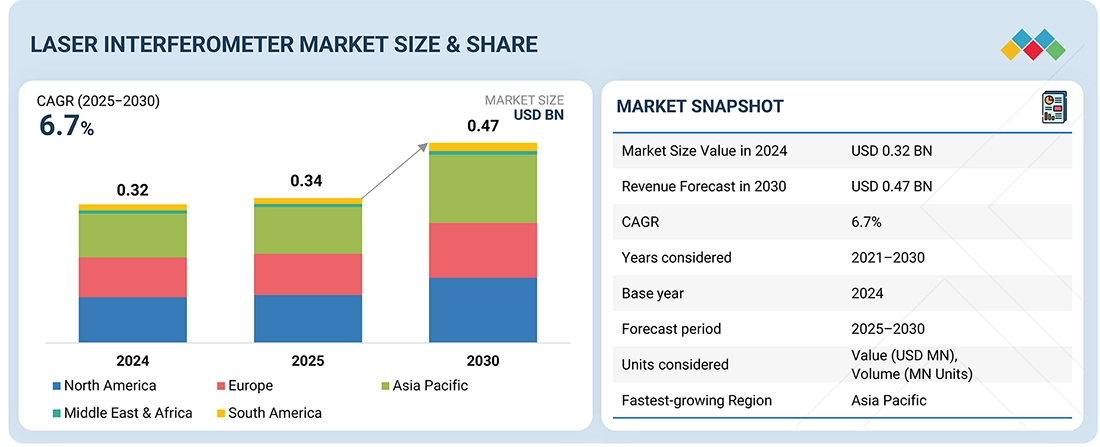
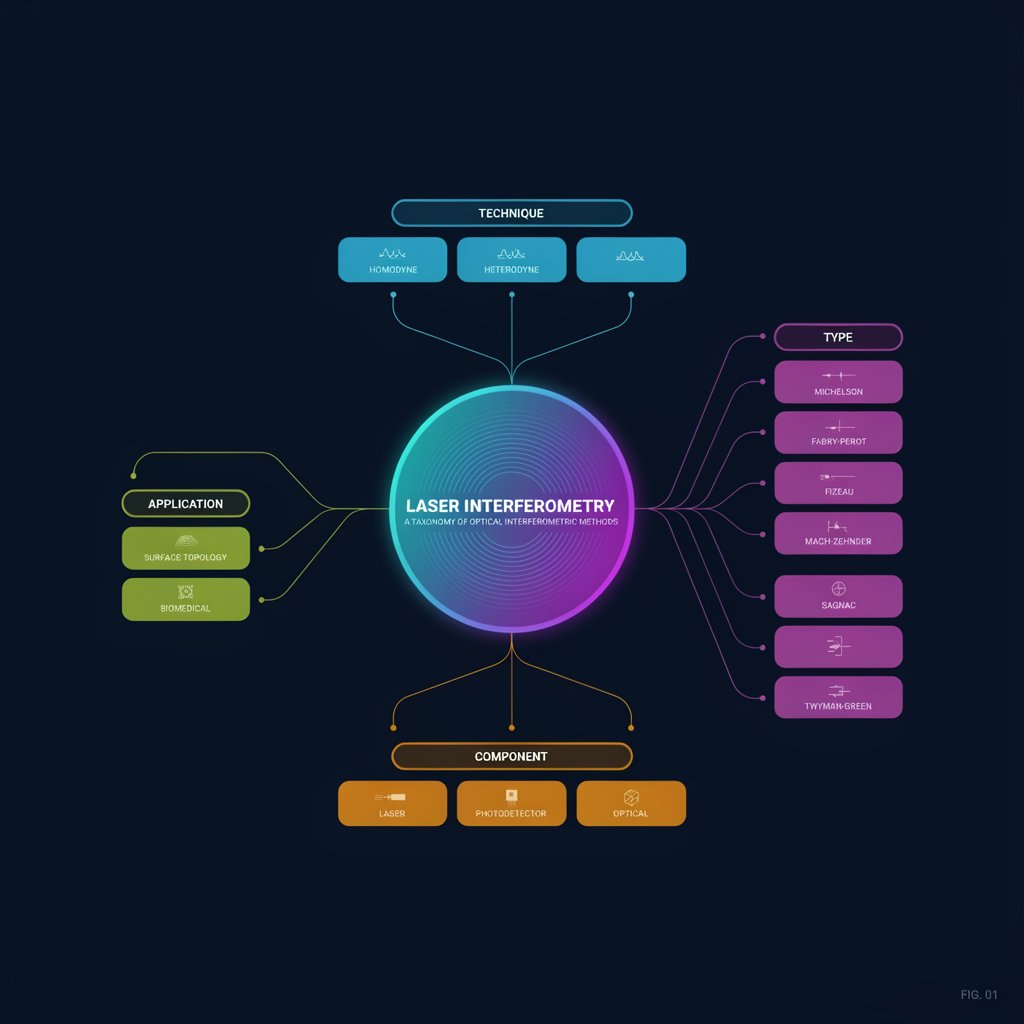
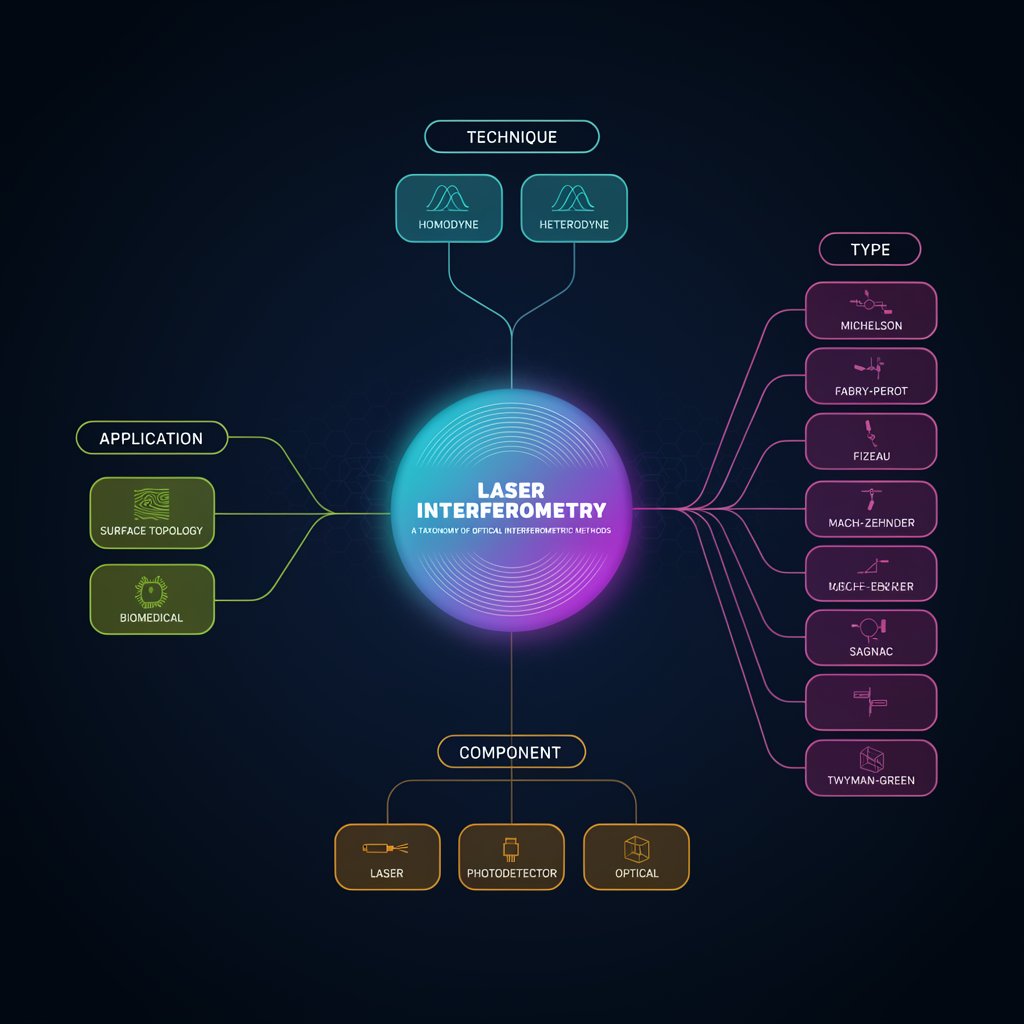
The Laser Interferometer Market is evolving as precision manufacturing, semiconductor fabrication, aerospace engineering, optics, and scientific research increasingly require highly accurate displacement and dimensional measurement. Homodyne and heterodyne interferometry represent two important measurement approaches used to extract extremely small changes in optical path length and position. While both techniques rely on laser interference, their signal-generation and detection methods differ, creating distinct advantages for different precision measurement applications.
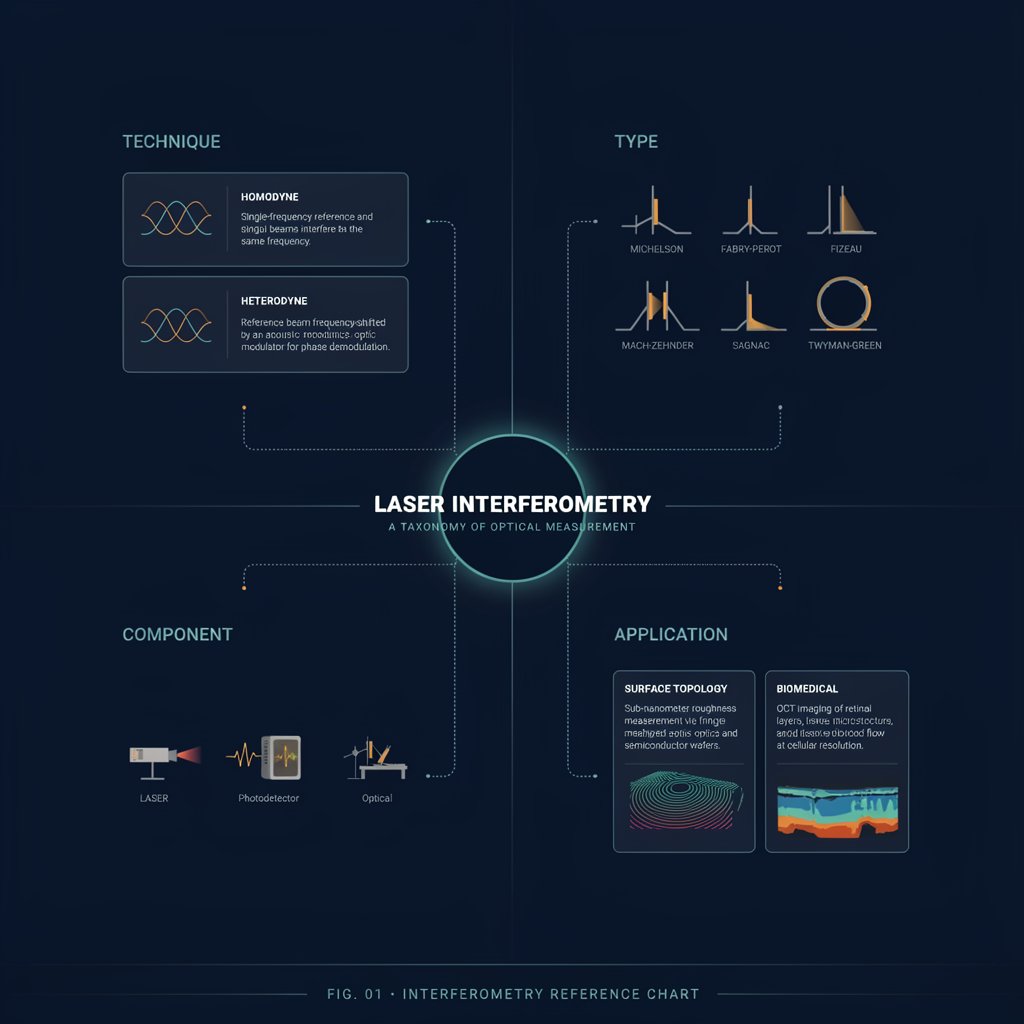
Homodyne interferometry uses a single optical frequency and measures changes in the phase or intensity of the interference signal. Variations in the optical path produce corresponding changes in the interference pattern, which can be analyzed to determine displacement. The relatively straightforward architecture of homodyne systems can make them attractive for applications where high precision is required without the additional complexity associated with dual-frequency optical sources.
Heterodyne interferometry uses two optical frequencies to generate a beat signal. The frequency difference between the beams creates an electrical signal whose phase changes as the measured object moves. This configuration can provide highly precise directional and displacement information and can offer improved resistance to certain intensity and polarization-related measurement errors. These characteristics make heterodyne systems particularly valuable for demanding industrial and research applications.
Download PDF Brochure @ https://www.marketsandmarkets.com/pdfdownloadNew.asp?id=83973072
The increasing requirement for nanometer-level positioning is supporting demand for both techniques. Semiconductor manufacturing equipment, precision machine tools, coordinate measurement systems, optical stages, and automated inspection platforms require extremely accurate positioning feedback. Laser interferometers can detect minute movements that may not be captured effectively by conventional sensors, helping manufacturers calibrate equipment and maintain tight production tolerances.
Semiconductor manufacturing is a major application area for advanced interferometric measurement. Lithography systems and wafer-processing equipment require highly accurate movement of stages and components. Homodyne interferometers can provide effective phase-based displacement measurement for suitable applications, while heterodyne systems can offer enhanced directional resolution and measurement stability for demanding positioning requirements. As semiconductor processes become increasingly sophisticated, demand for high-performance interferometric metrology is expected to expand.
Precision machine calibration is another important market opportunity. CNC machines, linear stages, robotic systems, and automated manufacturing platforms must maintain accurate movement over multiple axes. Interferometers can evaluate positioning accuracy, repeatability, straightness, and other machine-performance characteristics. Homodyne systems can provide cost-effective solutions for selected calibration applications, while heterodyne systems are often preferred where advanced resolution, direction sensing, and measurement stability are critical.
The development of Industry 4.0 is further influencing adoption. Smart factories increasingly integrate connected machines, industrial IoT platforms, automated quality-control systems, and digital manufacturing software. Interferometric measurement data can be incorporated into these systems to support continuous equipment monitoring and automated calibration. Digital connectivity can increase the value of both homodyne and heterodyne systems by transforming them from standalone measurement instruments into connected components of precision manufacturing ecosystems.
Inquiry Before Buying @ https://www.marketsandmarkets.com/Enquiry_Before_BuyingNew.asp?id=83973072
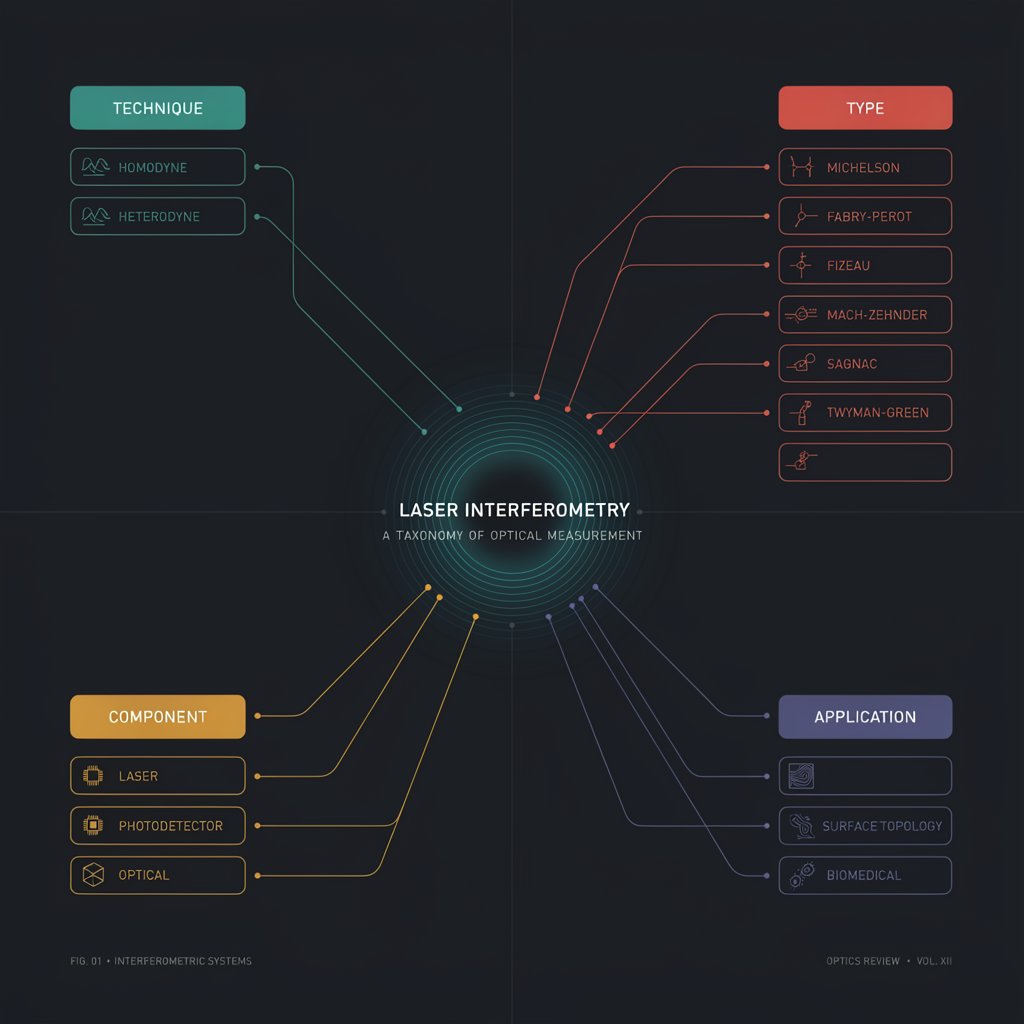
Advances in laser technology are improving the capabilities of both techniques. More stable laser wavelengths, improved frequency control, better beam quality, and compact semiconductor laser architectures are supporting higher measurement accuracy. Heterodyne systems particularly benefit from improvements in frequency stabilization and dual-frequency laser generation, while homodyne systems can benefit from simpler and more compact optical architectures.
Photodetector innovation is also influencing market development. High-sensitivity, low-noise, and high-bandwidth photodetectors can improve the detection of interference signals. In homodyne systems, precise detection of intensity or phase variations is essential for accurate displacement measurement. In heterodyne systems, high-speed detection of beat-frequency signals supports precise phase extraction and real-time measurement.
Digital signal processing is increasingly important for both measurement approaches. Advanced processors can analyze interference signals at high speed and apply phase-unwrapping, noise reduction, calibration, and compensation algorithms. Heterodyne systems can particularly benefit from sophisticated digital processing because the beat signal provides a frequency-based measurement channel. Homodyne systems can also use advanced signal processing to improve phase detection and reduce measurement uncertainty.
Environmental compensation is another important factor. Temperature, air pressure, humidity, vibration, and refractive-index changes can influence interferometric measurements. Modern systems increasingly integrate environmental sensors and compensation algorithms to improve accuracy under industrial conditions. These capabilities are important as interferometers move beyond controlled laboratories into production floors and automated manufacturing environments.
View detailed Table of Content here – https://www.marketsandmarkets.com/Market-Reports/laser-interferometer-market-83973072.html
Aerospace and defense applications provide additional opportunities. Precision alignment of optical systems, calibration of advanced machinery, testing of spacecraft components, and vibration analysis can require highly sensitive displacement measurement. Heterodyne interferometry can be particularly valuable where directional movement and high-resolution phase measurement are required, while homodyne architectures may be suitable for applications emphasizing simpler system configurations.
Optics and photonics manufacturing is another important application. Lenses, mirrors, optical assemblies, and photonic components require accurate surface and wavefront measurement. Both homodyne and heterodyne techniques can support optical characterization, depending on the required resolution, system architecture, and measurement environment. Growth in laser systems, optical communications, imaging, and advanced sensors is expected to create additional demand.
Despite their advantages, both approaches face challenges. Homodyne systems can be more susceptible to certain intensity and fringe-counting ambiguities, while heterodyne systems can involve greater optical and electronic complexity and higher system costs. The choice between the two depends on accuracy requirements, measurement range, environmental conditions, integration needs, and application-specific cost considerations.
Looking ahead, the Laser Interferometer Market is expected to benefit from continued innovation in both homodyne and heterodyne measurement techniques. Advances in stabilized lasers, photodetectors, optical components, digital processing, environmental compensation, and automated calibration will improve system performance. As precision manufacturing and advanced metrology increasingly demand nanometer-level measurement, homodyne and heterodyne interferometers will continue to serve complementary roles, supporting accurate, reliable, and increasingly intelligent optical measurement systems.