
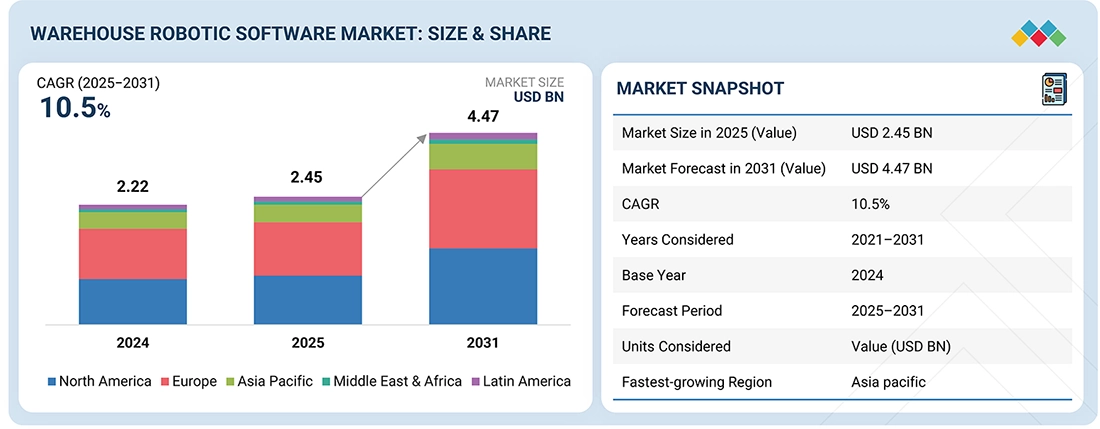
The Warehouse Robotics Software Market is expanding as organizations across diverse industries adopt intelligent automation to improve material handling, inventory accuracy, order fulfillment, and warehouse productivity. Robotics software serves as the coordination and intelligence layer for autonomous mobile robots (AMRs), automated guided vehicles (AGVs), robotic picking systems, automated storage and retrieval systems, and other warehouse automation technologies. Its applications extend well beyond conventional distribution centers, with e-commerce, third-party logistics, manufacturing, healthcare, and cold chain operations increasingly using software-driven robotics to address complex operational requirements.
E-commerce represents one of the largest and fastest-growing application areas for warehouse robotics software. Online retailers manage high volumes of individual orders and must meet increasingly demanding delivery timelines. Robotics software enables automated systems to coordinate picking, inventory transportation, replenishment, sorting, and order staging. AMRs can transport shelves, totes, or packages between warehouse zones, while robotic picking systems use artificial intelligence and computer vision to identify and retrieve products. Software continuously assigns tasks according to order priority, inventory availability, robot location, and warehouse traffic, improving fulfillment speed and accuracy.
The growth of omnichannel retail is further increasing the importance of warehouse robotics software in e-commerce. Distribution centers must simultaneously support online orders, store replenishment, click-and-collect services, returns, and expedited shipments. Intelligent software helps balance these competing requirements by dynamically allocating automation resources. During seasonal peaks and promotional events, robotics platforms can adjust workflows to accommodate higher demand, helping retailers maintain service levels without significantly expanding fixed infrastructure.
Download PDF Brochure @ https://www.marketsandmarkets.com/pdfdownloadNew.asp?id=86640666
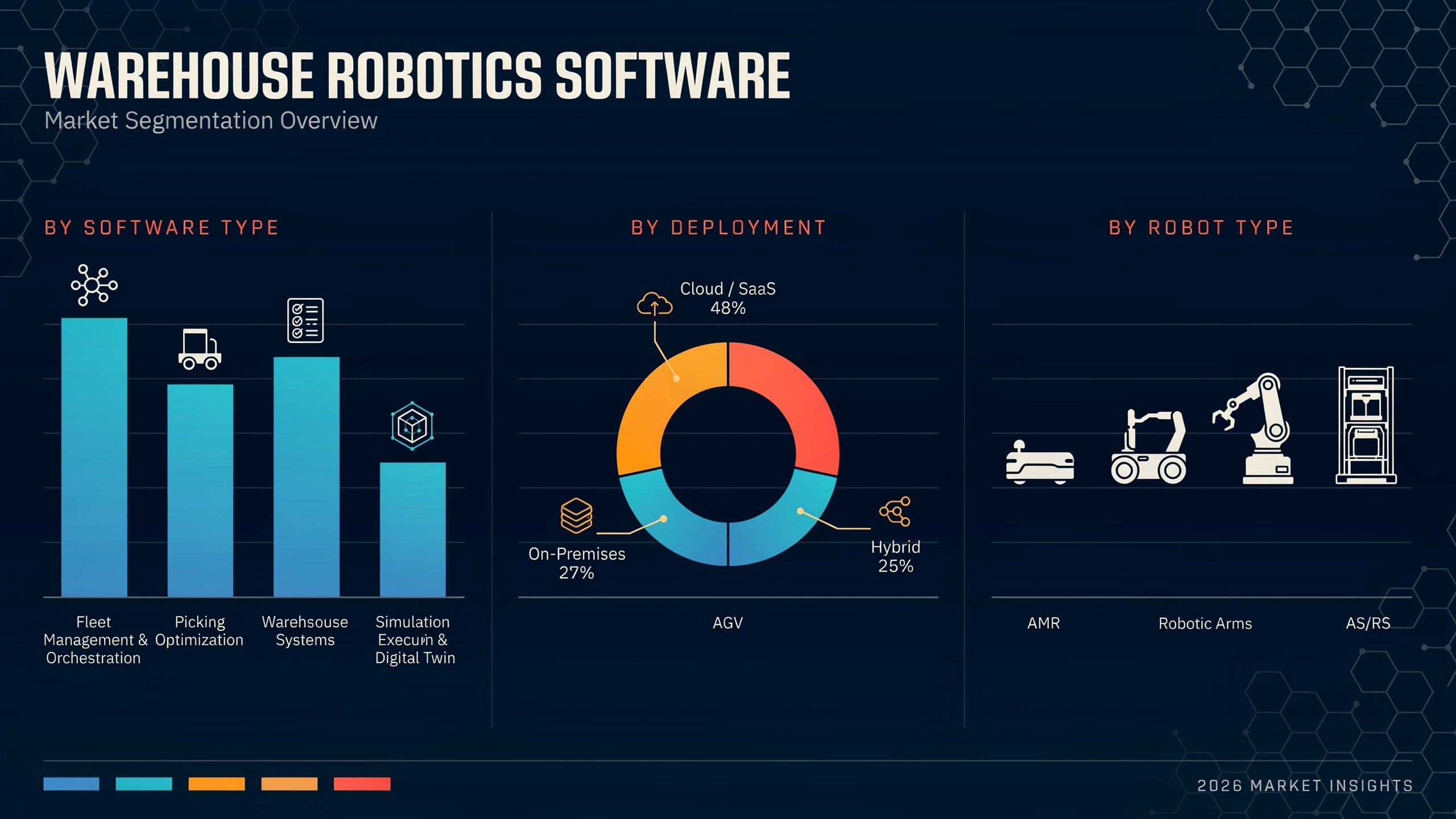
Third-party logistics providers are another major application segment. 3PL companies manage inventory and fulfillment activities for multiple customers, each with different product characteristics, order volumes, service-level agreements, and delivery requirements. Robotics software provides the flexibility required to coordinate automation across these diverse workflows. Fleet management and orchestration platforms allow 3PL operators to assign robots based on customer priorities, workload, location, and available capacity. This improves warehouse utilization while enabling providers to scale operations when new customers are added or seasonal demand increases.
The ability to manage heterogeneous robot fleets is particularly valuable for 3PL providers. A single facility may use AMRs, AGVs, robotic arms, conveyors, and automated storage systems from different vendors. Robotics orchestration software creates a common control layer that allows these technologies to operate together. Cloud-based platforms also enable 3PL organizations to monitor robotic operations across multiple facilities and compare performance data, helping them standardize processes while maintaining customer-specific workflows.
Manufacturing is increasingly adopting warehouse robotics software to automate internal logistics and material movement. Manufacturers require continuous transportation of raw materials, components, work-in-progress inventory, and finished goods between warehouses and production lines. Robotics software coordinates these activities with manufacturing schedules, ensuring that materials reach production areas when required. AMRs can automatically deliver components to assembly stations, while automated storage systems maintain inventory availability and reduce manual transportation requirements.
Integration between robotics software and manufacturing execution systems is creating more synchronized production environments. When production requirements change, the robotics platform can automatically adjust material delivery priorities. This reduces production delays caused by missing components and improves overall manufacturing efficiency. Robotics software also supports finished goods movement, allowing products to be transported from production lines to storage or shipping areas with minimal manual intervention.
Inquiry Before Buying @ https://www.marketsandmarkets.com/Enquiry_Before_BuyingNew.asp?id=86640666
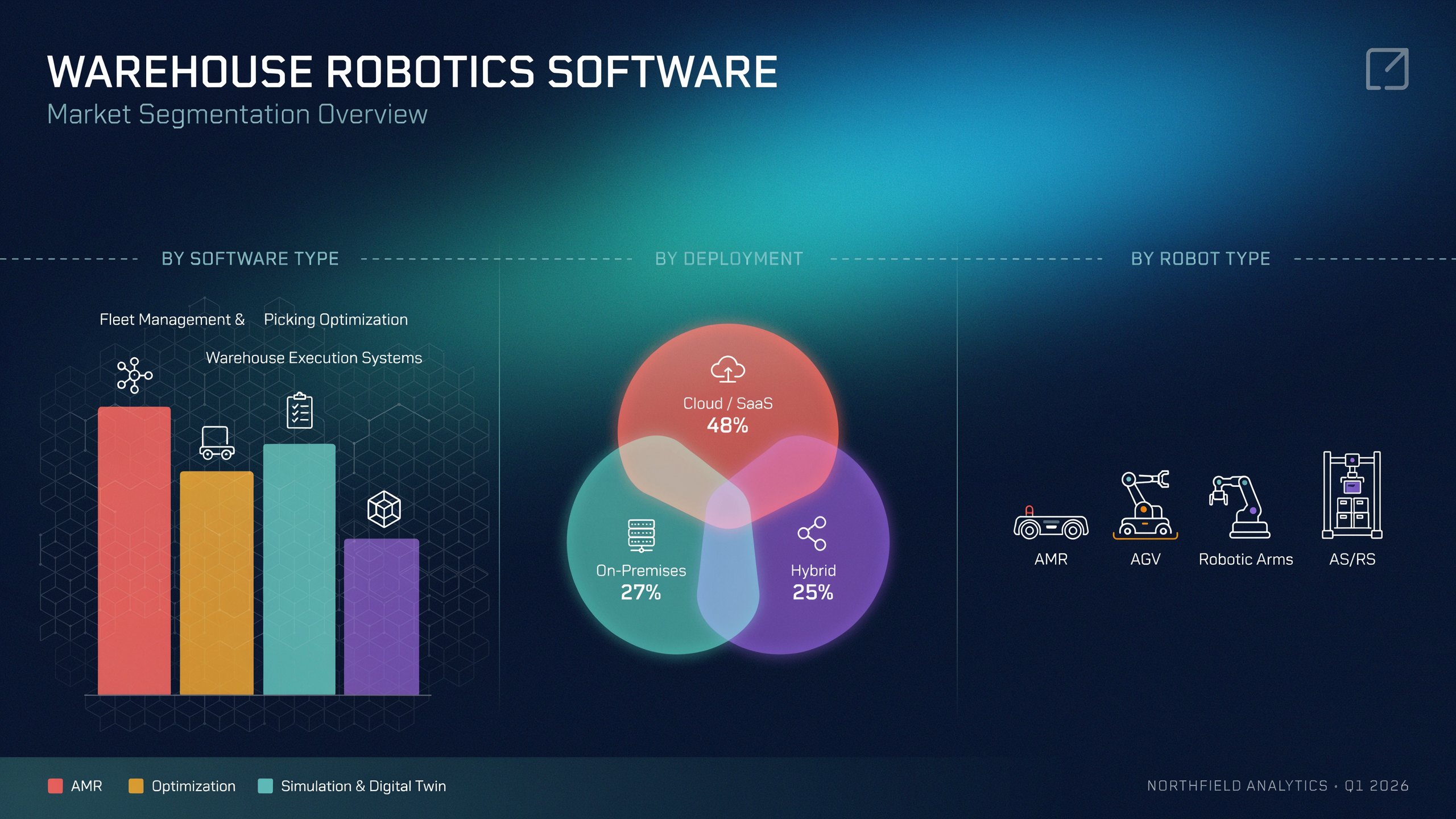
Healthcare and pharmaceutical warehousing represent another important application area because of the need for accuracy, traceability, security, and controlled handling. Hospitals, pharmaceutical distributors, and medical supply facilities increasingly use automated systems to manage medicines, medical devices, laboratory materials, and other sensitive products. Robotics software coordinates inventory movement while maintaining detailed records of product locations and transactions.
Automated robotic systems can support medication distribution, inventory replenishment, order preparation, and internal transportation within healthcare facilities. Software integration with inventory and enterprise systems improves traceability and reduces the risk of human errors. In pharmaceutical environments, robotics software can also help maintain compliance with strict handling procedures by recording automated workflows and monitoring storage conditions.
Cold chain logistics presents specialized opportunities for warehouse robotics software. Cold storage facilities manage temperature-sensitive products such as food, beverages, pharmaceuticals, vaccines, and biological materials. These environments can be challenging for human workers because of low temperatures, protective equipment requirements, and demanding working conditions. Robotics can automate material movement within refrigerated and frozen warehouses, reducing employee exposure while improving operational consistency.
Robotics software is particularly valuable in cold chain environments because it can coordinate automated storage, retrieval, pallet transportation, and inventory handling under controlled conditions. Autonomous systems can operate for extended periods in refrigerated facilities while software manages routes, task priorities, battery levels, and equipment status. Integration with temperature monitoring systems can provide additional visibility into cold chain operations and help organizations identify potential disruptions.
View detailed Table of Content here – https://www.marketsandmarkets.com/Market-Reports/warehouse-robotics-software-market-86640666.html
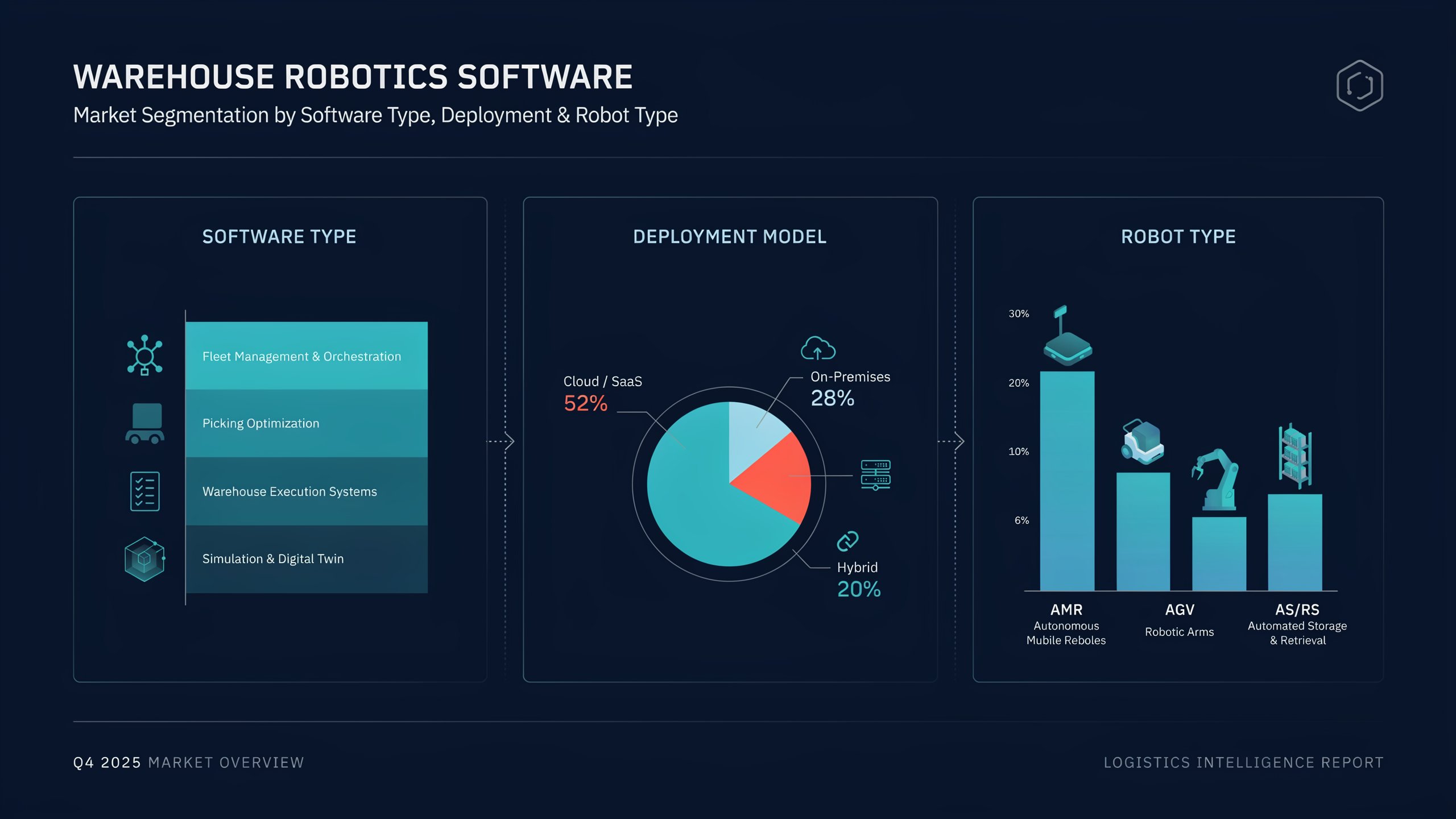
Artificial intelligence and computer vision are strengthening applications across all five industries. AI-powered software analyzes warehouse data to optimize task assignment, predict demand, identify congestion, and improve robotic navigation. Computer vision enables robots to recognize products, storage locations, packages, and potential obstacles. These technologies allow robotics systems to adapt to dynamic environments and support more complex warehouse operations.
Cloud and edge computing are also influencing adoption across industries. Cloud platforms enable centralized fleet management, analytics, remote monitoring, and software updates, while edge computing supports rapid local decisions for navigation and safety. The combination provides scalability and responsiveness for organizations operating large or distributed warehouse networks.
Looking ahead, the Warehouse Robotics Software Market will continue expanding across e-commerce, 3PL, manufacturing, healthcare, and cold chain applications. Each sector has different operational requirements, but all increasingly depend on intelligent software to coordinate automation, improve productivity, and increase visibility. Advances in artificial intelligence, autonomous navigation, digital twins, cloud computing, edge processing, and robotics orchestration will further broaden the role of software in warehouse operations. As businesses prioritize faster fulfillment, greater accuracy, workforce optimization, and supply chain resilience, warehouse robotics software will remain a critical technology for developing connected and increasingly autonomous logistics environments.