
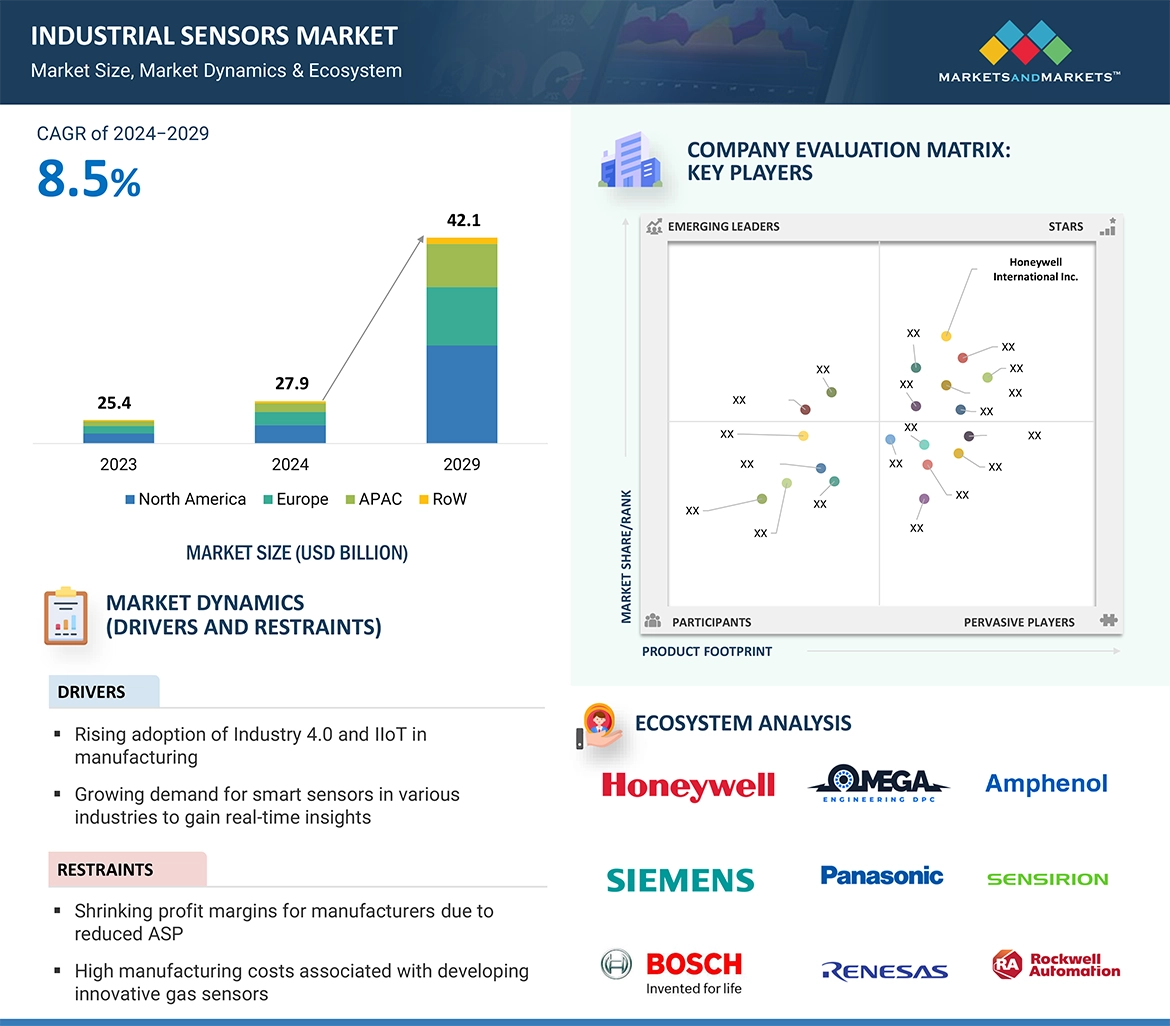
The Industrial Sensor Market continues to evolve as manufacturers increasingly adopt both contact and non-contact sensing technologies to support automation, digital manufacturing, and intelligent process control. Industrial facilities require accurate, reliable, and continuous monitoring of equipment, materials, and production processes to improve operational efficiency and maintain consistent product quality. Contact and non-contact sensors each offer distinct advantages depending on the application, operating environment, and performance requirements. As industries expand investments in Industry 4.0, Industrial Internet of Things (IIoT), robotics, and artificial intelligence, both sensing technologies are becoming essential components of modern manufacturing systems. Their complementary capabilities enable manufacturers to address a wide variety of industrial monitoring challenges across numerous sectors.
Contact sensing technologies operate by physically touching the object or material being measured. These sensors directly interact with equipment or products to detect pressure, force, displacement, position, temperature, or mechanical movement. Because of their direct contact with measured objects, contact sensors often provide highly accurate and stable measurements, making them suitable for applications requiring precision and repeatability. Industries such as automotive manufacturing, machine tools, metal processing, pharmaceuticals, and industrial machinery continue relying heavily on contact sensing technologies where direct measurement remains practical and reliable.
Temperature sensors represent one of the most common examples of contact sensing technologies. Thermocouples, resistance temperature detectors (RTDs), and thermistors are widely used in industrial environments where accurate thermal monitoring is essential. These sensors physically contact equipment, process fluids, or production materials to provide precise temperature measurements. Continuous monitoring enables automated control systems to maintain stable operating conditions while improving production quality and equipment safety.
Force and pressure sensors also demonstrate the value of contact sensing. Manufacturing processes including metal forming, assembly, packaging, material testing, and hydraulic system monitoring require direct measurement of mechanical loads and applied forces. Contact sensors accurately measure these parameters, enabling manufacturers to maintain production consistency while preventing excessive mechanical stress that could damage equipment or compromise product quality.
Download PDF Brochure @ https://www.marketsandmarkets.com/pdfdownloadNew.asp?id=108042398
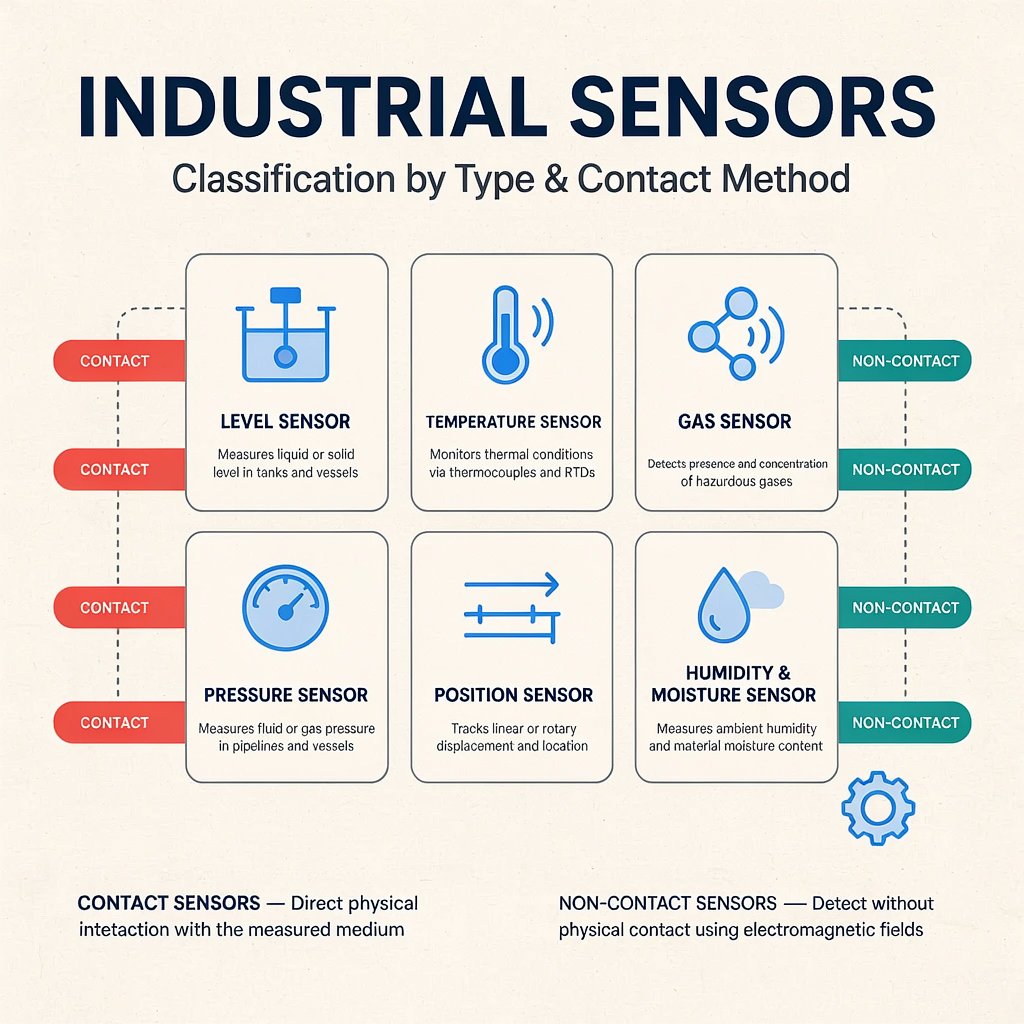
Despite their advantages, contact sensing technologies face certain limitations. Continuous physical contact may result in mechanical wear over time, reducing sensor lifespan under demanding operating conditions. In some high-speed production environments, direct contact may also interfere with manufacturing processes or increase maintenance requirements. For applications involving delicate materials, hazardous environments, or moving objects, manufacturers increasingly evaluate non-contact alternatives.
Non-contact sensing technologies are becoming one of the fastest-growing segments within the Industrial Sensor Market. These sensors perform measurements without physically touching the object being monitored. Instead, they utilize optical, ultrasonic, infrared, laser, magnetic, capacitive, inductive, or radar-based technologies to detect position, movement, distance, temperature, speed, and object characteristics. Non-contact sensors eliminate mechanical wear while enabling measurements in environments where direct contact would be impractical or impossible.
Machine vision systems have become among the most important non-contact sensing technologies supporting modern industrial automation. High-resolution cameras, image sensors, and artificial intelligence algorithms continuously inspect products during manufacturing without interrupting production. Vision systems identify dimensional variations, surface defects, assembly errors, missing components, and product inconsistencies with exceptional speed and accuracy. These capabilities make non-contact optical sensing particularly valuable in electronics manufacturing, automotive production, semiconductor fabrication, pharmaceuticals, and food processing.
Laser-based sensing technologies are also gaining widespread adoption. Laser displacement sensors, laser distance sensors, and laser profiling systems provide highly accurate measurements of dimensions, surface geometry, alignment, and positioning without contacting products. Automotive manufacturers extensively use laser sensors during body assembly, robotic welding, dimensional inspection, and final quality verification. Their high precision supports consistent production quality while reducing measurement variability.
Inquiry Before Buying @ https://www.marketsandmarkets.com/Enquiry_Before_BuyingNew.asp?id=108042398
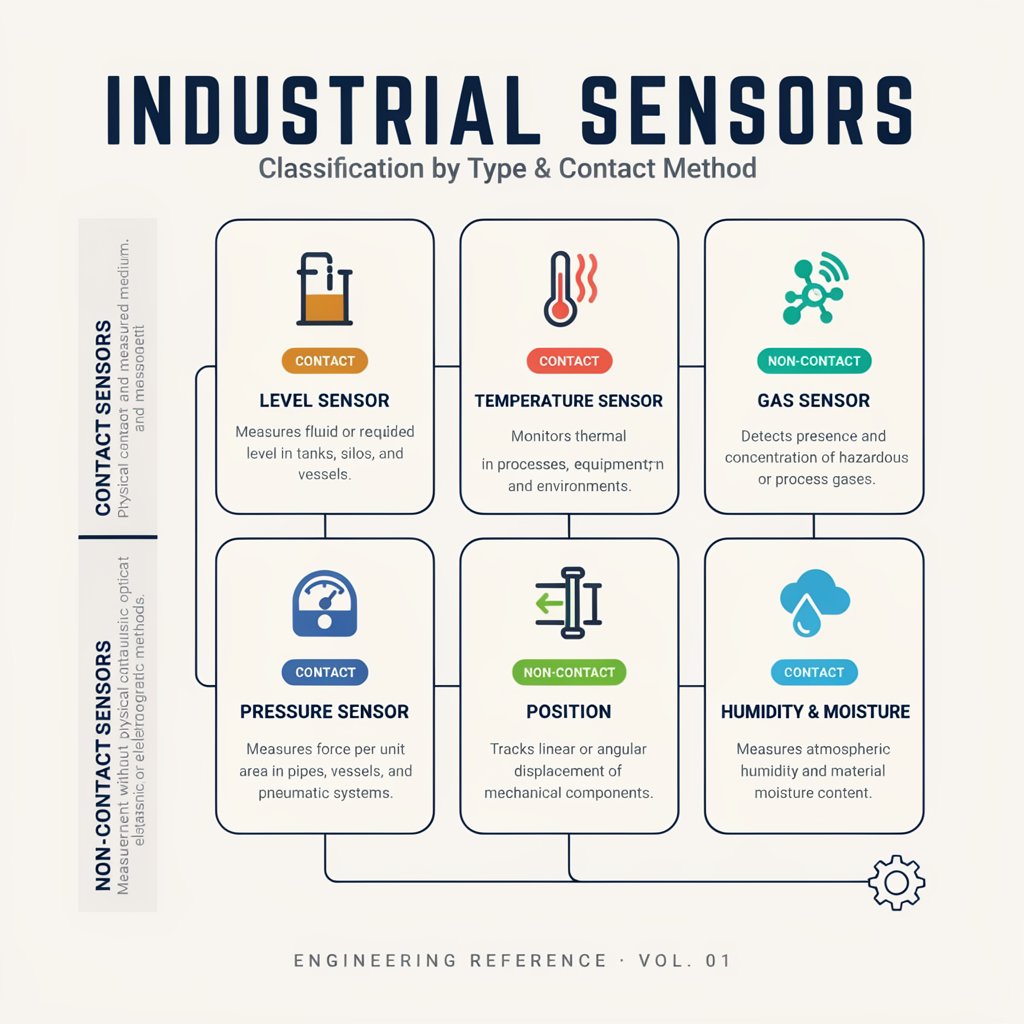
Infrared sensing represents another important non-contact technology, particularly for temperature measurement. Infrared sensors detect thermal radiation emitted by objects, allowing manufacturers to monitor temperature without physical contact. These sensors are particularly valuable for moving production lines, rotating equipment, high-temperature furnaces, electrical systems, and hazardous environments where conventional contact sensors would be unsuitable. Continuous infrared monitoring supports predictive maintenance, quality control, and energy management throughout industrial operations.
Ultrasonic sensors have become increasingly popular for distance measurement, level detection, object recognition, and fluid monitoring. They emit sound waves that reflect from target surfaces, allowing highly reliable measurement even in dusty, wet, or contaminated environments. Water treatment plants, food processing facilities, chemical manufacturing, and bulk material handling operations frequently utilize ultrasonic sensors because they operate effectively under challenging industrial conditions.
Inductive and capacitive proximity sensors further strengthen non-contact sensing applications. Inductive sensors detect metallic objects through electromagnetic fields, while capacitive sensors recognize both metallic and non-metallic materials by measuring changes in electrical capacitance. These technologies are widely used for object detection, conveyor automation, robotic positioning, packaging systems, and machine safety. Their durability and rapid response make them well suited for automated manufacturing environments.
Artificial intelligence is significantly expanding the capabilities of both contact and non-contact sensing technologies. AI algorithms analyze continuous streams of sensor data to identify patterns, detect abnormalities, optimize production parameters, and predict equipment failures. Whether the information originates from physical contact sensors or optical sensing platforms, artificial intelligence improves decision-making while supporting intelligent automation throughout manufacturing operations.
View detailed Table of Content here – https://www.marketsandmarkets.com/Market-Reports/industrial-sensor-market-108042398.html
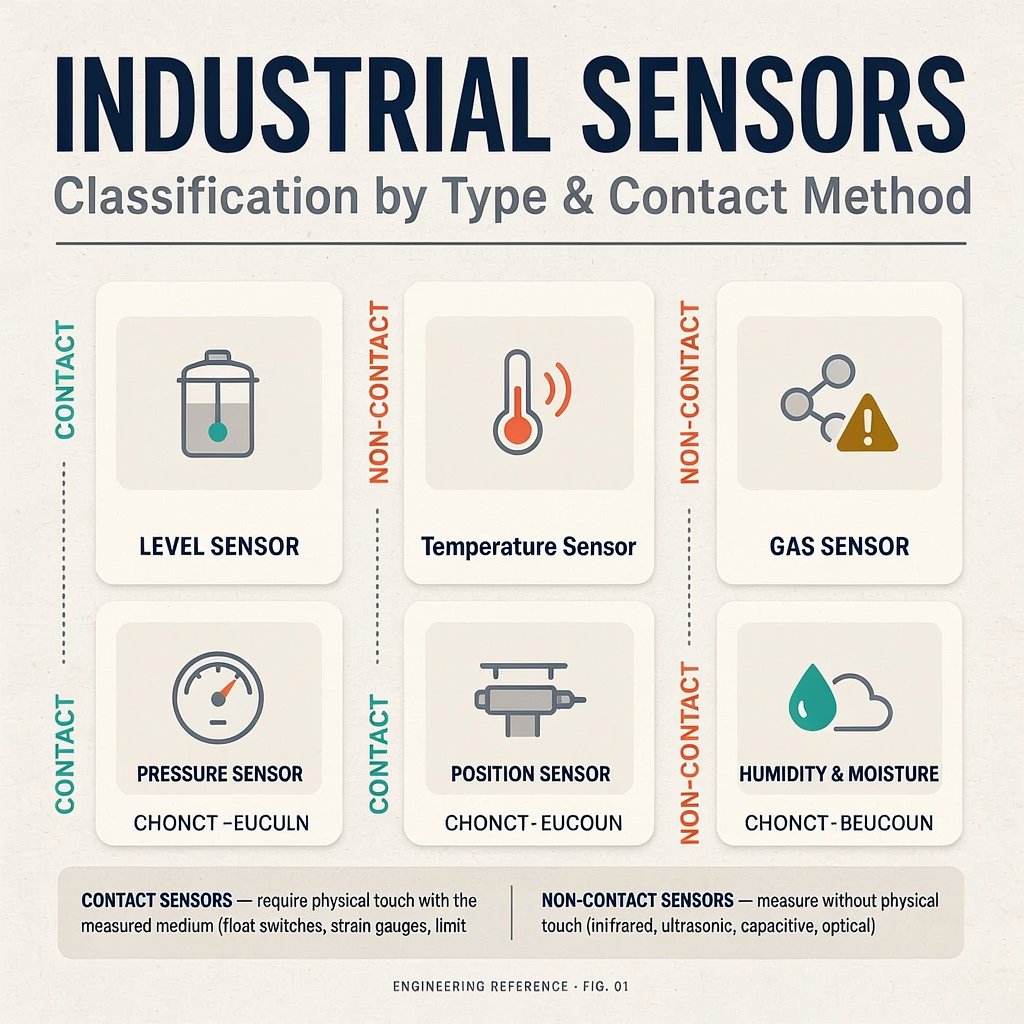
Industrial Internet of Things platforms further integrate both sensing technologies into unified digital ecosystems. Contact and non-contact sensors continuously transmit operational information to centralized monitoring platforms where manufacturers gain complete visibility across production facilities. Combining multiple sensing technologies provides more comprehensive process monitoring while improving equipment reliability, quality assurance, and predictive maintenance capabilities.
The automotive industry represents one of the largest adopters of combined sensing technologies. Contact sensors monitor torque application, hydraulic systems, engine testing, and mechanical assembly, while non-contact sensors perform robotic guidance, dimensional inspection, paint quality evaluation, and automated vision inspection. Together, these technologies enable highly automated vehicle manufacturing with exceptional precision and consistency.
Semiconductor manufacturing similarly depends on both sensor categories. Contact sensors maintain precise environmental control during fabrication, while non-contact optical systems inspect microscopic semiconductor structures with extremely high accuracy. Pharmaceutical production, electronics assembly, food processing, aerospace manufacturing, and industrial robotics also benefit from integrated sensing strategies that combine the strengths of both technologies.
Looking ahead, the Industrial Sensor Market will continue benefiting from advances in both contact and non-contact sensing technologies. Improvements in artificial intelligence, machine vision, laser measurement, smart sensors, wireless connectivity, edge computing, and IIoT integration will further expand industrial applications. Rather than competing directly, contact and non-contact sensing technologies will increasingly complement each other within intelligent manufacturing systems. As industries continue pursuing greater automation, production efficiency, operational safety, and product quality, manufacturers will adopt integrated sensor architectures that combine both technologies to create more connected, adaptive, and efficient industrial ecosystems.