
The global telecommunications industry is entering a transformative phase as governments, technology companies, and research organizations accelerate investments in sixth-generation (6G) wireless networks. While commercial 6G deployment remains several years away, the technologies underpinning future ultra-high-speed communications are already attracting significant investment. Among them, millimeter wave (mmWave) technology has emerged as one of the most strategically important innovations, enabling ultra-fast data transmission, ultra-low latency, and massive network capacity for next-generation digital infrastructure.
The growing commitment to 6G research across North America, Europe, and Asia-Pacific, combined with expanding AI data centers, autonomous mobility, industrial automation, and advanced defense communications, is creating unprecedented opportunities for the global millimeter wave technology market. As semiconductor manufacturers, telecom equipment providers, and governments intensify R&D efforts, the market is expected to witness sustained long-term growth.
Download PDF Brochure @ https://www.marketsandmarkets.com/pdfdownloadNew.asp?id=981
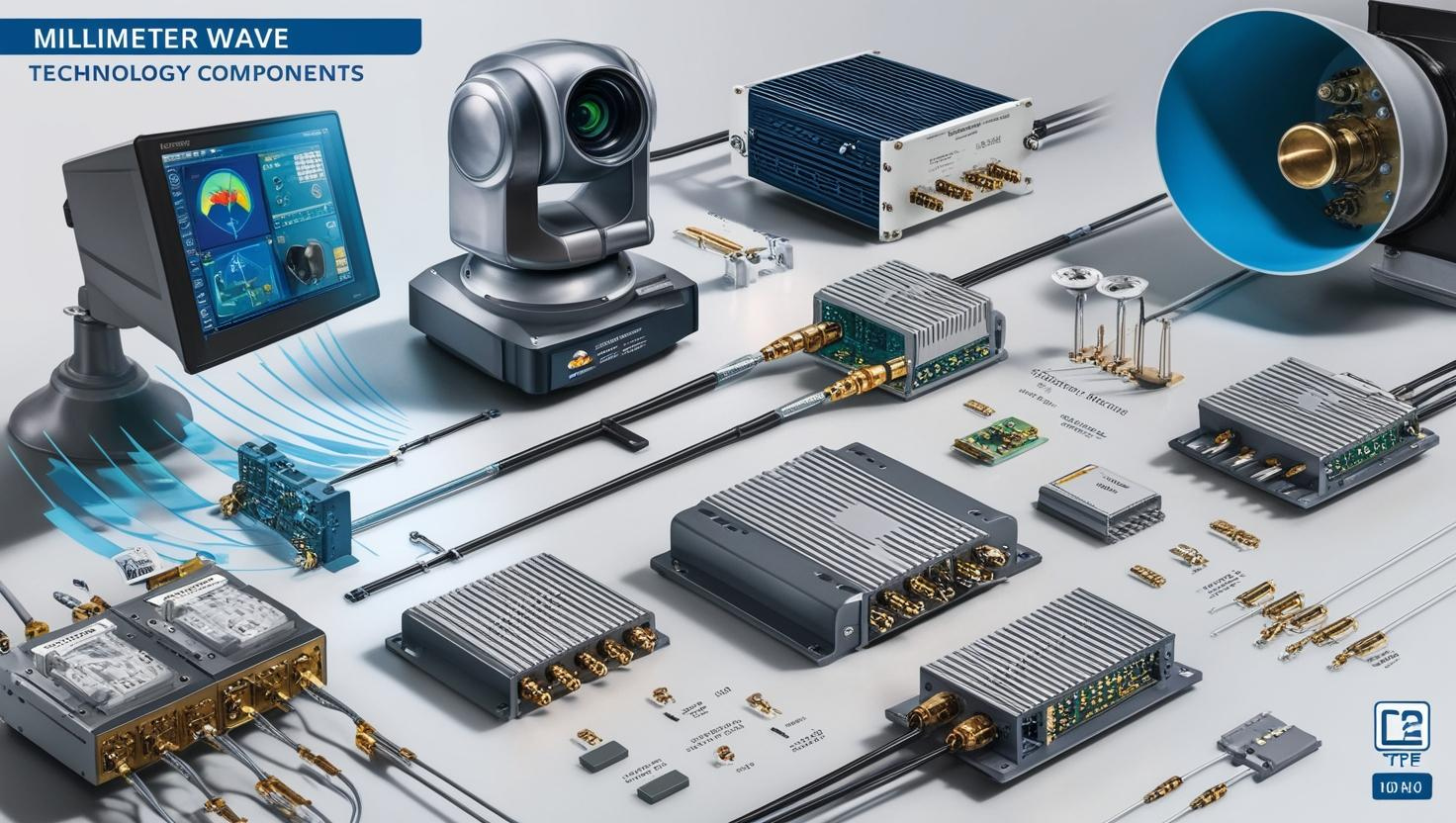
Global 6G Programs Are Accelerating mmWave Innovation
Recent announcements from major technology companies and national governments have reinforced the importance of advanced spectrum technologies in future wireless ecosystems. Countries including the United States, Japan, South Korea, China, Finland, and members of the European Union are significantly expanding funding for 6G research programs focused on terahertz frequencies, advanced antenna systems, intelligent radio access networks, and AI-native communications.
Millimeter wave frequencies, typically ranging from 30 GHz to 300 GHz, are expected to remain a foundational component of emerging 6G architectures. These frequencies deliver exceptionally high bandwidth, making them ideal for applications requiring multi-gigabit data rates, immersive extended reality (XR), holographic communications, autonomous transportation, and industrial digital twins.
The increasing commercialization of mmWave technologies today provides the technological foundation upon which future 6G networks will be built.
AI Infrastructure Is Driving Demand Beyond Telecommunications
Although mmWave technology first gained widespread attention through 5G deployments, its applications have expanded far beyond mobile communications.
Artificial intelligence infrastructure is becoming a major growth catalyst. Modern AI data centers require ultra-high-speed connectivity between servers, accelerators, storage systems, and edge computing nodes. Millimeter wave solutions enable high-capacity wireless backhaul, low-latency interconnects, and flexible network architectures that support rapidly growing AI workloads.
The convergence of AI, cloud computing, and edge intelligence is encouraging enterprises to invest in high-frequency wireless technologies capable of delivering reliable, high-throughput communications without the complexity of traditional wired infrastructure.
Automotive Industry Expands Adoption of mmWave Radar
The automotive sector continues to be one of the fastest-growing application areas for millimeter wave technology.
Advanced driver assistance systems (ADAS), autonomous vehicles, intelligent transportation systems, and vehicle-to-everything (V2X) communications increasingly rely on mmWave radar operating at frequencies such as 77 GHz and 79 GHz.
These radar systems provide highly accurate object detection, distance measurement, and environmental sensing under challenging weather and lighting conditions. As global automotive safety regulations become more stringent and vehicle automation advances, demand for high-performance mmWave radar sensors is expected to increase substantially.
Industrial Automation and Smart Manufacturing Create New Growth Opportunities
Industry 4.0 initiatives are accelerating adoption of millimeter wave communications across manufacturing facilities, logistics centers, mining operations, and energy infrastructure.
Factories are increasingly deploying private 5G networks powered by mmWave spectrum to support collaborative robots, autonomous guided vehicles (AGVs), predictive maintenance systems, machine vision, and real-time industrial analytics.
The technology enables highly reliable wireless connectivity in environments where traditional networking solutions may face limitations related to mobility, flexibility, or installation costs.
As industrial enterprises continue digital transformation initiatives, mmWave technology is becoming an essential component of next-generation smart factories.
Defense, Aerospace, and Satellite Communications Strengthen Market Outlook
National security modernization programs are creating another significant growth avenue for millimeter wave technology.
Military organizations are investing in secure high-frequency communication systems, electronic warfare capabilities, surveillance radar, advanced imaging systems, and next-generation satellite communications.
In aerospace applications, mmWave technologies support high-resolution sensing, aircraft communications, weather monitoring, and space-based broadband connectivity. The rapid expansion of low Earth orbit (LEO) satellite constellations is further increasing demand for advanced RF components capable of operating at extremely high frequencies.
Semiconductor Innovation Continues to Improve Commercial Viability
The rapid advancement of semiconductor technologies is making millimeter wave solutions more affordable, energy efficient, and commercially scalable.
Leading semiconductor manufacturers are introducing advanced RF integrated circuits, beamforming chipsets, phased-array antennas, silicon germanium (SiGe), gallium nitride (GaN), and CMOS-based mmWave components that significantly improve performance while reducing manufacturing costs.
These innovations are accelerating commercialization across consumer electronics, telecommunications infrastructure, automotive systems, healthcare imaging, and industrial IoT.
As economies of scale improve, broader adoption across multiple industries is expected to further expand the addressable market.
Asia-Pacific Emerges as the Fastest-Growing Regional Market
Asia-Pacific continues to lead global investments in next-generation wireless infrastructure.
China, South Korea, Japan, and Taiwan are making substantial investments in semiconductor manufacturing, telecom infrastructure, automotive electronics, and advanced research programs supporting both 5G evolution and future 6G technologies.
North America remains a major innovation hub due to strong investments from hyperscale cloud providers, semiconductor companies, defense agencies, and wireless technology developers.
Meanwhile, Europe continues strengthening collaborative 6G initiatives focused on sustainability, industrial digitalization, and secure communications, positioning the region for long-term market growth.
Long-Term Outlook
The millimeter wave technology market is transitioning from a niche wireless innovation into a foundational technology supporting future digital economies. The convergence of 6G research, AI-driven infrastructure, autonomous mobility, industrial automation, satellite communications, and advanced semiconductor innovation is creating sustained demand across diverse industries.
Organizations investing today in mmWave chipsets, antennas, RF modules, network infrastructure, and sensing technologies are expected to play a central role in the next generation of high-performance wireless communications.
As global investments in intelligent connectivity continue to accelerate, the millimeter wave technology market is well positioned to become one of the most dynamic segments within the broader wireless communications and semiconductor ecosystem over the coming decade.
For more info: https://www.marketsandmarkets.com/Market-Reports/millimeter-wave-technology-market-981.html